Platform on civil engineering, underground infrastructure, energy, construction equipment & construction machinery
‘It’s not the tap, but the power supply that will be the bottleneck’
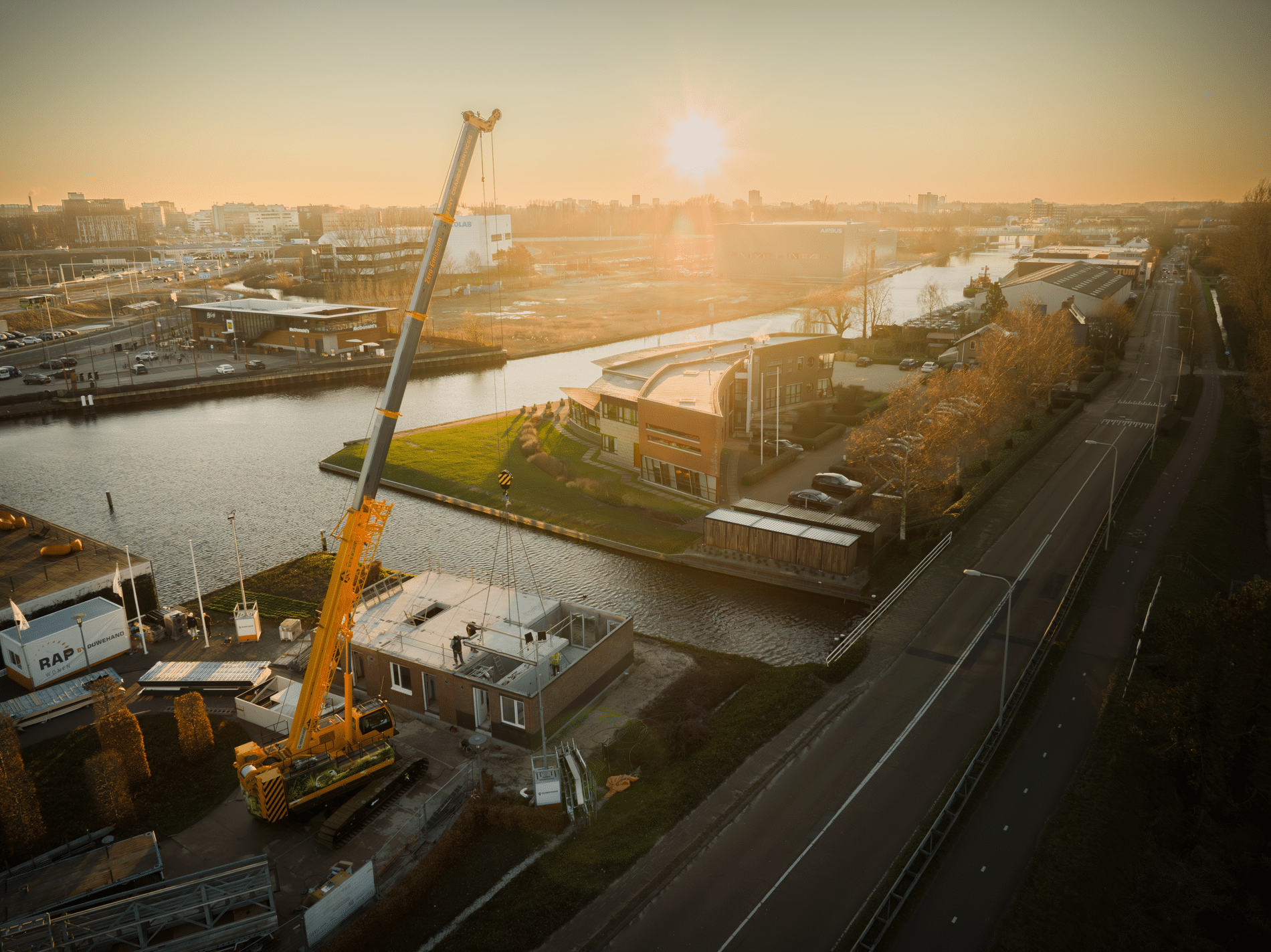
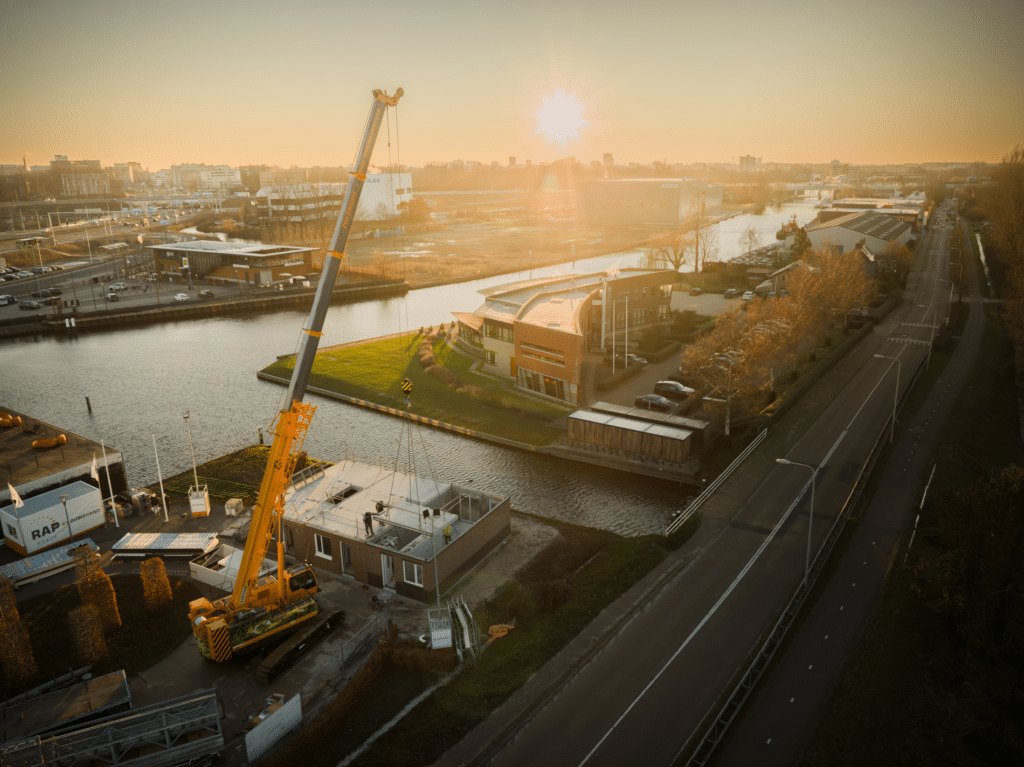
At SANY Cranes.Services, electric cranes are no longer the exception. According to Jack Donker, about three-quarters of the cranes sold are now fully electric. As a result, the challenge has shifted from the technology within the machine to the power supply and organization on the construction site.
Three years ago, an electric crane was still a topic that required a lot of explanation. SANY Cranes.Services now has seven fully electric models in its lineup, ranging from 50 to 200 metric tons. These include telescopic and lattice-boom crawler cranes that come equipped with electric power as standard. “They’re selling very well,” says Jack. “You can see that more and more companies are realizing that emission-free operations are no longer a distant future, but a prerequisite for being able to take on jobs.”
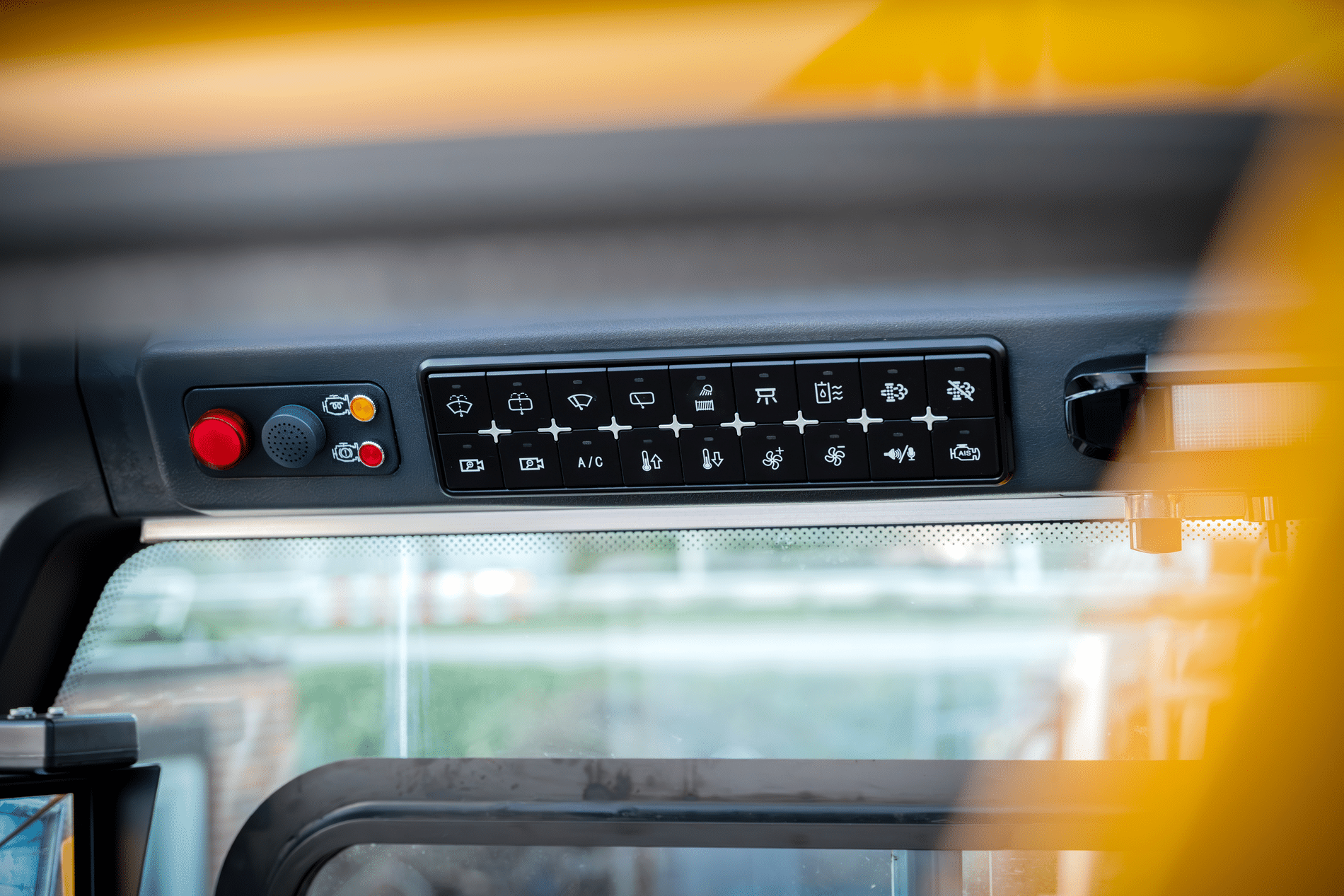
The fact that operators have embraced it helps. According to Jack, the controls feel familiar because the hydraulic functions and joysticks provide the same feel as those on a conventional crane. The main difference is the quietness. “Operators say: ”It operates just as I expect, but it’s wonderfully quiet all day long.’ The electric drive produces significantly less noise than a diesel engine, which makes a noticeable difference, especially on long-term projects.”.
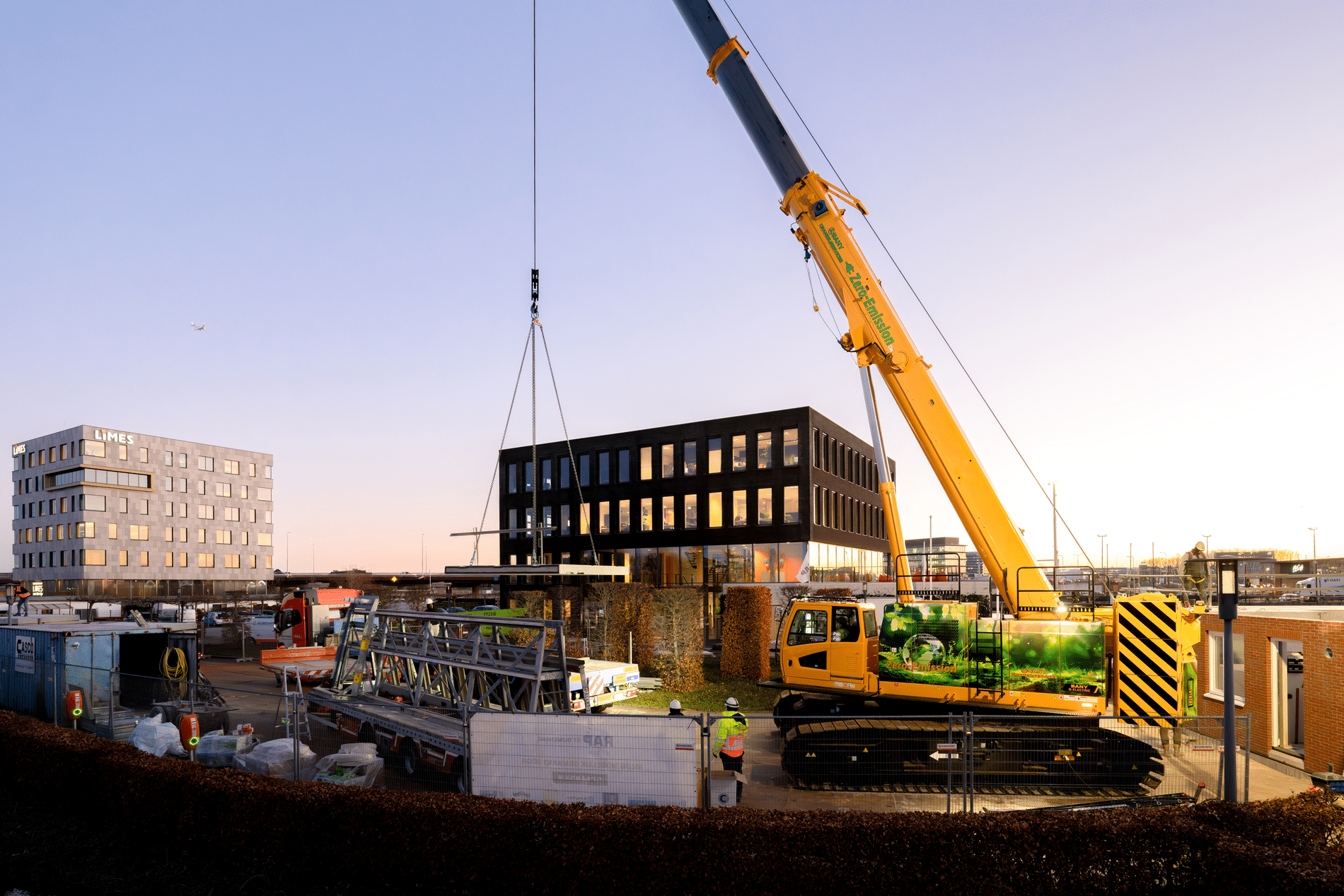
According to Jack, success in practice depends entirely on the available battery capacity. A crane must be able to operate for an entire workday without the operator having to worry about the battery while working. That’s why SANY opts for relatively large battery packs. Under normal use, about 45 percent of the capacity often remains at the end of the day.
That principle is also evident in the largest electric crawler crane in the showroom: the SANY SCC2000A-EV. This 200-metric-ton crane is equipped with a 422-kWh battery pack. “Lifting itself requires relatively little energy,” Jack explains. “But driving around a construction site requires a lot of power.”
He does not see battery swaps as the solution. The battery packs operate at high voltage and should not be disconnected or reconnected arbitrarily; only authorized technicians should perform these tasks. Furthermore, in practice, swapping batteries often takes longer than charging them. SANY Cranes.Services therefore trains not only operators but also technicians in working safely with electrical systems.
According to Jack, the biggest limitation is often not the crane itself, but the available construction power supply. With a 32A connection, a crane can be charged overnight in about six to seven hours. At many locations, however, only 16A is available, even though multiple electric machines need to be charged at the same time.
If the power supply is insufficient, external battery packs can provide a solution. These function as a mobile power source and can be charged elsewhere using DC fast-charging technology. This allows the crane to remain on site, eliminating the need to move the entire machine to a charging station.
For Jack, service is just as crucial as the electric drive system. “Our sales stand or fall on service,” he says. SANY Cranes.Services operates from four service centers in the Netherlands and has its own parts warehouse in Sassenheim. This enables the dealer to respond quickly in the event of maintenance, malfunctions, or damage. The lines of communication with the factory are short; Jack explains that SANY engineers are also regularly present at the Dutch office. This is important for customers who are incorporating relatively new drive technology into their fleet.
Upon delivery, machines undergo independent inspections, and both operators and technicians can receive training. For electric cranes, this training includes, among other things, safely disconnecting the machine from the power source. According to Jack, this combination of local service, parts in stock, and technical support also helps win over financiers. While leasing companies were previously hesitant about residual value and claims handling, he now sees that confidence growing.
According to Jack, financiers are also becoming less hesitant. Leasing companies were initially cautious about the residual value of Chinese machines, but have since come to realize that service, parts supply, and claims handling are well organized. “Above all, companies want a crane they can rely on and that will let them do their work all day long,” he says. “If that can be done with an electric crane, the choice makes more and more sense.”
However, Jack still sees some tension outside the construction site. In late 2025, following a complaint from European manufacturers, the European Commission launched an anti-dumping investigation into imports of new mobile cranes from China. The investigation covers self-propelled cranes weighing 30 metric tons or more, both on tires and on tracks. In February 2026, the imports in question were subject to registration. This does not yet constitute a definitive import duty; the investigation is still ongoing.
According to Jack, the procedure feels like an attempt by established European brands to slow the rise of Chinese manufacturers. He points out that clients are increasingly demanding zero-emission equipment, while the selection of fully electric cranes remains limited for now. He says SANY already delivers these machines straight from the factory, rather than as retrofitted models. “They simply want a product that they can’t deliver,” he says. The question, according to Jack, is therefore how European ambitions for zero-emission construction relate to trade measures that could hinder access to that equipment.