Platform on civil engineering, underground infrastructure, energy, construction equipment & construction machinery
It's not just the truck—the entire supply chain must be electric
Infrastructure contractor Martens en Van Oord is building a zero-emission earthmoving chain using electric Volvo trucks, battery containers, and smartly organized logistics. In Vlissingen, this approach will soon be put to the test on a large scale.
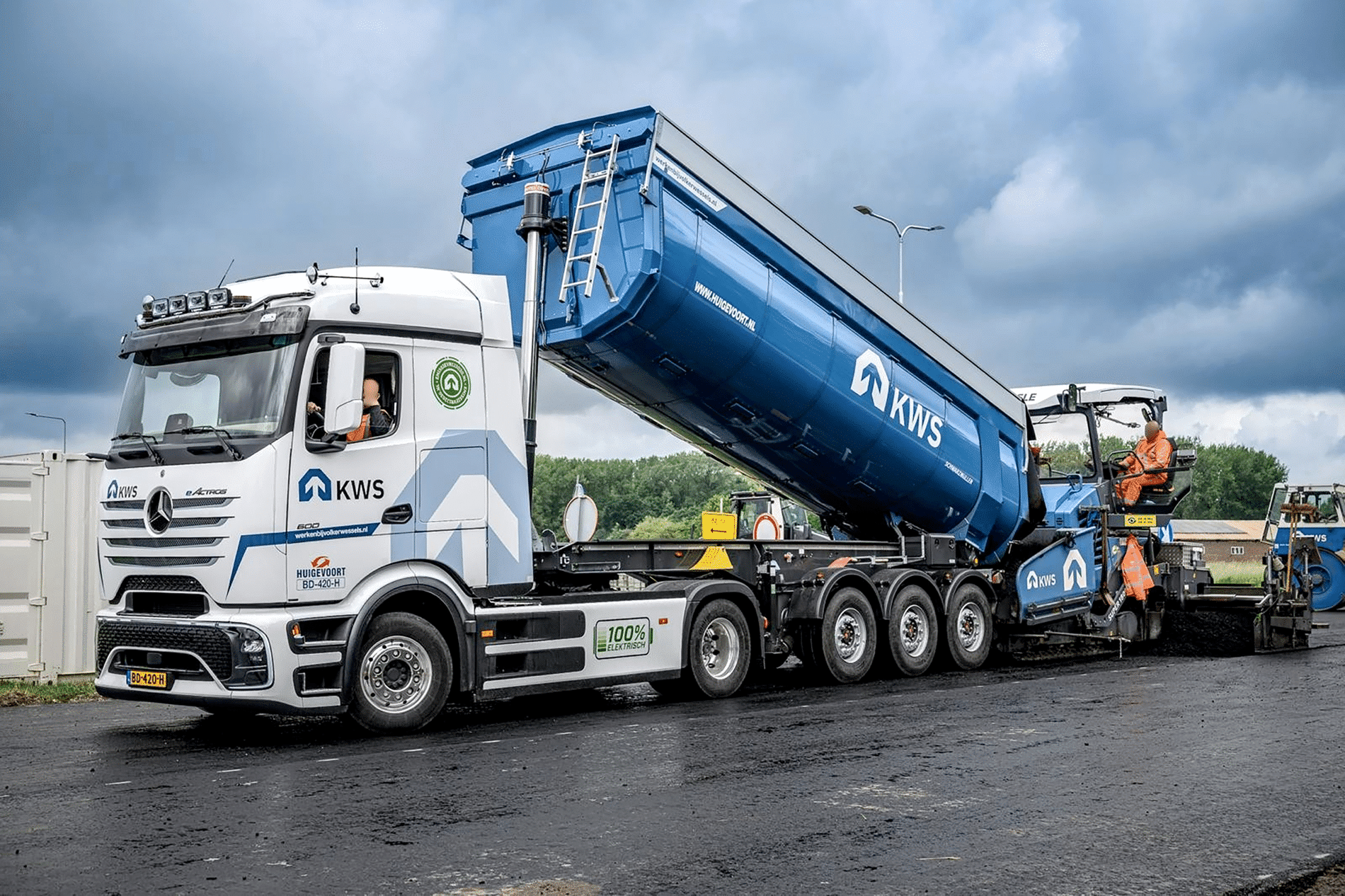
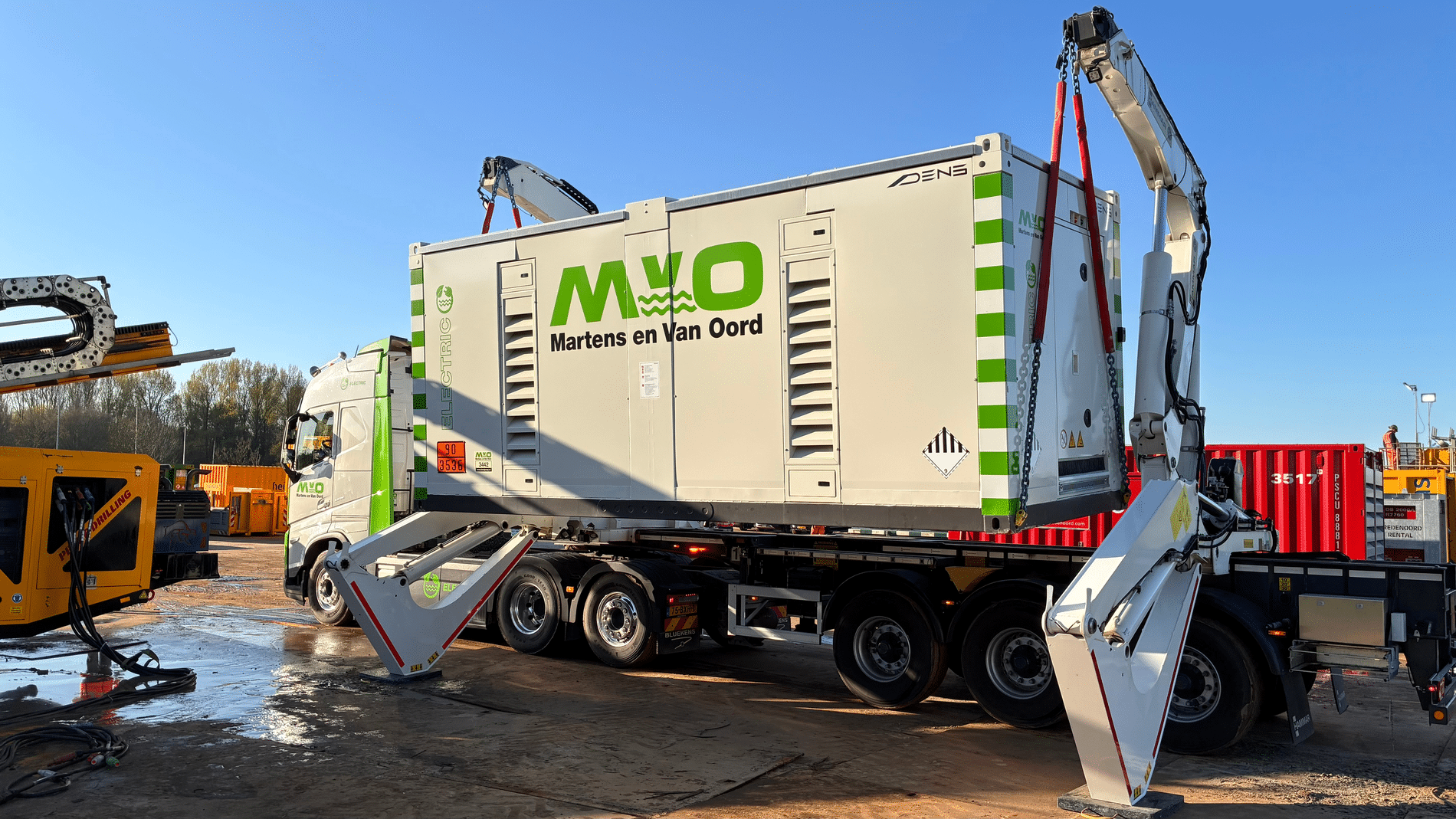
An electric Volvo FH Electric driving to Sweden to pick up a special sideloader: it sounds like a nice publicity stunt, but for Martens and Van Oord, it primarily illustrates just how broadly electrification has now permeated their business operations. The trailer is needed to transport heavy battery containers to project sites. The tractor-trailer picking it up is itself electric.
“A container like that weighs 25 metric tons,” says Director Tobias van Oord. “We bought a sideloader for that. When we bought that thing in Sweden, we thought: would we even be able to pull it off if we went electric?” Two colleagues made the trip. According to Tobias, it took quite a bit of preparation—especially in Germany—to find suitable charging stations, but the mission was a success.
This story says a lot about how Martens and Van Oord view zero-emission operations. It’s not a single electric machine or truck that makes the difference, but the entire chain surrounding it: from transportation and earthmoving to the energy supply at the construction site.

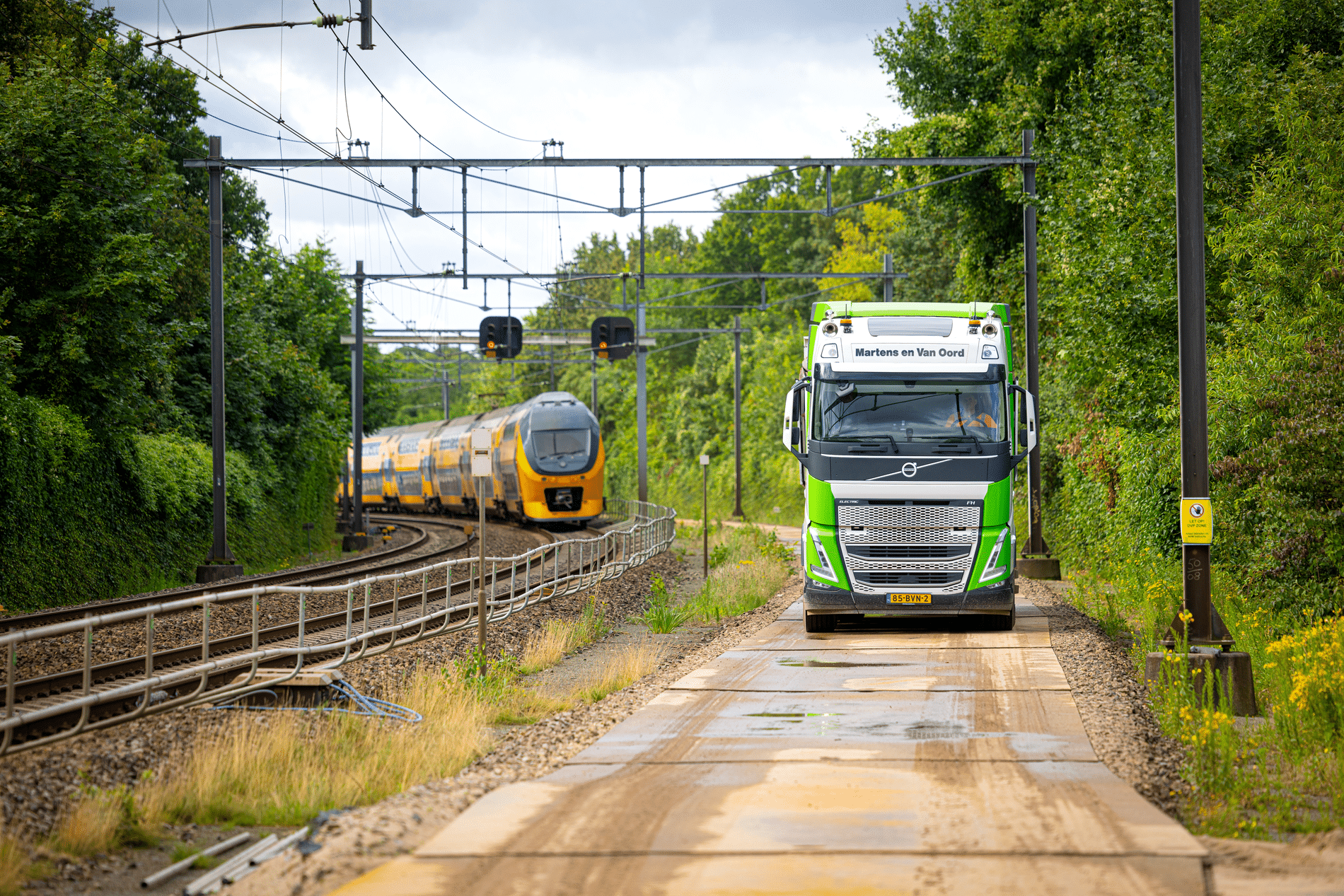
According to Tobias, there are two reasons for electrification. “We want to become more sustainable as a company, and our customers are asking us to do so.” So the pressure from clients is real, but the family-owned business doesn’t see it as a burden. “It’s not as if we’re being forced purely by our customers and see it as a punishment. We actually find it important and enjoyable ourselves.”
It’s all about continuity. Martens en Van Oord is a second-generation family business. “We use a lot of energy in the form of diesel, primarily to power our machinery and carry out our work. We’re very keen to make that more sustainable. We want to pass our company on to the next generation—a company that’s ready for the future.”
That ambition aligns with current procurement practices. Tobias observes that Rijkswaterstaat is increasingly committed to zero-emission operations. “They do require that at least 30 percent of the work be carried out emission-free. What they’re essentially saying is: 70 percent of the tasks can still be performed using diesel equipment, but 30 percent must be done electrically.”
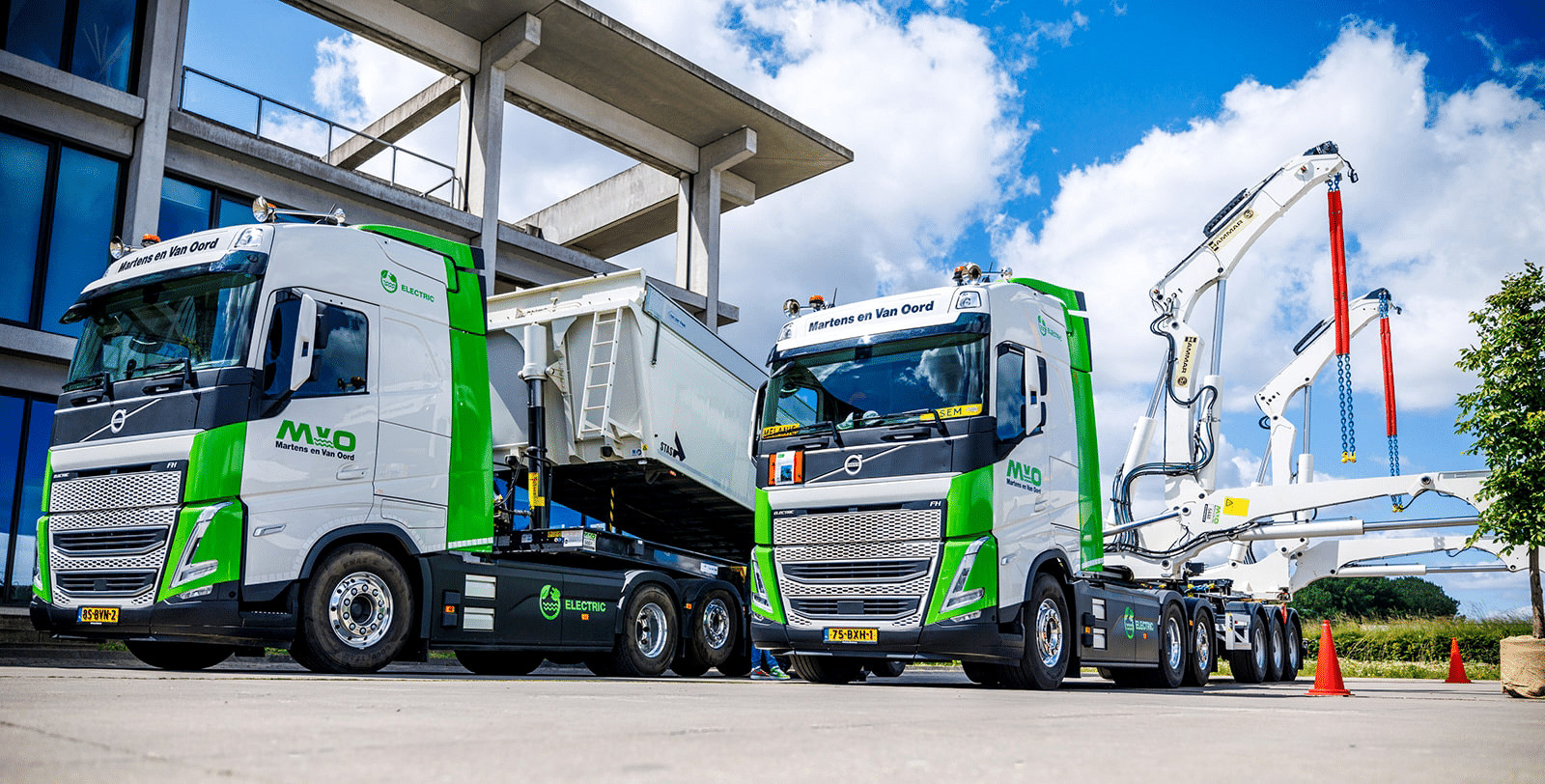
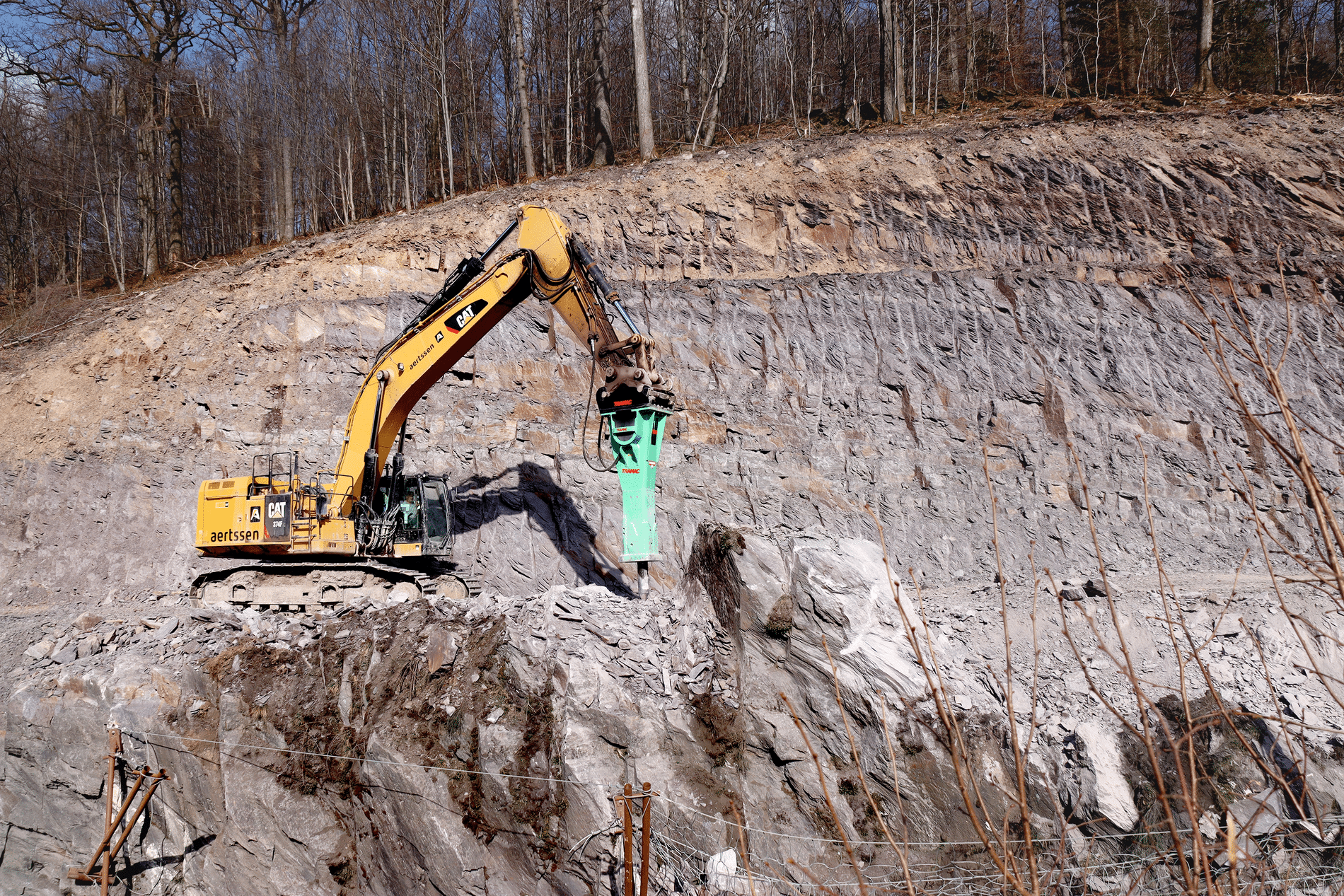
For Martens and Van Oord, the electrification of their heavy equipment fleet naturally began with trucks. “Among the heavier equipment, trucks are the first to be available for purchase as truly electric right from the factory,” says Tobias. “Earthmoving machines are now also available for purchase, but what you still often see is that an existing diesel machine is being converted to electric.”
The fact that Volvo was an early entrant into the electric truck market was a key reason for MvO to choose the brand. “Because Volvo was the first to bring electric trucks to market, we decided to switch to Volvo after all. We’re actually quite happy with that decision.”
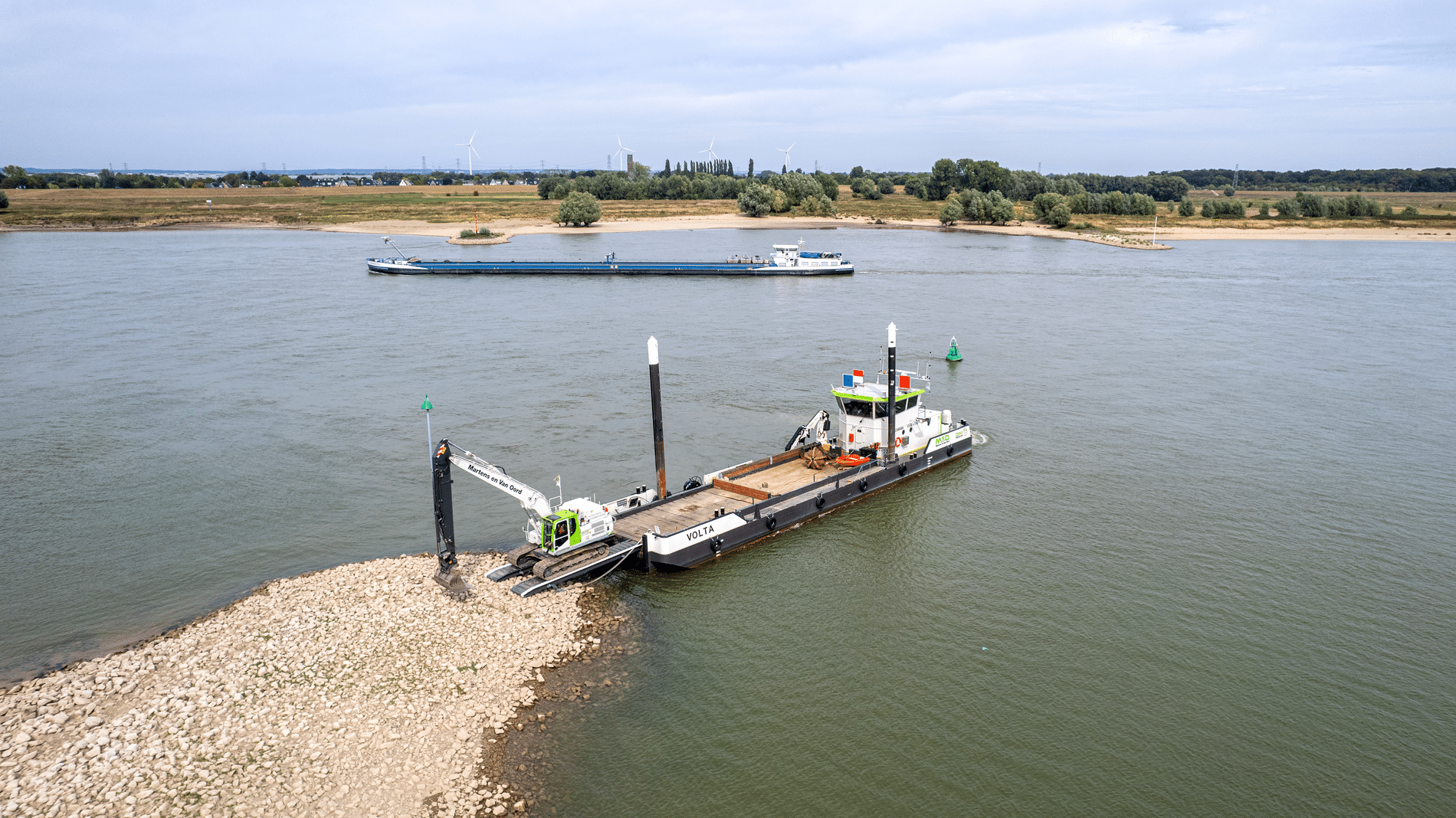
The first order consisted of three electric Volvo tractor-trailers. The fleet now includes five Volvo FH Electric tractor-trailers following the recent purchase of two 8×4 Aero models. Around the turn of the year, two more long-range tractor-trailers will be added, bringing the total to seven. In addition, Martens en Van Oord has invested in electric excavators, electric loaders, battery containers, and an electric workboat.
Tobias particularly appreciates that Volvo is committed to electrification across the entire group. In fact, a new Volvo truck and a Volvo loader were both delivered to MvO on the same day. “I think that’s really great. Volvo is truly committed to sustainability and electrification across the entire group. That’s really necessary, because I don’t think retrofitting machines has a future.”
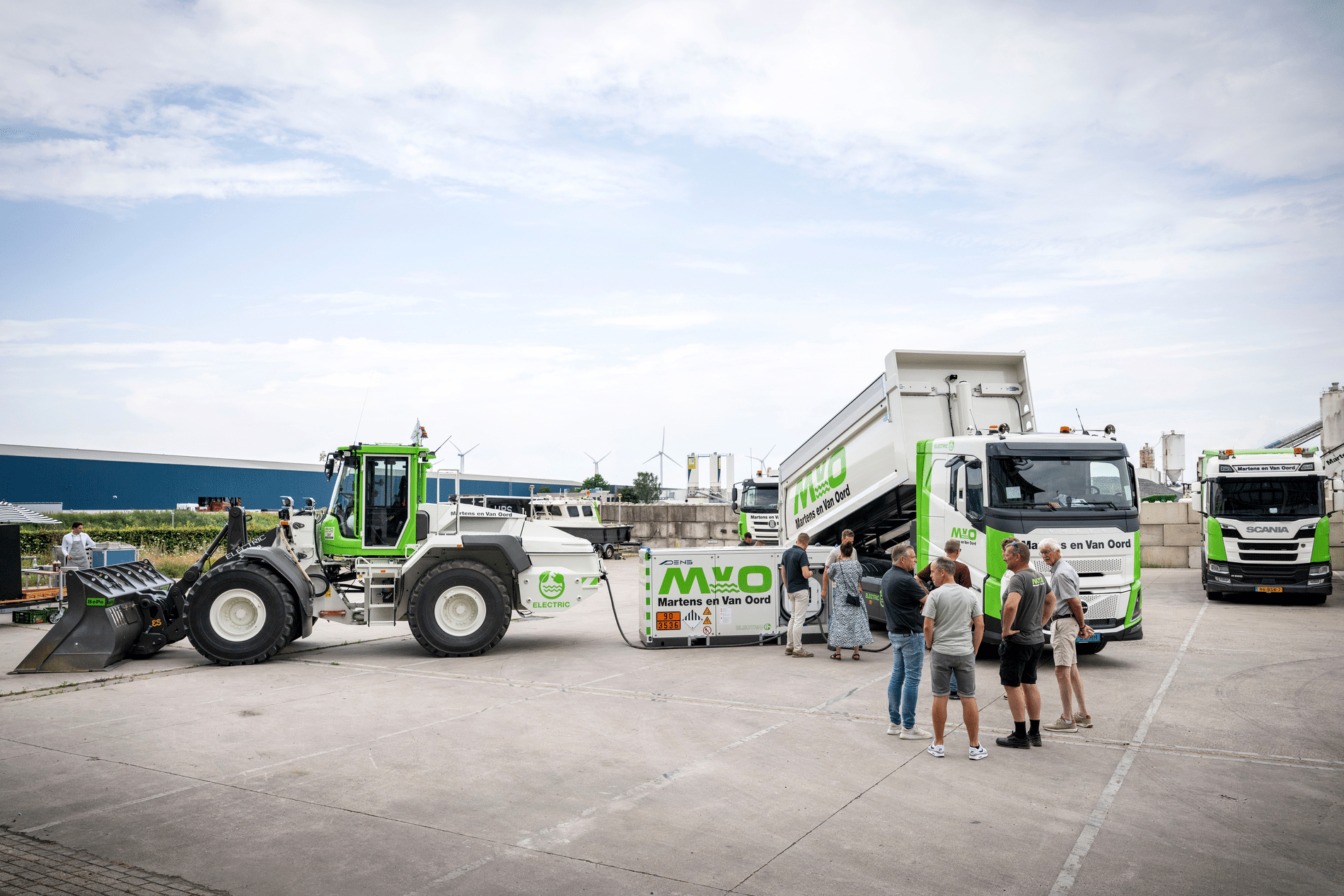
The biggest challenge isn’t the vehicles themselves, but charging them. “That really is always the biggest challenge: the power supply.” Whereas diesel could previously be easily transported to a project site, working with electric vehicles requires an energy plan that must be drawn up early in the preparation phase. “With electric work, you really do have to think it through a bit more carefully and start planning earlier. But in the end, it works out pretty well.”
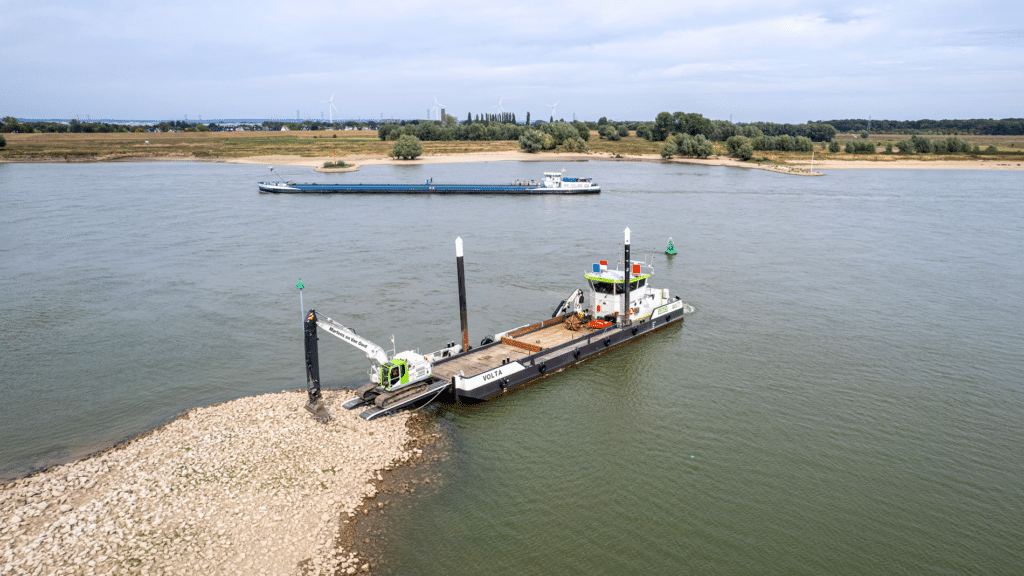
This is evident in a major project in Vlissingen, where Martens and Van Oord will soon be providing a significant amount of electric transportation for a large construction project by the Central Government Real Estate Agency. Due to nitrogen emission limits, the work there must be carried out with zero emissions. The sand arrives by ship; its transport, processing, and even the lighting must all be powered by electricity.
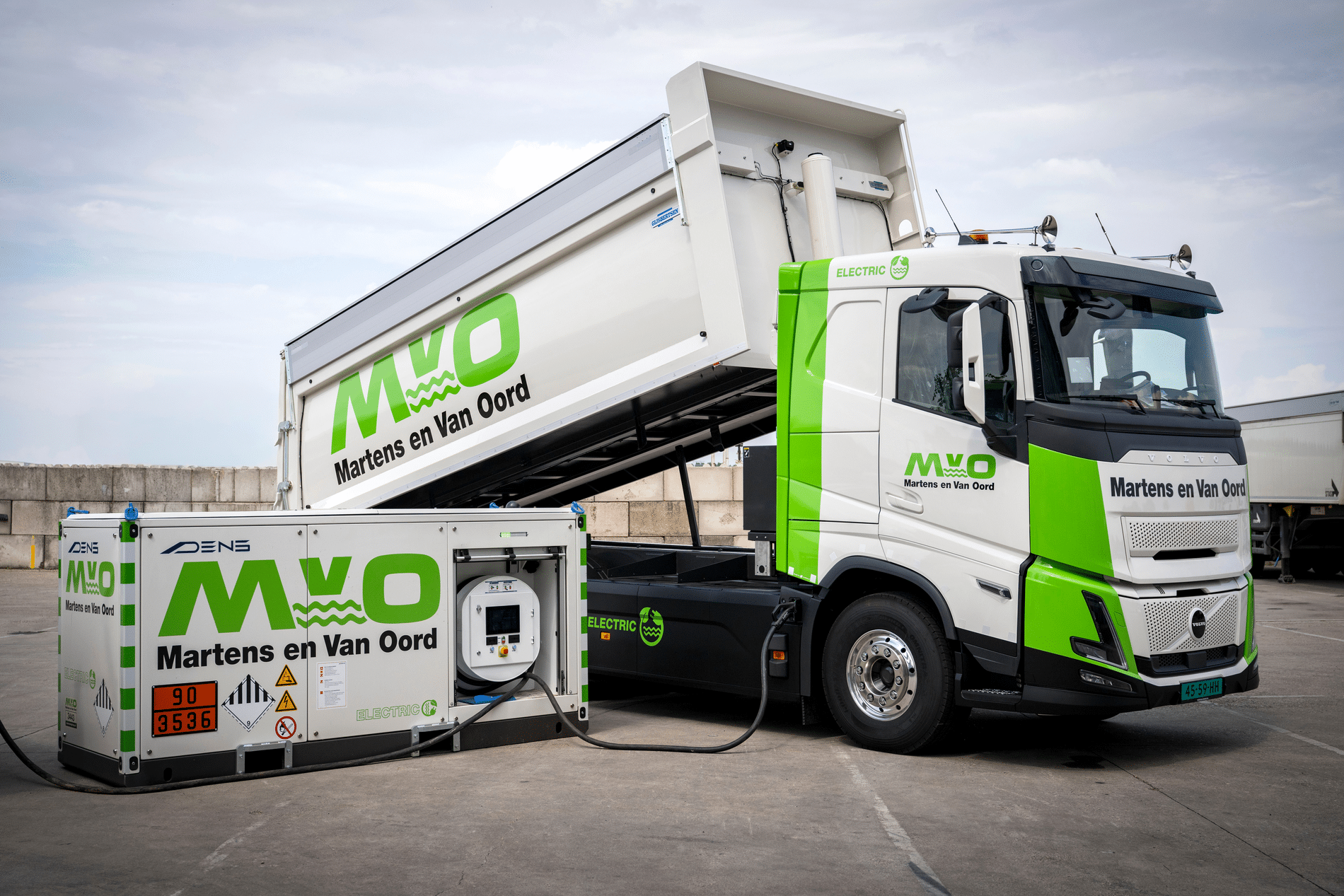
Heavy-duty charging stations are not available in the area. That is why Martens and Van Oord are installing a large battery container at a local contractor’s site, which is located a few kilometers from the construction site. That site has a 140-kW grid connection that is not always fully utilized. At times there is little surplus, at other times there is plenty. On average, approximately 100 kW is available. “That still amounts to 2,400 kWh per day that is actually left over on that connection. We’re going to use load balancing on the main meter to store every kWh that’s left over in the battery.”
The local contractor also has solar panels on the roof, but cannot feed the generated electricity back into the grid. The battery container offers a practical solution to this problem. “Thanks to our battery, the solar panels can generate power at all times. We can capture every available kilowatt-hour from the roof and the grid and store it in that battery (until the battery is full, of course—which will always be the case over the weekend when we’re not working).” Then, during peak times, trucks can recharge at a power of approximately 250 kW.
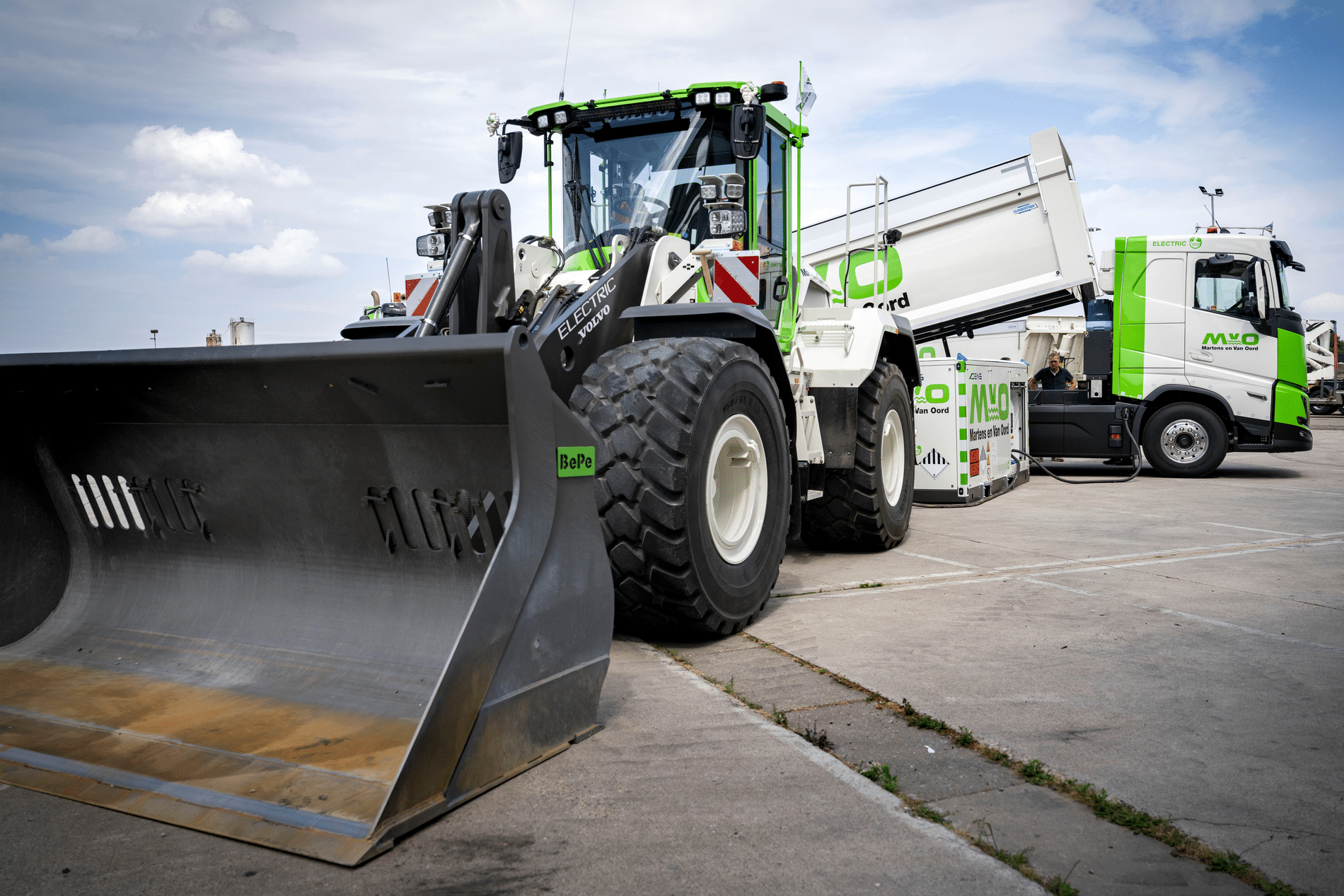
In addition to the large battery container, two smaller Accukids are being used on the construction site to charge an electric excavator, a roller, and a loader as needed. “It’s quite a logistical challenge,” says Tobias. “It just takes more time and attention to get this right.”
The investments weren’t immediately profitable. With the first electric trucks, market demand was still limited. On days when no client was willing to pay a premium for zero-emission transport, the vehicles were simply used for regular operations. Now, Tobias is seeing the utilization rate increase. Martens and Van Oord will be working on, among other things, the construction of a new baggage handling facility at Schiphol, a project that will be carried out entirely emission-free.
“You really have to take that step,” he says. “I’m very glad we took that step early on, because you learn so much during that time. That’s actually the most important thing.” That knowledge isn’t just found in the truck or the battery container, but rather in the combination of planning, charging, logistics, collaboration with local partners, and dedication to the job.
Attitudes are changing within the organization as well. According to Tobias, some drivers and operators were initially resistant. Now, even drivers with 25 to 30 years of experience enjoy driving electric vehicles. “I’m just noticing more and more enthusiasm in this area, because everyone is saying: this is just part of the job; this is the future. It’s no longer a hobby; it’s truly a new reality.”
The next step is the Megawatt Charging System, or MCS for short. The two new Volvo tractor-trailers, which will be delivered late this year or early next year, will be the first in the fleet to be equipped with an MCS connection. Martens en Van Oord will also soon install MCS chargers at its own facility in Oosterhout for this purpose.
With the current CCS standard, charging still takes too long under intensive use, especially with heavy loads and high mileage. “That means you simply have half an hour to an hour less driving time per workday than diesel trucks. That’s what makes it still expensive right now.”
According to Tobias, MCS is supposed to change that. “With that new MCS standard, you’ll be able to charge about three times as fast as you do now. That means you can charge the car enough during the driver’s 45-minute break to keep it running for the rest of the day.”
For Martens and Van Oord, electrification is therefore no longer just a technical experiment, but a new way of working. The electric truck is visible, but the real transformation lies in everything behind the scenes: on-site energy, mobile storage, smart logistics, and employees who are willing to do things differently.