Platform on civil engineering, underground infrastructure, energy, construction equipment & construction machinery
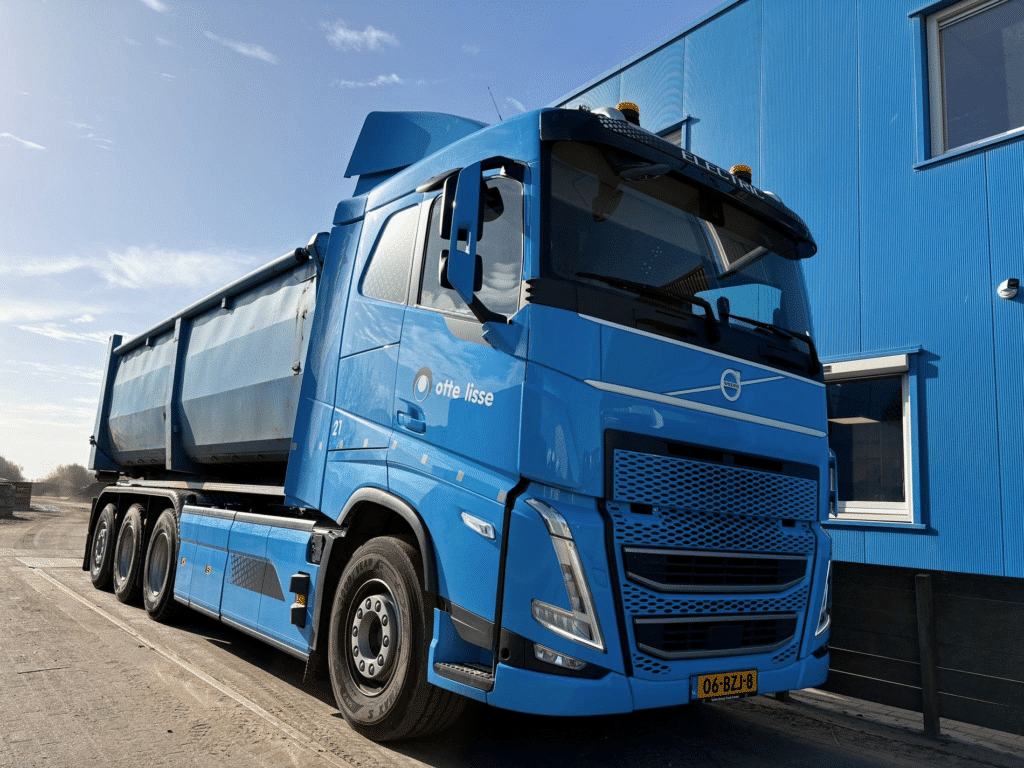
In Lisse, nestled among the tulip fields and the logistics hub surrounding Keukenhof, the family-owned Otte company has been building a solid reputation in the trade of agricultural products and transportation for decades. What began in 1934 with Arie Otte is now carried on by third-generation owner Tom Otte. “I’ve been working here for thirty years now,” he says matter-of-factly. “And the fourth generation is already working in the company as well.”
That continuity goes hand in hand with a clear change in direction: Otte is making a significant investment in electric transportation—not as a marketing tool, but as a strategic move in a rapidly changing sector under pressure from regulations, clients, and practical constraints such as grid congestion.
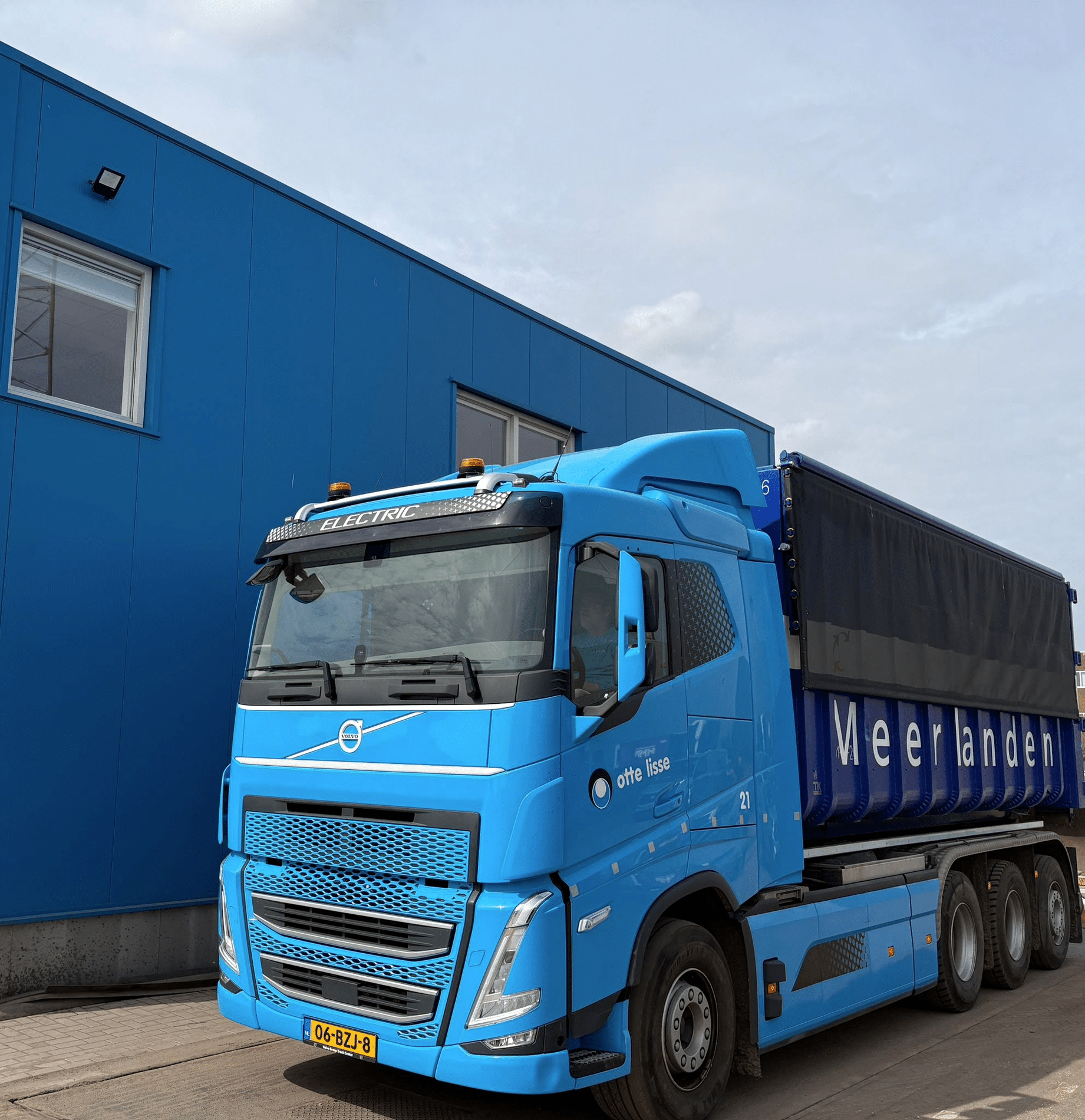
Within Otte’s fleet, the choice of Volvo Trucks is no coincidence. The relationship with the brand has been going on for years and is deeply rooted in the company. “The whole family is actually a big fan of Volvo,” says Otte. “Even my 91-year-old father still drives a Volvo.” The switch to Volvo Trucks as the main provider for the fleet happened gradually, following previous experiences with other suppliers. “When one brand stopped producing Euro 6 trucks and another supplier went bankrupt, we ended up with Volvo Trucks. And we were very pleased with that.”
The Swedish brand was also a logical partner when it came to electrification. “Volvo was clearly ahead of the curve in the field of electrification,” says Otte. “I also visited Sweden to see the developments with my own eyes.”
The decision to switch to electric trucks was partly driven by regulations, but certainly also by personal conviction. “I’ve always been the kind of person who thinks: if there’s something new, that’s the future.”
That approach had previously led to investments in solar panels and is now leading to investments in electric trucks. The fleet now includes two Volvo trucks with electric powertrains, and there are plans to expand the fleet. “It’s a significant investment. You receive a subsidy, but the cost is still higher than that of a diesel truck.”
Still, Otte sees it as necessary. Not only because of future regulations—such as the truck toll—but also because clients are increasingly requesting it. “For projects, such as those along the A44, the specifications state that part of the work must be carried out using electric vehicles. We can now offer that.”
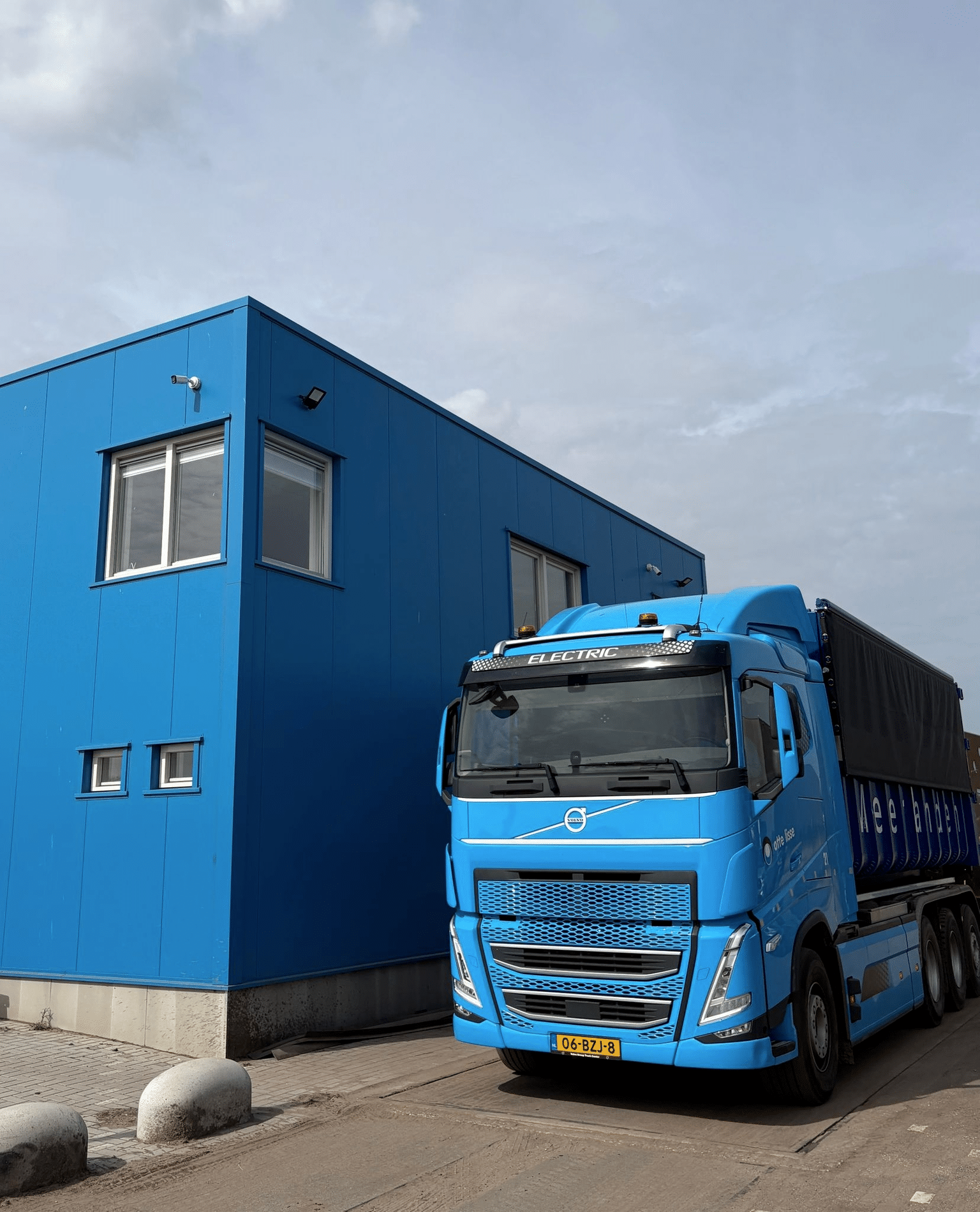
The transition to electric vehicles has a direct impact on daily operations. While diesel trucks can be used almost continuously, electric transport requires tighter scheduling. “Right now, we have limited charging capacity for the electric trucks on our own premises,” says Otte. “So we have to take turns charging. Then you see drivers switching trucks. We still need to figure out what works best in this situation.”
For now, the use of electric trucks is therefore limited to shorter trips. “The range requires targeted deployment, which is why we’re currently using them mainly for local operations. The next generation will have a longer range.” Digital support plays a role in this. Through Volvo Connect, the company monitors the vehicles“ status, energy consumption, and operational readiness. ”That’s handy. We can see how things are going with, for example, the range, and we can adjust our scheduling accordingly.”
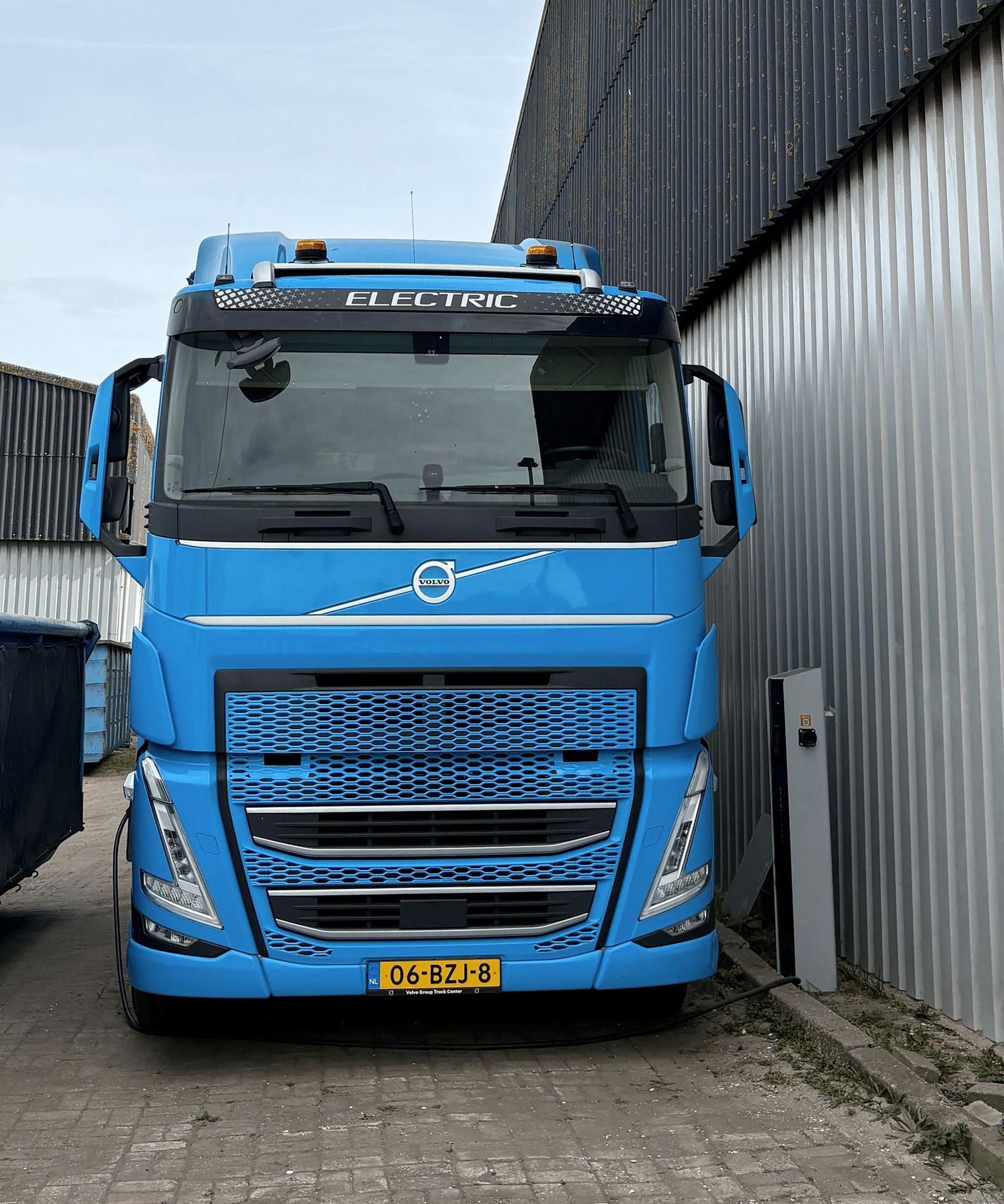
The biggest challenge, however, lies not in the trucks themselves, but in the energy supply. Grid congestion is clearly slowing down the expansion of electric transportation. Ironically, in addition to its own property, Otte has leased space for a charging park with sixty charging points. “But I actually don’t have enough power capacity myself.” A higher-capacity grid connection isn’t a short-term solution. “That’s just going to take years.” That’s why the company is looking for alternatives. For example, they’re working on a combination of solar panels and battery storage. “We continuously draw a small amount of power from the grid and supplement that with energy from solar panels. We store that in batteries.”
Work has now begun in Lisse on preparing the site for Floading’s charging stations and batteries. With this initiative, Otte is seeking to take control of its own energy supply, independent of the grid’s limitations.
At first, there was resistance to electric vehicles on the job site. “Drivers initially say, ”I just want to keep driving a diesel truck.“” But that attitude changes quickly once they start using them. “Once they’ve driven one, they often don’t want to go back. It’s quieter and just a more pleasant ride.” Otte draws a parallel with earlier technological changes: “Back in the day, drivers didn’t want automatic transmissions either. Now nobody wants anything else.”
From a financial standpoint, driving an electric vehicle can still be a challenge at times.
Otte still passes on a surcharge to customers, though the difference is narrowing. “In recent weeks, we’ve seen the gap with diesel closing rapidly.” In addition, external factors are beginning to work in favor of electric transport. Rising diesel prices and the upcoming truck toll are playing a role in this. “The upcoming per-kilometer toll will make electric driving relatively much more cost-effective.” In addition, demand from clients is growing. Although customers don’t always mention it explicitly, Otte has noticed that electric driving is increasingly becoming a requirement in tenders.
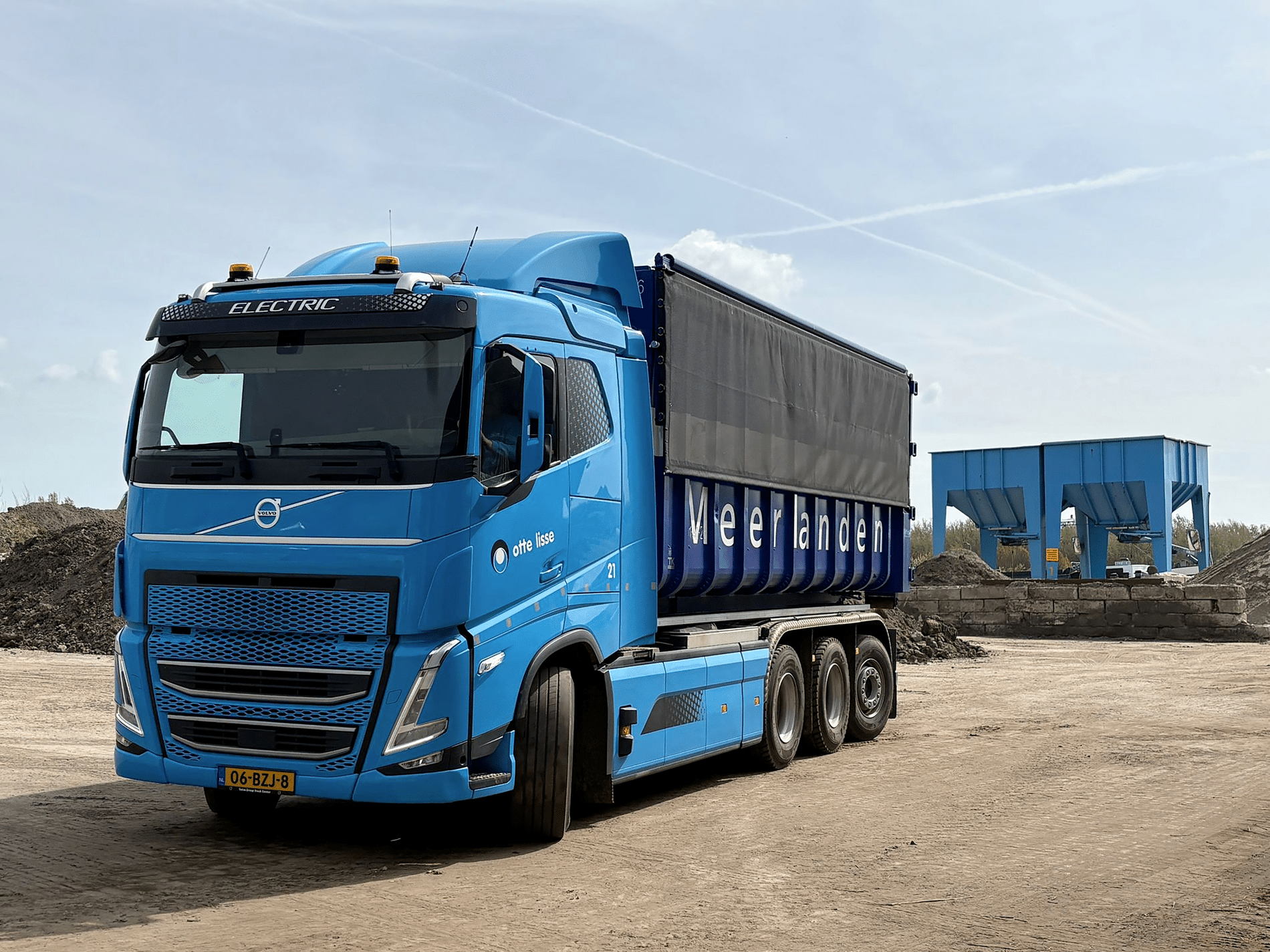
The transition to electric transportation at Otte Lisse isn’t going entirely smoothly. From limited charging infrastructure to grid congestion and higher investment costs: the reality on the ground is challenging. Still, the prevailing sentiment is that this direction is inevitable. “You see that some transport companies are dropping out and returning their subsidies,” says Otte. “But I actually think it will go ahead.” With Volvo Trucks as a long-term partner, a growing electric fleet, and investments in its own energy supply, the family-owned business is firmly positioning itself for that future. Not because it’s easy, but because standing still is no longer an option.
●