Platform on civil engineering, underground infrastructure, energy, construction equipment & construction machinery
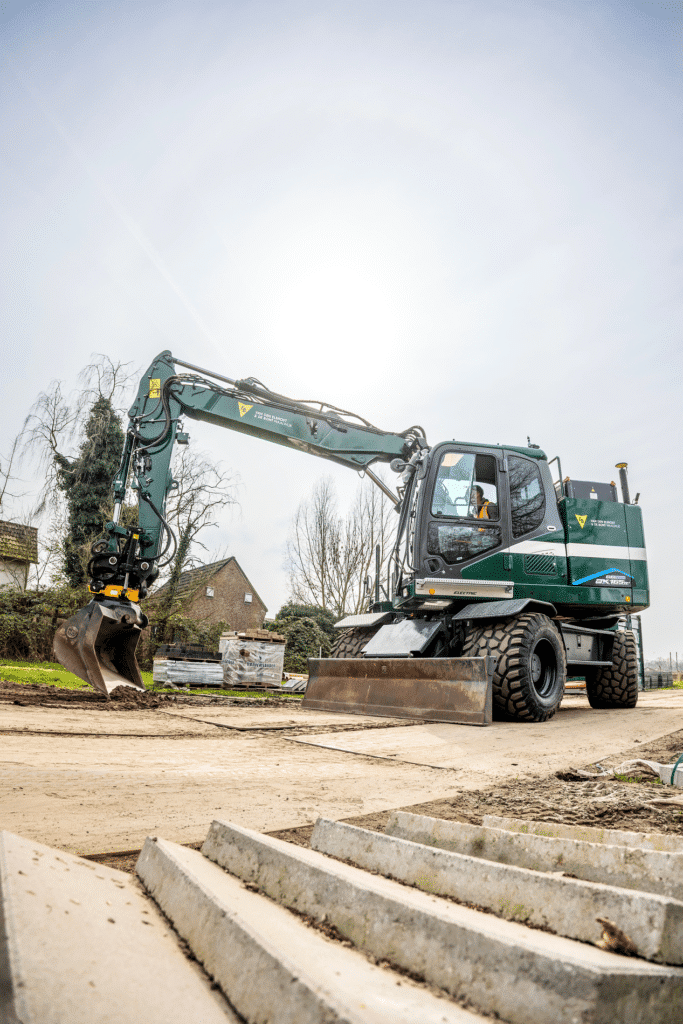
Anyone who talks to Erwin Muijs about his company quickly realizes that it’s not about machines or projects, but about people. Elshout & De Bont, a contracting firm based in Waalwijk, is celebrating its 85th anniversary this year and is still characterized by long-term employment and a strong family culture. At the same time, the company operates in the midst of a rapidly changing industry, driven in part by the rise of zero-emission equipment.
“We are a traditional contractor for the modern age,” says Erwin Muijs. “With a large in-house workforce, our own equipment, and our own workshop. When we’re working on a project, we’re actually there ourselves.” That combination of tradition and innovation is the common thread running through the company, which, with approximately 70 employees, operates in Central and Western Brabant and primarily works for municipalities and other government agencies.
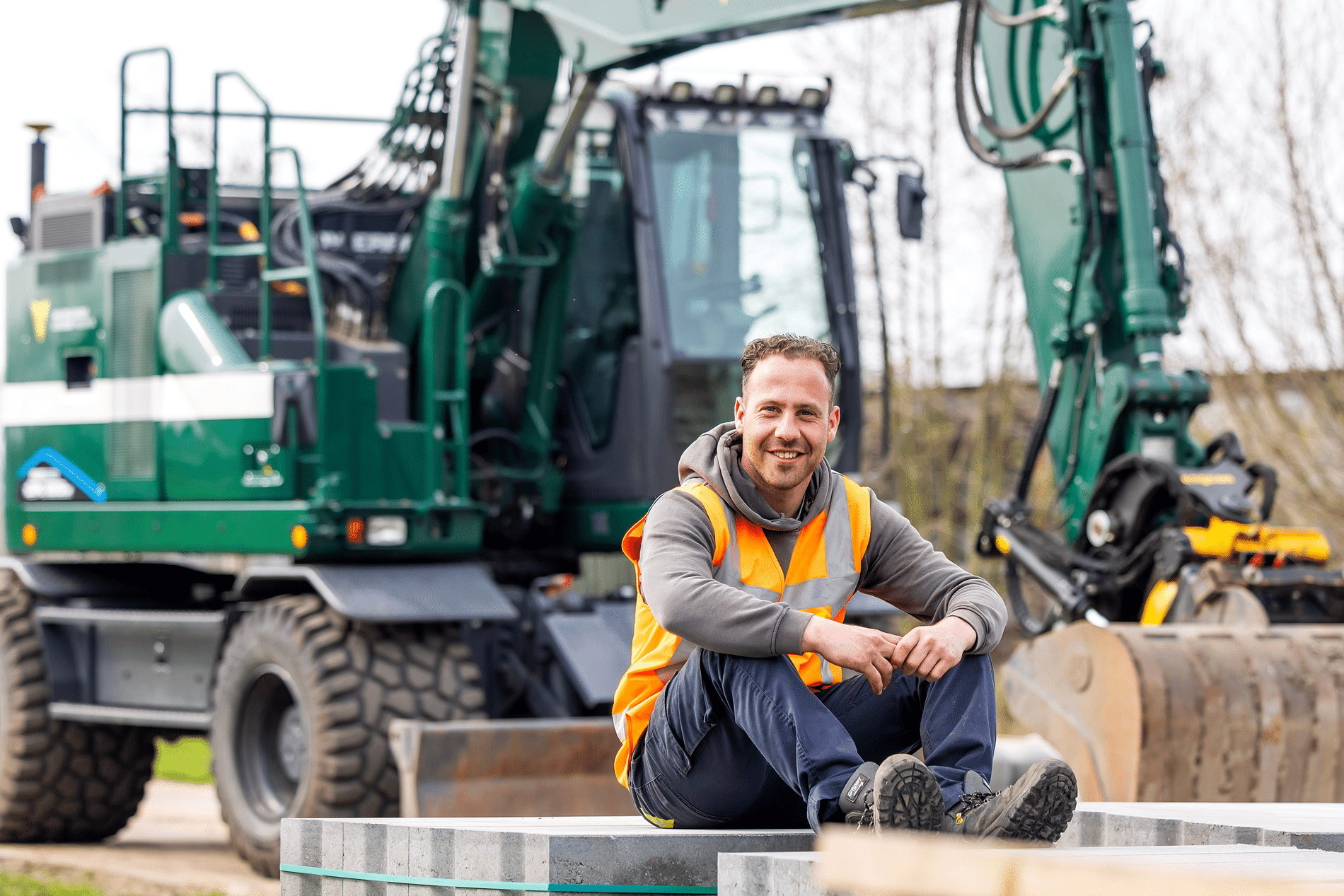
The roots of Elshout & De Bont go back well before the company was acquired by Muijs and his brother-in-law, Frans de Bont, in 2002. The name was deliberately retained. “I never considered changing the name,” says Muijs. “It’s part of the company’s identity.”
After the sudden death of Frans de Bont in 2021, the responsibility fell entirely on Muijs, but he says de Bont’s presence is still felt within the company. What stands out is the loyalty of the employees. Tenures of forty to fifty years are not uncommon. At the same time, the company is actively working to bring in younger talent. “We have a lot of young people, interns, and apprentices. You also have to work toward the future,” says Muijs.
That vision for the future extends not only to the workforce but also to how the company positions itself vis-à-vis clients and the community. Projects are routinely evaluated with clients and score an average of between 8.5 and 9. “Every project we complete is an invitation to take on the next one,” says Muijs.
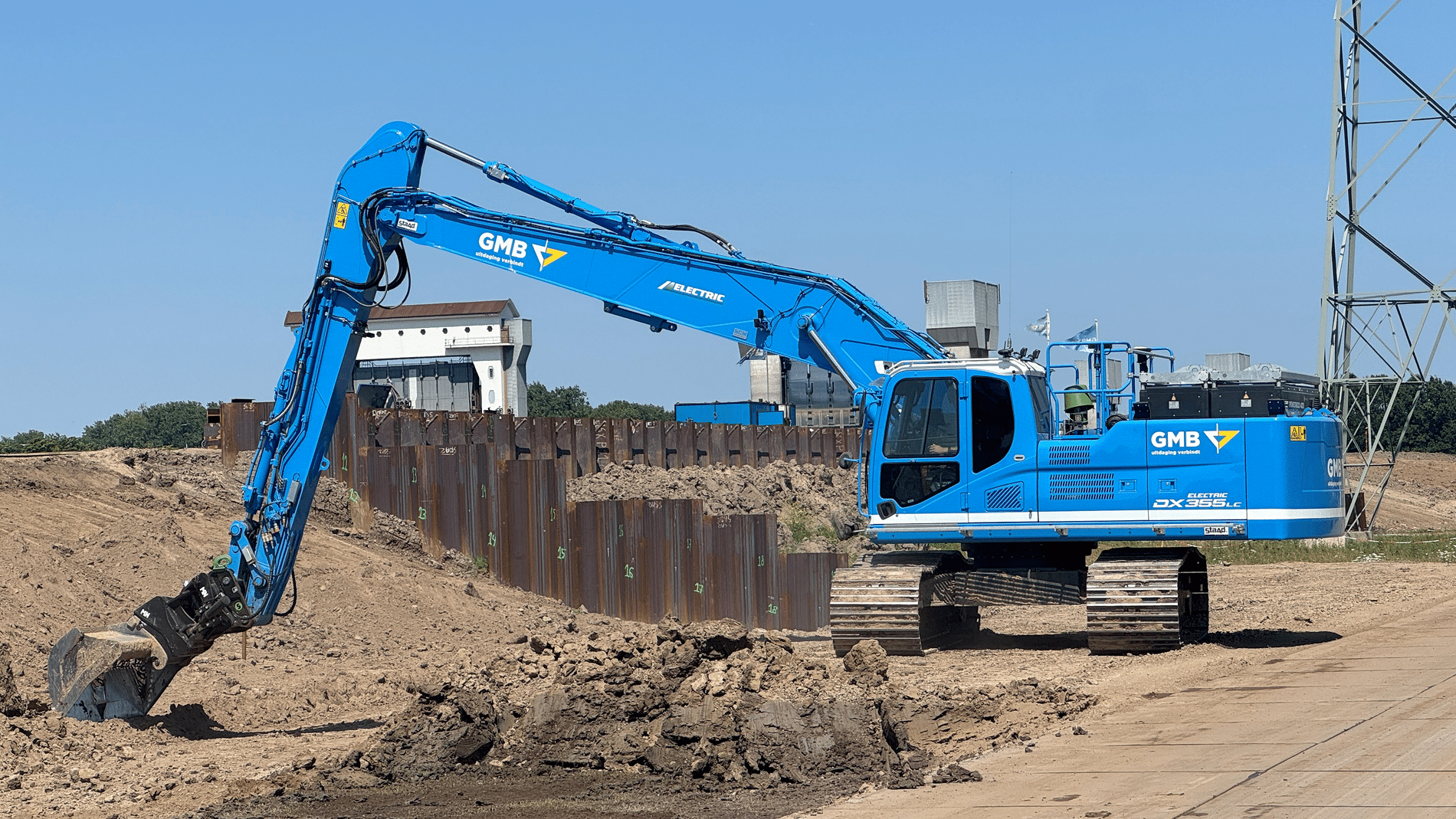
For Elshout & De Bont, the move toward electric equipment didn’t come out of the blue. The company began by electrifying smaller earth-moving machines, such as mini-excavators and articulated loaders. They now also operate two electric mobile excavators, including one that has been converted and one that is brand-new and factory-built electric.
According to Muijs, the motivation is twofold. “You run a business based on what the market demands, but also on principles. Everyone can see that something needs to be done in the world. At the same time, you have to be able to recoup your investment.”
That economic reality plays a significant role. Electric earth-moving machines require higher investments, while clients are not always willing to fully offset those costs. Nevertheless, Muijs observes that the business case is slowly improving, partly due to notional discounts in tenders and projects that explicitly require zero-emission operations.
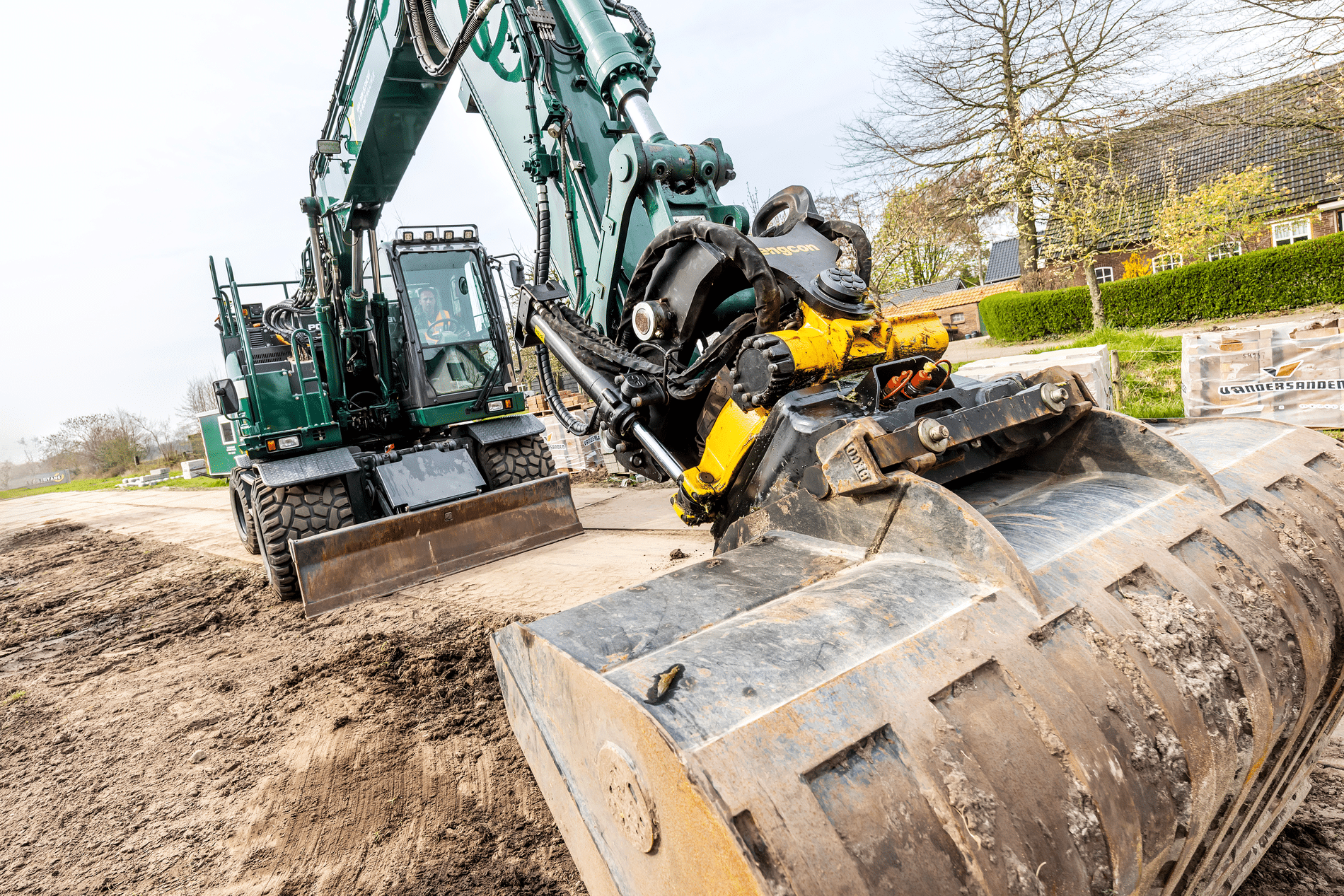
The electric mobile excavator, a DX165W Electric from Staad, is now being used on various projects. These often involve work in inner-city areas or nature conservation projects where emission requirements apply. “The first project was in a nature reserve where emission-free operation was required. After that, it was used in downtown Breda, as well as at several other locations where clients were willing to pay the extra cost for a more expensive emission-free crane,” says Muijs.
Train operator Joris Heesbeen is now working with the DX165W Electric and experiences the differences compared to conventional rolling stock on a daily basis. Although it took some getting used to—especially the charging and planning—the overall experience has been positive. For Heesbeen, this meant a clear shift in his daily work—not so much in operating the excavator itself, but especially in everything surrounding it. “The operation itself isn’t even the biggest difference,” he says. “But you have to constantly think ahead. You simply need a charging station. That determines your day.”
That reliance on electricity makes the work less straightforward than with a diesel engine. Whereas you’d normally just keep working without a second thought, working with electric equipment requires planning. “You can’t just decide on the spot, ”I’ll keep working for another hour.’ You have to know where you’re going to charge the machine and whether that’s actually possible. It’s definitely different.”
According to Heesbeen, you get used to it quickly, but it requires discipline. “You do become more aware of it. You start to view your workday differently. Because even though we can easily get through an entire workday with a fully charged mobile crane, you still have to keep an eye on where and when you can recharge it.”
At the same time, he sees clear advantages. The absence of engine noise, in particular, changes the work environment. “It’s just much quieter. You can hear better what’s going on around you. That makes for a more pleasant working experience,” he says. The immediate responsiveness of the electric drive is also striking. “It picks up speed right away. It just drives well.” On projects in inner-city areas or sensitive environments, that makes all the difference. Less noise and zero emissions mean less disruption—something clients are increasingly appreciating.
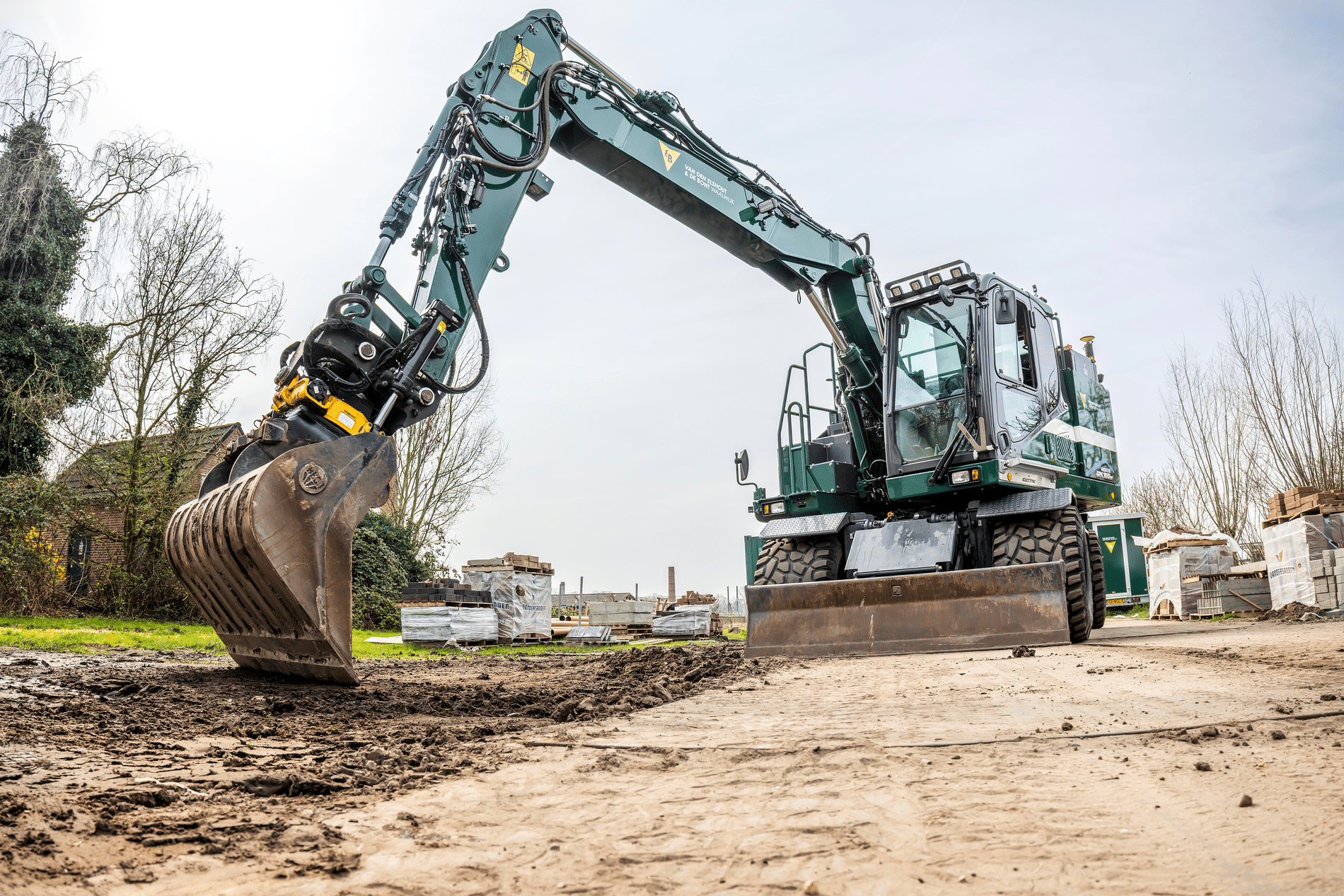
The biggest challenge isn’t the earth-moving machines themselves, but the power supply. Many projects lack sufficient charging capacity. “Every time, you have to figure out where you can charge. Often that’s at a nearby farm or business. Sometimes it works out well, and sometimes it doesn’t,” says Muijs.
Elshout & De Bont plans to continue its electrification efforts in the coming years in close collaboration with the specialists at Staad. The goal is to have approximately one-third of its machinery electrified by around 2027.
Electrification is not an isolated effort. Investments are also being made at the business site to improve sustainability, such as insulation and landscaping, with plans to eventually phase out natural gas.
”Still, the core of the company remains unchanged: delivering quality, responding quickly to clients, and investing in people. For Elshout & De Bont, the real joy lies in working together: collaborating as a close-knit team on projects that everyone feels responsible for, both today and with an eye toward the future."