[00:02] Introduction of the episode
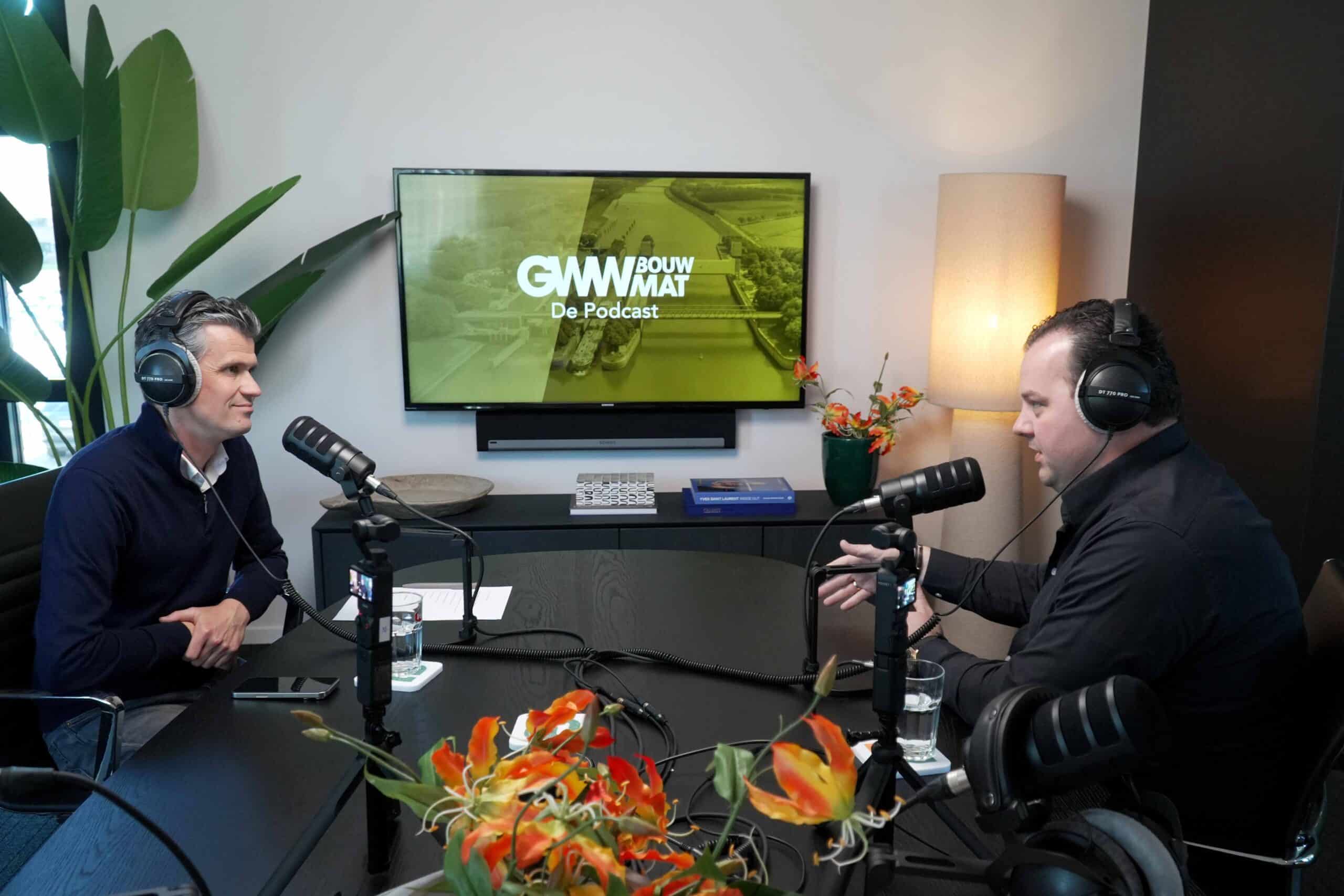
Roel van Gils: Welcome to yet another episode of GWW Bouwmat, the podcast. Today we dive deeper into the world that you may not think about every day, but that literally keeps everything running. Yes, because without pumps no construction site, no agriculture, no industry and not even amusement parks, apparently. Anyway, here we have someone at the table who knows all about it. John, welcome.
John van Tongeren: Thank you.
[00:23] Introducing the guest
Roel van Gils: Please introduce yourself.
John van Tongeren: I am John van Tongeren, 42 years young, married, two children, living in beautiful Phase.
[00:34] Explanation of the company and activities
Roel van Gils: Look at that, now of course we're all curious, but what do you do?
John van Tongeren: I am the owner of Van Tongeren Trading. And with Van Tongeren Trading, we trade water pumps, in the broadest sense, and related items, pipes, hoses, front or back. We buy that worldwide, mostly used. When we bring it back to Apeldoorn, we recondition or overhaul it, depending on what is possible and necessary.
Roel van Gils: And then we're going to find a new place for it somewhere in the world. Look at that. And you've been doing that since 2009 I understood? Yes. And what was the reason you started your company?
John van Tongeren: Well at that time I was working in the automotive industry. And during those years things weren't going so well in the automotive industry. And well you were actually kindly asked to look around you say. That's how bad things were going in the automotive. And there I took advantage of an arrangement that I could quit. Then I actually started for myself. Still based on the network I had in automotive. So say 80-90% commercial vehicle sales and 10% pumps and related items. I gradually converted that to 99% pumps and related items in 2-3 years.
[01:51] Background and affinity for pumping
Roel van Gils: You had an affinity with that market, the pumps?
John van Tongeren: Yes, absolutely. I was born and raised in a family of well drillers and augers. So from a young age, I crawled among the pumps and the pipes and the hoses, so to speak. Yes. No, my grandfather started over 75 years ago now. The company was taken over by my father and his cousins and eventually my brother took that over, but I walked in that, so to speak. And inherited the concept of a pump and everything from an early age.
[02:24] Gap in market and second life for pumps
Roel van Gils: Yes, because what were you thinking in the market of here's a hole, here's a hole in the market, here's where I dive in.
John van Tongeren: You see it's often overestimated what these machines cost.
Roel van Gils: Well, tell me.
John van Tongeren: Overestimated, maybe underestimated. And I think, yes, the life cycle of a pump is incredibly long. So I think, there really is possibility to give such a machine a second life. And there really wasn't. And by the manufacturers, the used was kind of added on. There weren't very hot sales of it either, sweet and new, I get that too. But there wasn't? No, there really wasn't.
[03:07] Difference with regular merchants
John van Tongeren: There were some universal construction equipment dealers who did some on the side. But they did that purely based on in a sale, not knowing what they had or yet what they were selling, let alone what
Roel van Gils: deserved. So also let alone reliability say
John van Tongeren: that lies people everywhere then when I usually come to a pump and then not to speak badly about you but average construction equipment dealer say he does it then he says he does because the motor is running that of course says nothing about the operation of the pump yes and nothing disadvantages of those people we belong it will be some good faith go but I want to say to an outsider a pump is a pump yes but that's not quite true, so to speak. You have so terribly many applicabilities, which then again specific types of pumps belong and match, that it's not just selling. It is also a piece of advice and a piece of talking to the potential customer about what is your problem.
[04:06] Sales versus rentals
Roel van Gils: Yes, because you mention sales. You guys do exclusively sales or also rentals?
John van Tongeren: No, some training we do exclusively sales. That's because a lot of our customers are rental companies. And to put it popularly, I don't want to soil my own nest. So their are good at that and we are good at their selling.
[04:22] Brand independent working
Roel van Gils: Yes, okay. And what makes you different from other parties?
John van Tongeren: Well, it depends a little bit on what you want to compare with other parties. But we are, and I always like to say, the Switzerland of the market, because we are completely brand neutral. We are not a dealer of any brand. We absolutely do not aspire to that either. But actually we can say that we cooperate with all the progressive pump brands in the world. Whereby we are not trying to sell a customer a specific product. Or trying a specific brand. But trying the best fitting solution to his problem.
[05:41] Comparison with automotive
John van Tongeren: And a little bit, I always like to mirror the automotive. You can go to the Volkswagen dealer for your used car. Who will at all times do the best in your Volkswagen. Whereas maybe for your mobility problem, an Audi is a much better solution. That is why there is always a right to exist in the automotive, even for the universal car company. They will always do their best to help you.
Roel van Gils: An appropriate solution.
John van Tongeren: Moving a good possible matching mobility solution from a stationary brand.
[05:41] Quality control and testing
Roel van Gils: You just mentioned Switzerland, is a brand independent, but at least Switzerland also stands for
John van Tongeren: precision, quality. That's why it is. And what we do, every machine that comes in to us, whether it's a week old or 20 years old, goes into our workshop. We're going to check it, optically check it and we have our own testing capabilities where we can run a test as best we can of gosh what is that pump going to experience in its working life? We document that and then we're going to look at gosh, what does the factory say it should actually be able to do?
Roel van Gils: When he was new?
John van Tongeren: When he was new. There's always some kind of degradation in that, of course. Am I going to make the metaphor again, make the comparison to automotive. When you probably bought your car, the salesman said it runs 1 in 22. He probably would too if there were no mirror bicycle tires on it in a wind tunnel and then another cough of wind
Roel van Gils: in the back have yes ideal conditions so yes that is at the pumps works there is no different
John van Tongeren: they're always kind of something in it of you come back to what can you expect when a machine is used what it's not new anymore but we have to make sure that a good working machine goes out at our door and in our case it doesn't matter if it goes to Poland, Peru, America or Portugal. Because the world has become very big because of the Internet, but it has also become very small. So the idea of well he has crossed the border, we don't hear or see that customer anymore, that is really a thing of the past. And those people are also willing to spend money, but they also want a bit of quality in return.
[07:29] Selecting the right pump
Roel van Gils: But how do you actually select the right pump? Because you say yourself there are so many pumps, so many different purposes, so many pumps. How do you select them?
John van Tongeren: Well, it actually starts the other way around. For us, the most important thing is, we obviously get multiple emails and requests every day of gosh what does that machine cost or. And actually it's the other way around. We always try to call directly to the person who sends us the inquiry. Tell us first what is your problem. Because it just requires a completely different solution whether you want to lower your groundwater through a well bore or you want to empty a sewer system. Maybe you want to irrigate a farm. So that requires different technology as well. So we need to know what the problem is first.
[08:08] Type of clients and specialization
Roel van Gils: But for a landlord, of course, that's broad.
John van Tongeren: Yes, but a pump rental company is also usually specialized. There are all-round construction machine rental companies that do have some pumps with them. But once things get a little complicated, they tend to be specialized pump rental companies. Those have such a wide arsenal of machines, they can always get into that. They also report to us and they often know more than we do. I'm not ashamed of that. So they do say that model, that type, do you have that on stand yes or no?
Roel van Gils: Yes, but well and then?
John van Tongeren: Then he is, if it goes through, he is with us all set.
[08:48] Stock and preparation
Roel van Gils: Oh, that one is ready too? Before that one comes online?
John van Tongeren: Or before that is available. With a certain routing, before it's online, then it's already been through the workshop, then it's been prepared optically, it's been prepared technically. Honesty, I also want to say again that that doesn't always go one on one, because we sometimes have that we have to wait a little bit longer, for example, when we have a part and if the valve cap hasn't come in yet then that's fine with me but then it just goes on the Internet.
Roel van Gils: Yes, I understand.
John van Tongeren: But usually you can assume if you're on the Internet that the issue is call, agree, pay and it can be picked up.
[09:16] Numbers and team
Roel van Gils: Well and I understood that you guys do about five to seven hundred pumps a year
John van Tongeren: yes those do go through yes so it's not always singles we also do larger numbers or sets or packages that go through at once we buy in and we sell them separately individually or sometimes like that so yes we do get those numbers
Roel van Gils: So do you have such a large stock
John van Tongeren: not continuously on those numbers in stock usually we have around 100 to 150
Roel van Gils: Yes and you also do that with a fairly compact team anyway
John van Tongeren: yes we do it with six people
Roel van Gils: So that's efficient
John van Tongeren: yes I would also like to keep it that way but they are very good people that makes a difference
[10:09] International commitment and examples
Roel van Gils: Okay, great. You just said indeed the pumps really do end up everywhere from banana plantations in Suriname to mines in Africa I understood and even Euro Disney. How is that possible?
John van Tongeren: Well of course Euro Disney is a great story. Euro Disney they were then cleaning up not even really remediating such a big lake where I think that Mississippi boat goes around. And we have stock then and that was an acute problem. And so the request came in of gosh that and that machine are we looking for now has it existed you have existed can it come to Paris tonight? Yes it can still come to Paris tonight.
Roel van Gils: Seriously? And what was the problem then?
John van Tongeren: Well a current machine, it could only happen in the evening because during the day of course were the tourists, the visitors to the park so it could only happen in the evening. Well they had a certain schedule for that and they just couldn't wait for other machines.
Roel van Gils: Yes yes and in Holland there was one.
John van Tongeren: There was one in Holland. And I don't know exactly but about six or seven hours later it was standing neatly.
[11:01] Strength in international trade
Roel van Gils: Because what makes you so suitable for that international trade then? What's in that?
John van Tongeren: A because we have a lot of stock. B because we have the knowledge in-house. So we can often think very specifically with the customer of what is your problem. We have the stock, we are logistically well versed. We can basically have own transport service. And otherwise we have good contacts within the transportation world. We've done it all once. So whether such a machine has to go on a plane or on a boat or on a train is nothing new to us. And we have good parties with whom we work so that we can switch quickly and arrange things quickly. And fortunately there are six of us, but all six of us are still like, yes, if it has to be done, it has to be done, so that's what we're going to do.
Roel van Gils: So then you go for it. Yes. But you don't forget to close the door then.
John van Tongeren: No. It doesn't really suit our customers either so to speak.
[11:48] Work rhythm and customer behavior
Roel van Gils: It gets busy with us from four o'clock in the afternoon.
John van Tongeren: Seriously? Yes. Many of our customers are somewhat smaller SMEs. They've been working all day, they've run into a problem. At four o'clock they are sitting in the car on their way home and think, maybe I should have a pump. And they call and they can keep calling. Oh that's not a complaining snake this. And then the calling and emailing begins so to speak. The same counts for eight-thirty say. I'm usually on the case by 6:30 and then the calling and mailing starts. Those guys are then on their way to their job or on their way to their business and then the review passes in their minds. Then calls are made and then things also just go very quickly and we can do that too.
Roel van Gils: Well beautiful.
[12:37] Trends in the market
Roel van Gils: And if we zoom out a little bit back what are the biggest trends you see in your sector in terms of pumping then say?
John van Tongeren: What we see is that because there is a lot of work in infra-related work that people do tend to be more inclined in the Netherlands to buy such a machine themselves and no longer rent it. And especially in the four-inch or six-inch segment. We want to have the thing ourselves. We see that happening.
Roel van Gils: And then it also stands still more often perhaps.
John van Tongeren: Yes but at the moment it's a bit of a big voltage curve how far can you see into a crystal ball but if you're in the infra work now in the pipes the cables and the conduits
Roel van Gils: then some may still happen of course
John van Tongeren: yes that's why so I wouldn't let fear rule you too much and assume he's out more that he's stationary
Roel van Gils: yes I understand
[13:35] Electrification and innovation
John van Tongeren: And we obviously get a lot of questions about electrification whether or not battery packs whether or not hydrogen yes we get a lot of questions about that
Roel van Gils: Questions about or also action
John van Tongeren: No electric is not new to us we have the electric which will since the 50's that they always hobbled along producing the traditional internal combustion engine always electric is that not new no battery packs like hydrogen that is of course all fairly new there are just a lot of questions about that and it will be sold by the manufacturer of new actually
Roel van Gils: Yes, but at your premises those
John van Tongeren: No, there are still such amounts being asked for that I am very quick to say just do a traditional electric one and the final client who has to make sure there is power or then there is a generator down the road and how they do it then they do it
[14:47] Sustainability and reuse
Roel van Gils: Yes but well if you are talking about sustainability then of course reuse is
John van Tongeren: Yes it's a nice way of being circular if they buy a used machine yes that's why and we can do that with us we can also make improvements to it if required because it's often more traditional engines but we can through monitor or telemetry adjust some improvements to it that will make it run more efficiently
[15:39] Smart systems and monitoring
John van Tongeren: A very simple example a timer that the pump doesn't run 24 hours but that it comes on at 5 in the morning because we go to work at 7 and two hours during and from click to eight in the place yes until the whole systems that we can have it proof speak from your iPhone on and off yes that is possible so
Roel van Gils: Yes yes yes yes
John van Tongeren: So yes, you are indeed making the bridge to smart systems monitoring we already see a lot of demand for that and it makes a little bit of customer and type of customer and how interested they are in their machinery or company that it really is a thing and on the other hand there are also people who are not concerned with that at all
Roel van Gils: Yes and that question depends on the application
[16:16] Demand for used pumps
Roel van Gils: And do you also notice that the demand is actually increasing for used pumps as you only do used pumps, of course?
John van Tongeren: Yes that demand is increasing we also sell new but usually it is used and that demand is only increasing and I think that A has to do with the level of investment for some machines that it is just financially interesting to buy a used machine and B is just speed producers are usually at decent delivery times for not everyone to fill what you think is decent but an x number of weeks you are just waiting for your new machine if not months and often in the wonderful world of water it is so that the problem was yesterday and they want the solution today
[17:01] Failures and use
Roel van Gils: Is there also often a call when there is a malfunction or something a pump fails or something like that
John van Tongeren: Yes of course people call and I also always prefer that I always say I'd rather you call me angry than stay away angry because then I can do something what we do see that 9 out of 10 breakdowns come from human actions and are not in the machine but I think that's inherent in how we're all socially set up now we also very often just get the phone it doesn't work and then you go and ask a little bit more and then you say yes but it's convenient at some point that you put the diesel in
Roel van Gils: Or that you plug in yes unbelievable
[18:00] Warranty and responsibility
Roel van Gils: What is the life expectancy of those pumps do you also provide warranty
John van Tongeren: Well, basically we don't give a warranty, that's very strange to say, but that's because we simply aren't responsible for what the customer is going to do with it and a lot of failures are the result of human error if you buy a machine from me for let's say 15,000 euros and tomorrow it's running and the bearings are flying around your ears, yes then we really do have to have a conversation with each other which I really understand completely and we really don't avoid that conversation only I can't describe it any other way than that it is the starting point from which you buy what you see and you have to have a relaxed trust that it will be alright and it will be alright and it will stay that way I'd rather that you call me angrily than that you come
[19:14] Importance of speed
Roel van Gils: And how important is that speed
John van Tongeren: It's very important that our customers have a problem yesterday and want a solution today, so they just want it delivered quickly, especially when it comes to groundwater, which often comes completely unexpected or has been going well for weeks while we're recording this podcast. you think there's nothing going on it's just going to rain for two days and then you need boots and a pump that's why we're here now of course because otherwise I couldn't be here and if it dries up really well then we need pumps again then we're going to pump it the other way so that we don't really benefit from this bad weather
[20:54] Anecdote and transportation
John van Tongeren: We once had to deliver pumps in an African country to a gold mining company and someone called and drove up without an appointment and made a terribly nice order and got three very nice machines out of it, very happy with it and financially finished the whole thing within a few days, all fantastic, he called up and said, "Yeah, but the boat takes too long, can you deliver them to Liege?" and said, "There's an airport that's only for goods transport, so they can take a plane, of course we can take care of it for you, no problem. we do documents before that all arranged the machine cleaned nicely we have done everything the best man called I have one more question for you can you drive via Maastricht I said if we go to Liege then we come via Maastricht that is not so very exciting nice he said because that is where I bought my Ferrari I would also like to have it on the plane and that was just enough room well I said you can call someone else to put it on the low loader with us it seems a bit too much of a good thing
Roel van Gils: Yes but yes these things happen
[22:23] Procurement of pumps
Roel van Gils: Hey, but you guys also buy pumps right? Roel: Yeah. Can people come forward?
John van Tongeren: Yes yes yes yes yes yes.
Roel van Gils: Is that also important?
John van Tongeren: You can sign up through our website that you have a pump to sell. Then you can upload some pictures and give a description. Usually then we contact you right away. And then we'll tell you if we're not interested or yes, we are interested. Then there's also a roadmap on how to do that. If you're a new client for us, I'm happy to go. Then they screen, well no not screen, but I do like a little bit of personal contact. So then I often get in the car or on a plane. Then we take a look at what it is and who are we doing business with. And then we finalize that nicely. For sales payment in advance, so we also pay in advance when we buy. And then we take care of transportation there as well. Then it's brought neatly neatly into the Netherlands. Because why
Roel van Gils: So that's an important part of you too, purchasing pumps. At least, if you don't buy in, those sales can't either. That's true. But there are also a lot of machines sitting unused.
John van Tongeren: Yes, at ex-trade we do machines with us because that's where the relationship is. There is no right or wrong towards a manufacturer or towards one. That relationship is right there with us. And also for that, we like to have a stock. And it also happens sometimes that manufacturers call and say, hey, we've had a cancellation. Or we have - you don't see the latter as much, but we have some overcapacity. Yes, nice.
[24:11] Maintenance and service
John van Tongeren: Yes, in principle every customer who has bought a machine from us can say we will do the maintenance or repair for preferably the question is always can you do that on location yes that is possible I am a bit cautious about it because we often can't do that much on location you always have you can have such a big service van but you always have the wrong parts with you yes pumps are often big in terms of weight heavy so you do have transport issues of course everywhere again
Roel van Gils: With transport
John van Tongeren: With transport so preferably we just have the machine with us then we can also test it right away because then we can test it again at that capacity that power test as it should so we prefer to have it with us and then we just repair and give service for third parties as we call it and then that's no problem at all can we do that in all brands as well
Roel van Gils: Also though brand independent and in terms of parts you get on you have in stock or those
John van Tongeren: exist or what it the fast runners have all in stock and the rest we'll make sure it gets there
[25:30] Maintenance and knowledge
Roel van Gils: Yes so yes yes the buyer is taken care of like that too
John van Tongeren: Yes yes yes yes yes yes yes so it is true yes we can completely unburden the customers in
Roel van Gils: Well beautiful
John van Tongeren: And customers also like to be unburdened I notice in recent years
Roel van Gils: In this area or at all
John van Tongeren: Yes in this area we notice that we are getting more and more maintenance and repair A then there will come that we are doing something right and B often in the excavation and hydraulic engineering company I name it then says well we can do maintenance maintenance we do it ourselves well totally fantastic and then they indeed come to the engine goes perfect oil change and fuel filter goes perfect and then there comes down specific knowledge of the pump and then it stops yes so we also do a lot of maintenance repair in consultation with the customer or customer that there is a certain workshop mechanic or workshop service that tells us what we have to do to that pump or we provide the right documentation and we give tips and tricks for you think about that if you have that machine we know from experience after so many hours this comes down or the work you do with it not everybody pumps water
[26:28] Media and use
Roel van Gils: Oh yes that's another good one because yes so we just know for you that you have to have that and that medium so we just know that and that in terms of is there maintenance or wear and tear coming up well but name a few examples other than water
John van Tongeren: Yes very topical of course in the infra burners is the bentonite when directed drilling and that is a that is a that is a very nasty substance to pump and that can be done fantastically with some pumps only it becomes very important that you clean that very well when you are done the
Roel van Gils: pump flushing actually and that little happens or that well speed again of course or forgetting too smoothly
John van Tongeren: It's always easier to point out someone else's failures 9 times out of 10 it will be done right only that 1 time that doesn't happen right then it does go wrong at a pump right away and then they call and that's okay they should just keep doing that too
[28:07] Collaboration and market
Roel van Gils: But then you have to go to location of course but I kind of
John van Tongeren: No usually you just pick it up because we can do so much more and faster in the workshop than we can on location and then for us the advantage and the disadvantage of a small team is that means that we really especially in such a sent bore where there is quite simply time pressure on it proverbially let everything fall out of your hands and make sure the machine gets back on its legs
Roel van Gils: Yes you can
John van Tongeren: And another medium what else goes through it we of course have brackish water we have salt water we have fresh water we have sewage we ourselves don't do that much in the industrial branch but there are also all kinds of liquids to think of with a certain pH value that a pump finds something of after a certain period of time and of course that also falls a bit with how do you deal with your maintenance
Roel van Gils: When you talk about maintenance do you also have contact with pump manufacturers
John van Tongeren: Yes and we generally have a very good relationship with all of them so we can also go there for our questions we also don't know everything we know a lot but we don't know everything but we actually always have a good cooperation with them
Roel van Gils: Yes I understand it is a nice market to act in though
John van Tongeren: No yes well no we're not bothered that it's a cock market or a certain jealousy among ourselves that's all pretty relaxed actually
[28:46] Advice to listeners
Roel van Gils: Well fine beautiful and if you can give one more tip or one piece of advice to the listeners what would that be
John van Tongeren: Always buy from us no that's fair
Roel van Gils: Yes that is fair
John van Tongeren: If you can give another tip make your problem negotiable when it comes to pumps and do not just buy something because you have something in your head and think I must have something tonight because very often you buy a pump and then you think yes but that has the neighbor also I have news for you there may because he has the same casing but in that casing may be 30 different types of pumps are already first explain your problem and if we can not help you we just say that yes and that is of course a disadvantage of used we do not always have everything in stock
Roel van Gils: No I understand no and but an alternative or a something about alternative
John van Tongeren: That yes but so you also sell no yes I sell no yes yes that also happens yes I can't help that either
Roel van Gils: No I understand no and then you can't either on you it takes too long of course to look for though the right
John van Tongeren: Can but usually we then try with a customer for look suppose you are looking for the pump x and then you say boy but that is such a specific machine that you only need for this project yes but I can't rent it anywhere yes but where has he we have a very large file of people who have such a machine and I will in fact call around for fifteen minutes and then often I get a customer who has bought it in the past and say yes he has been standing still with me for a year I don't want to come back of course I have to come back too okay so and then we try to make a bridge or the one says yes he is standing still but I don't want to sell it yet don't you want to rent it to Pietje or Karel for six months fine well and then we bring those people together well fine and we like to help you try to help everybody
[31:13] Total solution and closure
Roel van Gils: Do we need to know well I understand so call contact
John van Tongeren: Yes number on yes and I still experience too often that in all enthusiasm they have bought something in the market somewhere and then they call on yes thing does not work yes thing does work thing is not suitable for this this problem this application
Roel van Gils: And so then they more or less purchased something else and deployed it again on another project that it's actually not suitable for well special and where do you then make the difference in conclusion
John van Tongeren: Well, not only do we supply pumps but also everything that is attached to the pump or that belongs after the pump, so you pump the medium out of something and then we supply the right suction hoses and we can supply these in all sizes, types and conceivable couplings as the customer thinks and we think that this is the way it should be until the medium is transported away and the medium is discharged through hoses that can be through pipes that in some cases must be through a water meter that can be digital that can be analog that can be remotely monitored yes or no that must be through a vent box that can be through a sand trap that can be all kinds of things must be possible and all those items you also supply all of them supply all of them for
Roel van Gils: So also all related things so yes yes pipes also leadership also okay and have another side branch with
John van Tongeren: The company that does have that same world aspect that is the drilling machines for drilling for water or for geothermal energy at the moment that we buy and also sell that we clean up neatly we get them ready and make sure they can get back to work neatly for the next job
Roel van Gils: That's a lot more than just pumping well nice okay thank you so much John thanks for the nice conversation and listeners thanks for listening
John van Tongeren: Yes you guys thank you and I hope my story has been clear.