Platform on civil engineering, underground infrastructure, energy, construction equipment & construction machinery
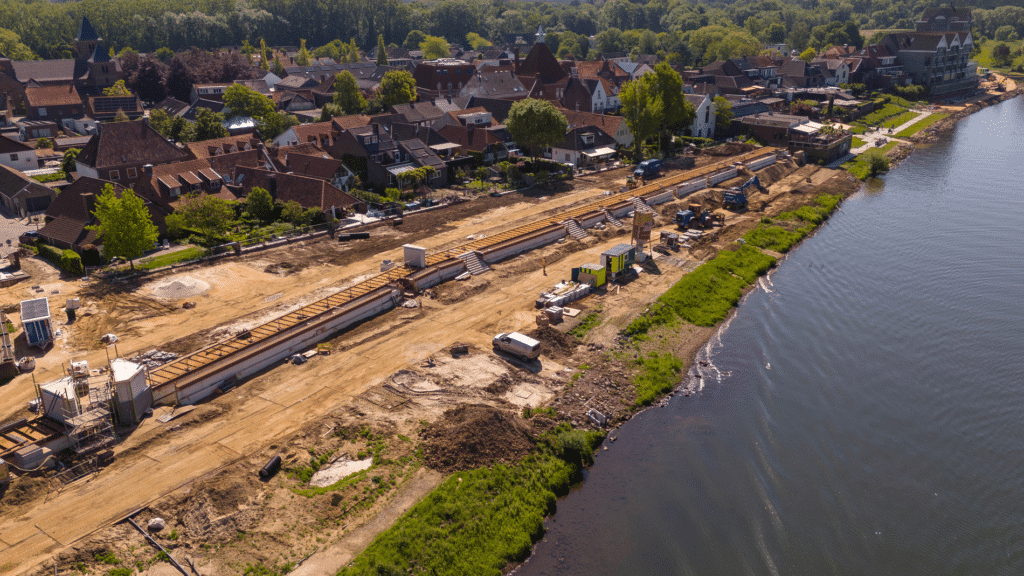
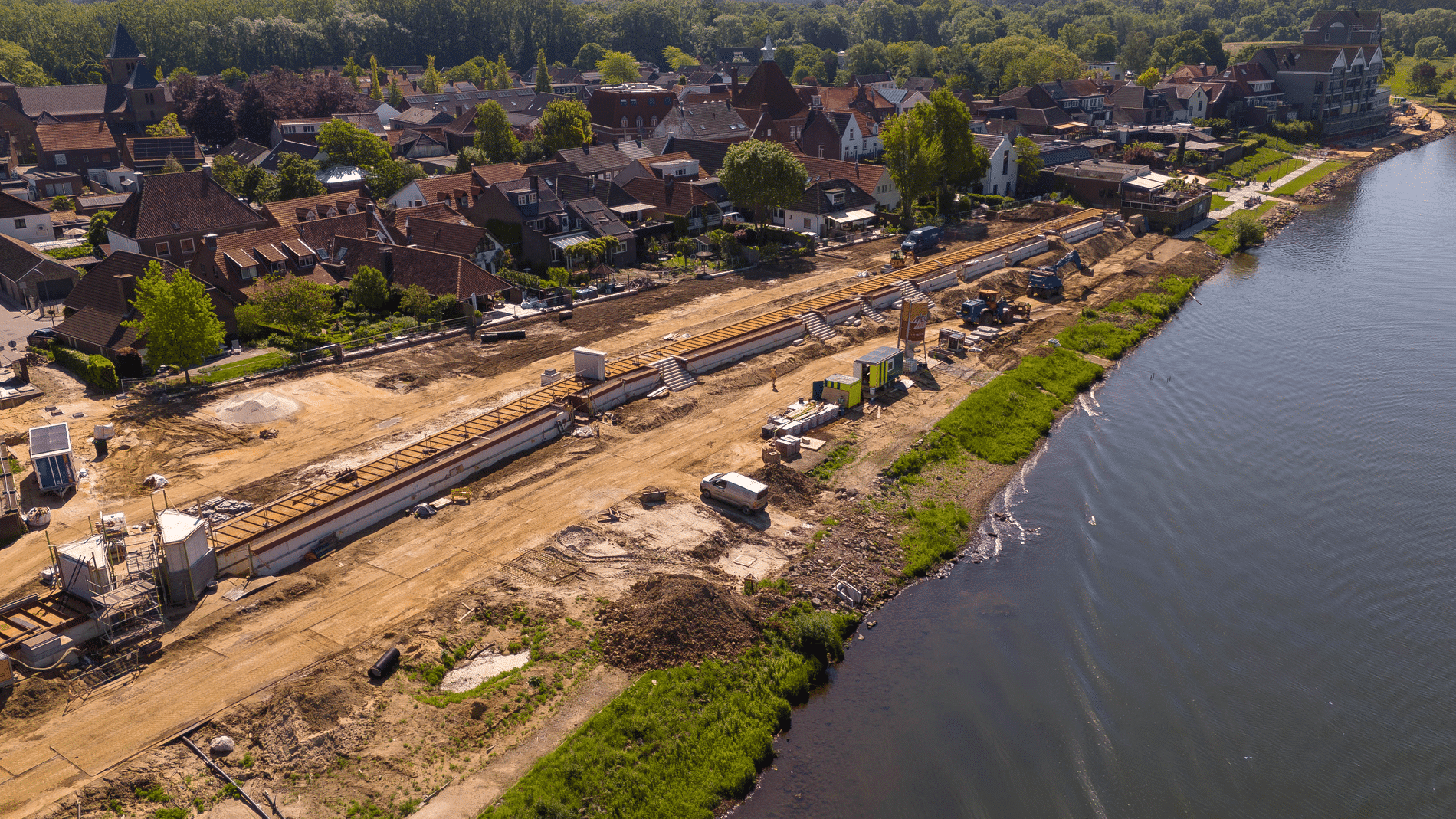
In Arcen, construction is underway on a unique hydraulic engineering project: a self-closing flood barrier nearly 600 meters long, which will eventually run right through 38 backyards. This will make Arcen home to the longest self-closing flood barrier in the Netherlands. The project is being carried out by Dijkzone Alliantie Arcen, a partnership between Ploegam, Dura Vermeer, and Hollandia Infra. They are executing this project on behalf of the Limburg Water Board. It is precisely this collaboration that is crucial in a project where, according to those involved, nothing is straightforward.
The existing flood barrier in Arcen consists of alternating green levees and hard barriers with gaps. A study revealed that several levee sections no longer met safety requirements. The main deficiencies related to height, piping, and inward stability. For this reason, a new flood barrier is being constructed over a length of 4.8 kilometers, and sections of the existing barrier are being reinforced or relocated.
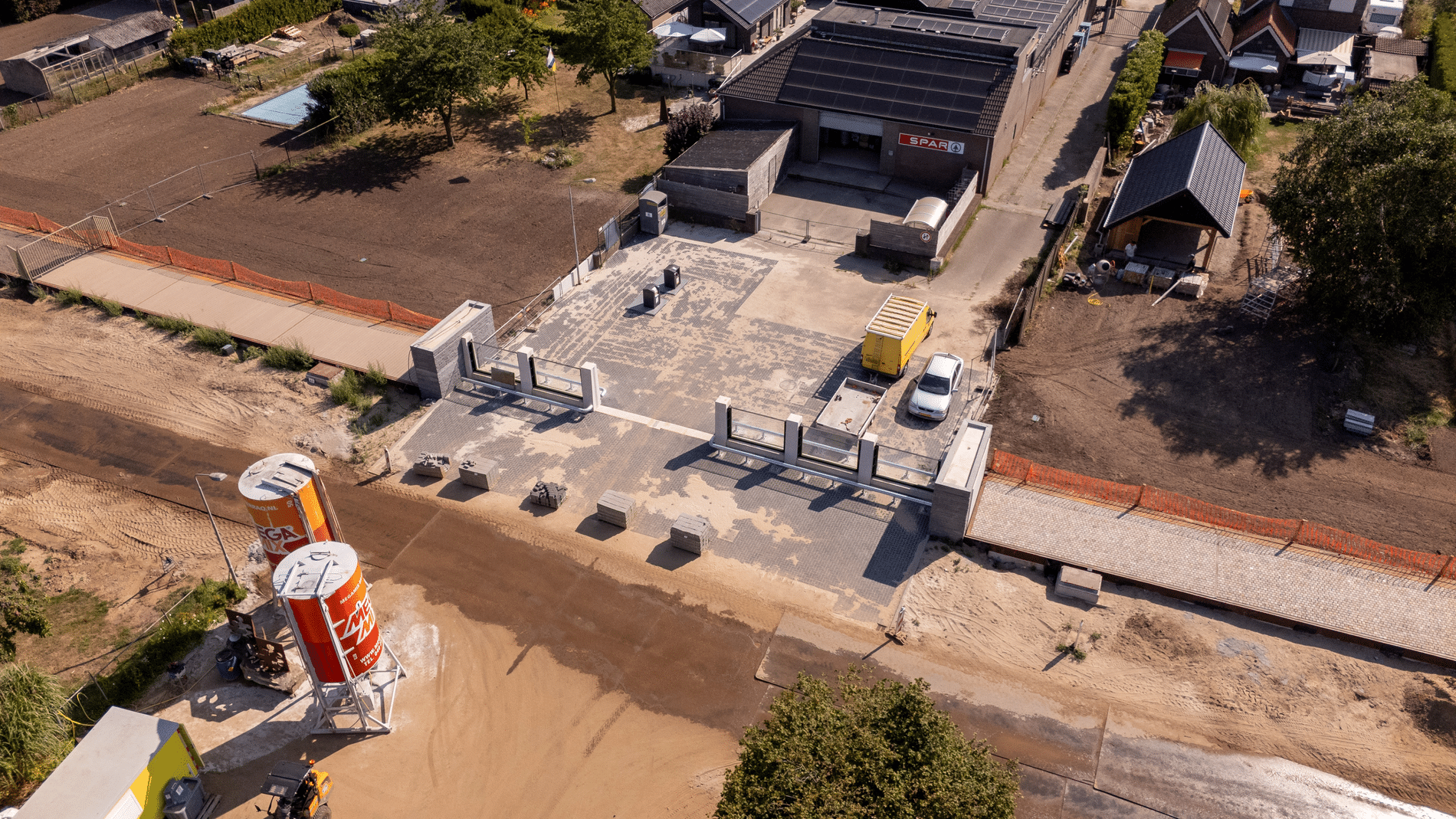
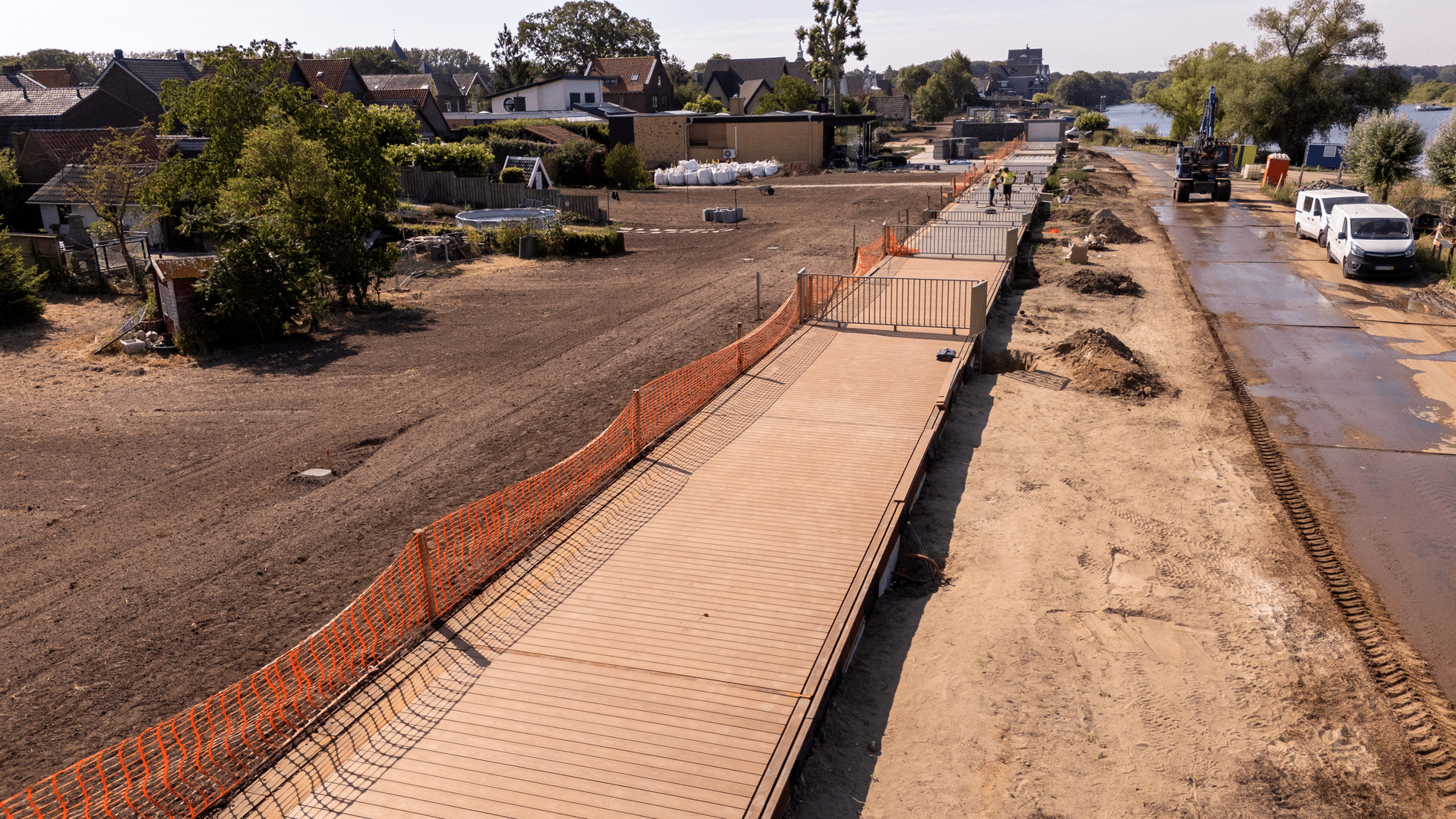
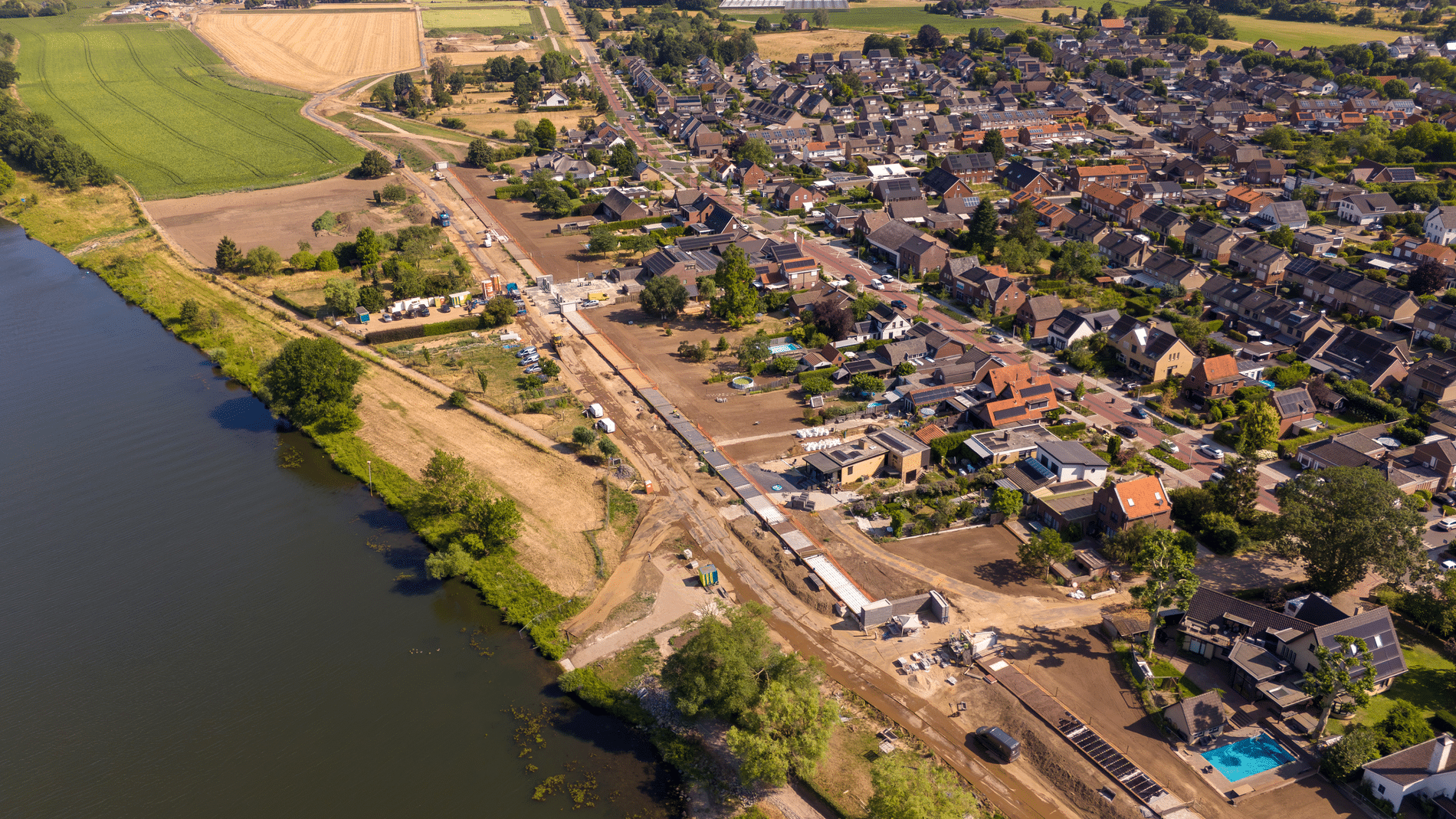
The project is divided into three areas. In Arcen-North, dikes are being relocated. Arcen-Central is largely located within a built-up area. Here, a self-closing flood barrier will be constructed over a length of approximately 590 meters, supplemented by, among other things, a glass barrier and various cut-offs. In Arcen-South, the green floodwall is being reinforced in and around the Natura 2000 area. In addition, the Lingsforterbeek stream and the area around the watermill are being addressed, and a fish passage is being constructed. The reinforcement is also linked to a so-called system measure. By relocating parts of the flood barrier, the Meuse River will have more space. This will allow water to be better contained and drained, reducing the risk of high water levels and flooding.
It is Arcen’s location in particular that makes the project technically and organizationally challenging. The new floodwall must blend in with the existing surroundings. At the Alt Arce restaurant, for example, part of the building will be demolished to make room for the new floodwall, after which the restaurant will be rebuilt around the new structure. At the La Tour Meuse apartment complex, the floodwall will be constructed in such a way that it aligns with the existing facade and balconies. The glass barrier thus serves, as it were, as a balustrade. Around the historic buildings and the old city walls as well, a design was sought that fits the character of Arcen.
This means there is no single, standardized solution being rolled out over 4.8 kilometers. The flood barrier constantly adapts to its surroundings. This requires not only technical customization but also extensive coordination with residents and other stakeholders. “The entire project is custom-designed. Nothing is straightforward,” says Dennis Hageman, civil engineering manager at Dura Vermeer. “It has been integrated and adapted to the surroundings and the wishes of residents.”
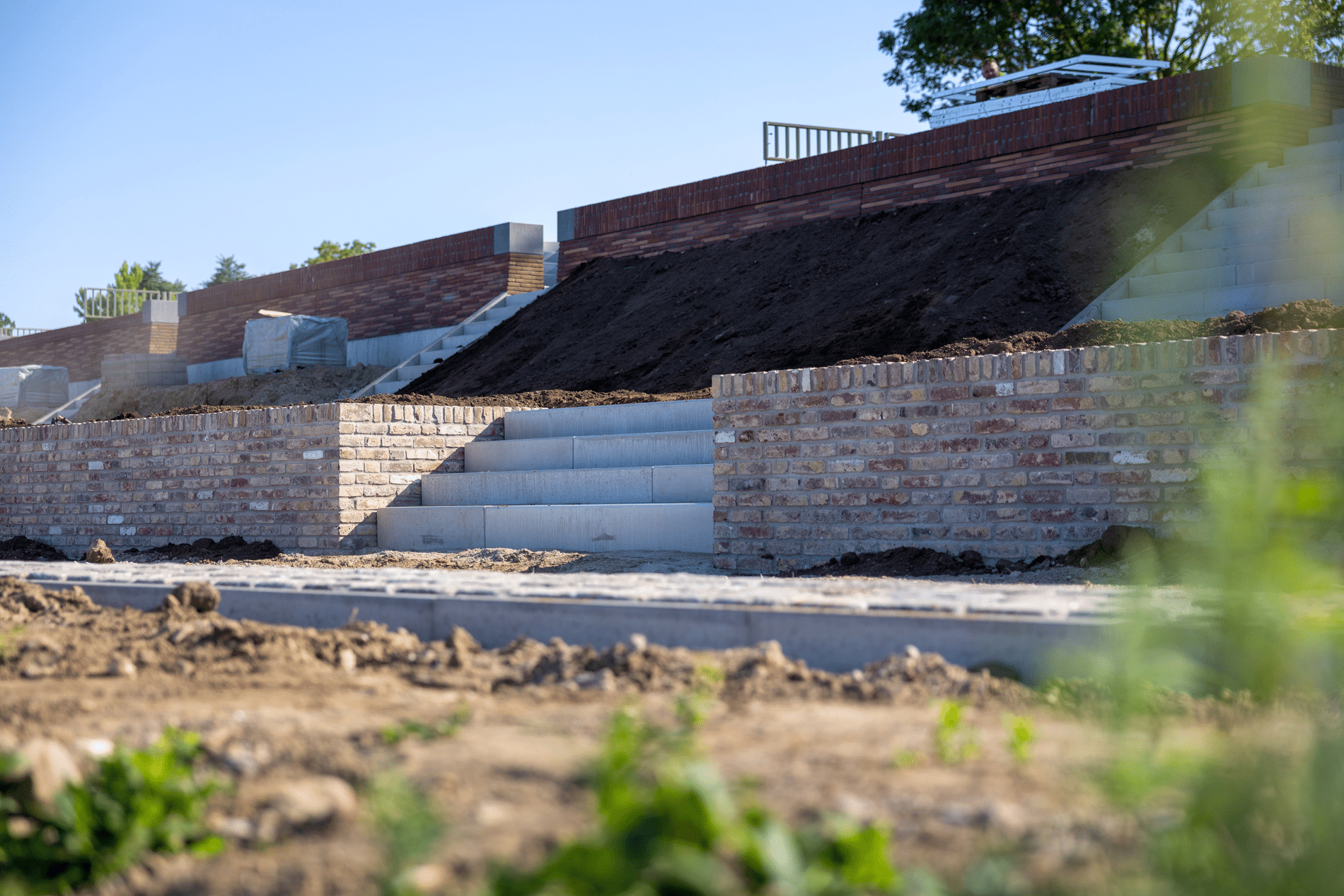
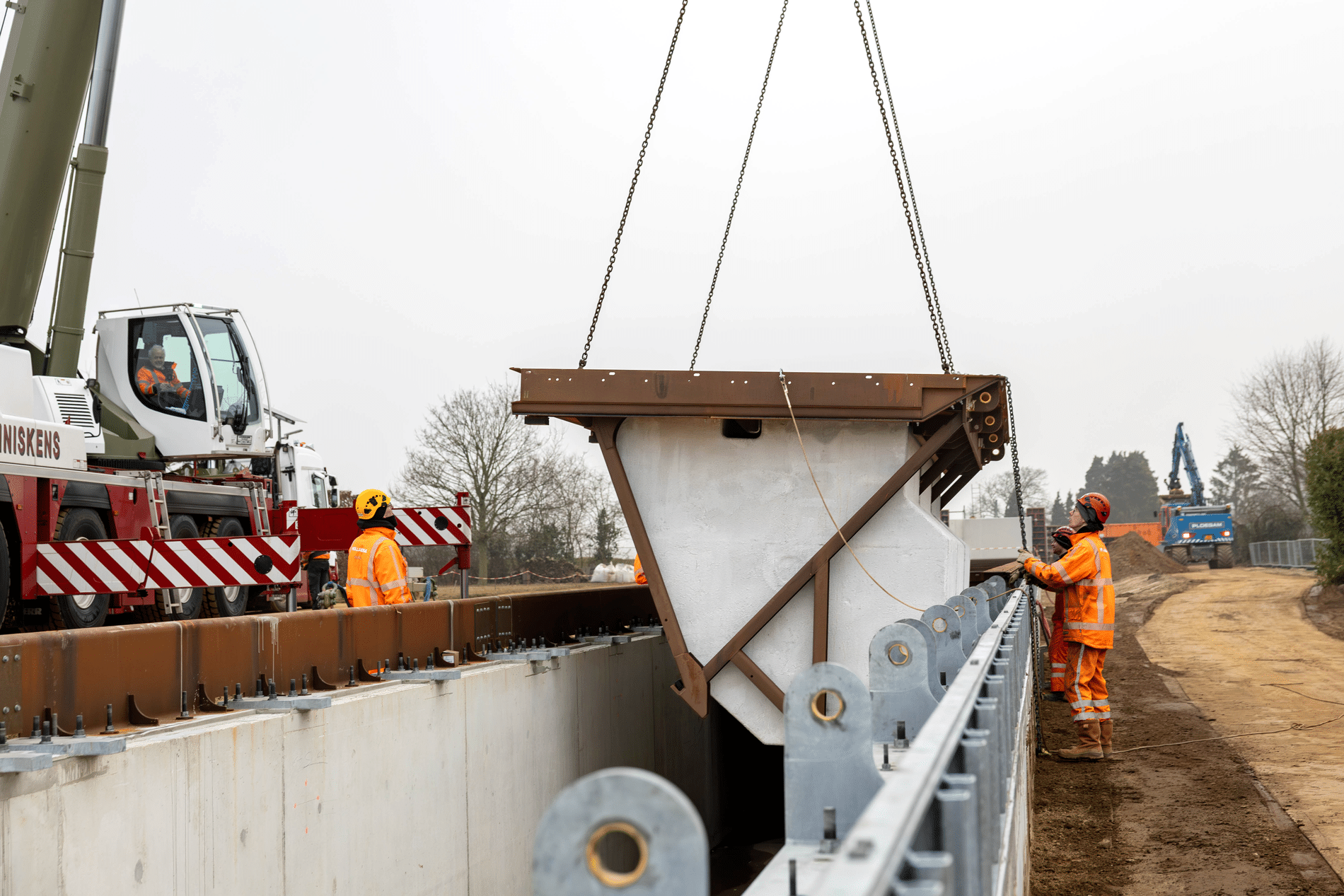
One of the most unique sections is located in Arcen-Midden. There, a self-closing flood barrier runs through 38 backyards. At normal water levels, the barrier is barely noticeable, and residents can use their gardens as usual. Only when the water level of the Meuse rises does the barrier automatically rise. That principle sounds simple, but its implementation requires extreme precision. “The gates are custom-made for each section, are about 9.5 meters long, and weigh approximately 7,000 kilograms each,” says Dennis. “Hoisting and installing them is therefore a matter of millimeter precision. Afterward, the gates are fitted with watertight seals and finished as agreed upon with the residents. The flood barrier is thus both a fully-fledged part of the living environment and a technical flood control structure.”
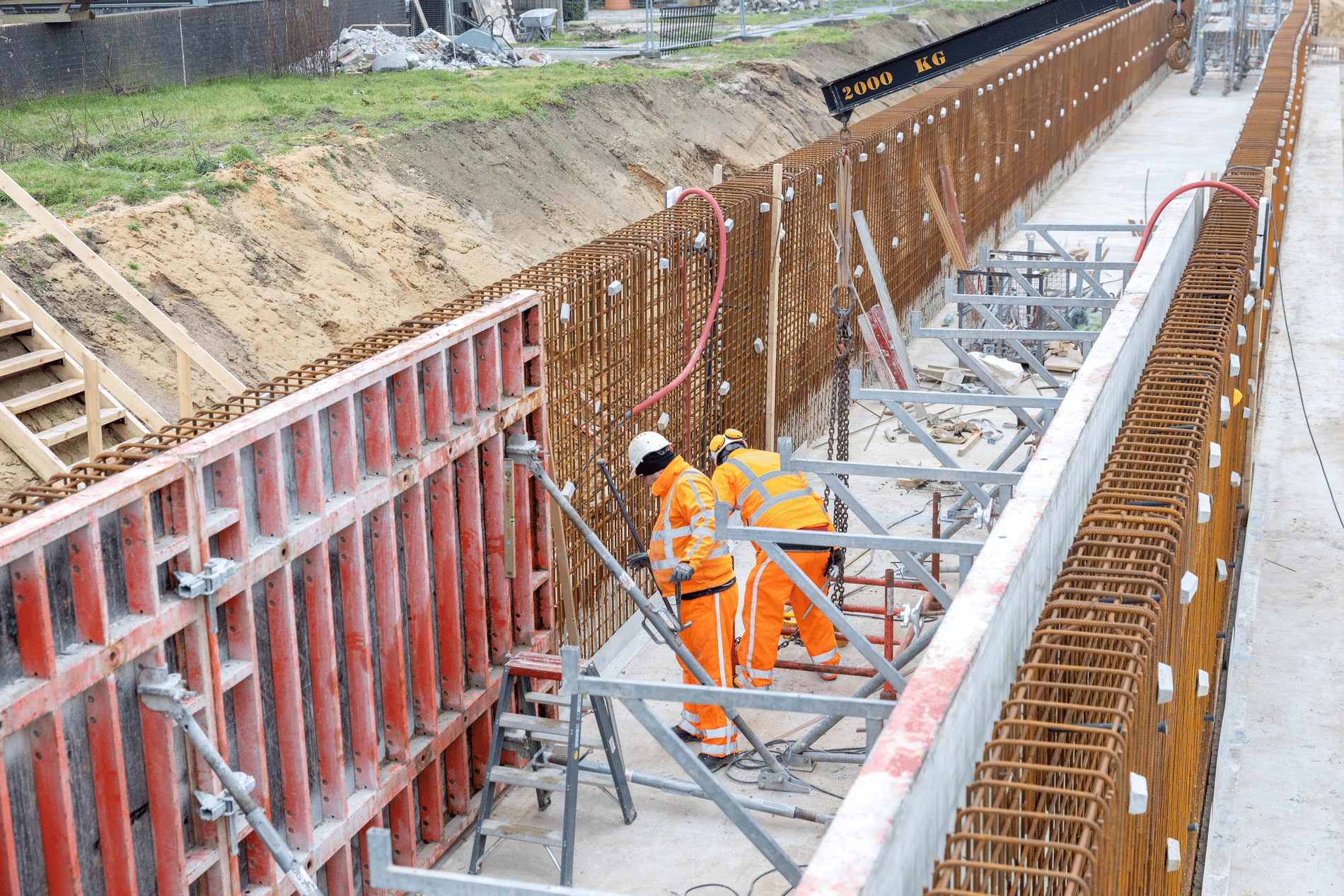
The technical design built upon previous experience. For the self-closing floodgate in Arcen, for example, the design in Steyl was examined. A key lesson learned there concerned the hinge points. In Arcen, a continuous hinge beam was chosen, making the dimensions easier to control. The design of the concrete boxes was also modified. Dennis: “Whereas longer structures are normally cut into sections and fitted with expansion joints using rubber connectors, in Arcen we opted for a maximum box length of 150 meters. By using steel-fiber-reinforced concrete, we were able to eliminate expansion joints and simplify the connection between the concrete and steel.”
Sustainability is also an integral part of the approach. Electric equipment is used during construction, and soil is reused locally as much as possible. “So far, approximately 100,000 cubic meters of sand and clay have been brought in and processed, a large portion of which comes from the Lommerbroek, Straelensbroek, and Vreewater nature restoration projects run by Stichting het Limburgs Landschap,” said Marijn Arts, technical manager at Ploegam. “We’ve also been able to reuse about 100 metric tons of sheet piling from the dike reinforcement project in Steyl here in Arcen. In addition, we’ve conducted trials with biochar. Biochar consists of carbonized plant residues that have absorbed CO2. These plant residues are incorporated into the concrete mix. We used this in the concrete mixes for the manhole covers of the self-closing flood barrier.”
Work on another section of the floodwall is scheduled for this fall. This involves the remaining section of Arcen-Midden. It is also the most challenging section, because it is located close to residential areas, there is little working space, and it will be built on piles. Marijn: “Up until now, we’ve been able to build around the existing floodwall, but now we have to partially demolish it to construct the new one. That will require appropriate emergency measures in the event of high water. We’re working outside the dikes and are therefore very dependent on water levels. It’s quite possible that we’ll end up with wet feet at some point.”
According to those involved, the way in which the Arcen Dike Zone Alliance and the Limburg Water Board collaborate is precisely what makes the project so strong. Martijn van den Essen, technical manager at the Limburg Water Board: “There’s a lot of openness; we involve each other in the process and share knowledge. This allows us to jointly discuss technical issues, implementation problems, and management aspects even while the project is still underway.”
The latter is becoming increasingly important as the project progresses. For example, two stream systems converge near the watermill, and the historic Wijmarsche watermill must be incorporated into the design. “In addition, Limburg’s first two fish lifts and—in terms of surface water—Limburg’s largest pumping station are being built here. For us at the Limburg Water Board, these are new types of structures that not only require attention during construction but also have implications for future management and maintenance.”
If all work proceeds as planned, Arcen will be flood-safe by the end of 2027, and the final work will be completed in 2028.