Platform on civil engineering, underground infrastructure, energy, construction equipment & construction machinery
Custom Work on an Italian Reservoir
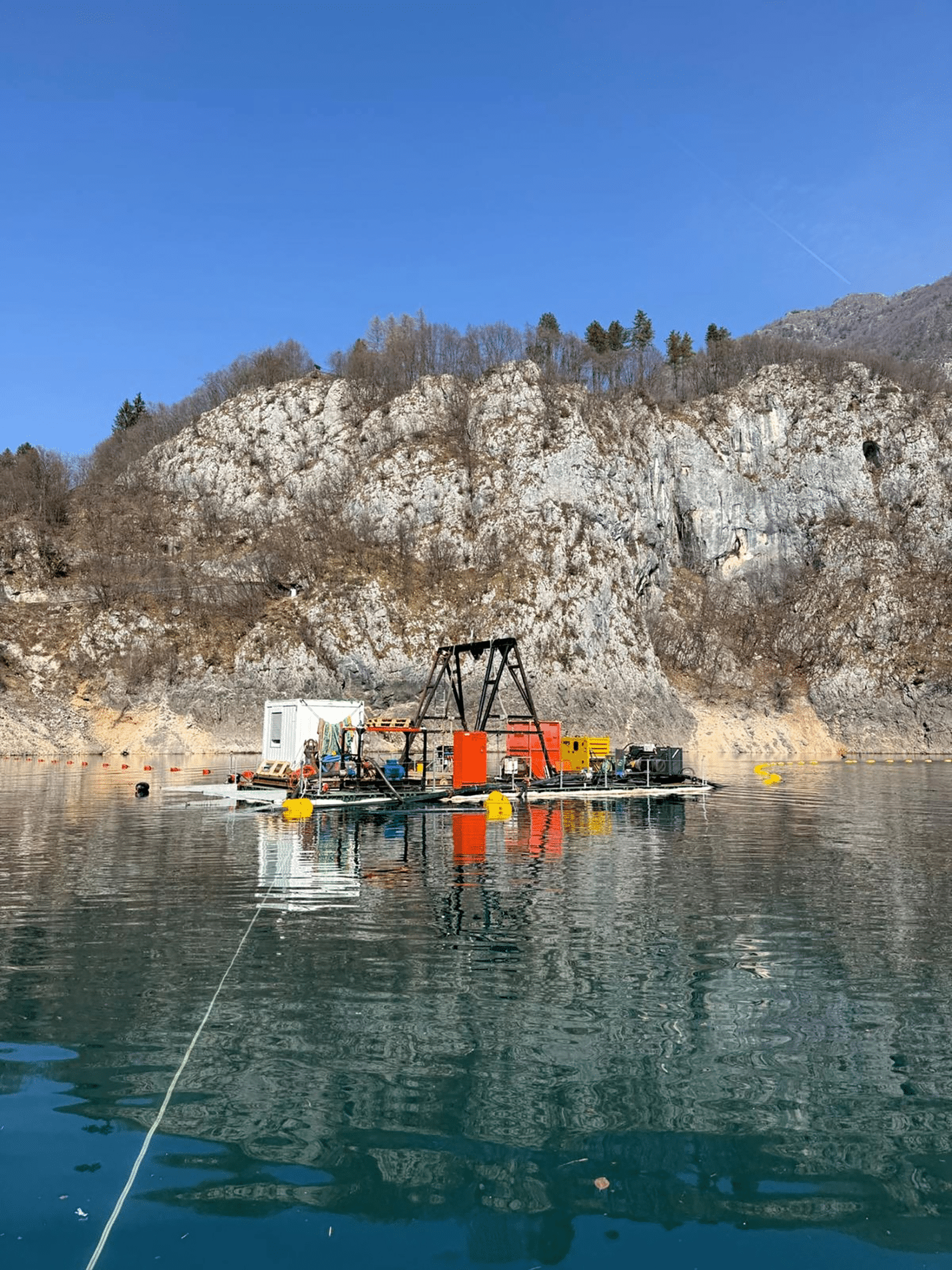
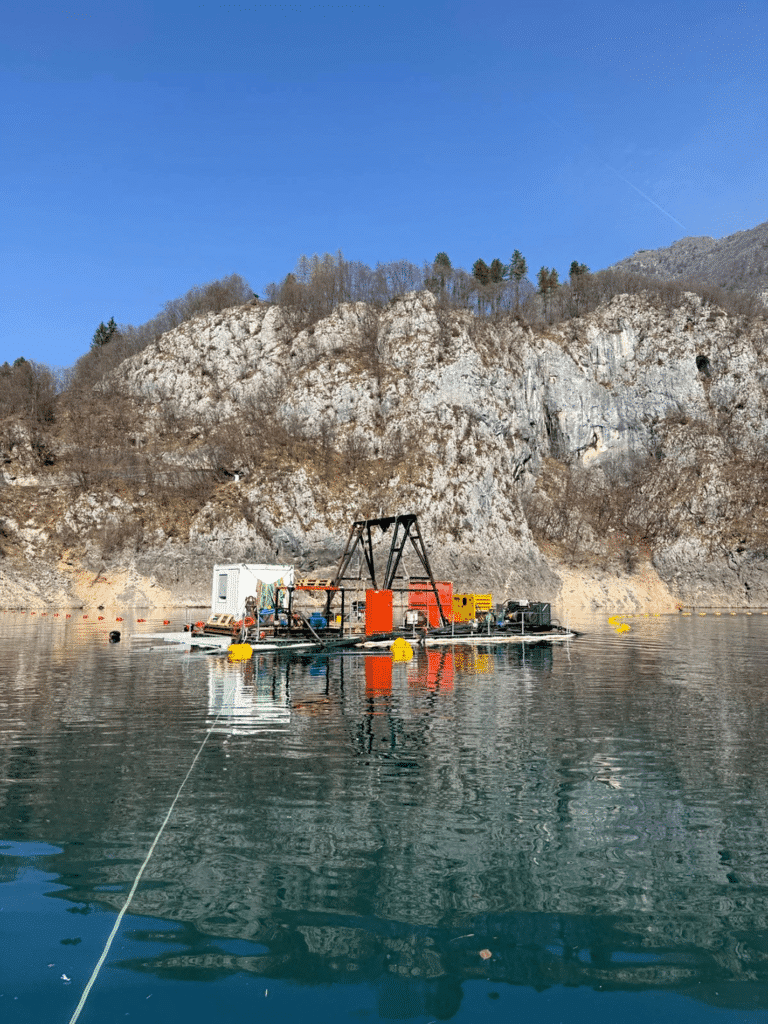
Removing sediment at a depth of 80 meters is a challenge in itself. When, on top of that, the equipment can only be transported to the job site by helicopter, it calls for a customized solution. In a reservoir in South Tyrol, Italy, Bell Dredging Pumps provided a rental system that enabled a French contractor to clear the water intake of a hydroelectric power plant of accumulated sediment.
“We regularly supply dredging equipment to this French contractor,” says Thijs van den Outenaar, sales engineer at Bell Dredging Pumps BV. “Based on their project specifications, we supplied a complete pump configuration. The challenge with this project lay not only in the great depth but also in the accessibility of the site.”
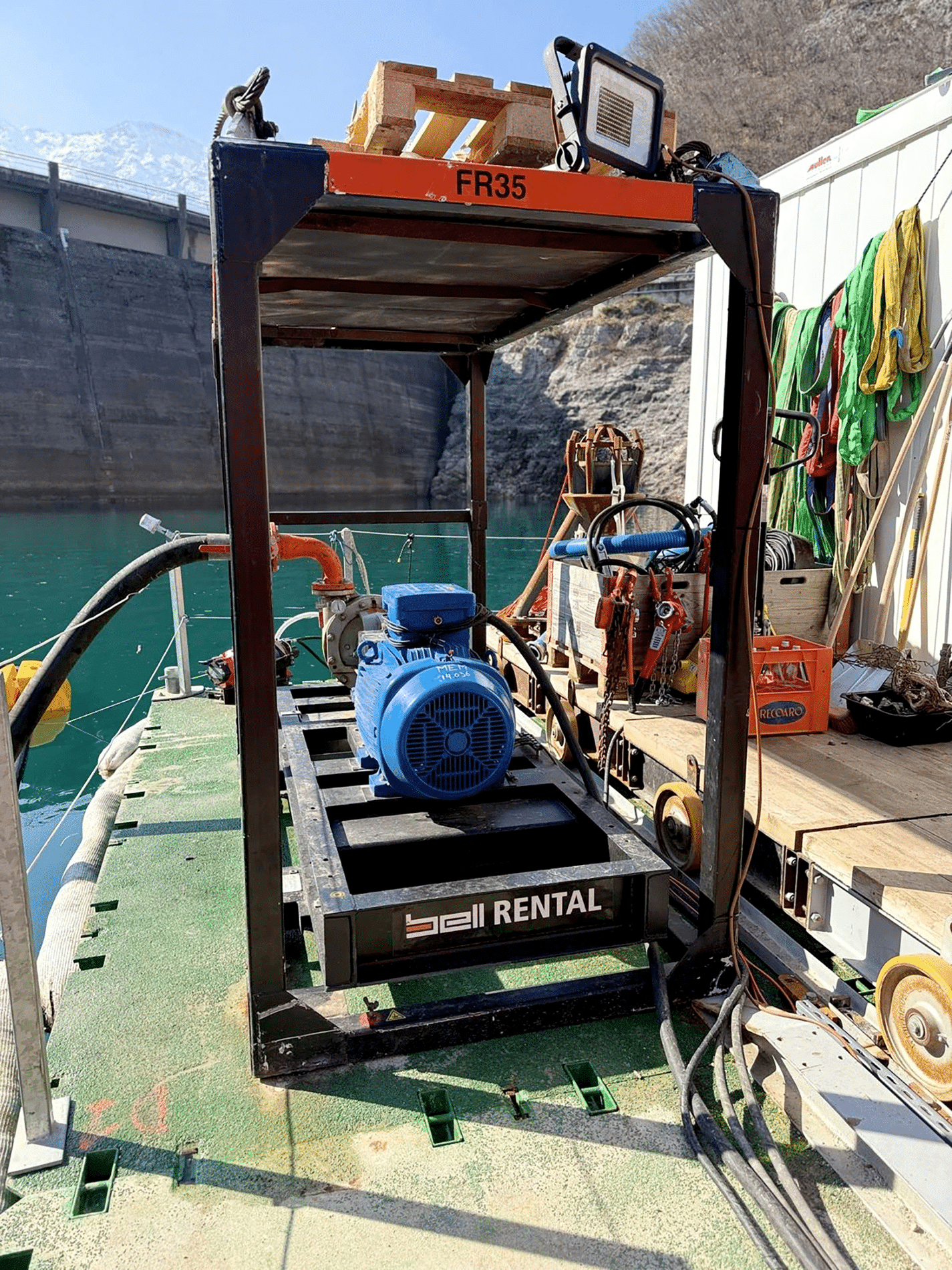
This became immediately apparent when the equipment was mobilized. The equipment could only be transported to the reservoir by helicopter. As a result, conventional solutions were ruled out. For example, a diesel-powered power pack was simply too heavy to fly in. “Instead, we opted for an electro-hydraulic solution,” Thijs explains. “The electro-hydraulic power pack was mounted on a pontoon in the water and connected via a cable approximately 350 meters long to a generator located on the shore. Due to the limited accessibility, this was the only feasible solution.”
The hydraulically driven Bell 150 was equipped with a double cutter, or a double cutting head. Over the years, the sediment around the intake of the hydroelectric power plant had become heavily compacted. Extra cutting force was needed to effectively dislodge this material. “A single cutter isn’t suitable in this situation. When you lower it using a winch, it gets stuck in the bottom. As a result, the entire pump ends up rotating with it, and you can no longer dredge. With a double cutter, the cutting heads rotate in opposite directions. This keeps the pump stable, allowing the sediment to be loosened in a controlled manner and immediately sucked away.”.
The dredging operations took place approximately 80 meters below the water’s surface, where the ambient pressure is about 8 bar. To ensure the pump operated reliably under these conditions, a pressure compensation system was used. A compensator is used to maintain the pressure in the bearing housing at the same level as the ambient pressure at that depth. In addition, the Bell 150 was equipped with a suite of sensors that continuously collect data on, among other things, discharge pressure, suction pressure, rotational speed, and depth. “When the pump is suspended at a depth of 80 meters, you can’t hear or see much,” says Thijs. “These sensors therefore literally serve as the eyes and ears of the system.”
According to Thijs, this project clearly demonstrates the added value of an extensive rental fleet. “Virtually all of our machines—from dredging pumps to cutter suction dredgers, and from amphibious cranes to power packs—are available for both sale and rental, including an operator if desired. This allows us to quickly put together a suitable solution for a wide range of projects, even when conditions—as in South Tyrol—are anything but standard.”