Platform on civil engineering, underground infrastructure, energy, construction equipment & construction machinery
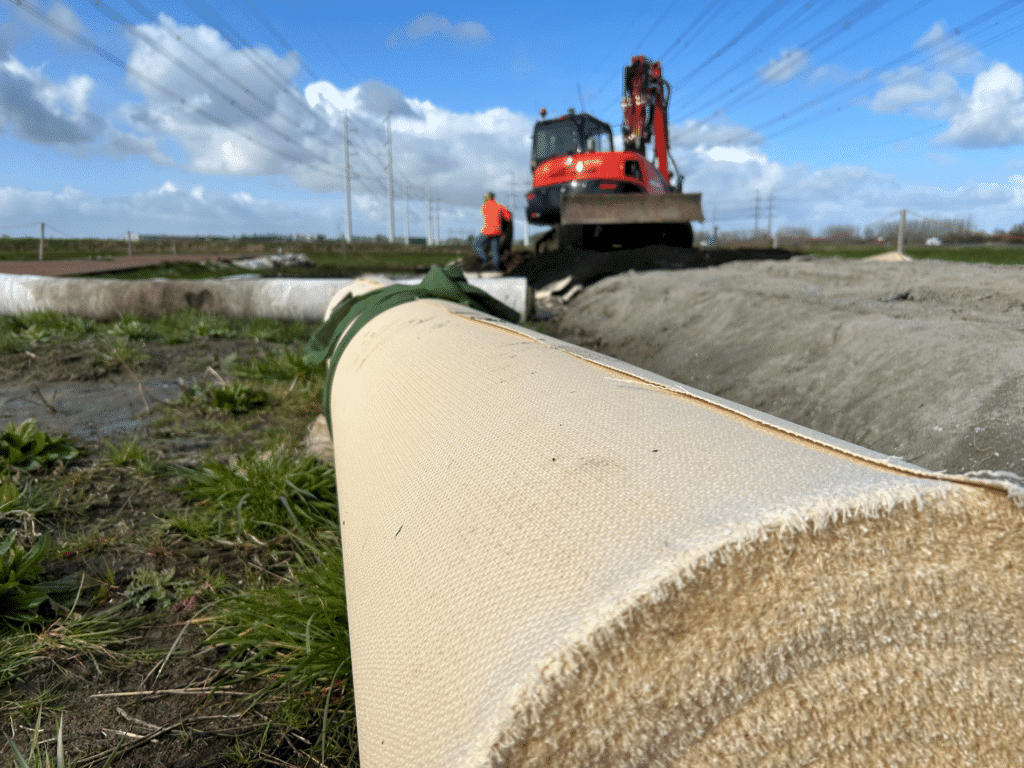
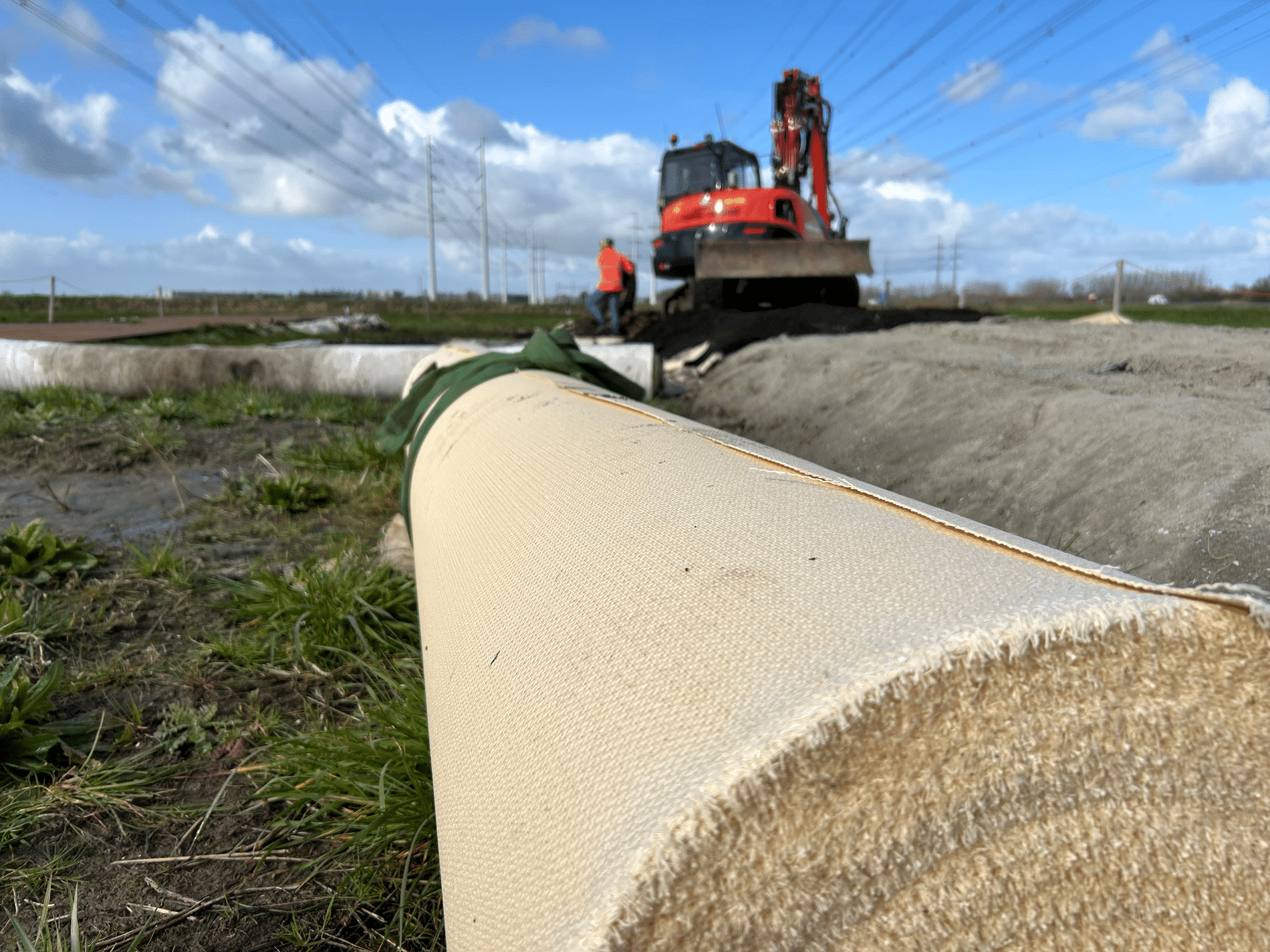
Why design a geotextile to last a hundred years if you’re going to remove it after just five years? That question served as the starting point for an innovative development by Joosten: JSTN Jogetex HV. It is a fully bio-based and biodegradable geotextile made from wood fibers. It is being used as a pilot in the Neder-Betuwe dike reinforcement project, alongside the standard synthetic version.
Geotextiles are indispensable in civil engineering. “They ensure the stability of construction roads, reinforce structures, and separate different soil layers,” explains Marco Hazenkamp, IDeA Manager at Joosten Group. “Traditionally, these materials are made from synthetic plastics and designed for a functional lifespan of 100 years. That makes sense for applications under bridges, roads, or hydraulic engineering structures that must perform for decades.”
But not every application requires such a long service life. “Temporary construction roads and crane sites—such as those used in the construction and maintenance of high-voltage power lines or wind turbines—present a remarkable paradox,” Hazenkamp rightly notes. “Here, the geotextile only needs to fulfill its function for a few years, after which the project is completed and the site must be restored to its original condition. The material is then removed and often incinerated. A product designed to last a century thus ends up in the waste stream after just a few years. That is the very definition of the destruction of raw material capital.”
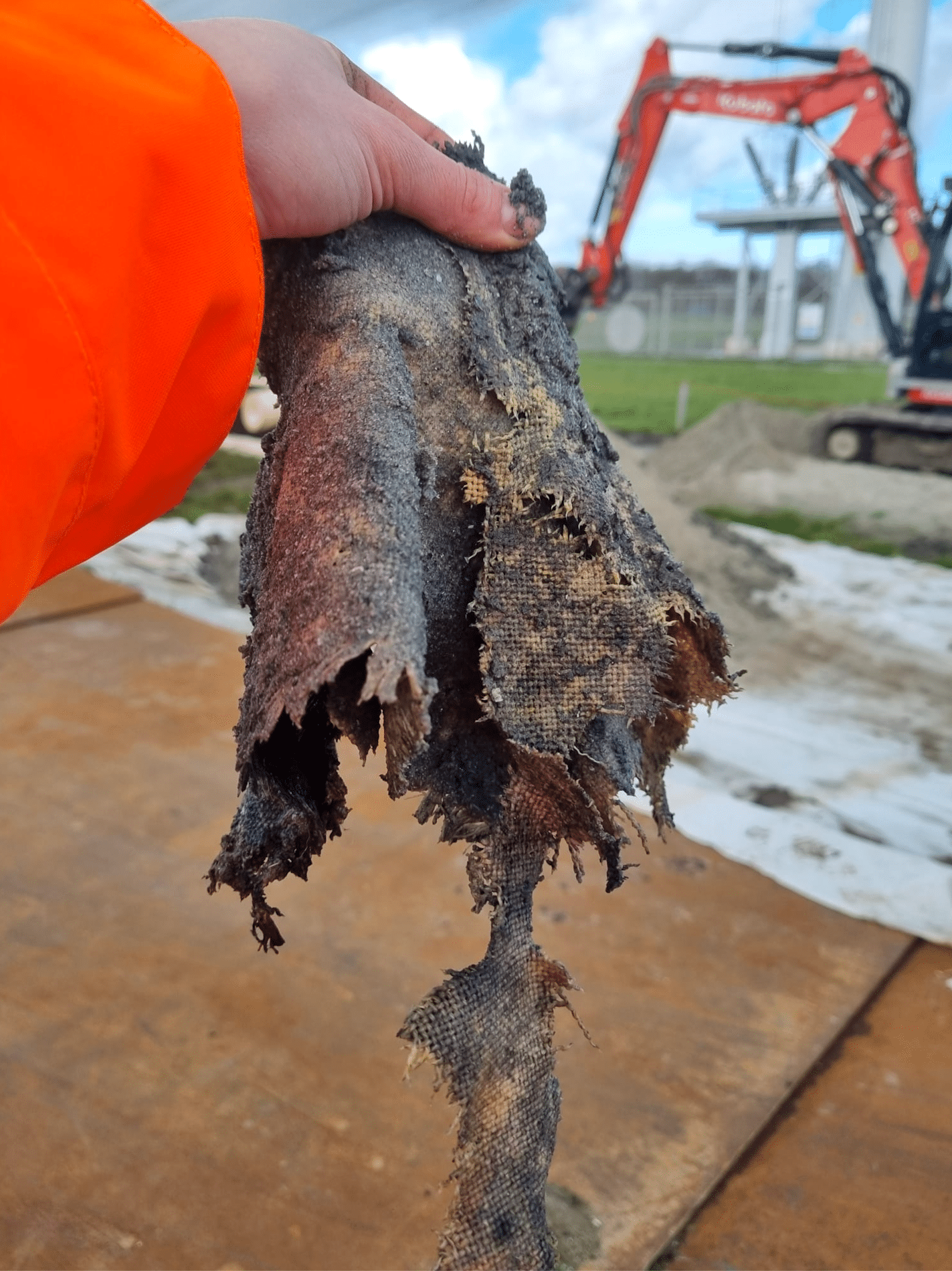
The original applicant for the HV development was BAM, at the request of TenneT. Together with these parties, Joosten set out to find a sustainable alternative to synthetic geotextiles for temporary applications. That search led to the development of JSTN Jogetex HV, where HV stands for wood fiber. “The material is made from Tencel fibers derived from FSC-certified pruning waste. Zwartz Textiel processes the wood chips into fibers, which are then spun into yarns and ultimately woven into a geotextile that fulfills the same structural functions as traditional variants,” explains Hazenkamp. The biggest challenge, it turned out, was not the strength of the material, but rather its biodegradability. How long will the geotextile retain its function before nature takes over?
The first pilot projects, conducted on TenneT projects, yielded surprising results. “At some locations, an untreated version was already broken down by soil fungi within three months,” says Hazenkamp. “That might seem like a setback, but it actually wasn’t. It confirmed that our concept worked. Extending the service life is easier than shortening it.” Work is now underway on a third generation of JSTN Jogetex HV, in which natural additives control and slow down the degradation process. “We expect this will make a functional lifespan of several years achievable, without losing biodegradability.”
The Neder-Betuwe Dike Alliance learned about the development of this sustainable geotextile and, in addition to large quantities of synthetic geotextile, is also installing several hundred meters of JSTN Jogetex HV as a pilot project under temporary construction roads. “The idea behind this is that it will eventually decompose and add ecological value to the site.” With JSTN Jogetex HV, Joosten demonstrates that innovation isn’t always about stronger or more durable materials. “Sometimes progress lies precisely in designing materials that last just long enough and then disappear on their own.”
Neem dan rechtstreeks contact op met Joosten Group.
 Contact opnemen
We are Joosten Group. We are building the sustainable living environment of the future. No project is too ambitious or too large for us. We approach projects based on the demands of the future. This is how we create sustainable infrastructure, water management, and green spaces in urban areas. We advise, design, and deliver. We install, we manufacture, we innovate. And […]
Bekijk Bedrijfsprofiel