[00:03] Durability and Service Life of Geotextiles
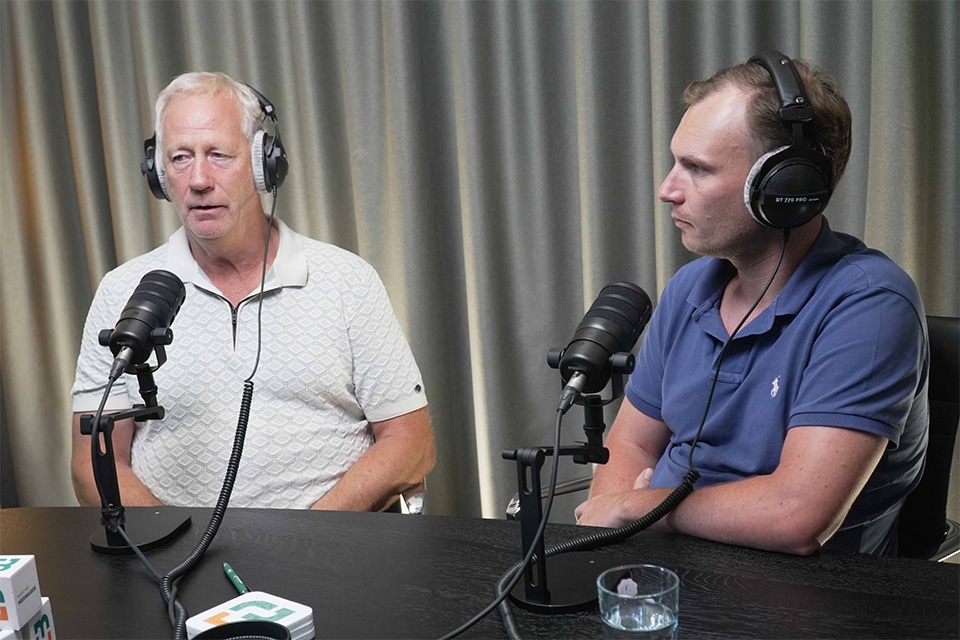
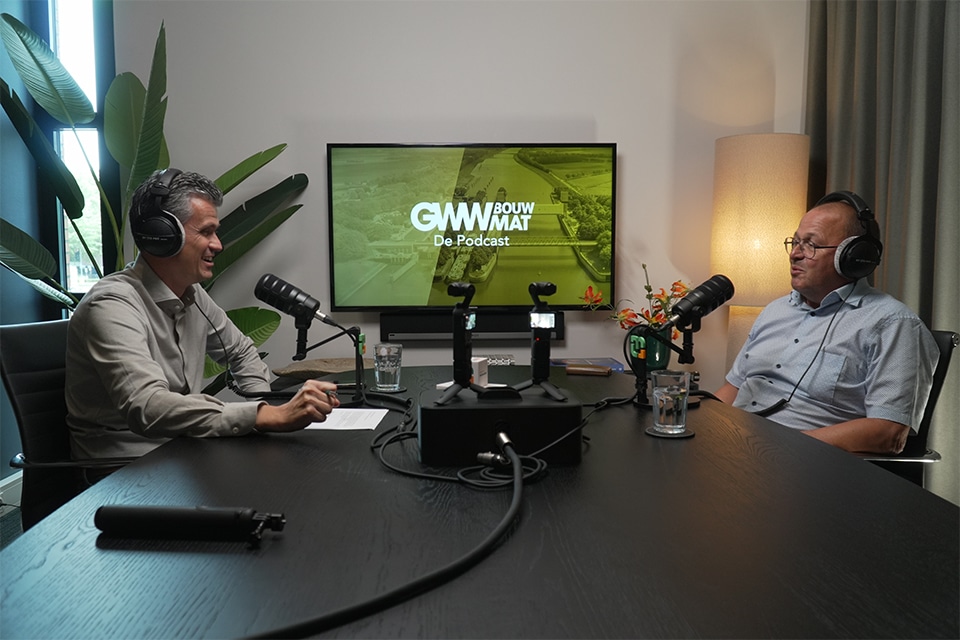
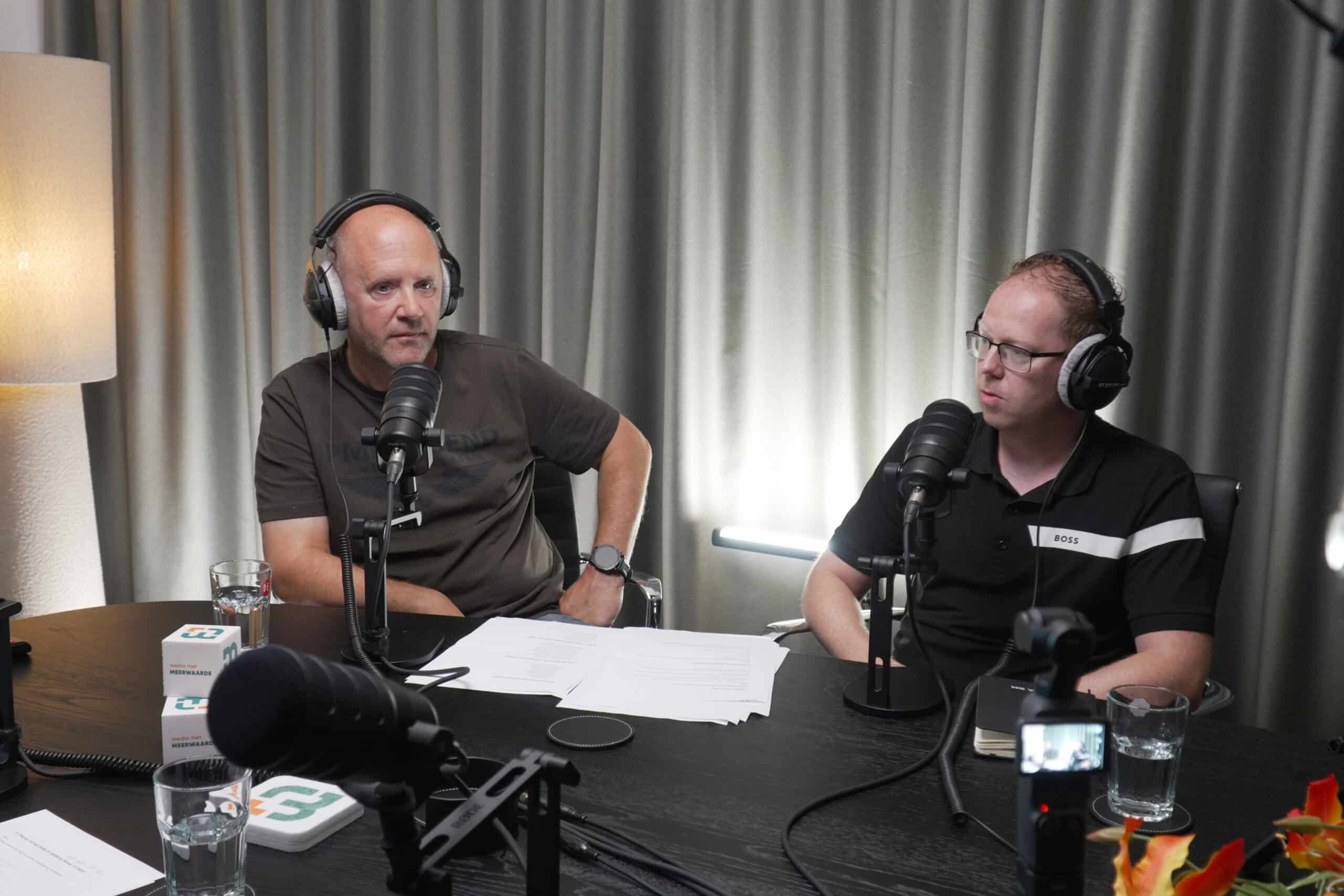
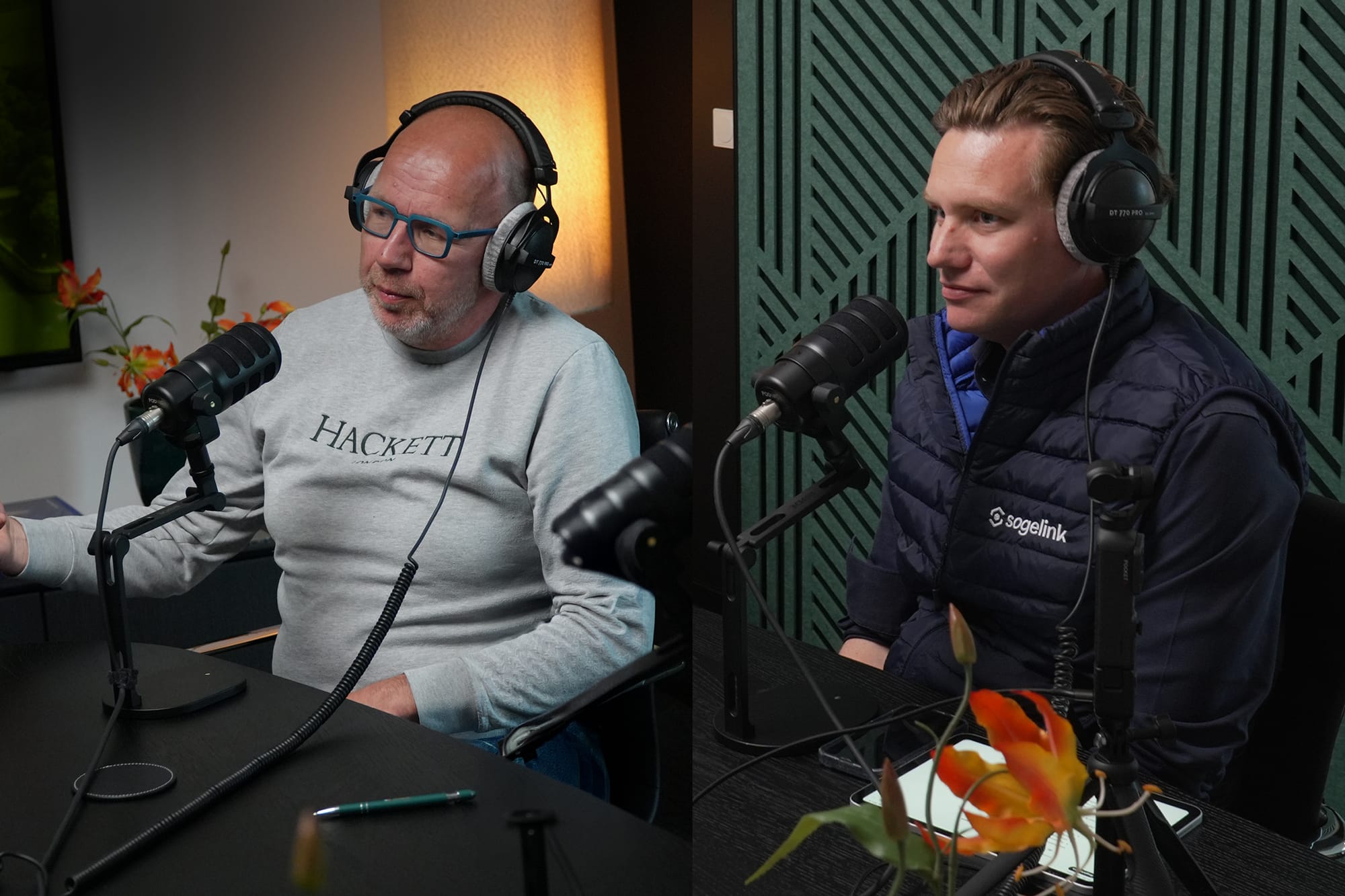
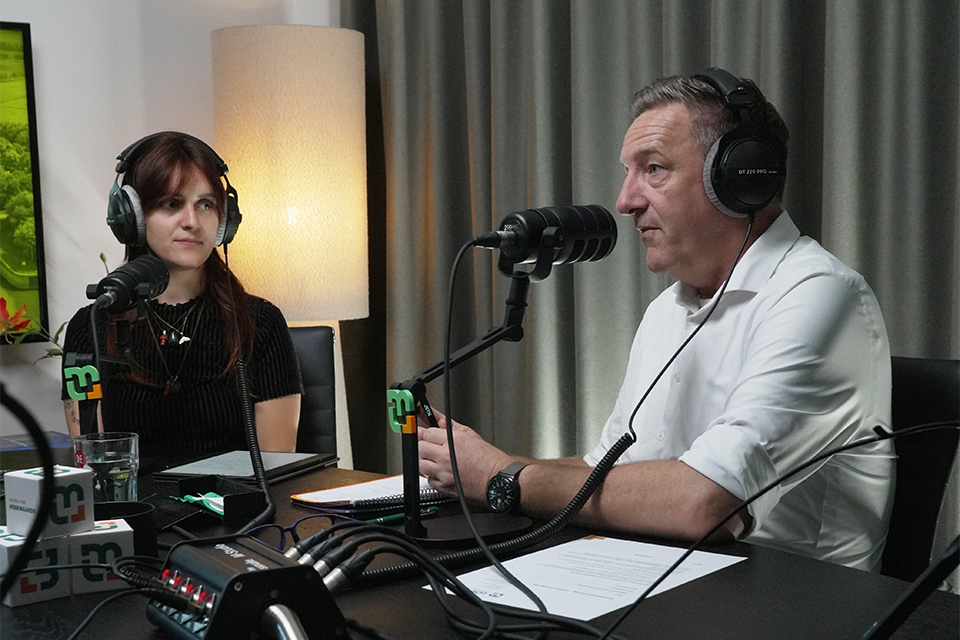
Roel van Gils: Welcome to another new episode of GWW Bouwbad, the podcast. In the construction and infrastructure sectors, the standard has been the same for years: materials must last as long as possible. A hundred years is often the benchmark. But is that really always the smartest choice? Because what happens if a material has to be removed from the ground after just five years? Then sustainability suddenly takes on a whole new meaning. Today we’re discussing this with Marco Hazenkamp and Sophie Pakvis from the Joosten Group. Biodegradable geotextiles, which are currently being tested in various projects as part of a pilot program. Welcome.
Sophie Pakvis: Thank you.
[00:41] Performance
Roel van Gils: Maybe you could briefly introduce yourself. Just a few lines.
Sophie Pakvis: My name is Sophie Pakvis. I am the sustainability manager at the Joosten Group.
Roel van Gils: Well, look at that. Thank you.
Marco Hazenkamp: Marco Hazenkamp, technical specialist at the Joosten Group and manager of the IDNA department (Innovation, Sustainability, and Consulting).
Roel van Gils: So you guys are basically always working on new developments within the group?
Marco Hazenkamp: That, too. Especially with our regular business. Projects that come to us from our commercial department, such as IDNA, but certainly also with new developments.
[01:13] What does a geotextile do?
Roel van Gils: Yes, today we’re going to talk about geotextiles. Everyone in the civil engineering sector is probably familiar with them. But what does a product like that do? What exactly is it? Can you tell us a little about it?
Marco Hazenkamp: Geotextiles, to put it briefly, actually serve two functions: they separate the various soil layers or structural layers from one another. In addition, they provide a certain amount of tensile strength to resist deformation. It’s quite technical, but essentially it makes the structure stiffer, so that, for example, vehicles can drive over it or you can build something on top of it. Geotextiles—and sometimes geogrids—are used in particular when the subgrade has poor bearing capacity. So if the subsoil itself isn’t capable of supporting certain loads or traffic, you add a geotextile, which provides that higher resistance to deformation. That’s basically what a geotextile does. And then it disappears back into the ground. You install the geotextile in a specific way. You can also fill the geotextile with various fill materials—such as sand, mixed aggregate, or natural rubble—so that the structure you build with it also becomes climate-adaptive. This allows it to store water and allow water to infiltrate. Ultimately, the most important function of geotextile is generally to separate different structural soil layers.
[02:33] Taxes and Lifespan
Roel van Gils: Yes, what kind of tax burdens would it need to handle? Of course, that varies as well.
Marco Hazenkamp: When it comes to the projects we’re currently working on, you’ll find TenneT projects, but also high-voltage transmission tower sites. These generally involve transport operations, freight traffic, and vans, as well as the installation of the structure itself. The equipment needed to build the structure and create the access road. When dealing with higher loads, you have to consider the crane sites: a telescopic crane will be positioned there—a large crane that rests on the ground with its outriggers. To support those loads, you use geotextile or geogrid to ensure the ground can bear them. And when you’re dealing with a telescopic crane, for example, that’s about 250 metric tons per square meter. That’s a significant load. So you’ll need to install a substantial piece of geotextile—a geogrid—to handle it. And as you mentioned at the beginning, the design life is often 100 years. In structural engineering, when you create a design and perform the necessary calculations, you base the design on a functional service life of one hundred years. That’s a requirement—a somewhat exorbitant one. On the other hand, when you do those kinds of calculations, you also factor in reduction factors and safety factors. So that 100 years is a sort of fictitious, functional lifespan, but ultimately, when you factor in the reduction factors and the associated risks, you arrive at a much more realistic lifespan.
Roel van Gils: Yes, so it's not like you'd install a faucet on it in 1998, for example.
Marco Hazenkamp: No, setting aside whether that structure is already in place, so to speak. But that’s actually a kind of calculated service life. If you really start crunching the numbers and factor in reduction factors, safety factors, and structural design factors, then setting the bar high but ultimately ending up halfway there is the most realistic scenario.
[04:32] Temporary construction roads
Roel van Gils: Yes, but often it can be even shorter, right?
Marco Hazenkamp: These days, there are also quite a few structures that aren’t meant to last very long. So their functional lifespan is actually only three to five years. And that does bring to mind TenneT projects, where you’re essentially constructing a temporary access road. It’s temporary—the name says it all. That construction road has only a temporary functional lifespan. So it’s quite a waste to install a geotextile—a synthetic geotextile—there that’s ultimately designed to last a hundred years. So it’s a bit of a waste to install that geotextile there for a hundred years. And then, after five years, it’s removed. And then, as is currently the case, it goes to the waste-to-energy plant.
Roel van Gils: You can't reuse those?
Marco Hazenkamp: You can reuse them, but ultimately, here’s the thing: you can pick them up, roll them up, and unroll them once. But if you’re going to reuse a geotextile—as I mentioned earlier regarding that reduction—when you do the calculations and apply those reduction factors, you factor in all those kinds of factors. Installation damage, removal damage, chemical conditions, pH—all those things are factored in. And you’d have to do that all over again. You’d have to redo that calculation for a geotextile that’s already been used once, removed from the ground, and then reused again. And then you realize that, ultimately, the specifications for that geotextile are no longer sufficient. You can no longer subject it to the load it’s actually supposed to bear.
Sophie Pakvis: Yes, and besides, once we’ve laid the geotextile at location A, if we want to install it at a new location, we’ll first have to thoroughly examine the geotextile. We’ll need to check whether that’s even possible, so that we don’t disturb the soil life at the new location.
[06:23] The Demand for Biodegradable Geotextiles
Roel van Gils: Oh, right, so you take it from one place to another. But ultimately, you were asked for a geotextile with a shorter lifespan—or for an application lasting five years or so. What’s the situation these days?
Marco Hazenkamp: At any rate, biodegradable. That was the initial question. Degradable, biobased, biodegradable. That was sort of the research question. That’s how you have to look at it. That question came from TenneT. TenneT, of course, has certain sustainability goals, but so do the contractors working for TenneT. In this case, it was BAM. BAM Construction. And they, too, have specific sustainability goals, but they can also leverage those in their bids. So, the projects they take on from TenneT or from a wind farm owner—that is, an operator. Sustainability goals are part of tenders these days.
Roel van Gils: Yes.
Marco Hazenkamp: EMVI plans—the economically most advantageous bid. And sustainability is often a very significant part of that. Currently, some projects aren’t necessarily awarded based on financial criteria—that is, the lowest price—but rather on a notional lowest price, which takes sustainability into account.
[07:34] Development of Jogetex HV
Roel van Gils: And when did it become clear to you that there was an opportunity here for geotextiles—or at least for Jogetex HV?
Marco Hazenkamp: It all started, of course, with a request from TenneT to BAM. BAM brought it to us. We are, of course, BAM’s contractual partner when it comes to the supply of geotextiles. BAM doesn’t manufacture geotextiles itself, and neither do we, but we do sell them and we do develop them. So ultimately, BAM passed that request on to Joosten—that is, to us. We then took on the development project together with BAM. Let me put it this way: wood-fiber-based geotextiles weren’t the first idea that came to mind, if you consider how such a development typically proceeds.
Roel van Gils: It was actually: create a geotextile that would only be used for a certain period of time. Actually, yes, that was the challenge.
Marco Hazenkamp: Yes, biobased, biodegradable. Yes, and for a certain period of time. And in that case, making it from wood fiber isn’t the first idea that comes to mind. We reviewed all kinds of raw materials in a trade-off matrix. And in that trade-off matrix, we ultimately looked at a number of aspects. What is the availability of the fiber or the raw material? Is it truly biodegradable? Various raw materials claim to be, but then, when you look at the research, it simply isn’t possible. And this is especially true for raw materials that aren’t available on a large scale. We also looked at, for example, fibers derived from crustaceans. If you look at seaweed, you can make all kinds of fibers from it. Bamboo, for example—you can make fibers from it. But ultimately, we’re talking about projects for TenneT—millions of square meters of geotextile. For every single project. But you also need raw materials to produce those millions of square meters. And if you then have to fish half the North Sea dry for crustaceans just to make geotextile, well, that’s obviously not the point. So we looked at it this way: which raw material is available, which one is also sustainable, and from which raw material can we naturally make a product that meets the technical specifications we require for building a construction road or a crane site?
Sophie Pakvis: We looked into the origin of the raw materials. We wanted to see if it was possible to source them closer to the Netherlands. So we really explored what’s available in Europe. And we also considered the sustainability of obtaining the raw materials. Of course, we don’t want to strip a forest just to make a little geotextile for civil engineering projects. So we looked at specific production sites where our raw materials are also sourced from wood offcuts. For example, the large blocks are used for timber construction. And we can use the remaining wood fibers for our geotextile.
[10:18] Composition of the geotextile
Roel van Gils: So what exactly is in it? What's the recipe? Or is that, of course, the secret?
Sophie Pakvis: Wood.
Roel van Gils: Just wood.
Sophie Pakvis: Yes. 99.9 percent wood?
Marco Hazenkamp: I'd say it's 100 percent wood.
Sophie Pakvis: Yes.
Marco Hazenkamp: Nothing else is added. Ultimately, you have to turn a wood chip—which is made by peeling the bark off the tree trunk—into a fine fiber. Those tree trunks do become wood chips. And those wood chips have to be processed into a kind of powder. We call that cellulose, cellulose powder. And from the cellulose powder, you can make fibers. We call them a kind of “fluff,” so to speak. And from that fiber, you can make yarn using a spinning mill. It’s literally just like how grandma used to do it. And from that yarn, you make a fabric. And that’s actually the geotextile you end up using.
[11:16] From Raw Materials to Production
Roel van Gils: How long did that process take?
Marco Hazenkamp: Well, look, we’ve been at this for roughly two years now. So, since the initial request for proposals, we’ve kept BAM and TenneT informed over the past two years through a pilot project that’s been running for a year now. It depends on how quickly you can actually find a suitable raw material. And in our case, we actually found one pretty quickly. And right here in the Netherlands, too. So it’s not so much about the raw material itself, but rather the company that can process it into the final product. Because for that, we’re working with the firm Zwartz in Oldenzaal. And Zwartz in Oldenzaal is a company that has been around—sorry if I’m getting this wrong—but I think for 138 years. It’s one of the oldest textile companies in the Netherlands. Zwartz is at the helm of the Zwartz company. And they’ve been making textiles from jute, flax, and linen for many years.
Roel van Gils: That's really sustainable, isn't it?
Marco Hazenkamp: It’s also very sustainable. It’s just less suitable for civil engineering. For that, jute is still the best option. But ultimately, we wanted to move toward—initially—a raw material that might be sourced from the Netherlands. That turned out to be quite a challenge, so we quickly had to switch to sources in Europe. European-certified forests, FSC-certified forests. But before you get there—before you even make a textile—consider this: if you have a manufacturer capable of producing a textile from a biobased material, a biobased raw material, then you’re actually already seventy or eighty percent of the way there. Because not every manufacturer, not every weaving mill, is capable of processing a biobased material. Synthetic materials are a bit easier. The machinery is designed for that, too. But bio-based is a whole different ballgame. It involves all kinds of dust formation during the production process itself. If you have a company that’s set up for that—and that’s Zwartz—then you’re already seventy to eighty percent of the way there. If you can also partner with a spinning mill that can turn your wood fibers into yarn, and do so in accordance with the specifications you know very well from civil engineering. It has to meet certain specifications—strength, elongation. If you know those specifications and can translate them into production, then you’re already 99 percent of the way there.
Roel van Gils: Yes.
Marco Hazenkamp: And that last part, in particular, went really fast. We actually wrapped that up in half a year.
[13:54] Technical Specifications
Roel van Gils: And those specs aren't comparable to a synthetic geotextile?
Marco Hazenkamp: Technical specifications—that’s what we’ve been working toward, to stick with the textile analogy. But ultimately, of course, based on your experience—and our experience with synthetic geotextiles—you know where the technical specifications need to be. So you know what the requirements are, you know what the reduction factors are—how much tensile strength, what percentage of elongation. So we laid that out as a model at Zwartz, just to say: hey, this is where it needs to go. How many grams of yarn do we need per square meter or per linear meter of width? How much do you need to use to meet these specs? They have the experience to figure that out. Ultimately, they actually matched a synthetic spec using a bio-based material.
Roel van Gils: Yes, but was it an instant hit?
Marco Hazenkamp: The first product was an instant hit. If you look at the technical specs—tensile strength, elongation, sand permeability, and water permeability—those are the four requirements that a geotextile must meet for, say, a construction road. But there was one thing we didn’t know yet: its lifespan—how quickly it degrades. And that’s now the focus of our research: how can we extend it? Of course, we knew the degradation rate of the base material—how quickly it breaks down. And at Dura Vermeer, De Dijkalliantie, we have a number of pilot projects underway. So we also know exactly what the different stages of the product are, how long they last, and what the degradation rate is. And now the challenge is to slow down that degradation rate—in other words, to extend the functional lifespan.
[15:30] Rate of degradation
Roel van Gils: Yes, but that’s what I understood from you: that’s relatively easier than the other way around, right?
Marco Hazenkamp: Yes, extending a lifespan is easier than shortening it.
Roel van Gils: So in that sense, it was good news right away that it actually ended quickly.
Marco Hazenkamp: That sounds strange to a lot of people. Of course, we made a pilot version of the first iteration. And it had actually disappeared after three months. Really—it had literally vanished. We went out to take it down. In some places, we couldn’t find the fabric at all.
Roel van Gils: Couldn't you find him anymore?
Marco Hazenkamp: Yes. And that was good news for us. Meanwhile, other people were standing there watching the removal and saying, “Man, how good is that, really?” And then I explained: it’s better to extend it than to shorten it. Because if you have to shorten it—if you have to remove material from your product, which means you have to make a lighter product—that also means you can no longer meet your technical specifications. So we’re better off extending the shelf life, making sure water and bacteria can’t do their work as quickly, rather than shortening it.
Sophie Pakvis: Because biodegradation is, of course, highly dependent on the season and also on the location. So we’re really happy that we can now start testing our fabric in different places. In Zeeland, it’s just lying on the ground. And there, we’re also testing it in different ways, so to speak. And our site at De Dijkalliantie is very interesting because it was also submerged there. Wood degrades differently when it’s underwater. So you can imagine that during a colder period—especially after it’s been underwater—the fabric holds up even better than at locations where it was installed in the summer, for example. That’s because soil organisms thrive on it in warm weather. So it’s really cool that we now have our Jogetex HV at two different locations and are seeing different rates of degradation there.
[17:28] Pilot programs at two locations
Roel van Gils: And are those two different projects—or at least two different possible applications?
Sophie Pakvis: I think both are for a temporary access road. But they are very different projects. Absolutely.
Roel van Gils: Because one of them was the Neder-Betuwe Dike Reinforcement Project?
Sophie Pakvis: Yes, Neder-Betuwe, that's right. And the other one is for TenneT in Rilland.
Roel van Gils: And the one from TenneT—has that been there for a while?
Sophie Pakvis: Yes, I think it's been there for a year now.
Marco Hazenkamp: Yes, almost a year. That's right.
Sophie Pakvis: And I've been with De Dijkalliantie for about half a year now.
Roel van Gils: Yes, and is that monitored continuously?
Sophie Pakvis: Yes, we’re going to try to visit the site every four months. Then the road plates will be removed, and we’ll be able to literally cut out and dig up pieces. We’ll go there with our shovel and scissors, and bring a trash bag to collect the pieces. The question is: where exactly is it, and what will we find? In some places, it had simply completely deteriorated and no longer had any technical qualities. But in other places, we were able to find it again.
Roel van Gils: Yes.
Sophie Pakvis: And there, we just had to—we really had to cut right through it, because it was just, well, it was just difficult again. It was easy to spot, and it was just a little bit more fabric than what we’d installed there. So those are some cool discoveries.
Roel van Gils: Yeah, I get it. But doesn't it have an official function, or does it?
Sophie Pakvis: It has both. Yes, the separation function—that was a bit trickier. Because, as you can imagine: it’s lying on the ground. Then, for example, sand is poured on top of it, and then it’s flipped over. So the sides—on one side they have sand, and on the other side they’re still just lying on the ground. So that’s where the composting happens; there, it breaks down more slowly than in the areas where it’s in contact with the soil and where sand has also been placed on top.
[19:16] Impact on the Soil
Roel van Gils: It was still there along the edges. And I understand it also enriches the soil, right, Sophie?
Sophie Pakvis: We hope so. We’re currently testing that to see what the soil quality was like at the start of the installation and again at the end of the installation. This is also because we sometimes operate on farmland, for example, so naturally we don’t want our product to damage the soil. So we’re testing that as well, but we don’t have any results yet.
[19:39] Versions of Jogetex HV
Roel van Gils: What generation of Jogetex HV are we on now? Where are you guys at right now? The product is constantly being developed, right?
Marco Hazenkamp: We're now on version three. But we've installed up to and including version two.
Roel van Gils: Okay.
Marco Hazenkamp: The first version is made of genuine virgin material. So, pure wood. It’s also a completely white version. And no additives have been added that would alter its lifespan in any way—that would affect its lifespan at all. But that’s our basic model, so to speak. What’s the pH of the soil? How much soil life is present in the soil? On average, about three or four months. We tested this once in our own garden. And it turns out that’s actually the case in real-world conditions. The second version is actually a sort of hydrophobic version. With this, we’ve tried to ensure that soil water—which also contains fungi and bacteria that ultimately cause decomposition—is less able to do its job. So it’s also soil-water-repellent. And with that, we’re actually hoping that those bacteria will be less effective, thereby extending the product’s lifespan. We’ll be taking that sample either this month or after the vacation. That depends on how our schedule works out.
Roel van Gils: At least this year.
Marco Hazenkamp: At least for this year, that’s for sure. But with this removal, we also want to install Version 3 right away—especially at the Rilland site for BAM. And Version 3 contains a type of antibacterial agent that prevents bacteria and soil fungi from doing their job.
Roel van Gils: For a certain period of time, then.
Marco Hazenkamp: For a certain period of time. Yes, we’re very hopeful that this will significantly extend the service life. We’re really talking about years here. Ultimately, the goal is three to five years. That’s what we’re aiming for.
[21:35] Duration of the pilot
Roel van Gils: That's the goal. And when do you expect that to happen? Well, of course, it's hard to predict the future.
Marco Hazenkamp: Yes, that's the downside of a pilot program.
Roel van Gils: How long will this remain a pilot program?
Marco Hazenkamp: We currently have access to the plot of land in Rilland. And if it were up to us, that would be for a very long time. Ultimately, this is a pilot project until we have demonstrated that the geotextile has a service life of between three and five years.
Sophie Pakvis: Yes, and I think what also helps is that we’re part of the Innovation Impact Challenge organized by Building Balance. It was launched to implement the National Approach to Biobased Construction for the civil engineering sector. And as you can imagine, when we’re talking about temporary construction roads or the use of geotextiles in civil engineering in general, there are quite a few guidelines and standards we have to meet before a product can be sold and we can rely on it. So, as part of the Innovation Impact Challenge, we’re also working on developing Dutch technical specifications that provide an exception to the current standards, allowing our product—well, not just our product, but multiple biobased geotextiles—to meet the standards and obtain the proper certifications. That assurance signals to the market that the product can be used and will retain its functionality. And I think that’s accelerating our innovation at breakneck speed, because we’re already aligned with the guidelines from the start. That process will take about a year. We expect those agreements to be in place by September 2027. And by then, we hope to be ready as well. We’re looking into what other tests we can conduct—for example, degradation tests—to demonstrate that it lasts longer than we’ve shown so far.
[23:29] Other Applications
Marco Hazenkamp: Yes, building on that, we’ve also started looking into scaling up the product. So far, we’ve made a flat geotextile, but there are many more types of geotextiles. So you can use them for various applications. When it comes to hydraulic engineering and similar applications, people often talk about looped geotextiles. And you can create a sinker on a looped geotextile. The name says it all: a geotextile with loops. Willow twigs are actually tied to it—bundles of willow, to be exact. We transport them on the water by boat. And eventually, you weigh them down with stony materials to prevent erosion of the riverbed. Until now, a synthetic geotextile was always used for this purpose. And ultimately, that has a functional lifespan of, let’s say, ten days. In the case of a sinking mat, it merely ensures that the stones don’t fall through it. Because of the large grids of willow twigs knotted onto it. Once it’s on the lake bottom, it stays there and serves no further purpose. So how great would it be to make the Jogetex HV into a looped fabric and use it to create a sinker? That’s just one of the applications for hydraulic engineering structures you could do with it. On the other hand, you could also consider nonwovens. It would serve only a separation function—but a temporary one. So you’d turn the fibers into a nonwoven product—a geotextile—that could then be used for other applications in civil engineering. But it would still be based on the same fiber. So that’s also one of the components of phase two of IEC’s Building Balance initiative: the Innovation Impact Challenge. We’re also looking at scaling up the product itself—not so much in terms of quantity, width, or length, but rather in expanding the range of applications for your base material.
Marco Hazenkamp: Yeah, so when will the pilot be finished? Yeah, never. No, but that also has to do with—just like Sophie said—the fact that you’re part of Building Balance, that Innovation Impact Challenge. Yeah, with an innovation like this, I don’t want to say it ever stops, but every time, new possibilities come up, like, “Hey, you could also do this with a wood-fiber geotextile.” And I hope that continues to develop. Of course, also in terms of lifespan—that we can get the lifespan spot-on between three and five years. That will still take some time. But ultimately, we’ll have a product. Imagine that the project is finished and the material is still there. But it has to be removed. Imagine we’re not allowed to leave it behind. Then we also need to know where we can take it. So far, everything goes to the incinerator. How great would it be if you could take it to the Groen Depot? But before you can bring your residual material to the Groen Depot, you need a specific certification for that. And we’re now trying to obtain that certification through the Innovation Impact Challenge, as part of our scaling-up efforts.
Roel van Gils: Yeah, kind of like the afterlife.
Marco Hazenkamp: Yes, the idea is: what are we going to do after the end of its useful life?
[26:29] Circular economy
Roel van Gils: Yes, that’s the key point, Sophie. Because why does this innovation fit perfectly into the circular economy?
Sophie Pakvis: Well, within the circular economy, we naturally often focus on the end of a product’s life cycle, for example. But we also focus on the beginning—the design phase—and rethinking how we use raw materials. Specifically, to ensure they’re used for the right application. That’s extremely important in the circular economy. We really look at what the demand is and how long the product needs to last, rather than asking: “What’s available, and can we just install it quickly?” That way, you avoid using products with a lifespan of up to a hundred years for something that apparently only needs to last three to five years. So really look at the right application for the product, while it still retains its functionality—meaning it can actually be used. What happens with synthetic geotextiles right now when they’re removed from the ground is that they’re damaged. Well, as we’ve already mentioned, they might contain soil-borne pathogens. But above all, they’re extremely dirty. And turning them back into new geotextiles ultimately takes quite a bit of work. We have to clean them, and we have to shred them. And once we’ve finally managed to turn it into a raw material—once we’ve recycled it—we’re now facing the reality that we can actually only use about five percent of it in new geotextiles. That’s because the guidelines stipulate that we must use 95 percent virgin material. That’s exactly what’s so great about these innovations: we’re already in talks with the developers of those guidelines to prevent running into these kinds of issues at the end of the life cycle.
[28:04] Regulations and Recycling
Marco Hazenkamp: And what you really notice is that regulation is lagging behind developments. That’s often the case with innovations—it happens all the time. And that’s also one of the requirements from the IEC: that we indeed focus more on updating the guidelines. There are guidelines regarding biomass materials, but they’re hopelessly outdated. On the other hand, you also see that our clients are already getting a head start on things. TenneT, again, is a good example. That’s another project we’re involved in: recycling geotextiles. Recycling geotextiles into new raw materials—in this case, PP. We’re specifically talking about synthetic geotextiles made from PP: polypropylene. TenneT now requires that 95 percent of the geotextile be removed. And that 95 percent must be recycled into new geotextile. And if you look at it from a technical perspective—in terms of polymer technology, installation technology, and raw material technology—well, none of that is possible at the moment. We at Joosten have managed to turn it into geotextile, but then the geotextile cannot be used for the application on which TenneT—and other clients—ultimately base their projects. So there you have it: we’re trying very hard to speed up the process. And that’s actually a process. We mustn’t forget: we’ve been using synthetic geotextiles for sixty or seventy years now. They’ve proven themselves by now, even in the long term. We mustn’t forget that synthetic geotextiles have also brought us—the Netherlands—to where we are today. In dikes, breakwaters, dike reinforcements, and storm surge barriers. I just mentioned this, but also in roads and reinforced soil structures. So all of these contain synthetic materials, all designed for the long term.
[30:18] Wood fiber wherever possible
Roel van Gils: Can that also be done with wood fiber? All of it? No, of course not.
Marco Hazenkamp: Not from a technical standpoint, no. We’d like that bridge to stand for fifty years. Are you using wood fiber?
Roel van Gils: Yeah, then you're…
Marco Hazenkamp: You can fill that in yourself. So we need to apply that wherever possible. And that’s certainly possible. We now have evidence of that. We also have products for that now. At least, we’re in the process of developing them. But we have a good grasp of the situation at the moment. Let’s use natural materials wherever we can and wherever they’re needed.
[30:51] What does this require of clients?
Roel van Gils: Yes. And what does that require of the clients?
Sophie Pakvis: Because, just like us, they were fortunate enough to sit down with two parties who were willing to set it up for a pilot. But I think that because it’s still unfamiliar, people tend to be quite a bit more hesitant. That’s just how we are as human beings. But we’ve now reached a point in the market where a lot has been conceived. A lot has been developed. There are many innovations, especially in biobased and biodegradable products. We need to start testing them. And it’s okay if things go wrong—we’ll learn from it. But above all, what we need from the market is the courage to take risks and just do it.
Roel van Gils: Okay.
Marco Hazenkamp: Yes, plus invest a little more. And look, we all know how much synthetic geotextile costs. The raw material is also widely traded—we just talked about that. It’s just been getting a bit more expensive lately due to various geographical circumstances. But ultimately, it’s still by far the cheapest product: synthetics. Biobased products are made from biobased materials. Yes, the process of producing and processing the raw material into a usable form—well, that simply involves a lot more work right now. It’s done on a smaller scale, which automatically makes it much more expensive. So what we ultimately… And of course, it’s great that the Innovation Impact Challenge has already brought the most important stakeholders on board. So they understand just how much time and effort it actually takes to develop something like this: a synthetic geotextile per square meter.
Roel van Gils: Yes.
Marco Hazenkamp: And what we’re really hoping is that these kinds of wonderful developments aren’t immediately shot down on financial grounds. And you see that happen all the time with pilot projects and new developments. We, too, were almost tempted to set a price in the early stages of development. We deliberately chose not to do that, because the price would have been sky-high, of course. But when you’re scaling up to the millions—and when you look at a phone these days that costs a thousand euros—there’s a whole development process behind it. And the same actually applies to these kinds of materials. When you scale up, you can also start thinking about price. But before you scale up, you’ve actually already been working on it for several years before you have anything technically relevant.
[33:11] Where do they want to be in five years?
Roel van Gils: Yes, looking ahead a few years, where do you hope to be in five years?
Sophie Pakvis: Well, I hope that in five years we’ll have a certified product on the market, but that we won’t stop there. I do hope that, in addition to developing Jogetex HV, we’ve also explored its various applications. And the applications Marco just mentioned—we’re thinking about those. But I also hope we’ve taken that next step. That we’ve amazed people with the application of our geotextiles or other products. So that we, as Joosten, are strong precisely because we have extensive knowledge of the entire civil engineering and infrastructure sectors. And I also hope that, with Joosten, we’ll have made further progress in this area in five years and truly demonstrated our commitment to sustainability.
[33:58] Call to the Market
Roel van Gils: Markt, are we going to respond commercially now?
Sophie Pakvis: Are we going to respond in a sustainable way?
Roel van Gils: Sustainable, of course.
Marco Hazenkamp: I think this call is directed at the market, but certainly also at us as Joosten. And look, where do we at Joosten come from? That’s, of course, a distribution business based on synthetic geotextiles. So if I want to make that call, I definitely want us—as Joosten—to be the first to keep our eyes open for biobased materials. Not just when they’re specified in a bid document, but also when we see an opportunity. That’s easier now thanks to IDNA. Generally speaking, as part of Joosten—with our focus on innovation, sustainability, and consulting—we delve a bit deeper into those specifications. So we might also see an opportunity to say: “Hey, but this is actually a temporary structure.” Would you be willing to consider a biobased material? That way, we can also get our colleagues more involved. That’s my ideal scenario: having those references so that our clients feel confident enough to include them in the specifications. Just ask for it and challenge the market. Because there are others out there. We at Joosten aren’t the only supplier of biobased geotextiles, for example, nor are we the only developer. But go ahead and challenge us, challenge the market, and just ask for it. And accept that it might cost a little more than a synthetic geotextile.
Sophie Pakvis: Yes, and I’d also like to challenge the rest of the market—perhaps the product developers and the developers of what might become the new Jogetex HV—to come to us. So we can explore: “Hmm, can we…?” Sometimes it’s the playful ideas—things you think aren’t possible—that actually make them possible. And preferably, of course, from a sustainable perspective. Because that’s why I’m here. But rethinking—rethinking materials. Look at nature. What is being done there in terms of water storage or land reclamation? Start applying that kind of structure as well. So we’d also like to have that side of the market at the table so we can come up with solutions together.
[36:10] Closing
Roel van Gils: Okay, great. Wonderful. Thanks for your insights.
Sophie Pakvis: Thank you.
Roel van Gils: And thank you for listening.

Platform on civil engineering, underground infrastructure, energy, construction equipment & construction machinery