[00:02] Marsé Montage Is Growing Rapidly
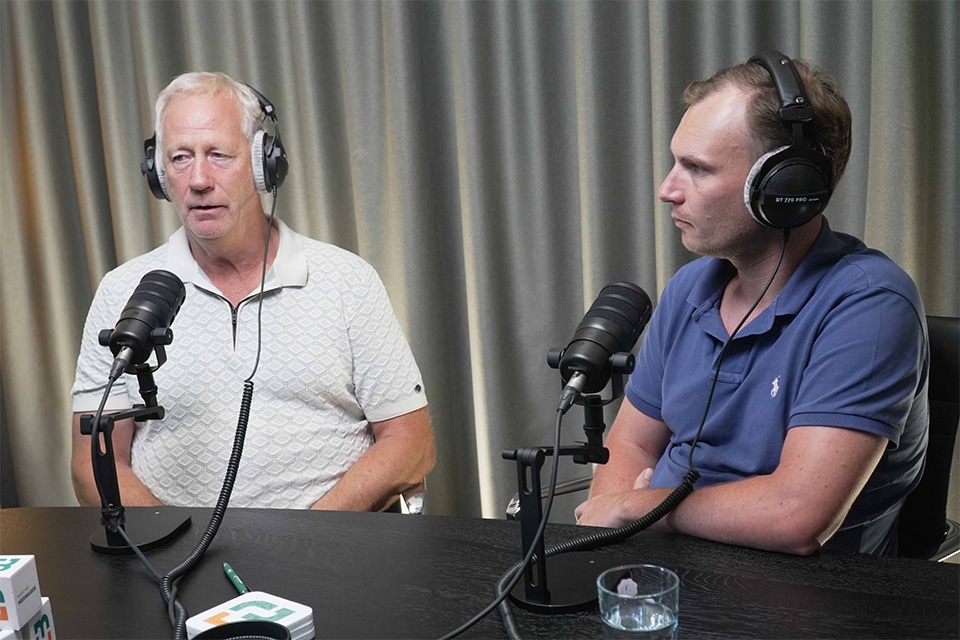
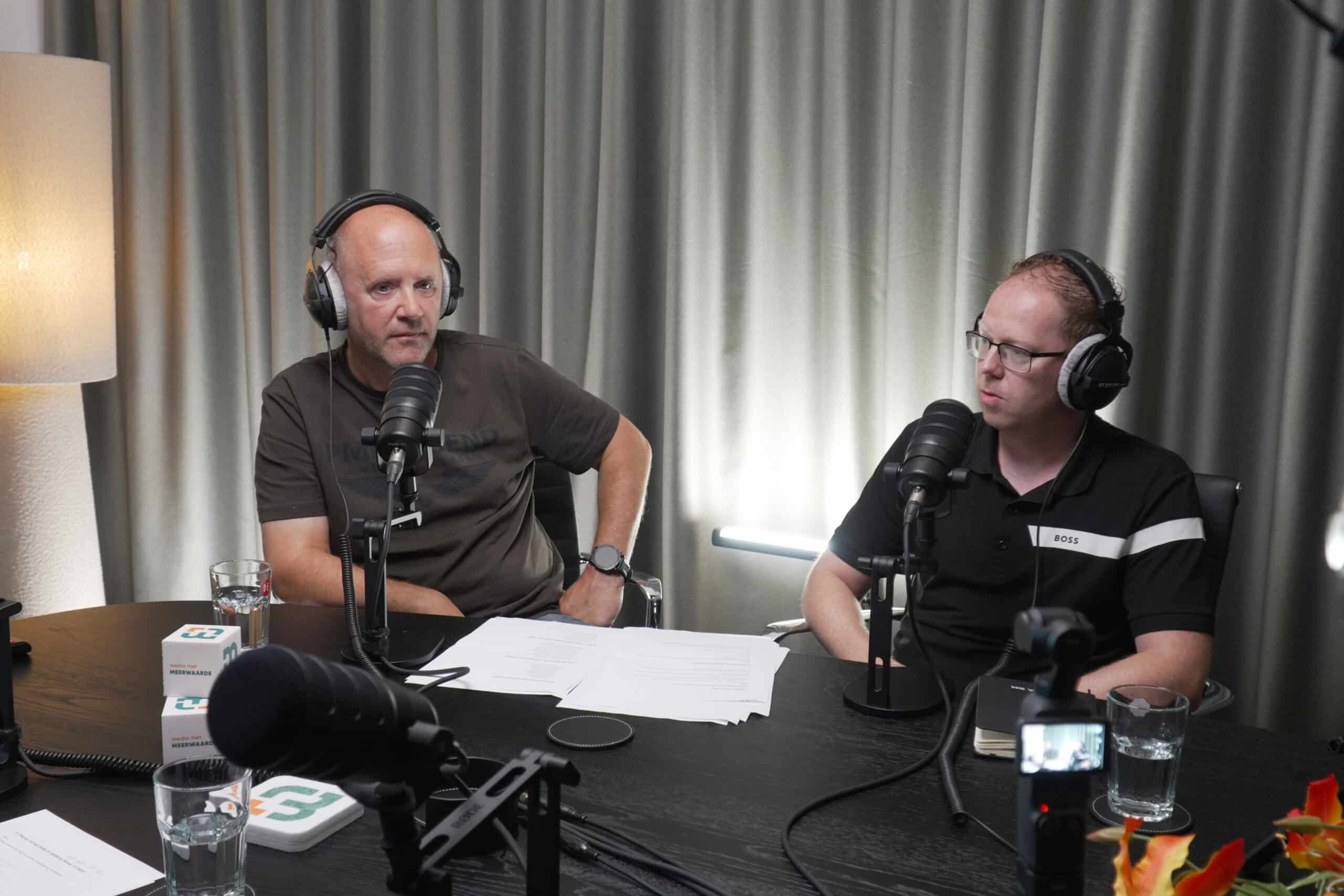
Roel van Gils: Welcome to another new episode of GWW-BOUWMAT, the podcast. Today we’re featuring a company that has undergone impressive growth in recent years. A move to a larger facility, the acquisition of a fellow steel construction firm, a growing team, and an increasingly prominent role in complex infrastructure projects. In short, they’re in full swing. I’m, of course, talking about Marsé Montage. Joining me at the table are Job and Robèr. Gentlemen, welcome.
Job Hester: Thank you.
[00:29] Meet Robèr Zoontjes and Job Hester
Roel van Gils: Please introduce yourself.
Robèr Zoontjes: 36 years at Marsé Montage.
Roel van Gils: Look.
Robèr Zoontjes: So, quite a while, actually.
Roel van Gils: So you have quite a bit of experience. Have you always enjoyed it?
Robèr Zoontjes: Otherwise, you wouldn't stay that long.
Roel van Gils: Yeah, I get it. Yeah, great. Thank you.
Job Hester: Yes, my name is Job Hester. I’ve been the owner of Marsé Montage for six years and of Wiko Staalbouw for one year. I’m also a colleague of Robèr’s, and every day I get to benefit from all the experience he’s gained.
Roel van Gils: You two spend a lot of time together.
Job Hester: We hang out together quite a bit, yeah.
[01:04] A New Chapter for Marsé Montage
Roel van Gils: Okay, great. Gentlemen, welcome back. 2026 looks like it’s going to be a special year for Marsé Montage. Or is it perhaps already? When you look back on the past few months, does it feel like the start of a new phase for you, Job?
Job Hester: Yes, definitely. And that actually started last year. So in 2025, as I just mentioned, we acquired Wiko Staalbouw. And we merged it with Marsé Montage. So now they’re together. They’re separate entities, but we collaborate a lot. So the teams also work together across departments, both in production and in assembly. Everyone has their own strengths. And by building on those strengths, we can actually serve our customers even better. On top of that, we also moved to a single location. So we went from two different locations to just one.
Roel van Gils: And I assume you're only talking about Marsé Montage.
Job Hester: And Wiko Staalbouw—both of them. So Marsé Montage was located in Castricum. It was on an industrial park, a bit out of the way, so it was pretty hard for large trucks to get there. And yes, customers could get there just fine, but they had to drive all the way through Castricum.
Roel van Gils: People in Castricum are happy now.
Job Hester: We’ve regularly had to swerve to avoid 22-meter trucks loaded with large pipes and lampposts. Most of the time, anyway. The transport companies are also very happy that we’ve moved. Now they can all back in normally and load and unload their trucks. It always worked out somehow. I think Castricum breathed a sigh of relief when we left in December.
[02:38] More space at the new location
Roel van Gils: Have you also gotten more space at the new location?
Job Hester: Yes, the office space is actually twice as large. We have about 1,100 square meters of office space. It’s a large office where we can all work together. We even have some space to spare. We’re also somewhat prepared for the future. We still have room to grow.
Roel van Gils: How do you like it, Robèr?
Robèr Zoontjes: A new location? It means a slightly longer commute in the morning, but that’s fine. We also checked out that location together to see if we were all comfortable with going there, of course. And yes, we’re very pleased to be there now and can see that everything is going better and more smoothly.
[03:27] Steel Structures and Anchors
Roel van Gils: Yeah, okay, but that's great. And if you could describe in a few lines who you are and what you do. Job, Robèr, you can both say a few words.
Robèr Zoontjes: Yes, temporary structures, but also a lot of anchoring systems for companies that drill anchors, anchor brackets—you name it. Basically everything—roof trusses, anything you can think of made of steel. Even a balcony railing—that’s possible.
[04:02] The Relocation of the Machinery
Roel van Gils: Yeah, yeah. And all those machines were moved to the new location, too. I can imagine that was quite a job.
Job Hester: Yes, definitely. That was quite a task. The move actually took up the entire month of December. And it’s still going on, actually, with setting up the new office. So not everything is in its place yet, and I can’t find things by feel. But that’s just a phase we have to get through. And that’s partly because we’ve actually been really busy—and still are, mind you. So we haven’t had time to get everything set up just right yet.
Roel van Gils: Did you work at two locations for a while, or not?
Robèr Zoontjes: Well, not really.
Job Hester: No, we did work at two locations with Wiko and Marsé. So Wiko Staalbouw was based in Koedijk and Marsé, as mentioned earlier, in Castricum. And those two companies merged while continuing to operate separately. But we did make sure that the downtime for both companies… That was in early December. Marsé’s was a week earlier than Wiko’s. And then we basically moved everything over—the large machines all at once—because we wanted to do it as efficiently as possible.
[05:07] The Acquisition of Wiko Staalbouw
Roel van Gils: What was the reasoning behind the acquisition of Wiko Staalbouw?
Job Hester: It’s actually interesting to look at companies that aren’t really future-proof at that moment, due to the owner’s specific circumstances at the time. For example, someone who wants to retire. Someone who’s already winding down operations. And yet there are still young people working there who have tremendous potential. They’re very talented and have extremely satisfied customers. So that was the company’s potential.
Roel van Gils: Yes. Sorry, Robèr, would you like to add anything? What's the difference between Wiko and Marsé?
[05:55] The Difference Between Marsé Montage and Wiko Staalbouw
Job Hester: Marsé is really a steel partner for the infrastructure sector, so to speak. That is, for civil engineering. We work with our regular contractors as steel partners. So they have the steel, and we take care of it. We make sure it gets to the site, is assembled, and is fabricated at the factory. And the smart ideas stemming from Robèr’s 36 years of experience are also of enormous added value, often for clients. So we also come up with a lot of solutions. We’re very adaptable. So we’re very flexible. We can easily deploy people, too. If we ever have to pull an all-nighter to meet a production deadline that was set a week in advance, that’s no problem for us. So in that respect, I think that’s our added value. And at Wiko Staalbouw, it’s pretty much the same, except the clients are different. They’re much more involved in regional construction projects—for contractors, really. In residential construction. Also in industrial building construction. The small industrial buildings—not the large ones, but definitely the small ones. They really specialize in custom staircases, landings, and railings. So they make very small, attractive staircases as well. And larger staircases, too. Stainless steel, steel, and aluminum.
[07:04] Greater capacity and shorter lead times
Roel van Gils: Yes, and now that you’re all in one location, you can of course support each other in that regard when it comes to your work.
Job Hester: Yes, definitely. For example, Wiko also produces quite a lot of smaller steelwork for contractors working on home additions and projects like that. We can manufacture those on short notice. And that generally leads to shorter lead times. I don’t think customers have fully noticed that yet. Because of the move, we’ve fallen about five weeks behind schedule. But we are producing items in a very short time. And that will ultimately result in very fast delivery times. We’ll become even more flexible.
[07:47] Flexibility for Clients
Roel van Gils: Yeah, yeah. Okay. And when you talk to clients, you often hear that…
Job Hester: That’s exactly it—the flexibility we offer. We can easily bring in extra people because we have a fairly large core team now. We also stay in close contact with the freelancers and other guys who work with us on a regular basis, so we know the quality of work they deliver and can call on them accordingly. And we’ve always had a great deal of flexibility, which is why clients chose us.
Roel van Gils: Yeah, yeah, yeah. Anyway, all kinds of things happen in the construction industry, of course. Schedules get pushed back, designs get adjusted—you name it. You can respond to those changes quickly.
Robèr Zoontjes: Delivered yesterday, more or less.
Roel van Gils: Oh, great. Yeah, okay. So even if you call at the last minute.
Robèr Zoontjes: Yes. Oh, right, we'll need four more welders tomorrow.
Roel van Gils: But it can be quite challenging, right?
Robèr Zoontjes: That's right. But we always do our best to make it happen.
Roel van Gils: Yeah, yeah. And is that also a reason why clients come back? Keep coming back, actually?
Job Hester: I think so. Yes, that and the quality of the players we’re producing.
[08:54] Construction Work at the Brittenpassage
Roel van Gils: Yeah, okay. Customization plays a big role, of course. Can you give a few examples of projects you’re working on, for instance?
Robèr Zoontjes: What we're working on right now. Among other things, we're currently working on the Britten and Minerva passages for Mobilis, in the Zuidas district, at Zuidasdok.
Roel van Gils: And then you supply various steel structures.
Robèr Zoontjes: Yes, everything from welding lids onto posts to designing structures and figuring out how to support all kinds of concrete elements.
Job Hester: Our work there varies. So we supply the anchoring structures so that the companies doing the anchoring work can actually do the job.
Roel van Gils: But you make that at your facility, right?
Job Hester: We make all of them on-site, yes. And a number of support structures. And the covers that Robèr was just talking about, for example—those are supplied to a very high standard, with full penetration welding. So we’re working under execution class 3—ROK 1.4 in this case.
Roel van Gils: Rijkswaterstaat?
Job Hester: That's right, yes. And we also have 100% UT inspections on 380 covers. And that just makes us even prouder when we deliver them without any defects.
[10:13] On-site welding and working during service outages
Roel van Gils: Yes, and do you also do outdoor welding?
Robèr Zoontjes: Definitely. Mostly outdoors.
Roel van Gils: Mostly outdoors—sorry. So you mean on-site. Yeah, okay. And that work often involves field service, of course.
Robèr Zoontjes: And at night, too, and on weekends.
Roel van Gils: Yeah, it doesn't matter. Quite a few of your people, of course.
Robèr Zoontjes: Definitely.
Roel van Gils: Anyway, that spirit is definitely there.
Job Hester: Yeah, and the nice thing about it is that the guys… Look, if you ask someone if they want to work on the weekend, most of them will say no. That’s the case with us, too, at first. But they also understand that because of that weekend work, we have work for the rest of the week, too. So it’s not like they’re all thrilled about it, but they’re definitely willing to do it.
[11:04] Roadwork on the A27
Roel van Gils: I understand that you’re also active on the A27.
Robèr Zoontjes: Yes.
Roel van Gils: ALSÉÉN. Can you tell us a little about that? What's the best part of the work there?
Robèr Zoontjes: As it happens, we’ve just finished building the support structure for the bike bridge on Groeneweg. The temporary bike bridge will be reinstalled there this week. That’s one thing. That’s what we’re doing right now.
Roel van Gils: So what should I keep in mind? In terms of construction? How big? How many metric tons?
Robèr Zoontjes: Yes, not a huge number of metric tons, but at least wind bracing or beams, HEB 300. It’s not extremely heavy. It’s more the structure itself that you have to weld in place between drilled piles. And, once again, under time pressure.
Job Hester: So that bike bridge had to be installed during a specific week because of a road closure taking place this weekend. And the structure had to be finished by then. So it was up to us to make sure that it was… And we succeeded.
Roel van Gils: Yes, absolutely.
[12:00] Safety and Certification
Roel van Gils: Yeah, yeah. And what about safety?
Job Hester: Yes, 100 percent. So, of course, we’re VCA-certified. All our guys and girls are, too. And we’re really committed to safety. So we also have the SCL, the Safety Ladder.
Roel van Gils: Oh, right.
Job Hester: Level 3 certified. And I think we upgraded that last year, from Level 2 to Level 3.
Roel van Gils: [unclear] Did you take the course?
Robèr Zoontjes: No, it was fun, but I also learned a thing or two.
Job Hester: We did it in-house. That’s also the great thing about having such a large building. We have the space to set up that kind of thing. So we had people come in with all kinds of mannequins and actors with all sorts of injuries. So yeah, it was a fun day for the staff.
[13:04] Execution Class 3 and Expansion of Technical Knowledge
Roel van Gils: And then, as you already mentioned, execution up to execution class 3.
Job Hester: Yes, so we comply with EN 1090-2, execution class 3. And very often there are additional requirements—for example, from Rijkswaterstaat—such as those just discussed with ROK 1.4 or 2.0. And we have quite extensive knowledge about those kinds of things. So we can deliver everything within that scope.
Roel van Gils: And there was also a job opening for an IWT employee, right? Or have you filled that position by now?
Job Hester: A new colleague will be joining us starting next week. And yes, they’re also an IWT graduate and someone who’s truly specialized in this field. This will actually help us expand our knowledge even further. Especially since we’ve hired quite a few young people recently—with somewhat less experience—who still have a lot to learn. And this new employee will help with that. So, it’s really another expansion of the company’s knowledge and the team’s as well.
Roel van Gils: What does that mean for clients?
Job Hester: In the field of engineering, for example. So we can contribute even more to finding solutions. And I also think we can shorten delivery times somewhat by increasing our drafting capacity, for example.
Roel van Gils: Yes, and of course, get all the documentation in order eventually.
Job Hester: Yes, we really have that under control already. So the manufacturing manuals and such—what we need to do under execution class 3.
Roel van Gils: Oh, right, that's part of it, of course.
Job Hester: Yes, that's all part of the process. So it's all well documented and under control.
[14:41] Bridge Projects in Medemblik
Roel van Gils: And I understand that you’re also involved in bridge projects in Medemblik—is that correct?
Job Hester: That's right, yes. Two new bridges are being built. One has already been built in Medemblik, and they’re currently working on the other one. We actually got involved with the firm K_Dekker to build the support structure. We got involved at a pretty early stage. And there was also this approach: “Think along with us; come up with a solution.” So, in that sense, they basically put it in our hands. We talked with them quite a bit about it and came up with a pretty good solution, all together. It’s actually very simple, but also very cost-effective.
Roel van Gils: So what kinds of products should you consider?
Job Hester: Yes, so this actually went from a pile cap—something that was going to be welded onto a pile with all kinds of gussets and very thick plates—to a fairly thin plate that we could position with millimeter precision thanks to the dimensional specifications. And the main advantage was that it took a little less time. All because we were once again under time pressure to finish the bridges, especially for the first section.
Roel van Gils: Because time pressure is definitely an issue, isn't it?
Job Hester: Yeah, that’s always a bit of an issue. And then you might think: why not start a little earlier? But often it’s not up to us. Still, it works well for us, so… And I think the client knows that, too. And the funny thing is: for that first bridge, we actually had to finish it so quickly because the bats were able to fly underneath it again.
Roel van Gils: Oh, because of the flora and fauna.
Job Hester: Yes, exactly.
Roel van Gils: Yes, of course that’s also playing an increasingly important role in infrastructure. Yes, okay.
[16:26] The machinery in the new warehouse
Roel van Gils: Well, I think we’ve mentioned enough projects. So all of that will be manufactured at your new facility. Take us on a tour. What kind of machinery do you have there? What are you capable of doing?
Job Hester: We actually have some duplicate machinery right now. So, of course, we merged two companies into one and brought all the machines with us—at least, all the machines we had room for.
Roel van Gils: That spot was there, too.
Job Hester: Yes, that area was there, too. All the machines that had already been inspected or still needed to be inspected—but could be inspected—were moved along. We got rid of all the machines that no longer met current safety standards. And we can actually cut—that is, plasma cut on a 6-by-2 plasma table—up to 40 thick. So that actually happens quite often in the Marsé business: we have to cut something quickly because there’s still a bit left over from the weekend that needs to be installed somewhere so we can open or close up again quickly. At Wiko Staalbouw, our specialty is cutting handrails into special shapes and things like that. A great project for another client: they have chimneys on vacation homes, and we have to make 42 chimneys out of steel… No, out of aluminum. And we actually make those entirely ourselves.
Roel van Gils: Okay. And what about the actual chimney itself?
Job Hester: It is an ornamental chimney, so no smoke goes through it and no fire comes out of it. But it’s for aesthetic purposes, and we make it out of aluminum. So we cut it ourselves, shape it a bit, and weld it together ourselves. Then it goes to the coating shop to get a nice color.
[17:55] Steel, stainless steel, and aluminum
Roel van Gils: Yes, yes. So basically metal in the broadest sense of the word. That means steel, aluminum, and stainless steel.
Job Hester: Yes, really. All… Or at least, those three types. Not the more specialized ones, but those three.
Roel van Gils: Yes, yes. And in addition to that, both CNC and conventional press brakes, as I understand it.
Job Hester: A heavy-duty bending machine. Not even an extremely heavy-duty one, but at least one that can bend material up to 12 thick over three meters. So it’s suitable for all sheet pile covers and other structures. And we have a CNC-controlled bending machine for more precise bending work. So, for example, for chimneys or planters made of Corten steel—or really, you name it.
[18:36] Major Projects from the Past
Roel van Gils: Yes. We’ve now mentioned a number of projects. Those are fairly recent projects. In the past, you’ve…
Job Hester: Marsé Montage has worked on projects covering roughly half of the Netherlands. But Robèr was involved in that, so maybe it would be best if he explained it.
Robèr Zoontjes: Yes, I can tell you a thing or two about that. We built the tunnel in Zevenaar for the Betuweroute. It weighed 1,500 metric tons.
Roel van Gils: And what kinds of structures did you build for that?
Robèr Zoontjes: We built formwork there, along the entire length of the tunnel. After that, we moved on to the high-speed rail line. We built two [unclear] for the high-speed rail tunnels. That was 9,000 metric tons, and then we removed it again. It’s a temporary structure.
Roel van Gils: And what happened to that?
Robèr Zoontjes: That goes back to the supplier where the pipes came from. The beams.
Roel van Gils: So that can be used again.
Robèr Zoontjes: You see that a lot, too. I’ve seen this beam before. And you used everything. Then we went to Amsterdam Central Station for the North-South Line. We supported the main station building. Back then, we moved something like 1,600 metric tons underneath Central Station using forklifts and all that. But it was great being right in the city center. Yeah, we had a great time. Ten years working together. It was a really fun project for all the technicians, too. And yes, we also worked on the Rijksmuseum. We built the two basements there. And we did a parking garage in Utrecht, Vredenburg—a parking garage. Top-down. So they were building from the top down, and we worked our way down, five floors at a time. So they’re all pretty unique projects we’ve done over the years. And all the small parking garages—well, there are too many to list. Because I start in the morning and I don’t know where I’ll end up by the afternoon. So it’s a very broad range.
[20:48] Operates nationwide
Roel van Gils: And do you operate nationwide?
Job Hester: Yes, definitely. We operate nationwide. Look, we’re based in Alkmaar, of course, so we do tend to focus on Amsterdam and Utrecht as well—absolutely. We do a lot of work in Rotterdam, so that’s kind of our region. We’re currently out there on the A27. That’s a bit further, but it’s still all within a reasonable driving distance for us. Beyond that, we coordinate with the client. We also recently delivered a lot of steelwork in Vught for the cut-and-cover section there. In that case, for example, we handled the production but not the installation. Installation in this case is more of a job for the pile driver. So I believe we delivered 73 beams there, each 22 meters long—HEB 500, HEA 500, and HEA 450. So that was another really nice project. And we actually had that left over because we had been renovating the locks to Muiden. We did a lot of work there as well.
[21:58] Marsé Montage and Wiko Staalbouw as steel partners
Roel van Gils: Yes, if you deliver quality, of course, and do a good job, then word-of-mouth is the best form of advertising.
Job Hester: Yes, exactly.
Roel van Gils: Okay. So, to sum it up, what can people call you about? Marsé Montage, and Wiko Staalbouw, of course.
Job Hester: Yes, well, they’re basically two different things. So for Marsé Montage, we’re essentially the steel partner on larger projects. That’s how we want to position ourselves. And we can do just about anything there: on-site welding, supplying structures, fabricating structures on-site, but also simply manufacturing, delivering, and installing complete structures that are fabricated in our own facility. So we can basically handle anything related to steel. And for Wiko Staalbouw, yes, there we specialize in staircases, landings, railings, spiral staircases—all kinds of special structures. We also handle smaller structural steelwork for contractors. We have our own truck with a crane that we use to install things.
Roel van Gils: Self-sufficient.
Job Hester: Self-sufficient, definitely. Yes. And with the experienced guys we have on staff, the customer doesn't have to worry about us at all while we're working.
[23:10] Growing with the Team
Roel van Gils: Okay, great. That gives me a complete picture, I think. Looking ahead to the coming years, where will Marsé Montage and Wiko Staalbouw be together?
Job Hester: Well, I hope we can keep this momentum going. And that our team of employees—both guys and girls—continues to grow steadily. We’ll keep doing our best to keep all our customers satisfied. And I hope we’re able to maintain this growth. Yes, that’s really the goal.
[23:40] Job Openings and Closing
Roel van Gils: Are there perhaps any job openings for listeners who might be interested?
Job Hester: Yes, we’re still looking for a new… No, actually. Yes, there are always job openings. There’s always room for good people. We’re fully staffed in all areas, though. But there’s always room for good bench workers, welders, construction workers, and mechanics.
Roel van Gils: Okay, great. Thank you for your insights so far, and for sharing your story. And listeners, thank you for listening.
Job Hester: Yes, thank you.
Robèr Zoontjes: You're welcome.

Platform on civil engineering, underground infrastructure, energy, construction equipment & construction machinery