Platform on civil engineering, underground infrastructure, energy, construction equipment & construction machinery
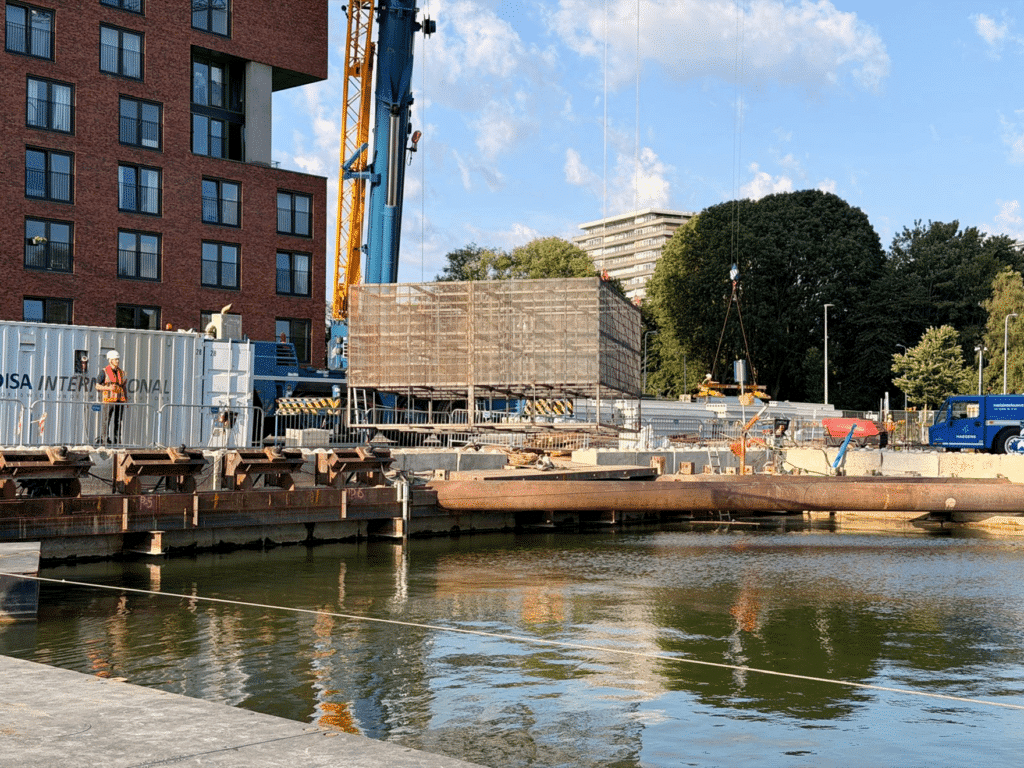
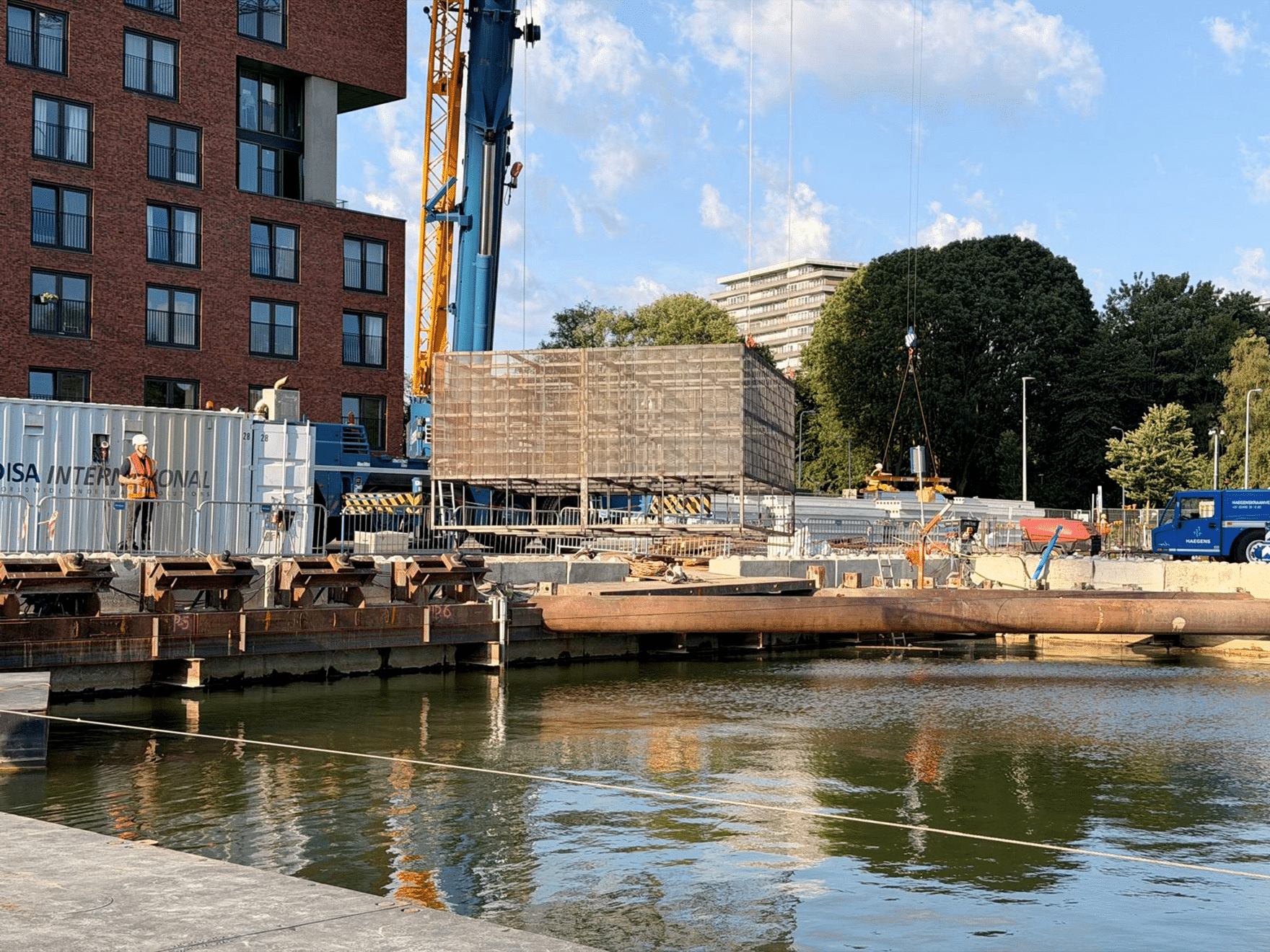
Before the first floor of the new residential tower at the Our Domain project on Europalaan in Utrecht goes up, a technical feat is being accomplished more than five meters below ground level. In a construction pit measuring 120 by 45 meters, divers and specialists from DISA International are laying the foundation. With the pouring of 4,700 m³ of underwater concrete just after the summer break, the construction pit now serves as the ‘foundation’ upon which the tower can be built.
“As a regular partner of Roel van der Stoel, we were brought in to perform the specialized underwater work,” says Cecil de Groot of DISA International. “Our work was extensive. First, we thoroughly cleaned and inspected the CSM walls to ensure that the underwater concrete could bond optimally. We used 400 bar of high-pressure water to remove loose cement residue and roughen the surface.”
Another important part of the work involved extending no fewer than 731 Gewi anchors. “These anchors protrude upward from the seabed and hold the concrete floor in place. By adjusting the length of the anchors with coupling sleeves only after installation, you prevent damage during the excavation of the construction pit,” explains dive team leader Juul Bakker. DISA also laid the foundation for the elevator shafts underwater. “The rebar cages were lowered in a controlled manner and are now an integral part of the foundation.”
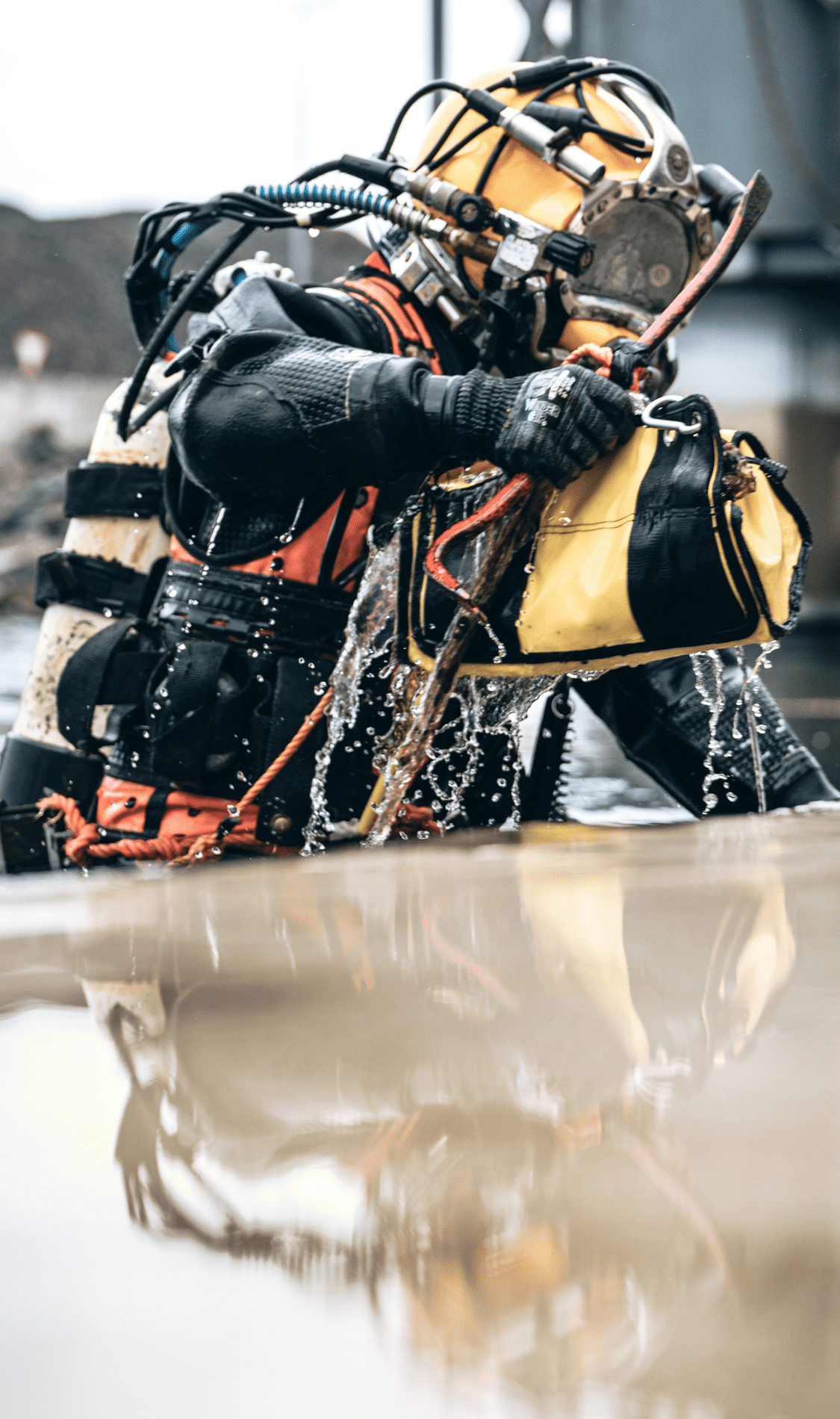
To control cracking, DISA installed two 45-meter crack guides in the 120-meter-long underwater concrete floor. “Using a steel frame and plates, we created a localized weakening in the concrete so that any shrinkage cracks would form exactly where desired,” explains Cecil. “Injection hoses were installed directly at these locations and covered with an inflatable seal. Should sand or water leakage occur later, gel or injection mortar can be injected through the hoses to permanently seal the crack.” Injection hoses were also installed as a preventive measure in the corners of the construction pit, as that is where shrinkage poses the greatest risk of leakage.
The work took place in a construction pit with a water depth of approximately five meters, while underwater visibility ranged from as little as one meter to several meters. During the busiest phase, three DISA dive teams worked simultaneously on the project; in total, the work took about eight weeks. “Above water, too, the project required sophisticated logistics,” Juul notes. “Several cranes were positioned around the construction pit, while three bulkhead bridges served as both work bridges and shoring frames. This allowed equipment and personnel to work safely inside the construction pit.”
With the completion of the specialized underwater phase, the foundation is ready for the next step: the construction of a new residential tower that will soon be part of the large-scale housing development along Europalaan in Utrecht.
Neem dan rechtstreeks contact op met DISA International.
 Contact opnemen
We provide safe, time efficient, cost-effective and comprehensive subsea solutions. YOUR SUBSEA SOLUTIONS SPECIALIST We are DISA International, your specialists in pioneering subsea solutions. Since 2003 we have been diving into different segments of the marine and underwater world where our inventive and comprehensive solutions are relied upon by our international client base. HOW WE [...]
Bekijk Bedrijfsprofiel