Platform on civil engineering, underground infrastructure, energy, construction equipment & construction machinery
One battery change: enough power for a full workday
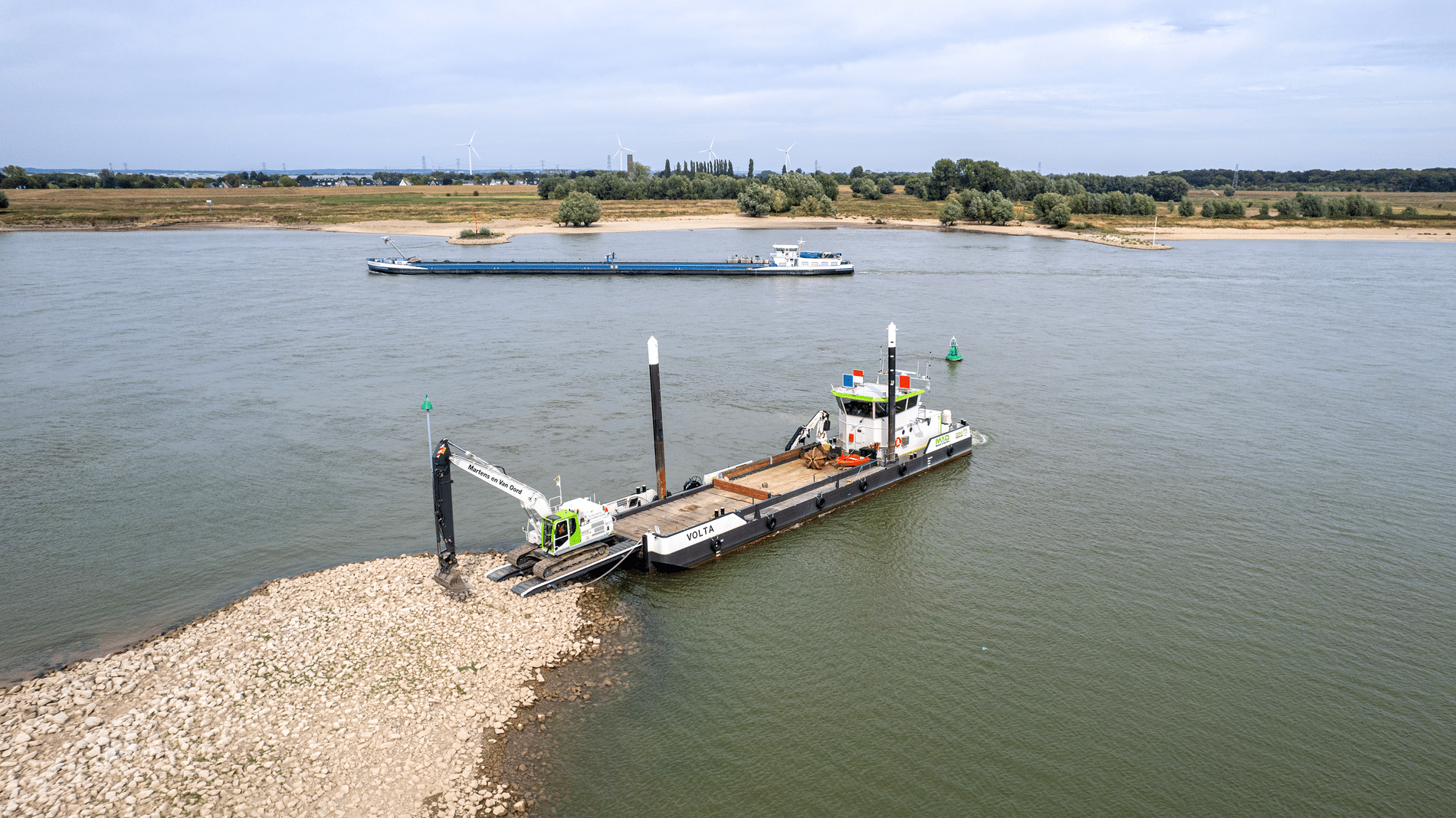
Along the Waal River near Ochten, GMB’s new electric crawler excavators are working on the Neder-Betuwe dike reinforcement project. This isn’t a test run or demonstration, but heavy earthwork from early in the morning until the end of the workday. Operators Anton Molenaar and Jurgen Kruis notice above all what’s missing: engine noise, exhaust fumes, and the power dip of a diesel engine.
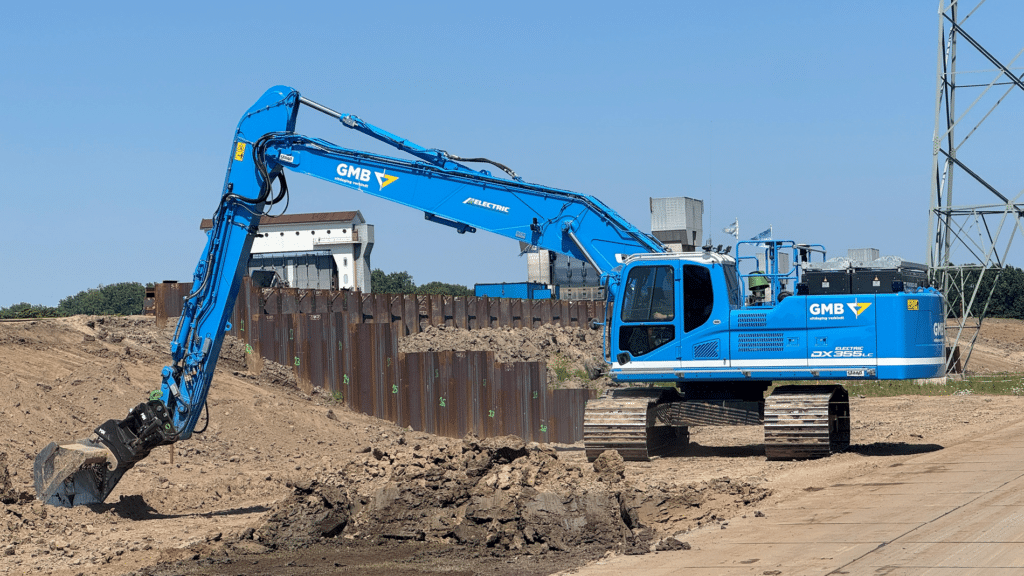
Anyone in Ochten who goes by the sound of a motor will easily walk right past GMB’s new excavators. On the Waalbandijk, tracks crunch across the sand, a bucket breaks up the pile of rubble, and the hydraulics hiss with every movement. The familiar roar of a diesel engine is missing. Meanwhile, work continues as usual in Anton Molenaar’s cab.
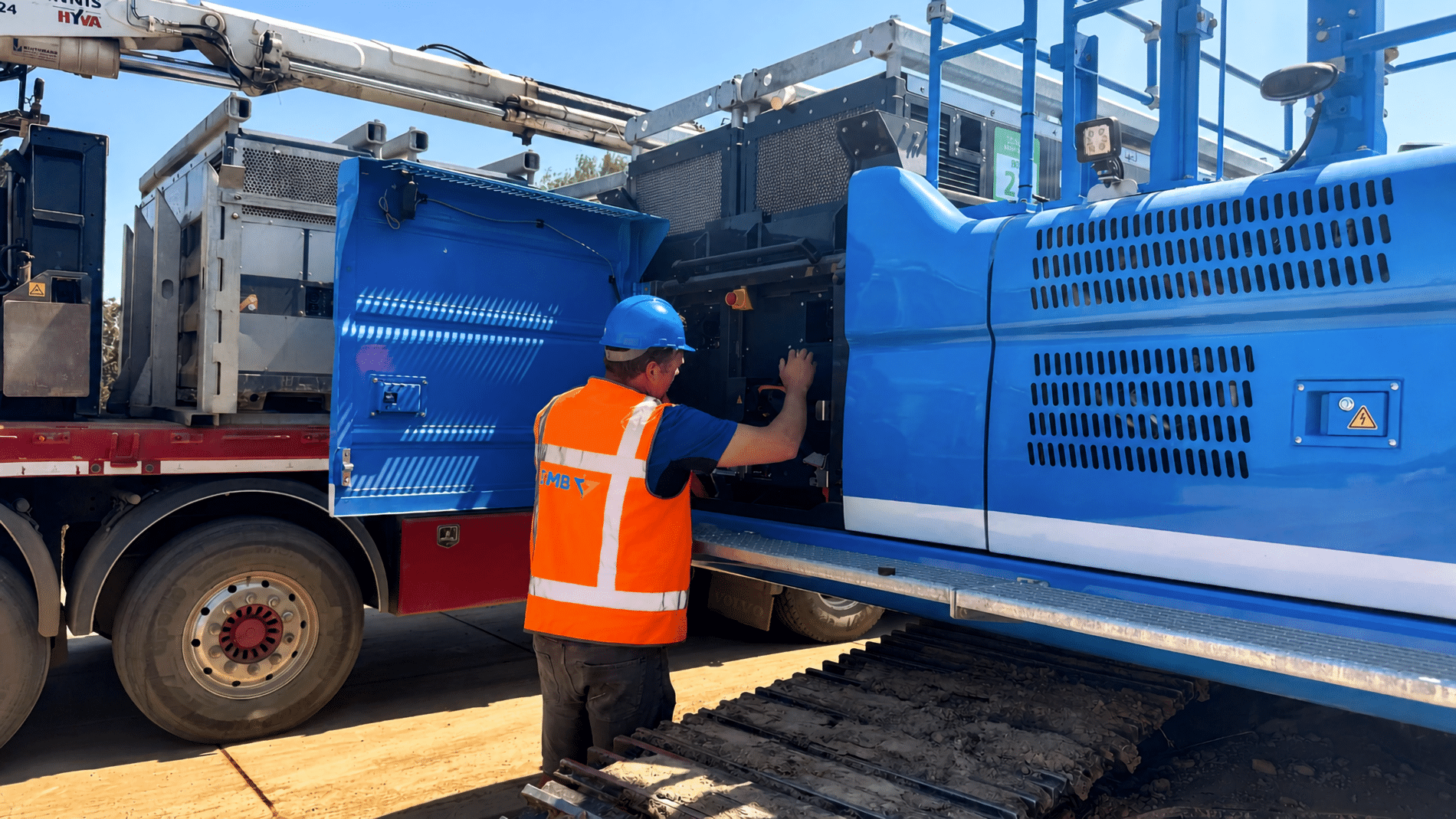
His DX355LC Electric is a 35-metric-ton electric crawler excavator with a boom extended up to 12.3 meters. So this isn’t light work. Here, the machine digs deep and lifts high—exactly the kind of work that requires a lot of energy. Yet the two Powerbox 400 battery packs are swapped out only once a day. In the morning, the excavator gets a full set; after that, it runs continuously throughout the workday. According to the operators, the swap itself takes no more than four to five minutes. ’The electric motor delivers its maximum torque immediately,“ explains Staad sales specialist Frank Verbij. ”As a result, the RPM doesn’t drop when the machine is under heavy load.“
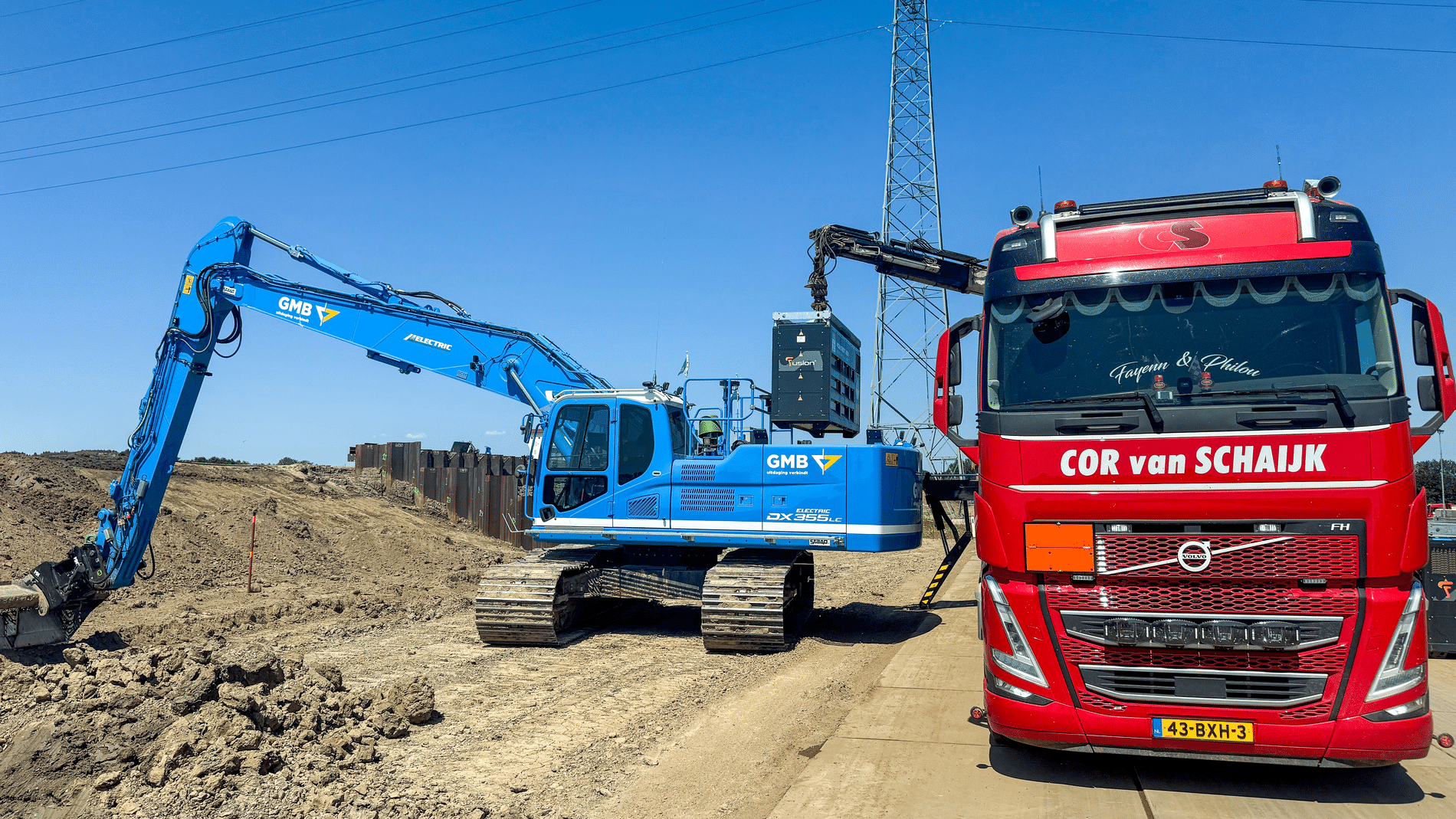
Anton now has over two and a half years of experience with electric equipment. “Ultimately, it’s still a hydraulic excavator. Only the drive system is different.” He notices the biggest difference in power delivery. A diesel engine must constantly compensate under load, while the electric motor delivers its power evenly. “There’s less power drop-off and a continuous flow of oil. The machine just keeps pulling.” He also expects benefits for the hydraulic system: fewer fluctuations could mean less wear on the pumps.
My colleague Jurgen Kruis is just as level-headed. “You don’t really notice any difference in how it runs. It’s mainly the things surrounding it that are different.” The plug must be disconnected and the lock released correctly before changing the battery, and the startup procedure requires a specific sequence. If you try to rush it, you might skip a step. “Those are things you have to get used to.” The new electric machines help the operator with this, Frank explains. “For example, a safety lock prevents the battery from being replaced while the charging plug is still connected.”
The crawler excavators are being deployed on the Neder-Betuwe dike reinforcement project led by the Rivierenland Water Board and the Neder-Betuwe Dike Alliance, in which Dura Vermeer, Ploegam, and GMB are collaborating. The total length of the project along the northern bank of the Waal is 20.2 kilometers. Work has begun on the first nine kilometers between Tiel and Ochten. Strict rules apply to the excavation of the dike body. Since the Waal River can rise rapidly, each earth-moving machine is allowed to excavate only a limited length at a time, so that the work can be closed off in a timely manner in the event of high water.
For GMB, this purchase isn’t an end in itself. The family-owned company aims to operate emission-free by 2030 and, to that end, established a phase-out plan for diesel equipment, trucks, and company vehicles years ago. “We didn’t just want to buy an electric machine; we wanted to find a partner with whom we could continue to build,” says Pascal Ogink, operations manager at GMB. He represents the machine operators and site supervisors in the selection and purchase of equipment.
The requirements were clear: replaceable batteries, sufficient capacity for a full workday, and, preferably, a single supplier for both crawler excavators and wheeled excavators. Especially on dikes, fixed heavy-duty charging stations aren’t available everywhere. With portable battery packs, power can be brought directly to the machine.
GMB had machines from various suppliers tested on projects. Operators worked with them for a day and reported on stability, speed, tires, reach, and handling. GMB then evaluated the candidates based on functionality, price, and collaboration. Staad and its electric machines emerged as the top performers in this comparison. Frank made a point of staying close to the operators during the tests. “They can immediately sense whether a machine feels right, isn’t stable enough, or if a particular boom configuration isn’t suitable for the job. With that information, you can provide targeted advice.”
Then the detailing began. GMB and Staad created a build manual for each machine. It includes not only the length of the boom and the weighted counterweight, but also the position of screens, joystick functions, lighting, cameras, decals, and lubrication points. “The operator spends the whole day in there. So his workspace should be just right,” says Pascal. Three of the four DX355LC Electric crawler excavators ordered will have an identical long boom; the fourth will be shorter and more powerful.
The total order consists of four DX355LC electric crawler excavators, two DX165W electric mobile excavators, and four additional Powerbox 400 battery packs. In addition, GMB ordered three conventional Develons for work where electric power isn’t always feasible yet. On the Neder-Betuwe project, the contractors also share a joint pool of 24 battery packs. A single platform makes swapping, charging, and mutual use significantly easier. “You have to view the machine and the power supply as a single system,” says Frank. “Even without a permanent connection at every worksite, you can continue working emission-free with a charging station and swappable batteries.”
For Staad’s sales specialist, the collaboration really begins after delivery. Operators can call him directly, and their real-world experience informs future configurations. “It’s precisely the critical feedback that helps us improve. That’s what makes the machines better,” according to Frank.
On the dike, the bucket sinks back into the dike body. The long boom extends, the upper carriage rotates, and dozens of metric tons of steel and soil begin to move silently. Electric operations don’t make a loud announcement here. It just gets to work.
Earthmoving Days
Want to see for yourself how an electric crawler excavator works? During Staad’s Earthmoving Days on Friday, September 18, and Saturday, September 19, in Veghel, you can take a close look at the machines featured in this article and try them out for yourself.
Neem dan rechtstreeks contact op met Staad BV.
 Contact opnemen
Staad is a leading Dutch company founded in 2013. Since then, we have become an importer and dealer of Develon earthmoving machines in central and southern Netherlands. In addition to supplying conventional machines, we also develop electric earthmoving machines with our Staad brand. We are an innovative player in an industry in which machines are becoming ever cleaner and, in the meantime, we supply [...]
Bekijk Bedrijfsprofiel