Platform on civil engineering, underground infrastructure, energy, construction equipment & construction machinery
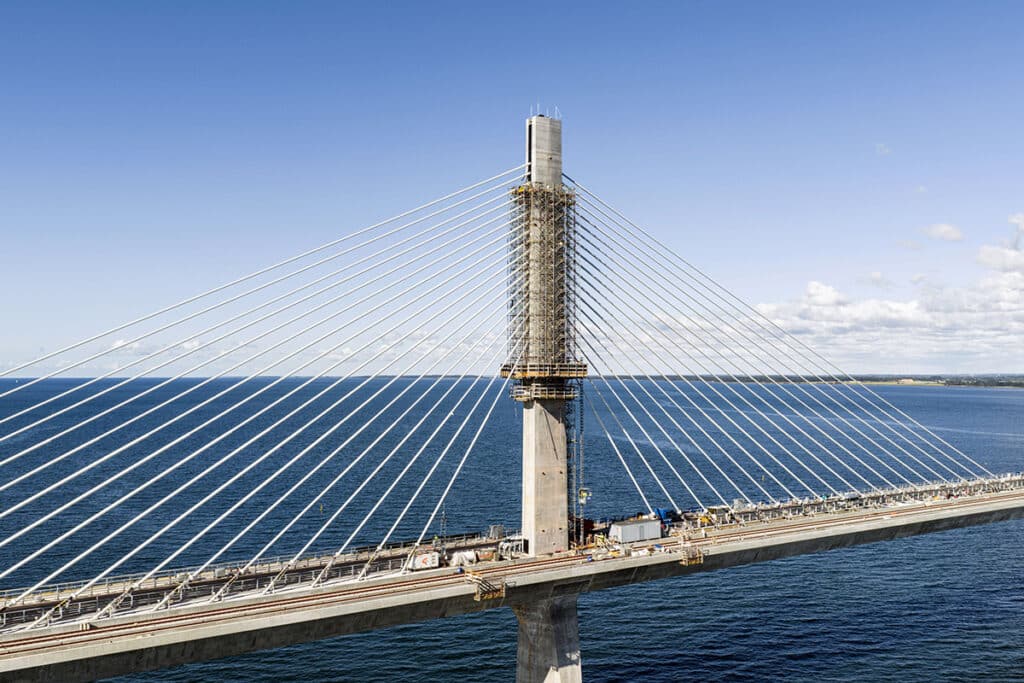
With the construction of the new Storstrøm Bridge, Denmark is modernizing a crucial part of the Scandinavian road and rail network. To ensure safe and stable progress under complex geometric and environmental conditions, Doka is supporting the project with an integrated formwork and shoring concept designed to provide predictable work processes throughout all critical construction phases.
With a total length of approximately 3.8 kilometers, the Storstrøm Bridge will be Denmark’s third-longest bridge. Beyond its size, the project plays a strategic role within a high-capacity north-south transportation corridor. Together with the Fehmarn Belt Link, it forms part of an uninterrupted connection between Scandinavia and Central Europe, supporting cross-border passenger and freight transport by road and rail.
“The Storstrøm Bridge project required a design that could adapt precisely and easily to changing geometries while withstanding high wind loads. Doka’s technical approach provided the stability and flexibility needed to maintain a reliable construction sequence under constantly changing geometric conditions, particularly in the mainland section,” explains Aurelia Penza, technical manager at Itinera.
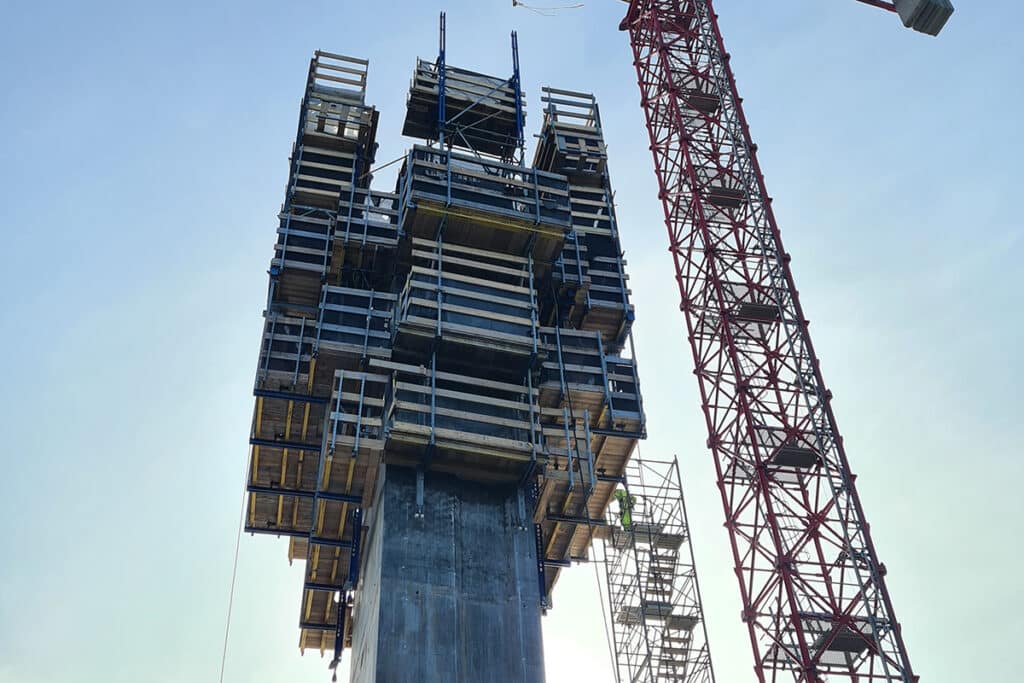
Doka has been contributing to the Storstrøm Bridge project in various phases since 2019. The contract included solutions for the approximately 80-meter-long access bridges on both sides, pier caps prefabricated on land, cantilevered structures connecting the prefabricated bridge segments to the pylon, as well as formwork for the pylon itself. To complete the overall setup, a custom-built work platform was installed to support the final construction work on the cable-stayed bridge.
“For Denmark, the Storstrøm Bridge represents a significant step toward improving the national transportation network and cross-border connections. Our involvement since 2019 reflects our close collaboration with the client and our ability to support technically demanding bridge construction projects. As a reliable partner, we at Doka ensure success—by delivering high-quality solutions for complex infrastructure projects,” adds Martin Overgaard Skovsege, Managing Director of Doka Denmark.
As the central supporting structure of this cable-stayed bridge, the 102-meter-high pylon not only transfers all forces to the foundation, but also features an extremely complex design with variable geometry, integrated recesses, prefabricated box-outs, and sheathing tubes for the stay cables. Work on the pylon was a critical milestone in the overall construction sequence. By combining SKE100 plus platforms for heavy loads and multi-level work zones with flexible SKE50 plus platforms on the sides where space was limited, a cost-effective and efficient system was achieved.
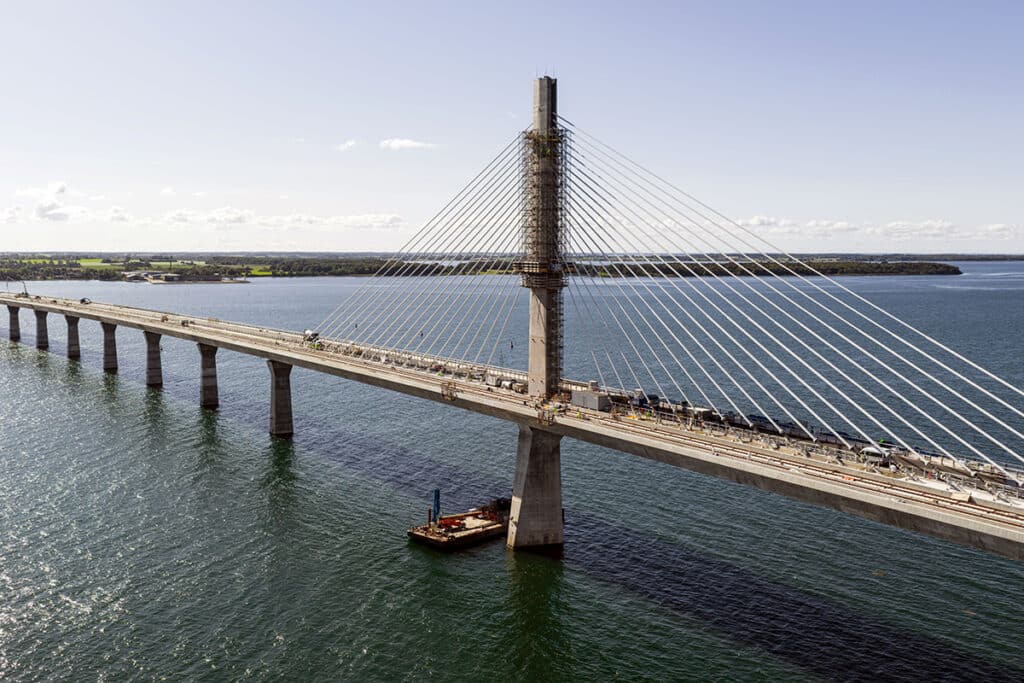
The final phase of the cable-stayed bridge was supported by a custom-built work platform that enabled the completion of the project’s final tasks. The platform was built up level by level using the Staxo 100 support tower and rested on four stationary SKE100 Plus and SKE50 Plus climbing formwork units, utilizing the proven anchor points from the pylon construction.
Two integrated stair towers ensured safe and comfortable access throughout all work operations. The platform was securely attached to the pylon and provided stable and reliable working conditions, even under heavy wind and load conditions. This allowed the pylon work to be successfully completed, marking an important milestone in the overall construction process.
Doka’s contribution to the Storstrøm Bridge project demonstrates how technically advanced formwork and shoring solutions can support complex infrastructure projects across multiple, independent phases, from preparatory work to key construction milestones. The bridge is expected to open to road traffic in 2026, with rail traffic to follow.
Project Details:
Neem dan rechtstreeks contact op met Doka Nederland B.V.
 Contact opnemen
Doka – Formwork and Scaffolding. We make it work. Doka is one of the world’s leading companies in the development, production, and distribution of formwork technology for use in all areas of the construction industry. In addition, Doka is a global supplier of well-designed scaffolding solutions for a wide range of applications. Doka employs 7,000 people worldwide in […]
Bekijk Bedrijfsprofiel