Platform on civil engineering, underground infrastructure, energy, construction equipment & construction machinery
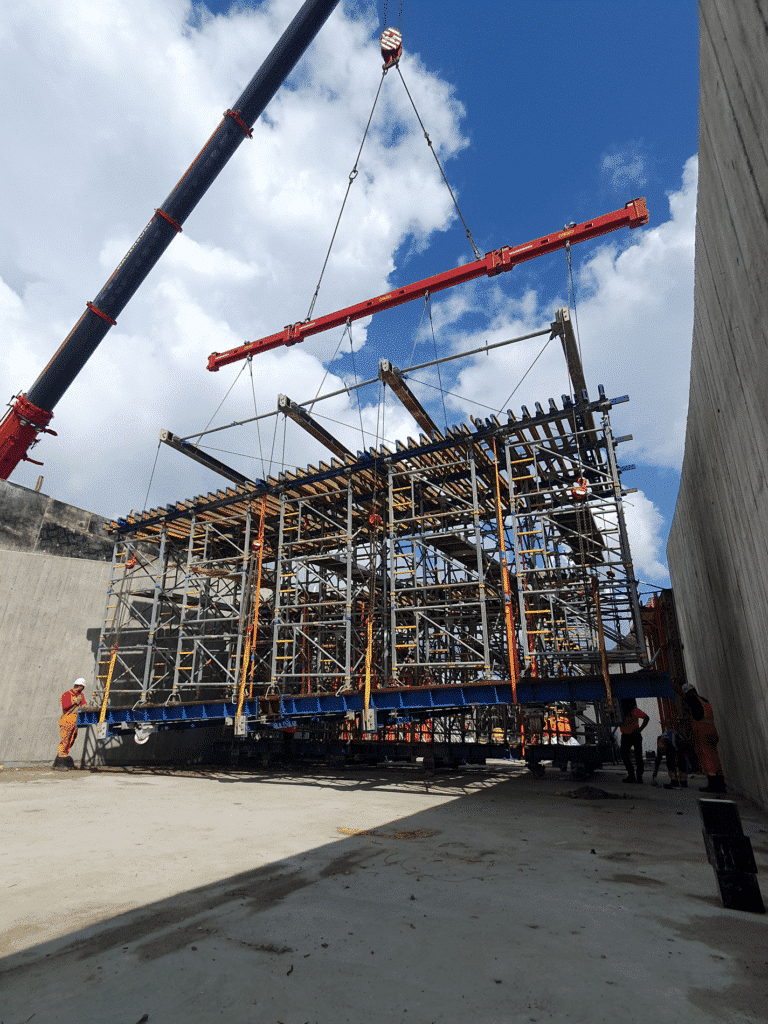
Doka provides formwork, shoring systems, and scaffolding worldwide for virtually any concrete project. As part of the international Doka organization, headquartered in Austria, the Dutch branch can draw on a wealth of knowledge and experience from projects around the world. This international expertise proves particularly valuable in complex infrastructure projects.
Doka is known as a full-service provider of formwork and shoring systems. “We provide solutions for residential construction, non-residential construction, and large-scale infrastructure projects,” says Remco de Jong. “It’s not just about the technology, but also about safety, logistics, and feasibility on the construction site. For complex projects, we make good use of our international Global Expertise Centers (GECs). These centers are staffed by experts who are involved daily in challenging projects worldwide, ranging from bridges and tunnels to heavy support structures.”
“The strength of a global organization is that you can learn from hundreds of similar projects,” says Remco. “When we receive a request for a complex tunnel project, our specialists draw on experiences from different countries and translate them into a solution that fits the local situation.”
That’s necessary because no two tunnels are alike. “A tunnel under a river has different requirements than a tunnel in a mountainous area,” he says. “Length, shape, load, and construction method also vary from project to project.”
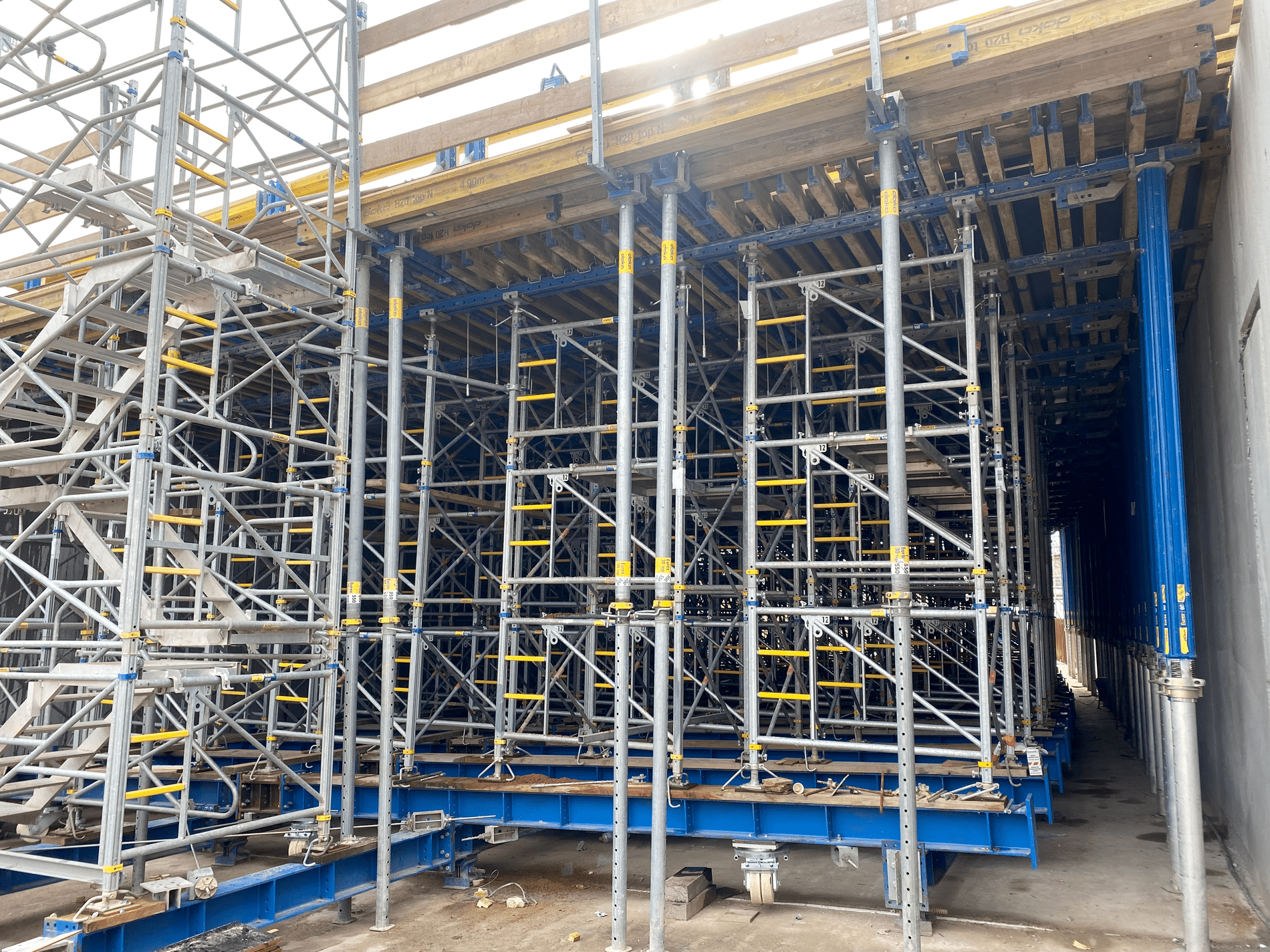
That is why Doka developed the UniKit system: a modular system of heavy-duty steel components that can be combined in a variety of ways. “Whereas heavy steel structures used to be welded on a project-by-project basis, a standardized approach is now increasingly being adopted,” Remco explains. “The steel components are bolted together instead of welded. This eliminates many time-consuming checks, certifications, and weld inspections, while maintaining flexibility. The same building blocks can be used to assemble straight, curved, or complex tunnel formwork.”
A good example is the tunnel project at Julianaplein in Groningen, part of the Aanpak Ring Zuid initiative. “Here, we had to build two intersecting tunnels. The challenge lay in the complex geometry: sloped floors, curved tunnel alignments, and varying heights,” says Remco. “We designed a tunnel formwork system that could be used for both tunnels. The structure was fully adapted to the sloped shape of the tunnel and mounted on wheels, so it could be easily moved to the next tunnel section after each construction phase.”
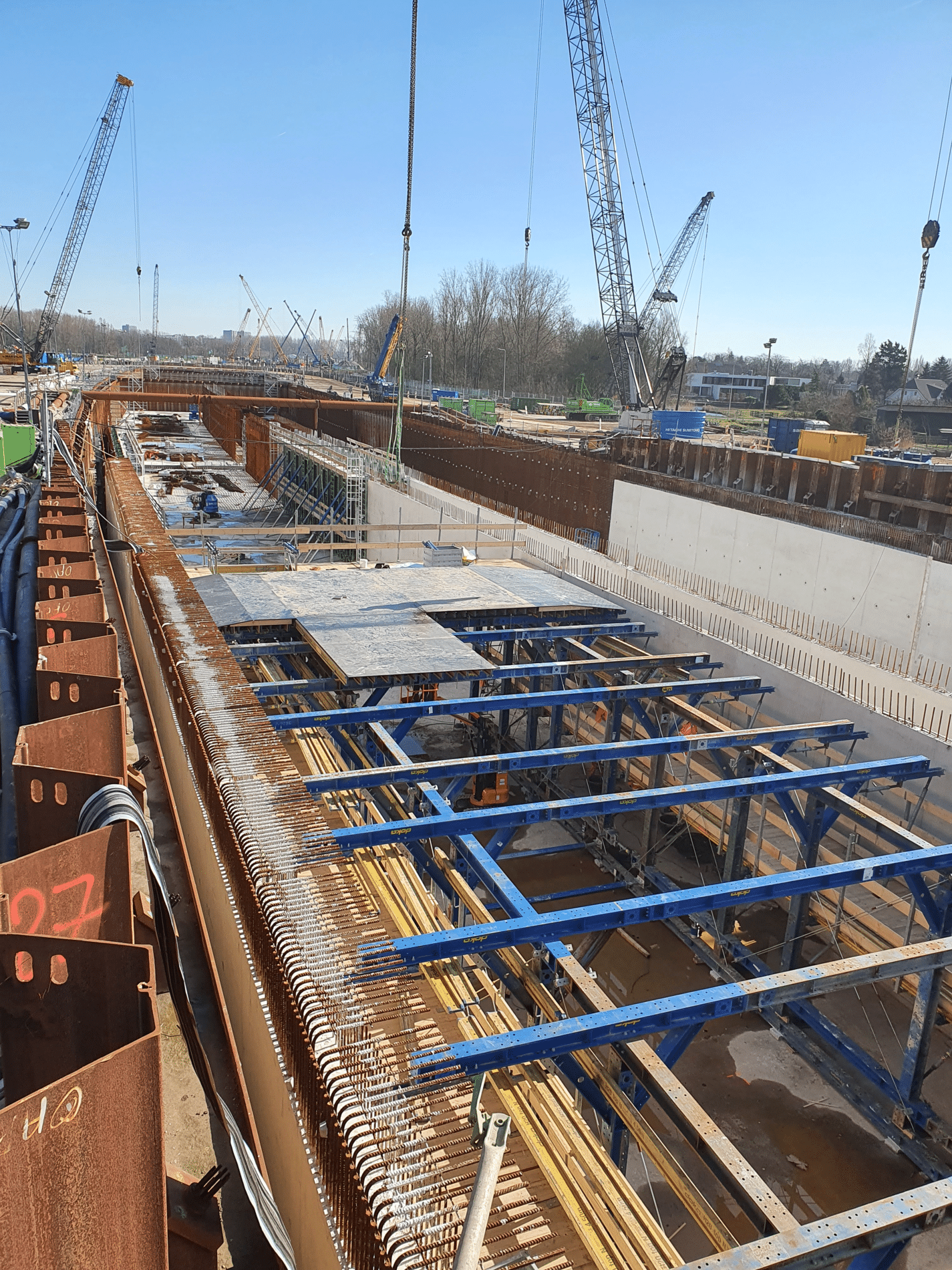
According to Remco, flexibility also played an important role in the construction of the De Groene Boog land tunnel in Rotterdam. “Here, the project budget was under pressure, and at the same time, construction logistics had to remain efficient. To address this, we developed a solution using tunnel cars that could be pulled to the next tunnel section with a winch. By utilizing existing system components, we were able to implement a cost-effective solution without compromising safety or quality.”
The combination of standardization and customization is at the heart of the Doka philosophy, Remco summarizes. “We strive to enable as many applications as possible using as few different components as possible. This ensures efficient inventory management, rapid deployment, and reliable solutions. Furthermore, every project is supported by specialized engineers and instructors who guide the contractor through the assembly process and ensure safety on the construction site.” Global expertise, translated into local solutions, makes it possible to execute even the most challenging tunnel projects in a manageable and safe manner.