Platform on civil engineering, underground infrastructure, energy, construction equipment & construction machinery
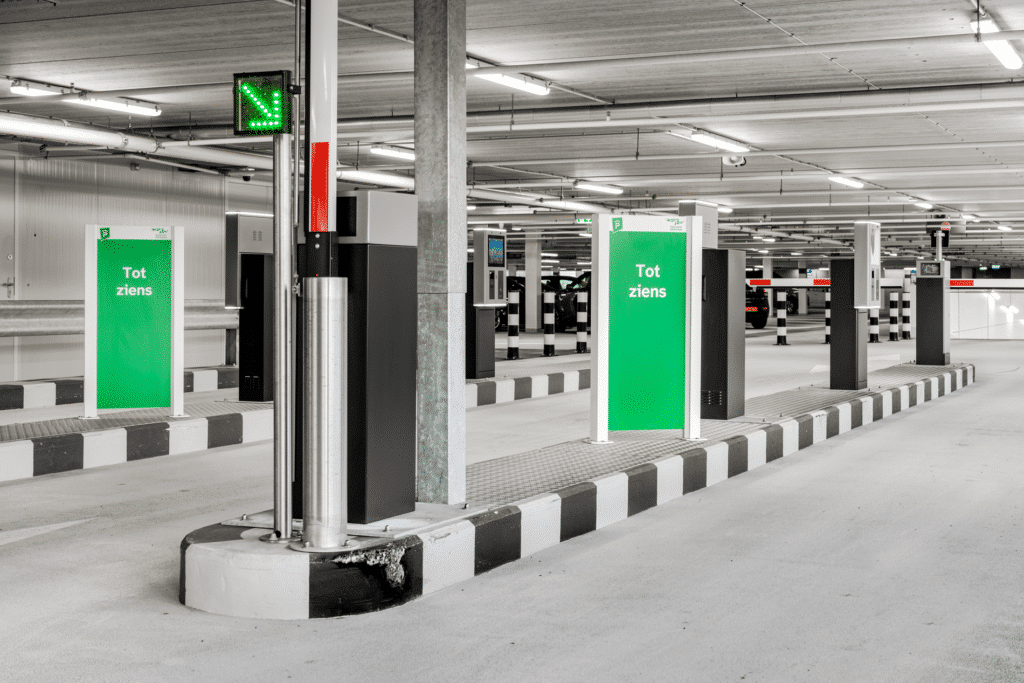
Underground construction requires protection that is appropriate from the design phase onward
Underground construction has become an integral part of urban development. Where space is scarce, functions are increasingly being moved below ground level. Parking beneath residential buildings, shopping districts, offices, station areas, and mobility hubs frees up space above ground for living, working, green spaces, and a better quality of life. But underground construction also presents technical challenges. According to Mario van Ginkel, sales manager at Triflex, a sustainable parking garage therefore doesn’t start with the finishing touches, but rather in the design phase.
“An underground parking garage is a heavily used structure that is subjected to a variety of loads,” Mario explains. “In addition to the structural challenges of underground construction, factors that arise during use must also be taken into account during the design phase. Moisture, de-icing salts, dirt, mechanical loads, safety, drainage, and maintenance all play a role. If you don’t think about these things until construction begins, it’s actually too late.”
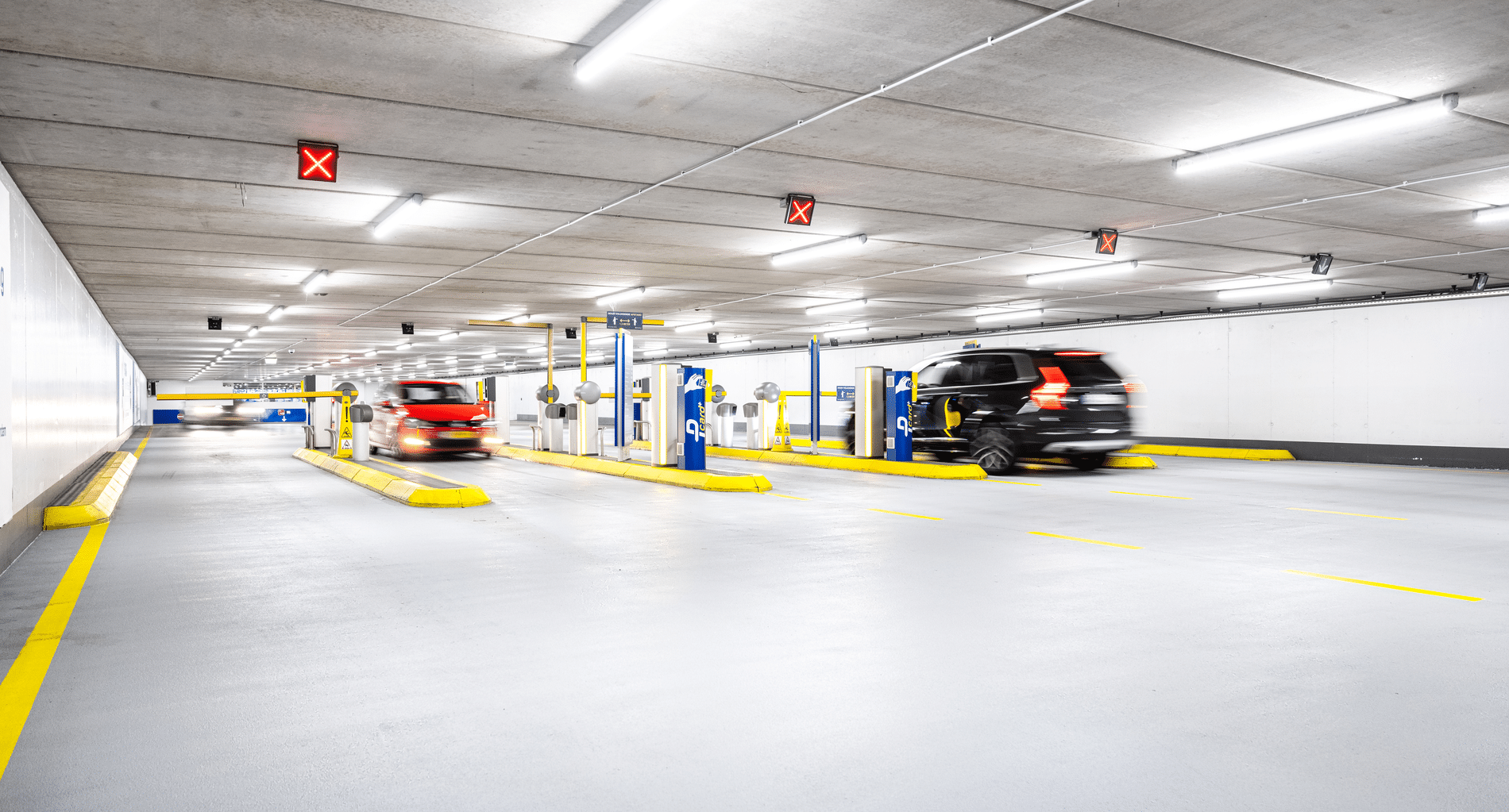
When it comes to parking garages, the first thing that often comes to mind is the visible floor: driving lanes, parking spaces, ramps, and lane markings. But the technical performance actually lies in the big picture. Every day, cars bring water, dirt, oil, and—in the winter—road salt into the garage. Chlorides, in particular, can cause significant damage over time if they penetrate the concrete structure through cracks, joints, or damaged finishes. Combined with moisture, this can lead to corrosion of the reinforcement and costly repairs.
“The floor finish isn’t just for aesthetics,” Mario rightly points out. “It also serves a protective function. It must prevent moisture and salts from penetrating the structure. This is incredibly important, especially in underground parking garages, where damage often doesn’t become visible until the problem has already progressed.”
Mario explains that, in addition to chemical stress, there is also constant mechanical stress. “Think of tires grinding against the road in curves, braking and acceleration forces on inclines, and heavy traffic on roadways. That calls for systems that are not only watertight but also wear-resistant and tailored to actual use.’
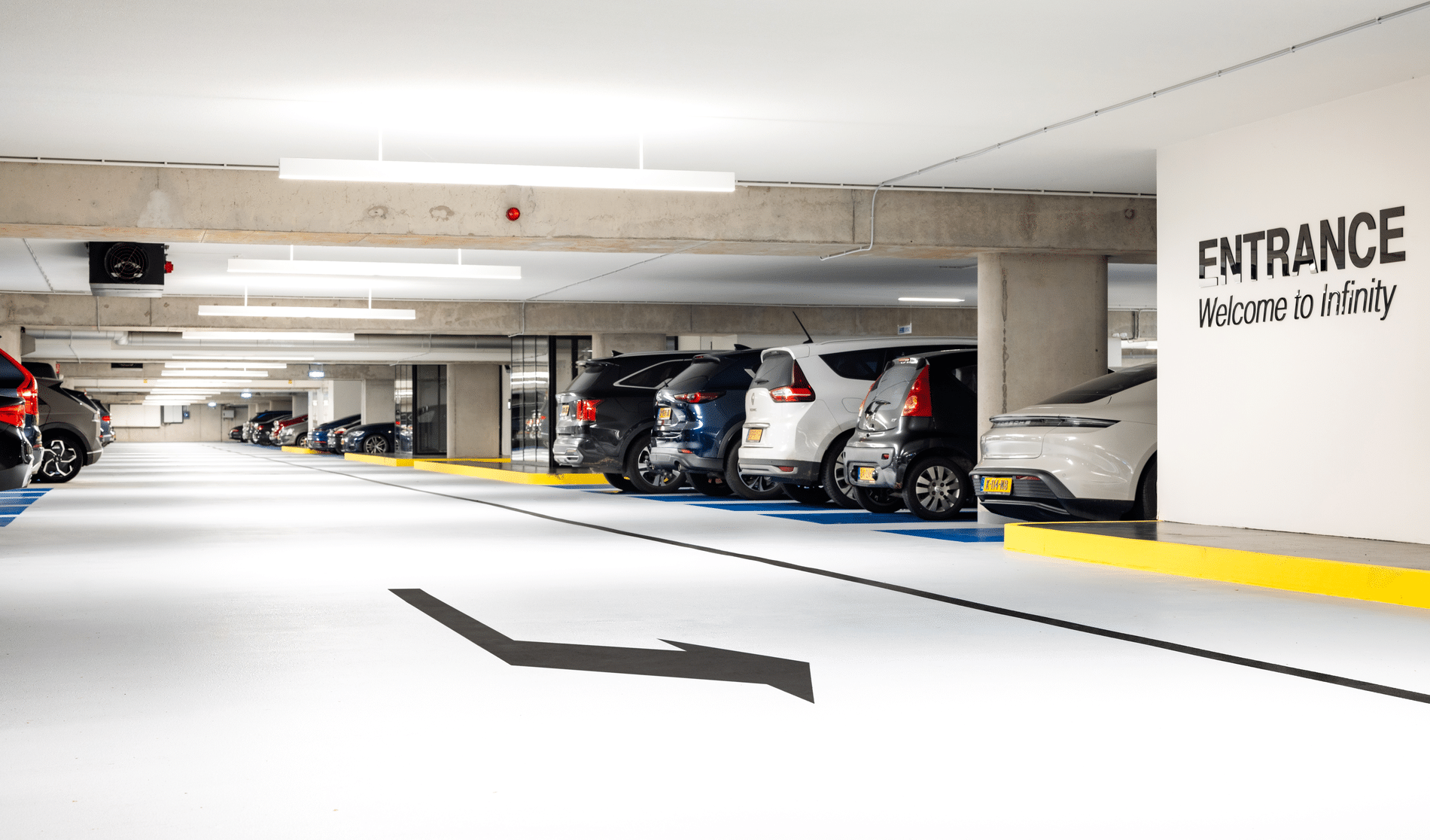
In practice, problems rarely arise in the simplest part of the floor. “You can usually get the large surface right,” says Mario. “But in the end, it’s the details that determine how long a parking garage will continue to function without issues. A connection to a gutter, column base, or expansion joint must be technically sound. If water gets under the system there, that’s often where the problems start.”
According to Mario, liquid plastics offer advantages in these areas. “They can be applied seamlessly around complex shapes and joints. Once cured, they form a continuous, watertight, and wear-resistant protective layer without overlaps or seams in vulnerable areas.’
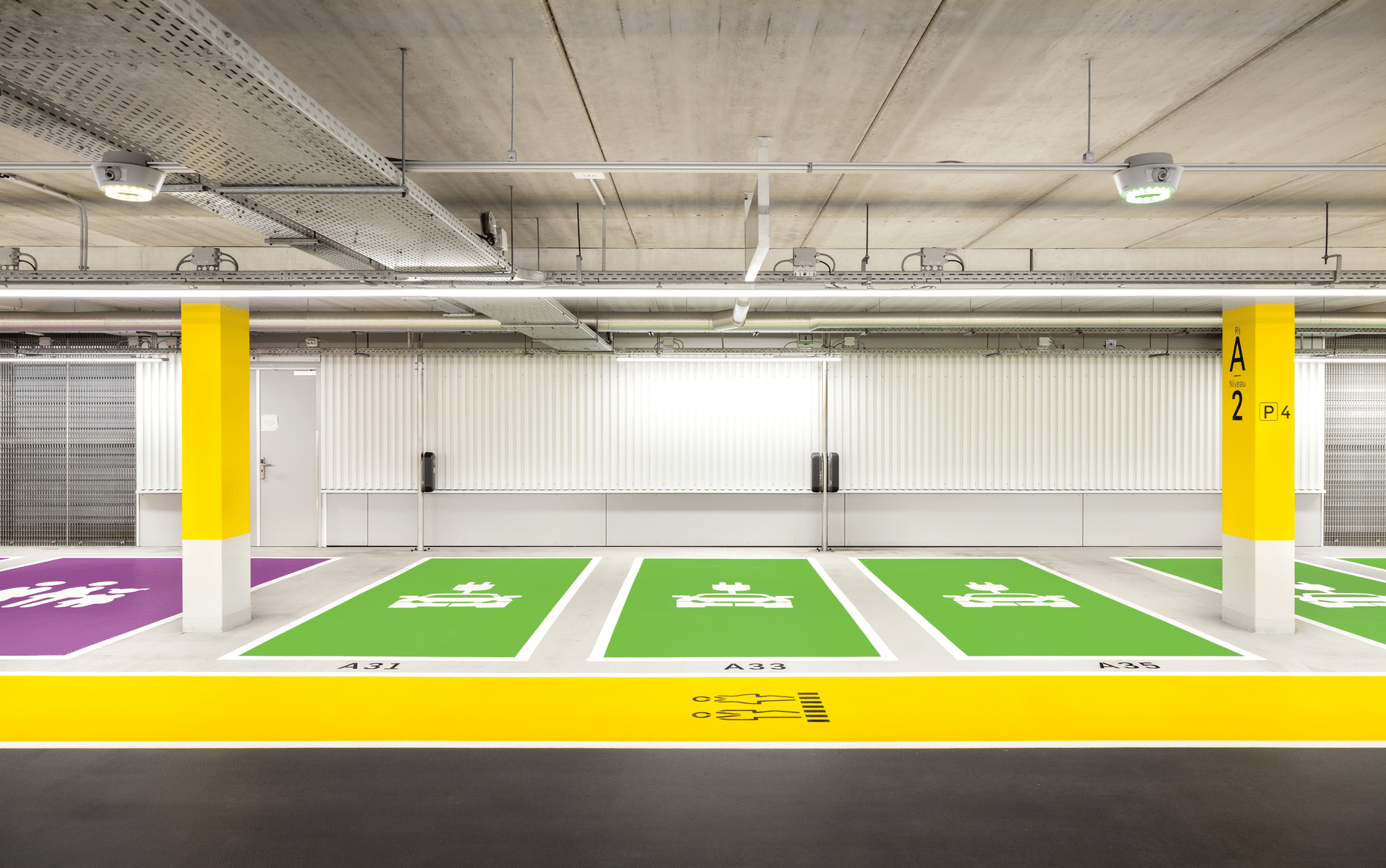
Another component that deserves special attention in both design and construction is the ramp. Ramps are subjected to virtually all the stresses found in a parking garage: moisture, dirt, de-icing salts, the angle of the slope, braking forces, acceleration forces, and tire skidding.
“An inclined ramp is perhaps the most heavily loaded part of a parking garage,” says Mario. “That’s often where you first see wear, slipperiness, or damage if the finish isn’t properly suited to its intended use.”
A durable, slip-resistant finish is essential for ramps—not only to minimize wear and tear, but also to ensure user safety. The correct surface texture, adhesion, layer structure, and detailing are crucial factors in this regard. The transition to the flat floor, drainage, and connections to walls and gutters must also be carefully considered.
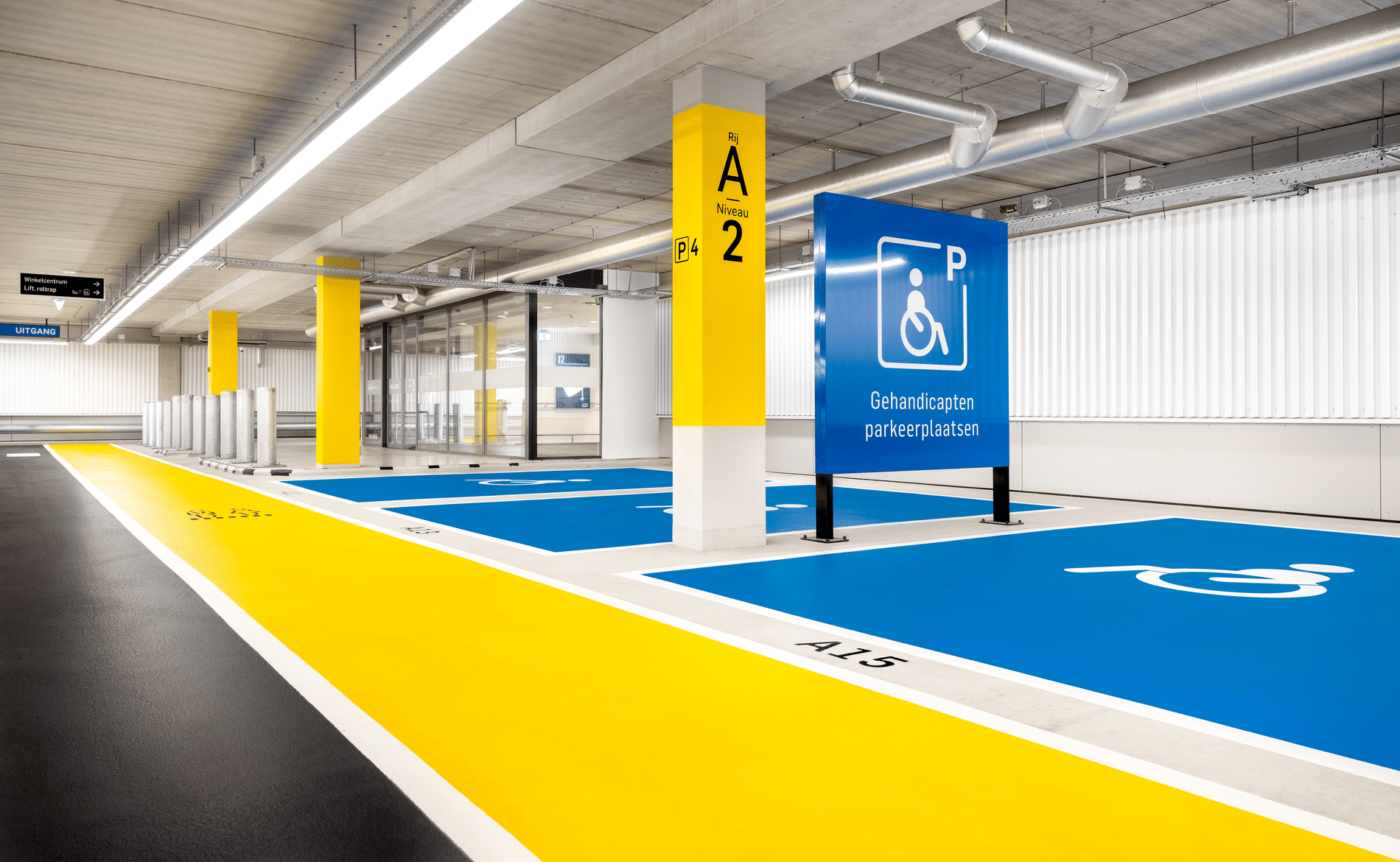
According to Mario, a good solution always starts with a careful assessment of the situation. “No two parking garages are the same. A parking garage beneath an apartment complex requires a different approach than a public parking garage with heavy traffic. A ramp, in turn, requires something different than a parking space or an intermediate level.’
He continues: “The best results are achieved when the design, construction, and management teams begin collaborating early on. That way, you can make choices that are technically sound and practically feasible. This prevents failure costs and extends the structure’s service life.”
Underground parking garages are increasingly becoming part of broader mobility concepts, such as mobility hubs, charging stations, shared mobility, and bicycle parking. As a result, requirements related to safety, routing, sustainability, and maintenance are becoming increasingly important. Nevertheless, the technical fundamentals remain the same: the structure must be protected against moisture, chlorides, wear and tear, and heavy use.
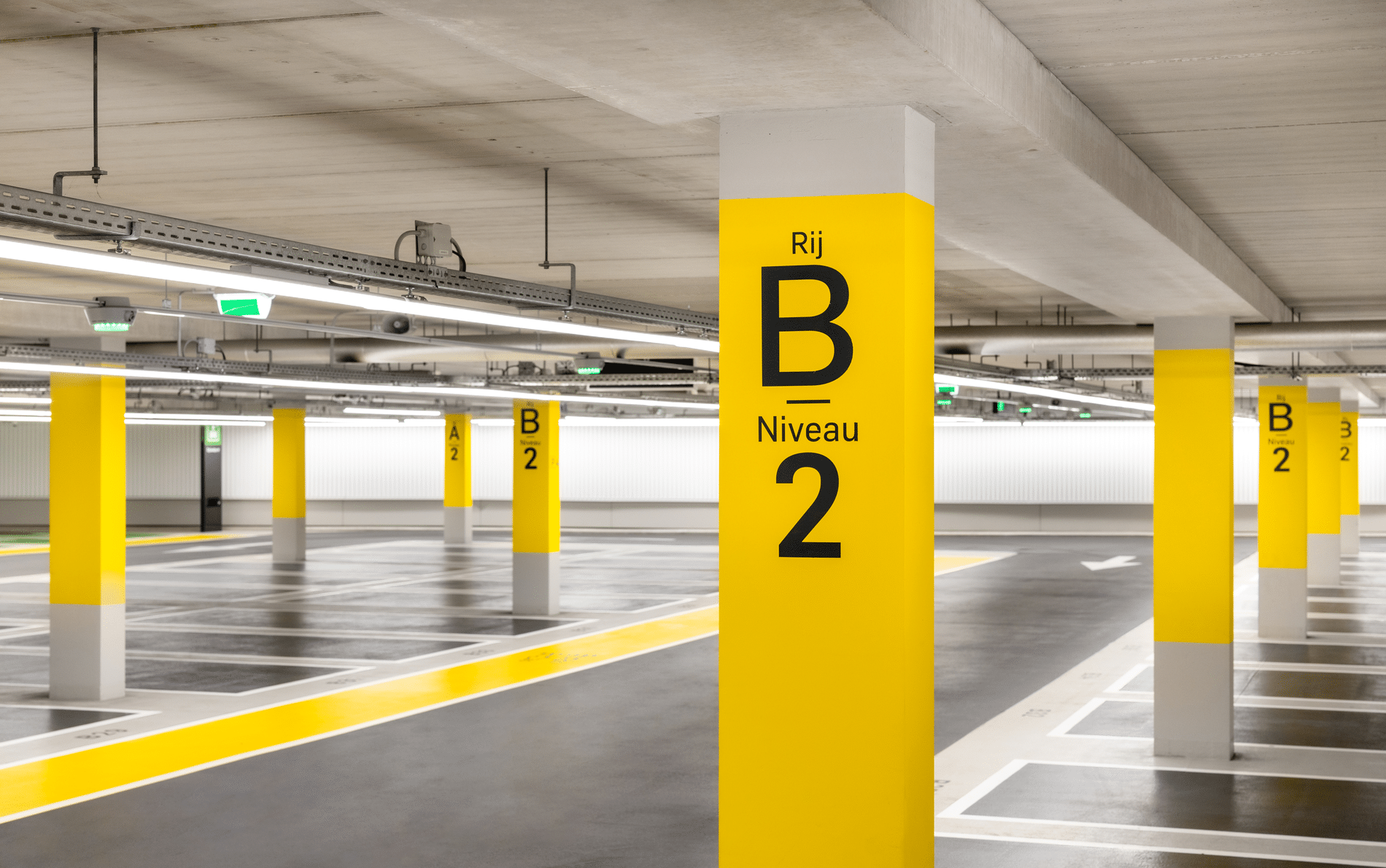
“Building underground frees up space above ground,” Mario concludes. “But that gain in space is only truly sustainable if the underground structure continues to function reliably. To achieve that, you have to look beyond just the floor. It’s about protection, detailing, safety, and future-proof use.”
With this approach, Triflex aligns with the practices of designers, contractors, facility managers, and clients in the civil engineering sector.
Neem dan rechtstreeks contact op met Triflex BV.
 Contact opnemen
Triflex is a manufacturer and supplier of liquid plastics for flooring and sealing systems. We have been doing so for more than 40 years. In that time we have specialized in sealing and protecting roads, infrastructure, parking garages, balconies, terraces and roofs. Our systems are fully reinforced and crack-bridging. Quality is our number one priority. Where [...]
Bekijk Bedrijfsprofiel