Platform on civil engineering, underground infrastructure, energy, construction equipment & construction machinery
But indispensable for safe and reliable underwater operations
Anyone working underwater today with diving and ROV systems can no longer afford to improvise. All equipment deployed revolves around demonstrable safety, certification and compliance with a maze of regulations. Behind every successful DISA International project is therefore an intensive logistics and maintenance program, carried by people who know the complexities of the underwater world.
DISA operates internationally, with offices in Belgium, the Netherlands, Germany, Denmark and Singapore, and many projects beyond. “That automatically means: different legislations, certification regimes and customer requirements,” says managing director Didier de Graaff. “In diving alone, the regulations differ per country, and sometimes even per type of project. So before equipment goes out, it is carefully prepared.” According to De Graaff, this is done by specialists with expertise. “Many colleagues have worked for years as divers or technicians themselves and know exactly what is needed outside. All the radars must be on, as is often said internally. Only then does a project come to fruition safely and successfully.”
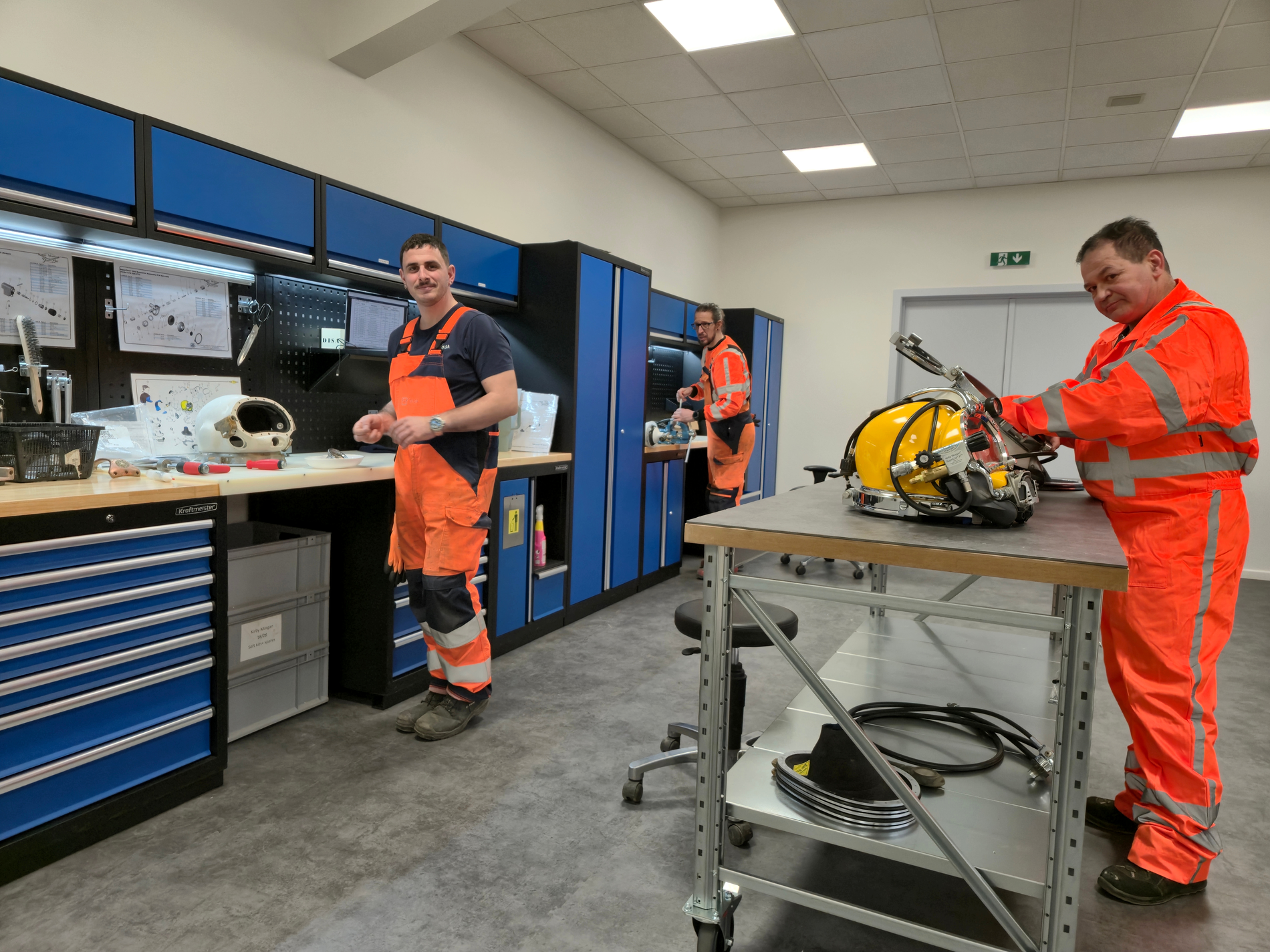
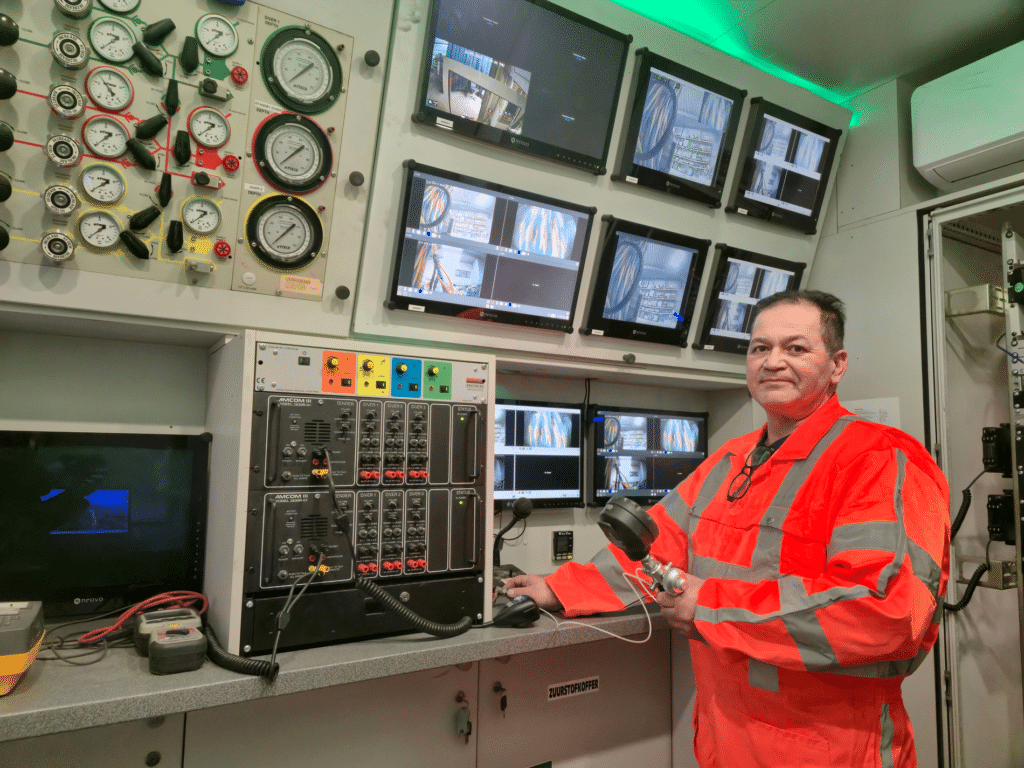
For offshore work, IMCA guidelines apply, but on top of that there are often national additions. “A decompression tank that may be 1,600 mm according to IMCA must be 1,800 mm in Denmark, for example,” gives Jacques van de Riet, equipment manager at DISA International, as an example. Together with his colleagues Eddy van Straten and ROV technician Guido Hartmann, they ensure that DISA's diving and ROV systems are always up to date and comply with applicable laws and regulations. Another example: “In Belgium, lifting equipment for a project must be inspected every three months, while in the Netherlands that suffices annually. It is exactly this kind of detail that makes the difference between delay and smooth project progress,” Van de Riet knows.
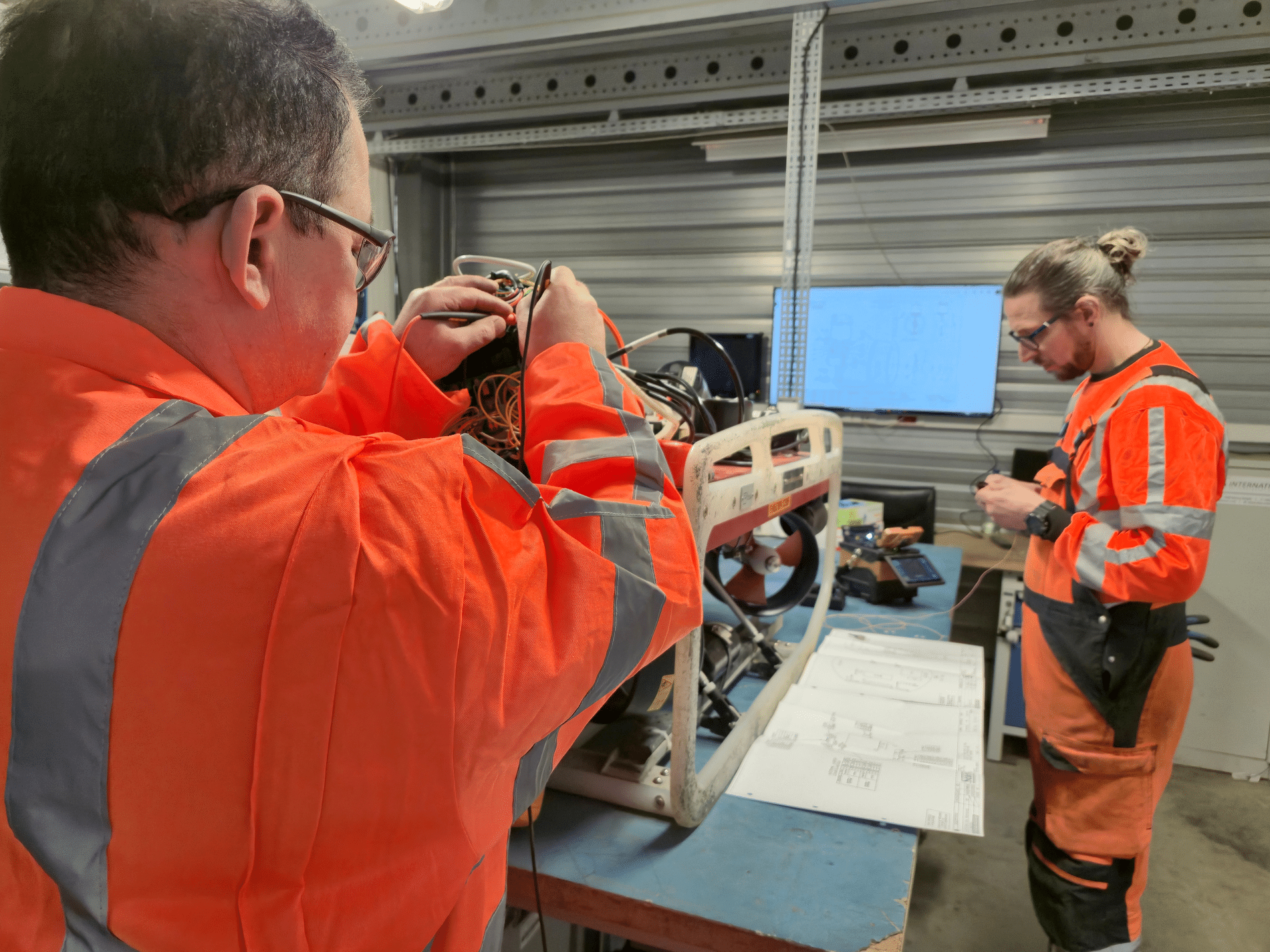
DISA's management and maintenance program is quite intensive. For example, the underwater specialist manages some 130 diving helmets, each with its own maintenance and certification cycle. “Respirators, literally life-saving equipment, are largely inspected internally and periodically certified externally by Lloyd's,” Van de Riet explains. “Diving containers are maintained entirely in-house: from panels to calibrations. Only specialized parts are outsourced. Even hydraulic, pneumatic and electrical tools, often used in preparation above water, must be demonstrably safe.” Containers full of spare parts accompany large offshore projects. “Distances are often long, and downtime due to a missing part is not an option.”
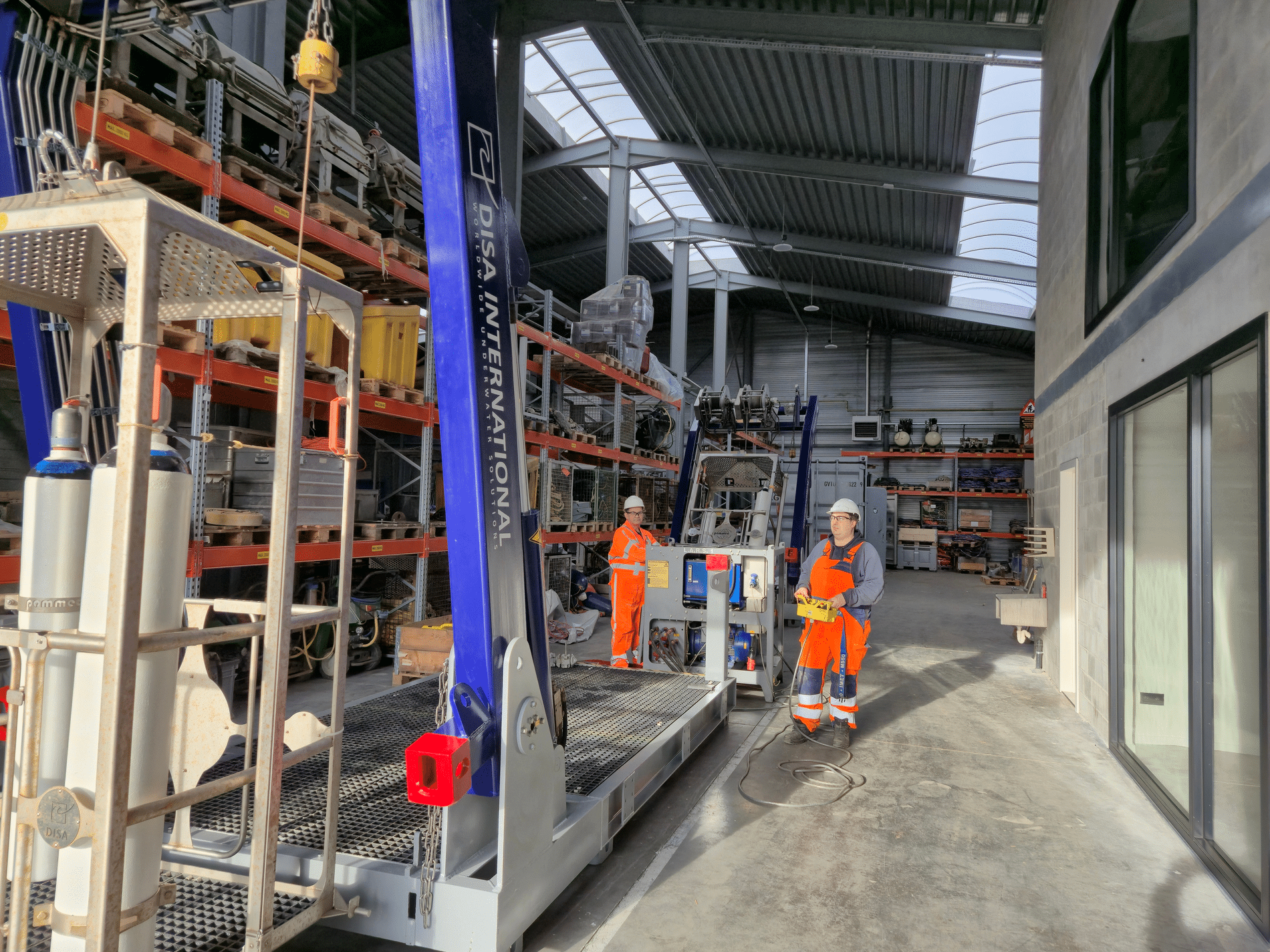
ROVs are a world unto themselves. “The technology relies heavily on complex electromechanics, robotics and precision arms,” De Graaff clarifies. “Again, everything has to be certified. In the workshop, they are completely disassembled, maintained and - where necessary - modified or redesigned. Project-based solutions are created that are even patented later on. And so we continue to invest in the development of diverless technologies. It not only increases safety, but also shortens lead time and reduces costs, while maintaining quality.”
Such an intensive development, management and maintenance program requires space. “In our facilities in Belgium, we test our ROVs, diving equipment and our customers‘ project test rigs in test pools. This is how we at DISA International are able to ’wet test” everything very efficiently before it is sent towards a project,“ de Graaff assures us and concludes, ”Our equipment division may be invisible to the outside world, but it is indispensable for safe and reliable underwater operations."
Neem dan rechtstreeks contact op met DISA International.
 Contact opnemen
We provide safe, time efficient, cost-effective and comprehensive subsea solutions. YOUR SUBSEA SOLUTIONS SPECIALIST We are DISA International, your specialists in pioneering subsea solutions. Since 2003 we have been diving into different segments of the marine and underwater world where our inventive and comprehensive solutions are relied upon by our international client base. HOW WE [...]
Bekijk Bedrijfsprofiel