Platform on civil engineering, underground infrastructure, energy, construction equipment & construction machinery

They have been engaged by contractor consortium OpenIJ to build the extinguishing system at the largest sea lock in the world, in IJmuiden. After almost 100 years, the Noordersluis is really in need of replacement and is getting a special extinguishing system.
René Borgh, project manager at contracting company QUALM, talks about the separate dry system that was used. "A dry system means as much as that the pipes are not always filled with water. Only when water is needed are the pumps started and the pipes filled," Borgh explains and continues: "That means the pipes have to be drained when no water is needed and the valves are open when the pipe is filled. The challenge lies in the fact that the valves close the moment the air is forced out of the system and the firefighting water therefore fills the entire system. Design-wise, this is very special, also because part of the 3.5-kilometer-long fire mains runs under the lock. This has not been done on such a large scale before. But it was requested by Rijkswaterstaat, and fulfilled by QUALM."

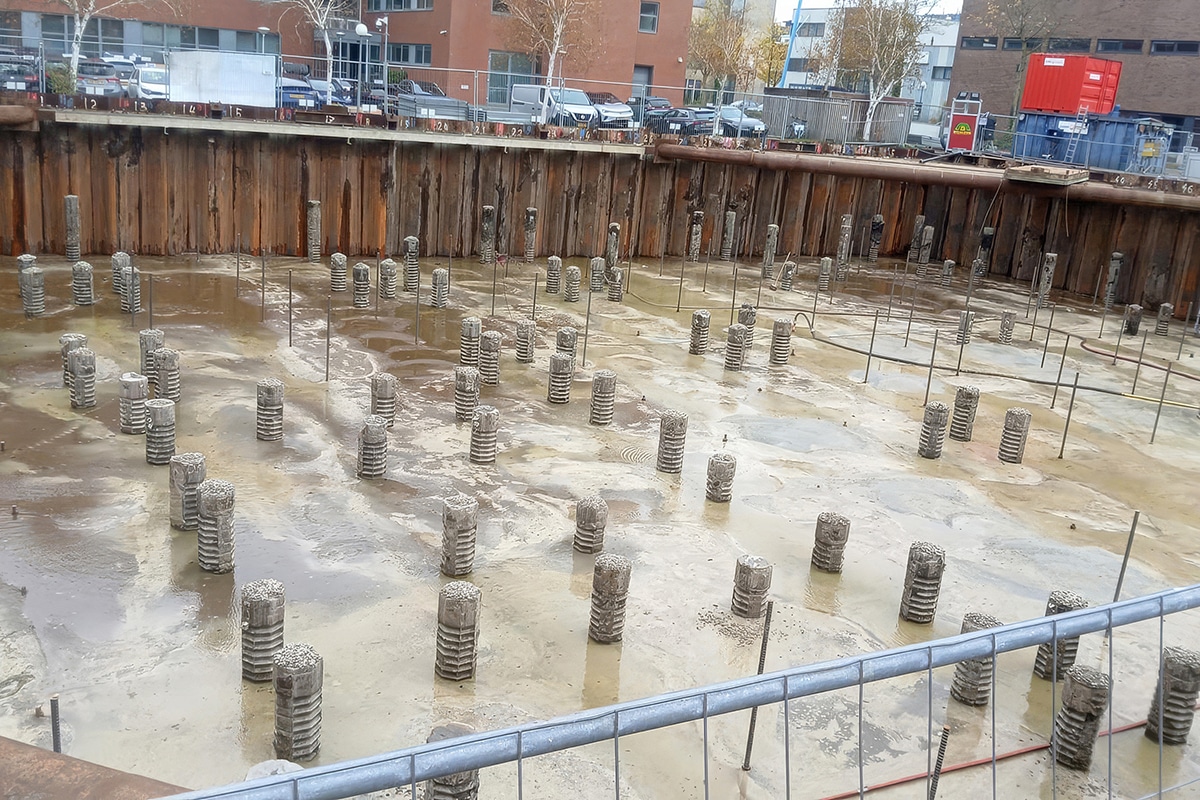
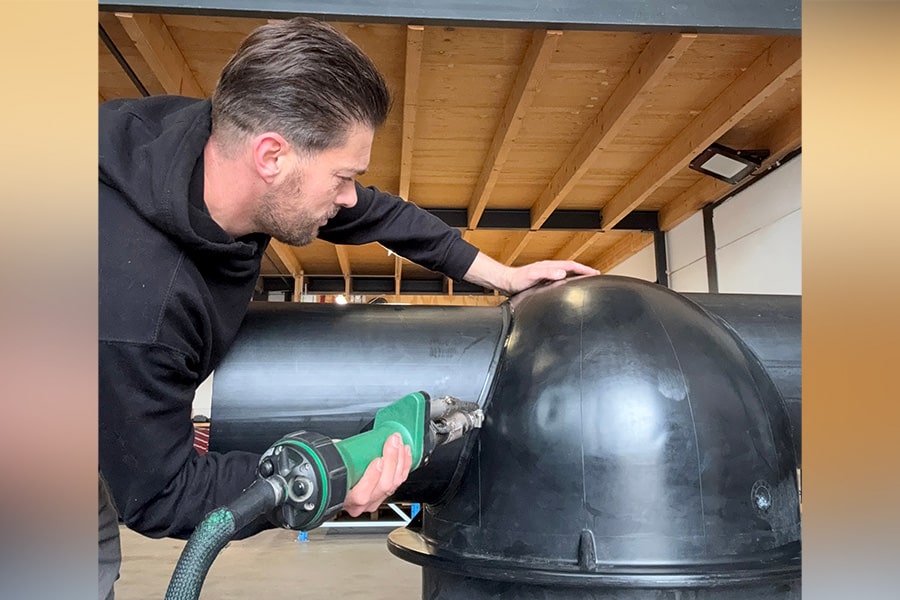
"Because the pipeline, which is duplicated, one of which is a reserve, initially runs under the lock and is cast entirely in concrete, we started at the bottom back in 2017 and worked up to just below ground level in many, many phases along with the concrete pours. Both at the inner and outer head of the lock. The whole thing was later sunk to the bottom which brought it back to the right point to connect to the horizontal section." Borgh says that this work lasted until 2019: "Then we received the order to also install the horizontal part of the fire lines. Including all fittings, installation of the wells made by OpenIJ, the fire hydrants, piping and valves in the control building. We supplied almost everything so, except for the pumps in well one." PE piping was used in the ground. Plastic pipes with a pressure rating of 16 bar. "In the wells, we applied GRE pipes including valves and GRE windlasses (as water hammer dampers), a class better and unique. The design called for stainless steel piping, but precisely because seawater is running into it because of the dry system and it will be dry, we want to minimize the risk of corrosion, of course." That too is typical QUALM: thinking beyond what is requested and offering advice for better.