Platform on civil engineering, underground infrastructure, energy, construction equipment & construction machinery
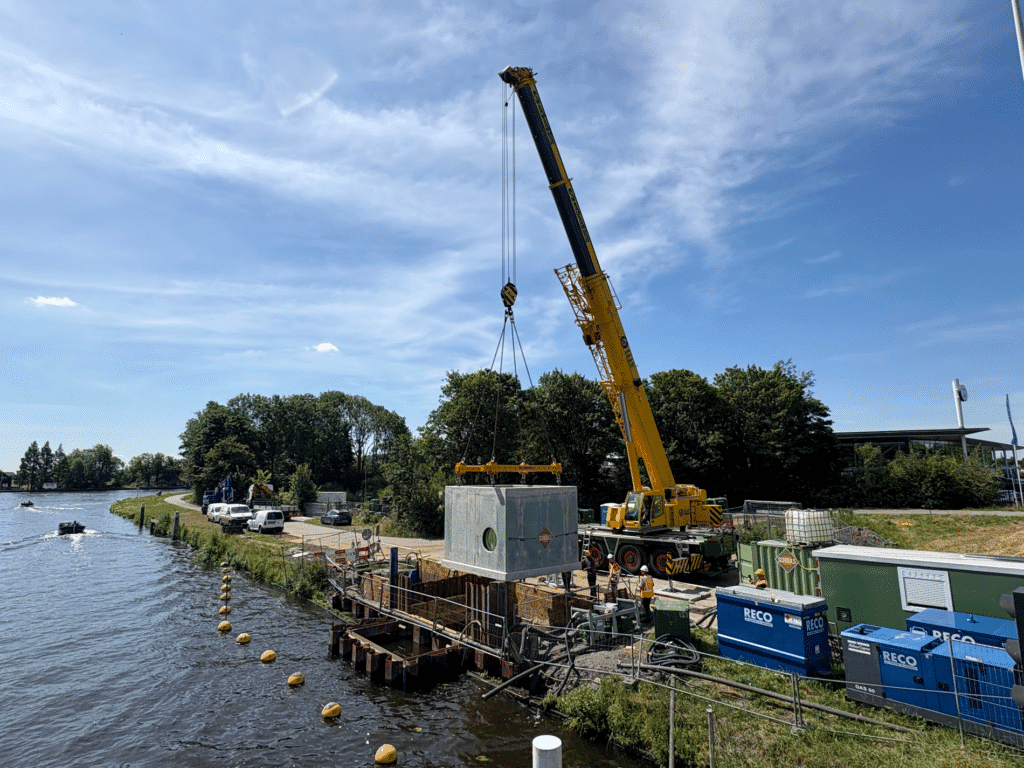
An unusual overflow facility was constructed in the municipality of Voorschoten this year. The project, commissioned by the Hoogheemraadschap van Rijnland, is unique because geopolymer concrete - a sustainable alternative to traditional concrete - was used for the concrete manhole. For both client and Aannemingsbedrijf Schouls B.V. this was the first time that this material was used as part of a sewer system.
An overflow facility is an essential part of the sewer system, explains Corné de Vogel, project manager at Schouls. “The sewer system in Voorschoten drains to the Leiden-Zuidwest sewage treatment plant. During extreme rainfall, however, the capacity of the sewer system can fall short. The water level in the system then quickly rises, with the risk that sewage water ends up in the street. The overflow facility prevents this. When the water level in the sewer system rises too high, it flows over in a controlled way via the new concrete pit into the surface water: in this case the Korte Vliet, a storage basin waterway. This keeps the sewage system functioning and prevents nuisance for the surrounding area.”
The project was put on the market by the Rhineland Water Board in the fourth quarter of 2024. Three parties were invited to tender; Schouls was awarded the project. “We didn't have the lowest tender price, but scored on the EMVI criteria, especially in terms of emission-free construction,” says De Vogel. “A particular point of attention in the tender was the choice of materials. The contract required that the overflow facility be made of geopolymer concrete. It was directly also a pilot for the Rhineland Water Board. This concrete is known for its greatly reduced CO2 emissions: a saving of about 105 kilograms of CO2 per cubic meter. For this project, with 26 m³ of concrete, that meant a significant environmental gain.”
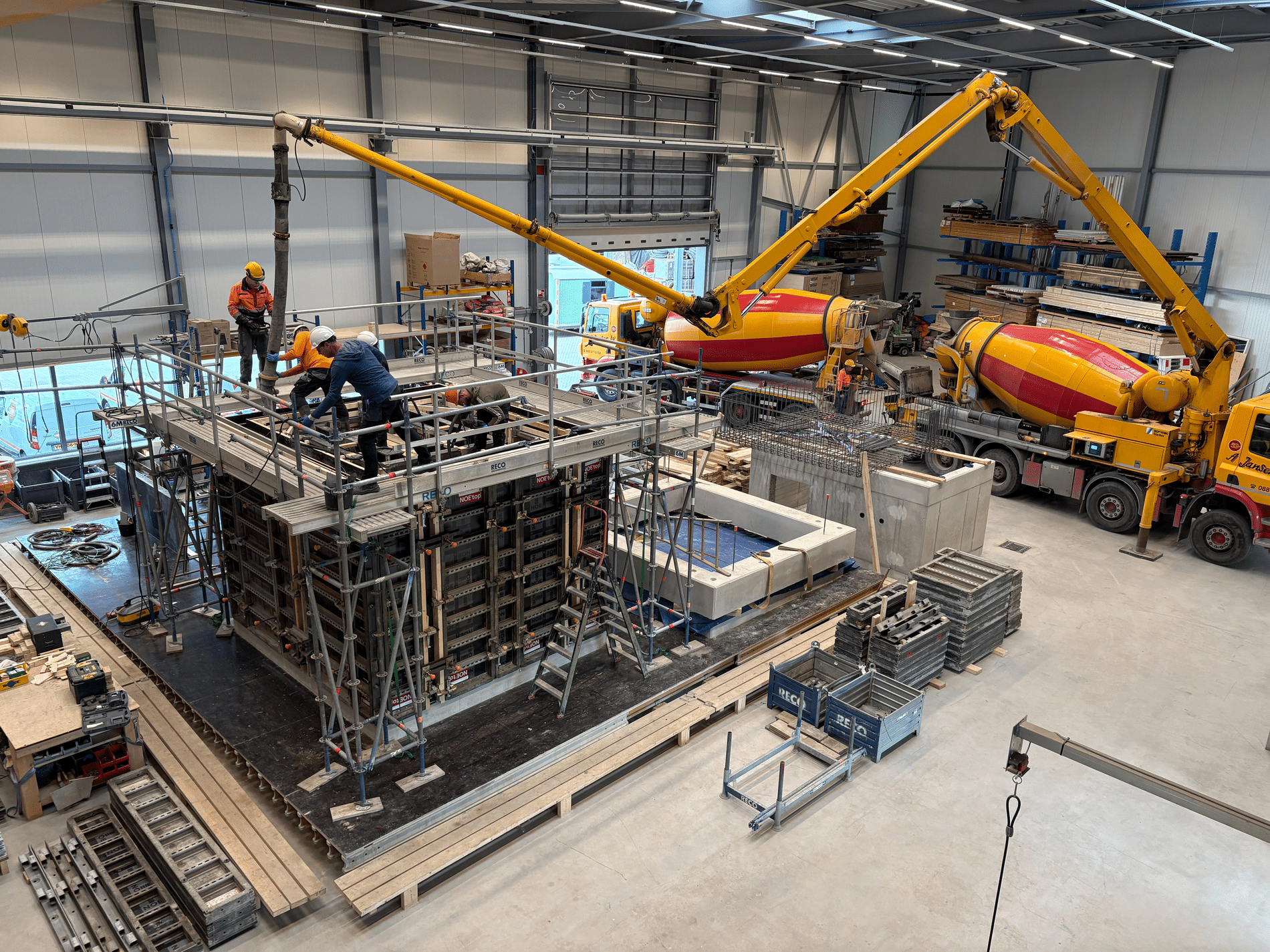
The overflow pit itself is a structure 3.60 meters long, 4 meters wide and 3.30 meters high. The floor plate, side walls and overflow wall are in one piece with a total weight of 39 tons. The separately produced cover plate weighs another 10 tons. In total, the pit weighs about 50 tons. “We chose to produce the structure in our own workshop,” says De Vogel. This not only proved its feasibility, but also provided valuable knowledge for future applications. “On the overflow wall in the pit is an overflow knife, which allows the overflow level to be set precisely. Floating check valves are also present to prevent backflow from surface water towards the sewer system. In addition, the inside is equipped with a co-cast HDPE lining, which provides protection against the aggressive environment in the sewer system, due in part to the presence of H2S gas.”
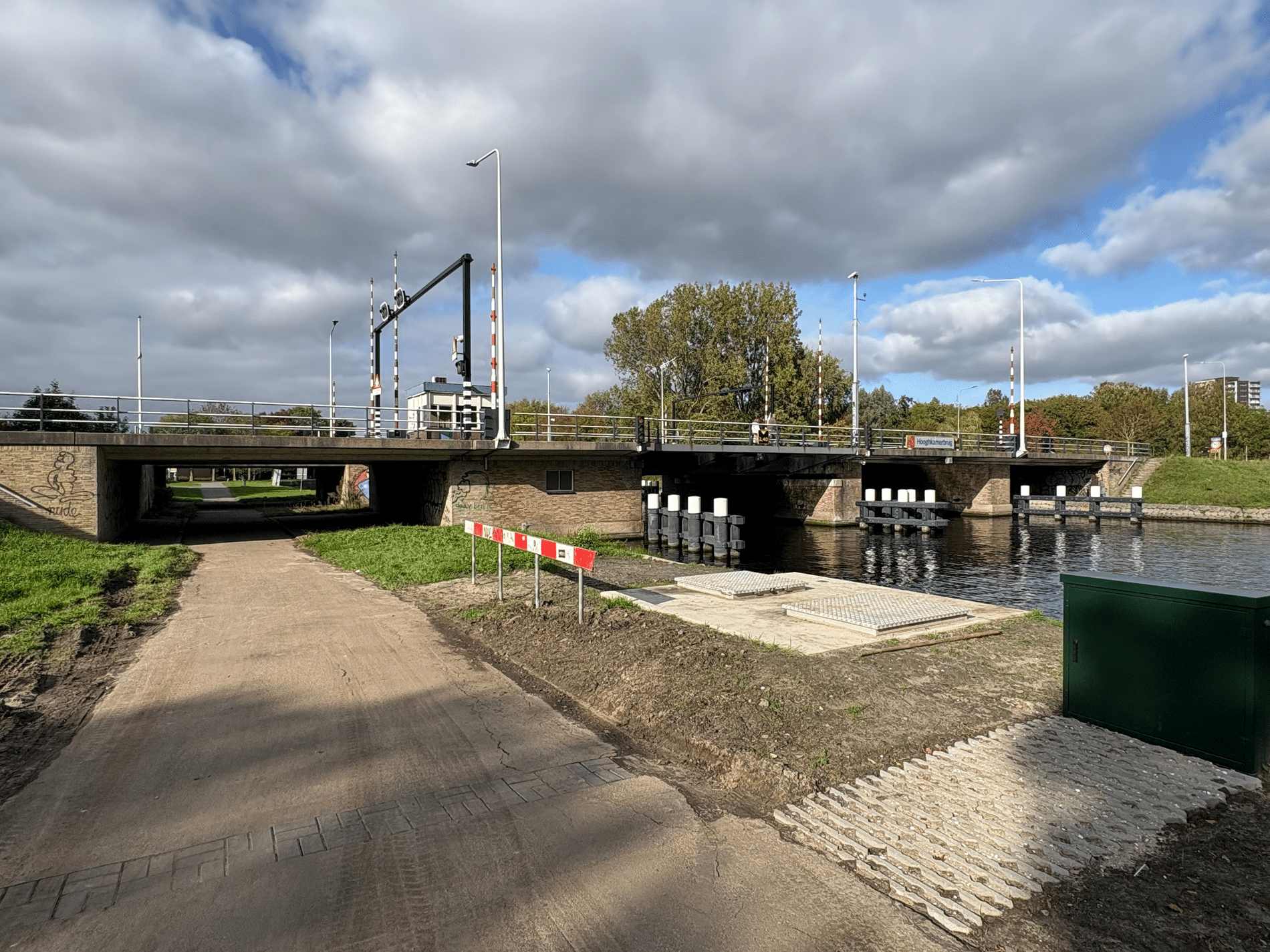
After a thorough preparation from the beginning of 2025, Schouls started the execution outside just after Ascension Day. Steel sheet pile walls were placed along the Korte Vliet, which immediately included a piece of quay replacement. Next, existing wooden sheet pile walls were removed, piles driven and a construction pit dug. “After placing the pit that we had prefabricated in our workshop, connections were made to both the sewer system and surface water, and the cofferdam was backfilled. Finally, the quay was finished with a new stone lining,” De Vogel looks back. “During execution, a strong commitment was made to emission-free construction. Whereas in the tendering process we had offered 45 percent of the operating hours emission-free, in the end we even managed to achieve 71 percent emission-free, mainly thanks to the deployment of an electric crawler crane.”
The overflow facility has now been completed and has been in use since September 2025. For Schouls, the experience gained opens a door to a wider application of geopolymer concrete. “We build many pumping stations for various water boards. The application of geopolymer concrete is also promising for that market,” says De Vogel who adds that it is thought likely that geopolymer concrete is by nature significantly more resistant to corrosive conditions such as H2S gas. “With that, there is a chance that future applications in sewer systems could be done without protective HDPE lining. That would be the next step in further simplifying, preserving and making sewer structures more cost-effective. To be continued.”