Platform on civil engineering, underground infrastructure, energy, construction equipment & construction machinery
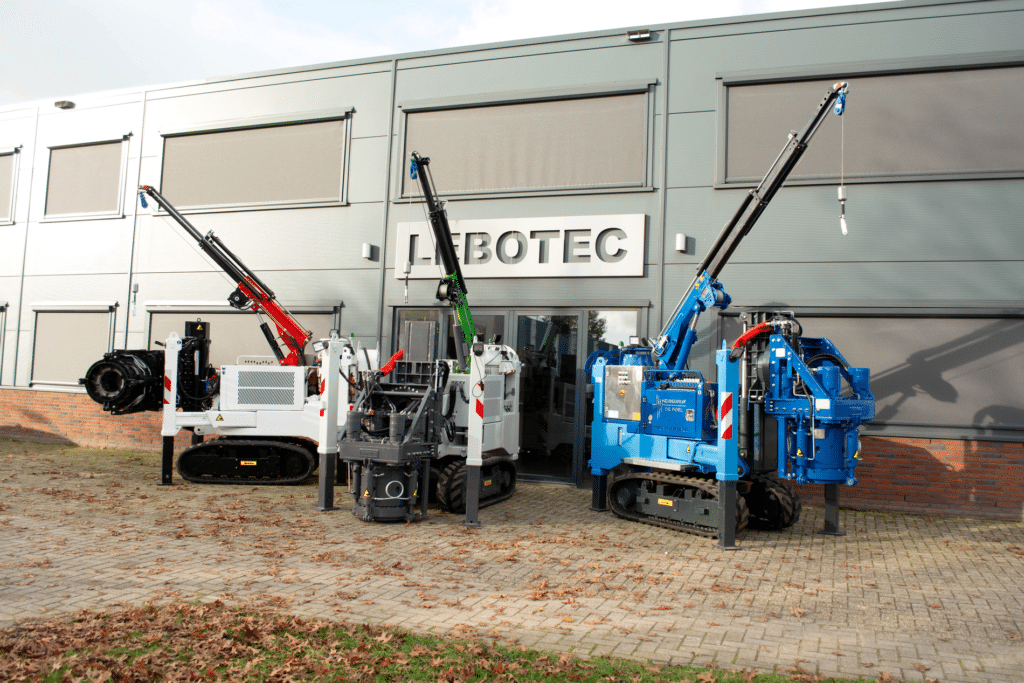
Compact and versatile solutions for renovation and inner-city projects
Inner-city foundation work requires different choices than a decade ago. Projects are becoming more complex due to less space, stricter emission requirements and transport weight restrictions. At the same time, the need for reliable foundation solutions remains high, especially in renovation, redevelopment and expansion of existing properties. Machine builder Lebotec is responding to this with compact drilling machines and a practical intermediate solution for emission-free work.
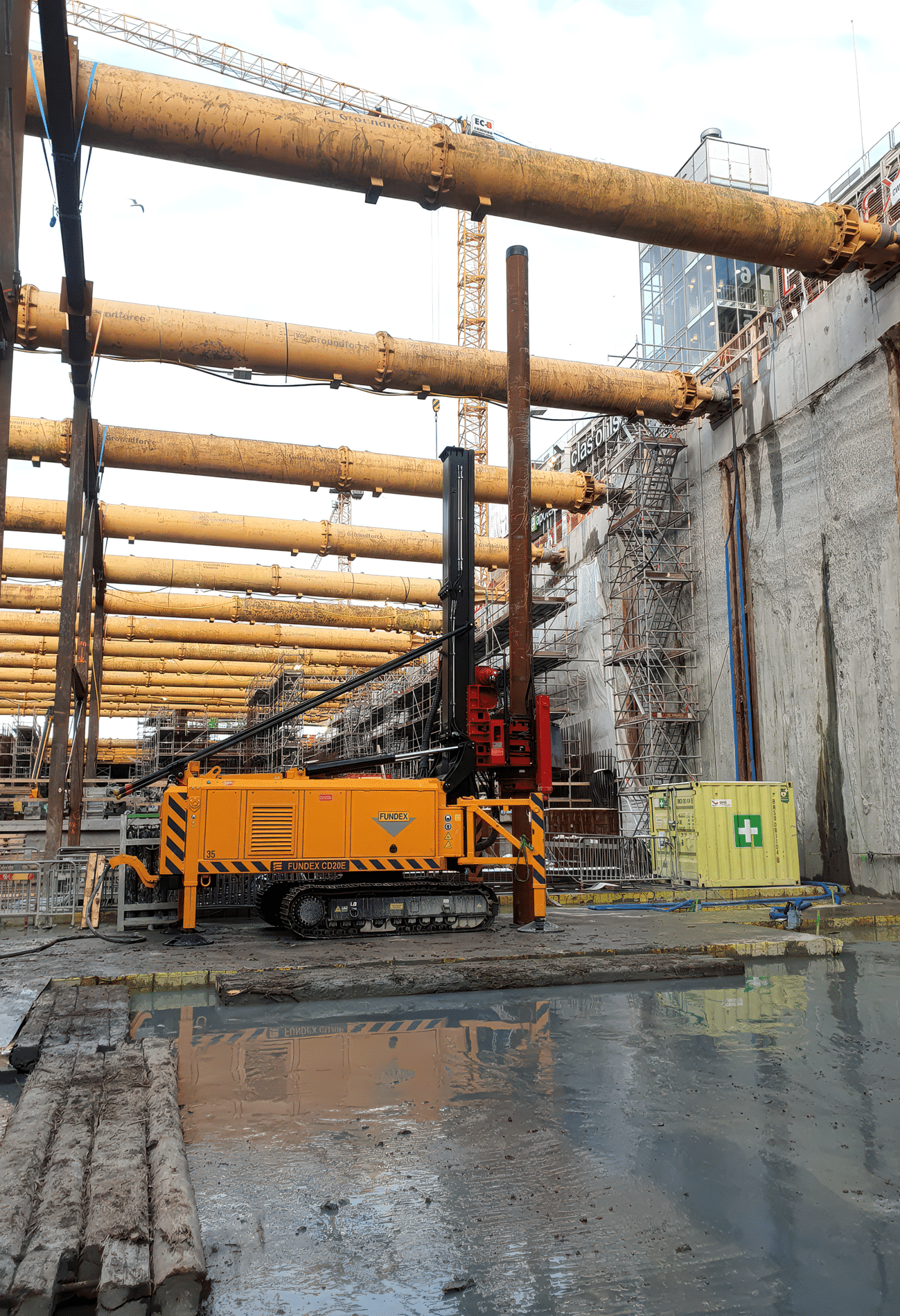
According to Van Oostwaard, the tension between feasibility and environmental requirements works directly into the equipment on the construction site. “The working field of foundation specialists is visibly shifting,” he says. “The focus is increasingly on small, fine-grained projects in urban areas. You work in limited space, often between existing buildings, and must be able to move quickly.” That development translates directly to the CD machines that Lebotec has developed in recent years.
The mini and midi segments in particular are growing strongly. Large cranes and heavy foundation racks are increasingly difficult to use in inner cities, while the work continues. “Here we need machines that are compact, maneuverable and have sufficient power to do the job well and in a controlled way,” says Van Oostwaard. “So you have to use technology differently to make smarter use of power.” What started with the CD65 has grown step by step into an entire CD family, with the CD45 as its smallest offspring. And there are plans for heavier variants in the future. The machines are ideally suited for screw injection and other pile systems in urban situations, where space and logistics are decisive. “We are also going to expand with the 80 and the 100, with eight and ten ton-meters of drilling torque, respectively.”
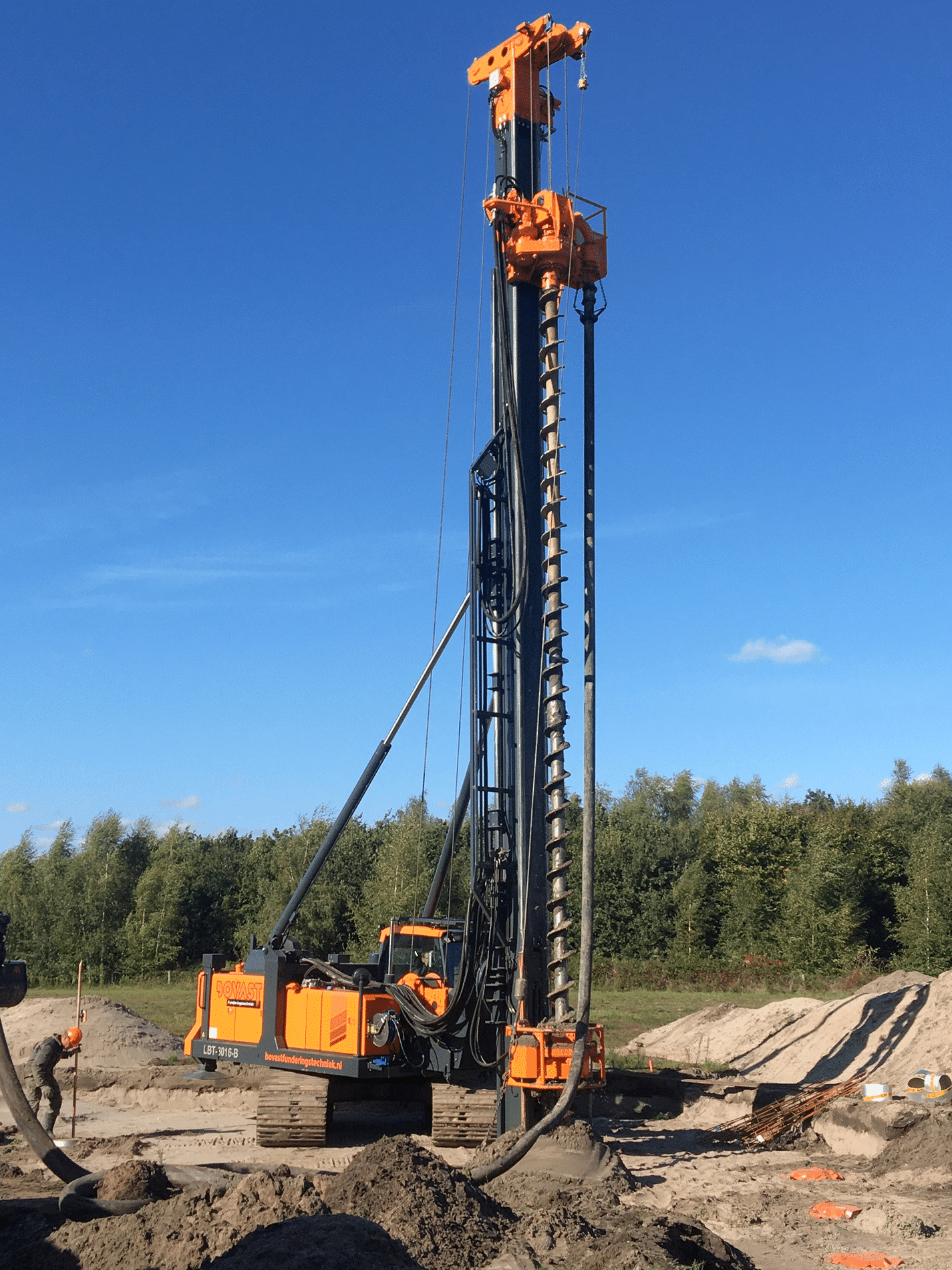
Emission-free work is a recurring theme in this regard, but according to Van Oostwaard, practice is recalcitrant. “At higher capacities, foundation work requires an enormous amount of energy in a short period of time. You can't just get that from the grid.” Fully electric solutions are possible, but involve hefty investments and logistical issues. “Battery packs become heavy, require charging infrastructure and also have to be moved. That makes the switch more complex than it looks on paper.”
For that reason, Lebotec is developing an external electric power pack that can power machines with a battery pack, even when originally running on diesel. “You can switch per project,” Van Oostwaard explains. “If you need to work emission-free in an inner city, the power pack will temporarily take over the drive.” The system is expressly intended as an intermediate step. “That way contractors don't have to replace their entire fleet of machines at once, but can work emission-free wherever it's required.”
This pragmatic approach suits the way Lebotec works. New machines and modifications rarely arise only behind the drawing board, but almost always from questions from practice. Van Oostwaard: “If a solution saves time in a limited space, it has immediate value. And if several customers ask for it, you know it's a broader issue.” With further expansions in the pipeline, he looks ahead with confidence. “The foundation of tomorrow requires not only strength, but smart ways to deploy that strength purposefully.”