Platform on civil engineering, underground infrastructure, energy, construction equipment & construction machinery
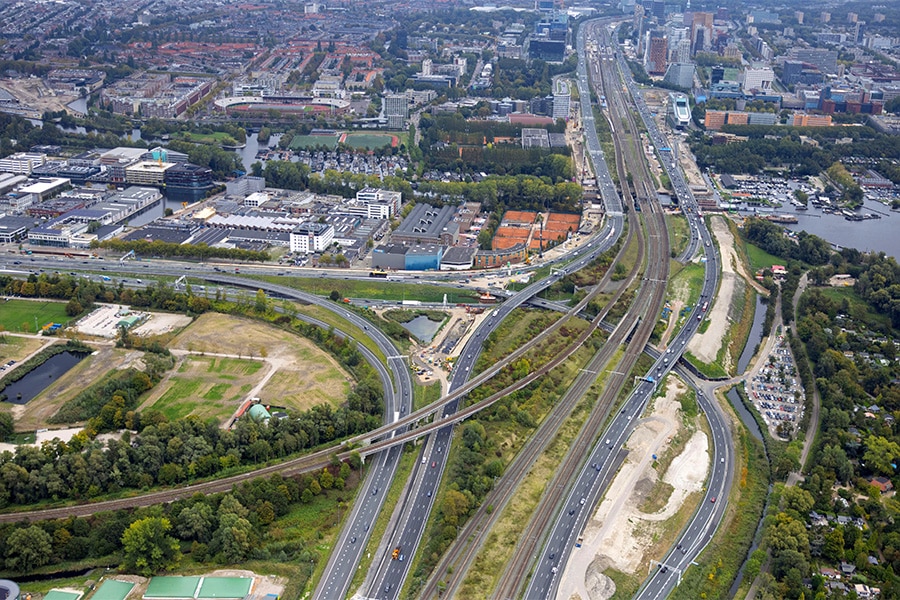
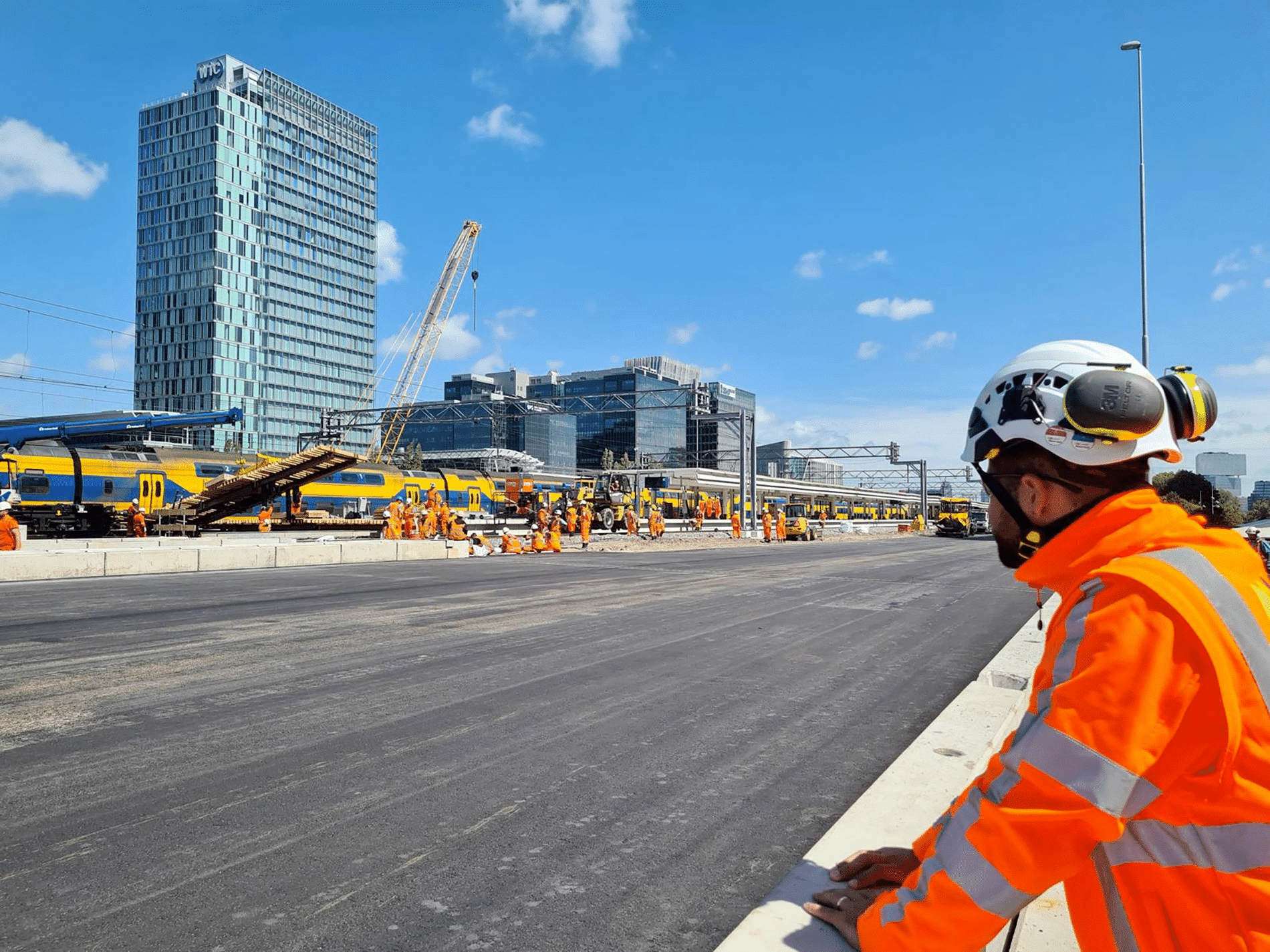
The Amsterdam region is home to one of the busiest traffic arteries in the Netherlands: the A10 South. Thousands of cars, trains, subways, and cyclists converge here every day. The area is a crucial link in the accessibility of the capital, Zuidas, and Schiphol Airport. However, the existing infrastructure no longer meets the growing demand for mobility. Zuidasdok will improve accessibility to Amsterdam and the northern part of the Randstad, both by public transport and by road. Part of this extensive program is the reconstruction of the De Nieuwe Meer junction in the renovation of the A10 South, a project that was tendered separately and awarded to the TriAX construction consortium, consisting of BESIX, Dura Vermeer, and Heijmans.
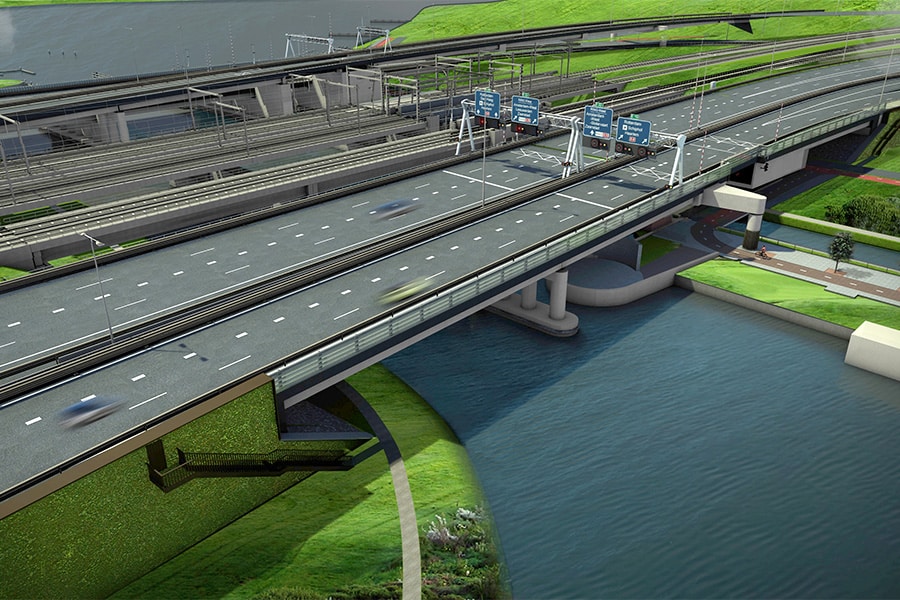
The goal is clear: to unravel the junction so that traffic can flow more safely and smoothly, begins Ferdinand Bockhoudt, project manager of the junction on behalf of the Zuidasdok program. “On the A10 South, through traffic and traffic destined for Amsterdam South still conflict with each other too much. The solution has been found in the construction of parallel lanes. This reduces congestion and makes the road clearer.”
The project area of the De Nieuwe Meer junction extends over 2.5 kilometers between the S107 Amsterdam-Slotervaart, Oud Zuid, and S108 Amsterdam-Oud Zuid, Buitenveldert junctions. Within this route, numerous structures are being renovated or expanded, including the bridges over the Schinkel River and the construction of an impressive flyover connecting the inner ring of the A10 South with the A4 towards A4 Schiphol.
The bridges over the Schinkel are a technical highlight of the project. “There are currently five movable bridges in use, owned by various parties: ProRail, GVB, and Rijkswaterstaat,” says Bockhoudt. “To increase capacity, three bridges will be added on the south side and one on the north side. At the same time, an existing bridge on the south side will be demolished.” “As a contractor, we are used to building bridges and viaducts,” says Markus Büttner, project director at construction consortium TriAX. “In this project, the circumstances make it complex, including the clustering of the controls. Whereas the bridges currently open separately, they will soon be operated in a coordinated manner. This will allow several bridges to open at once, reducing waiting times for road and rail traffic. Operation will be carried out remotely via a new digital system, many components of which are being digitally pre-built and tested in a ‘digital twin’ setup.”
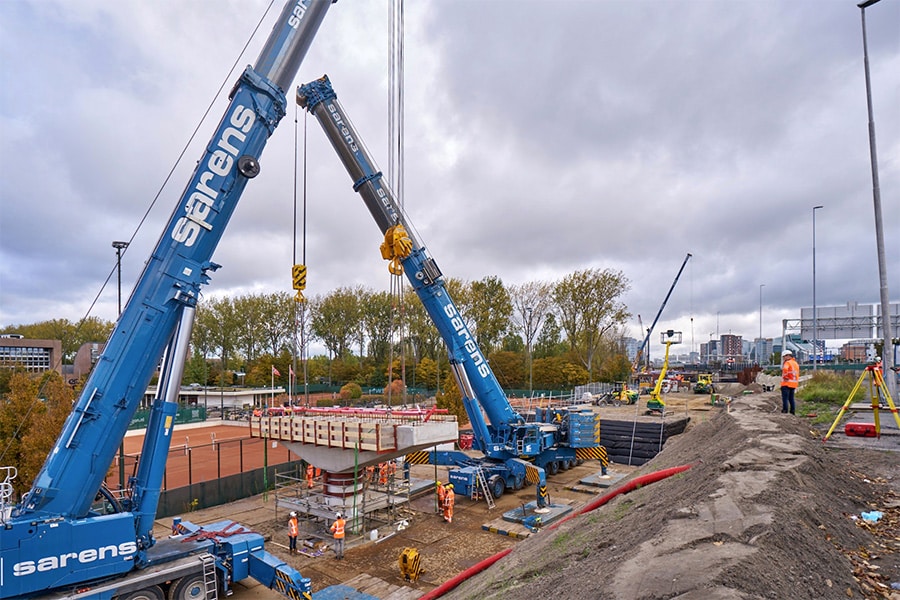
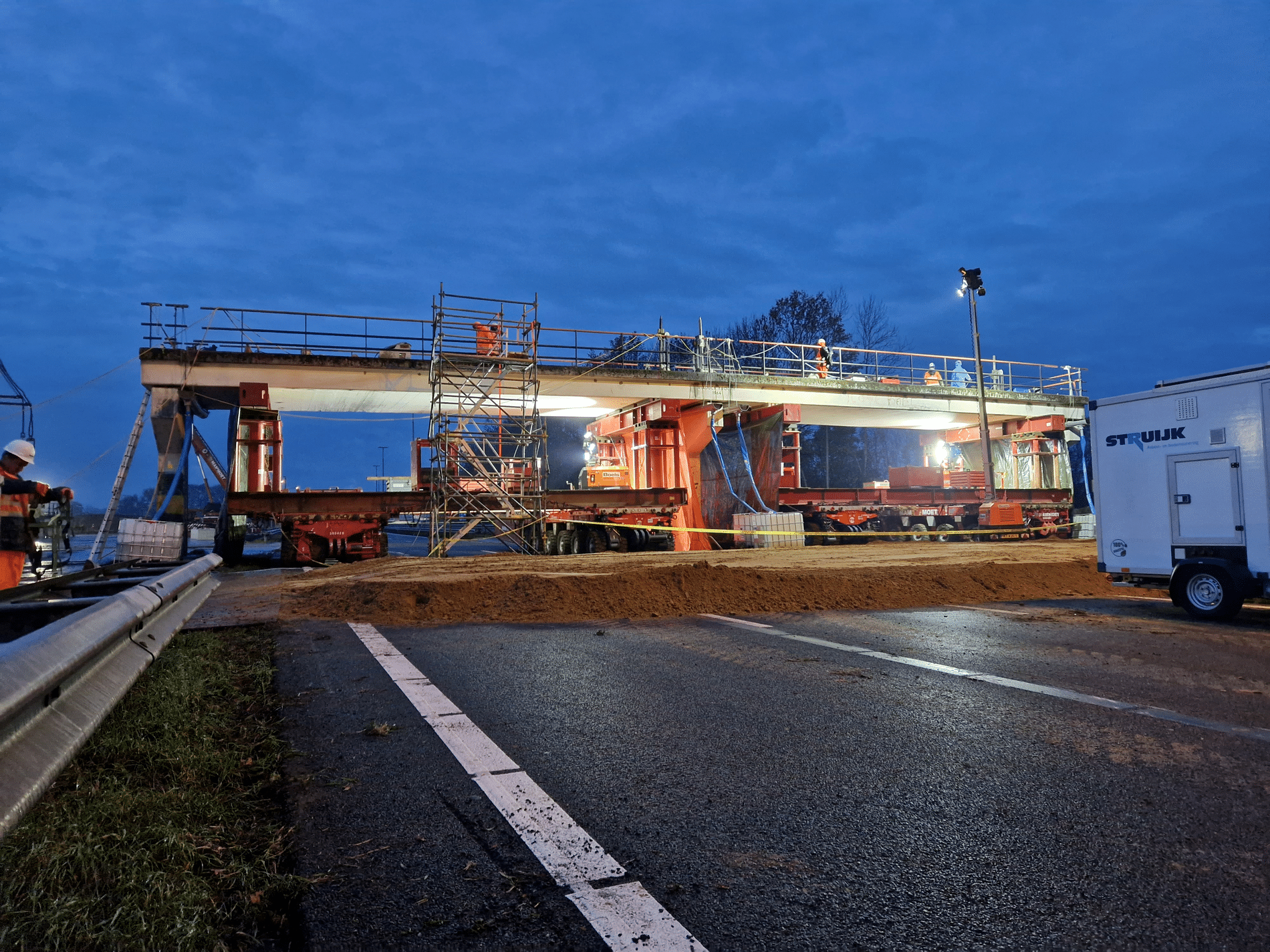
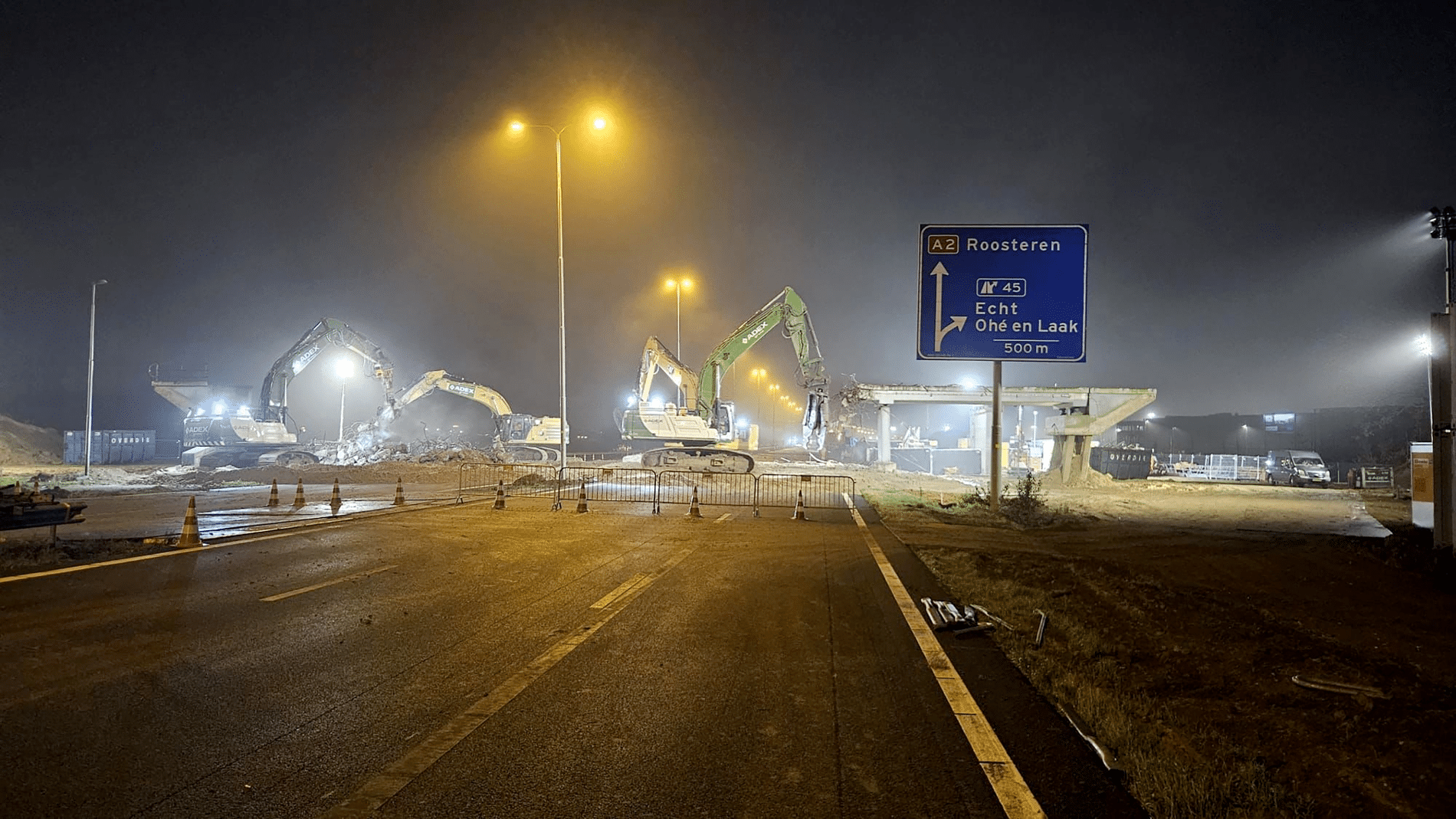
Building a highway in a densely built-up, inner-city environment is no easy task. “The A10 South is high, the subsoil is weak, and space is scarce,” Büttner summarizes succinctly. “That's why we're using innovative construction techniques, such as pile mattresses and reinforced soil, which have never before been used in the Netherlands on such a large scale and at such heights so close to buildings. But nailed walls with shotcrete instead of sheet piling are also unique in our country and are intended to ensure safe working conditions without having to close the highway for long periods or cause inconvenience. However, occasionally we have no choice but to ‘temporarily’ shut down the surrounding area. For example, the A10 was closed for 16 days to allow for the construction of the flyover pillar. We also closed the Amstelveenseweg for six weeks to construct the support points for the viaducts for the parallel lane. Furthermore, many components, such as the steel bridge sections for the Schinkelbrug and the concrete girders and hammer pieces, are prefabricated in Friesland and transported by ship. This allows them to be installed quickly during planned closures. Again, the aim is to minimize the impact on traffic as much as possible.”
In this project, the TriAX construction consortium is working closely with Zuidasdok and with specialized subcontractors who have already demonstrated their knowledge and expertise in the tender phase. “The complexity lies not only in the technology, but also in bringing together all the interests: from road users and residents to transport companies and businesses in the region,‘ says Bockhoudt. The gentlemen are therefore very proud: ”Under the hood, this is one of the most technically challenging projects in the Netherlands. We are building in the middle of the city, while traffic, the city, and life continue as usual.“
The project will literally grow out of the ground in the coming years. The steel drop-down ramp will be installed in 2026, traffic will be able to use the new parallel lane on the inner ring road in 2027, and by 2031, the entire junction will be ready for the future: a modern, safe, and well-organized gateway to Zuidas, the Amsterdam region, and the northern Randstad.
Zuidasdok Program
The Zuidasdok program is one of the largest infrastructure projects in the Netherlands and consists of several projects. The focus is on the renovation and expansion of Amsterdam Zuid station, the construction of two motorway tunnels in the A10 Zuid, and the reconstruction of the De Nieuwe Meer and Amstel junctions. The TriAX construction consortium is responsible for the reconstruction of the De Nieuwe Meer junction, while Amsterdam Zuid station is being built by the Nieuw Zuid construction consortium. The Volkerwessels Infra construction consortium is currently designing the motorway tunnels, and the reconstruction of the Amstel junction was definitively awarded to the Amstel Verbindt construction consortium on October 31.