Platform on civil engineering, underground infrastructure, energy, construction equipment & construction machinery
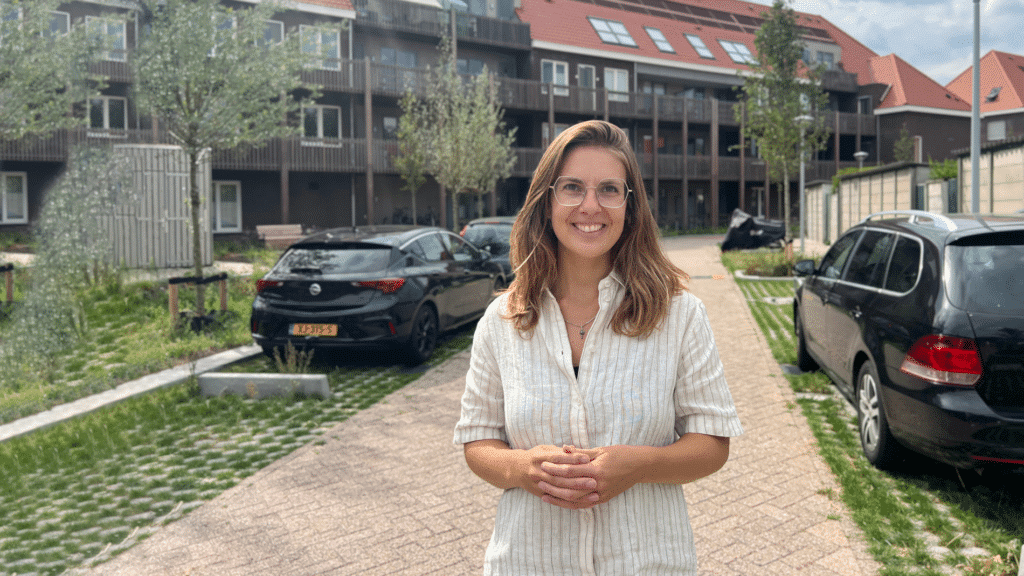
‘If you need technical help, Fien is the one to ask.’
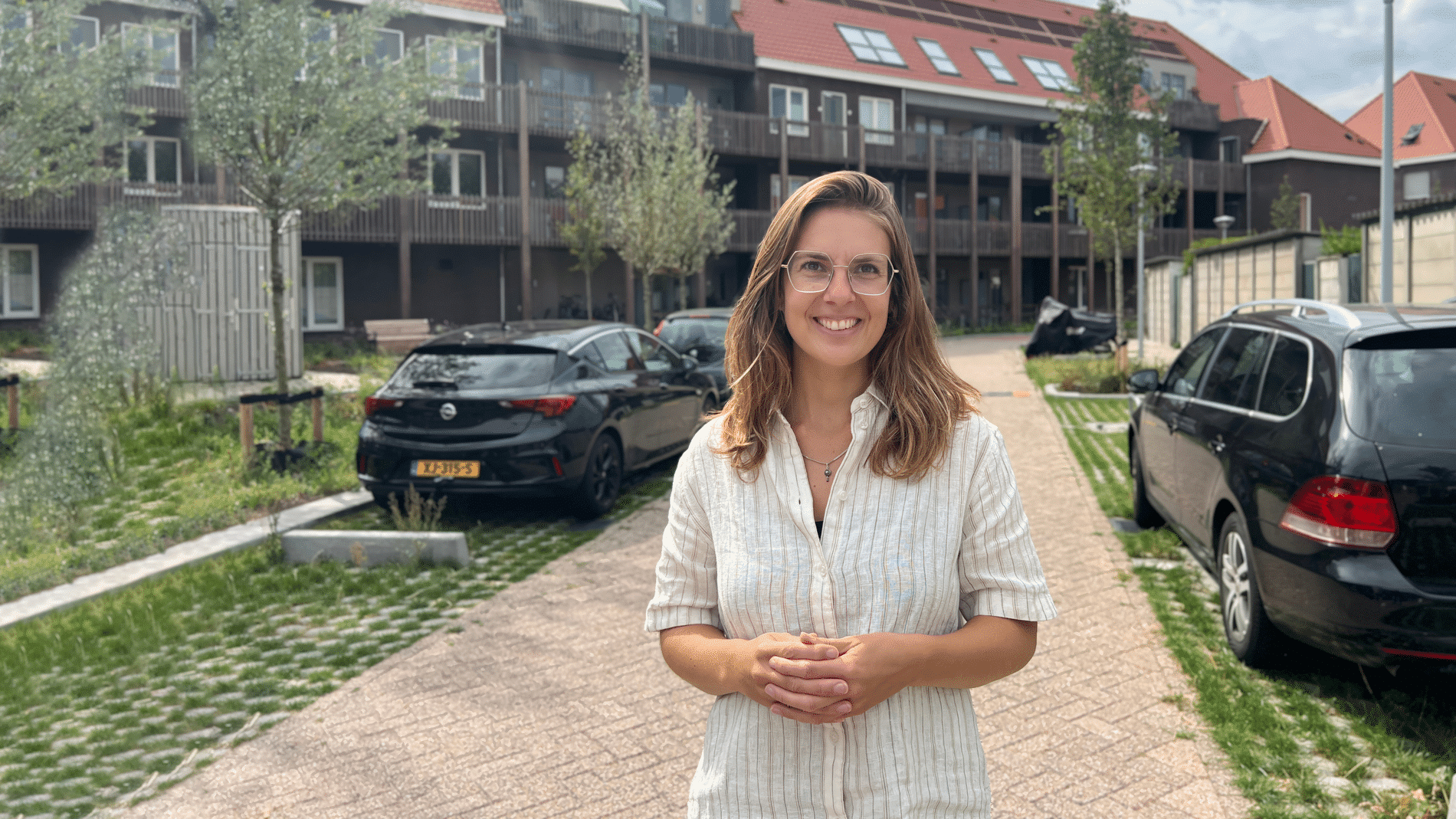
What if you want not only to design what public spaces look like, but also to understand how water, soil, greenery, and technology interact within them? For Fien Dekker of Rain(a)Way, that combination became the foundation for her work on Park Positive. Her mission: to transform the traditional gray street into an ecosystem where rainwater isn’t drained away as quickly as possible, but instead can seep into the soil right where it falls.
Fien studied at the Design Academy Eindhoven and later pursued further studies in climate adaptation and urban areas at Wageningen University. Her graduation project, Rain(a)Way, marked the first step: a tile that visibly integrates rainwater into the street. She is now working through her company on Park Positive, a concept for green-blue paving that combines design and engineering.
That technical aspect turned out to be exactly what she had been missing during her design studies. “I’ve always had an interest in both spatial design and engineering. At Wageningen, I was able to truly combine those two worlds.” The result is a variety of green-and-blue paving solutions that not only look beautiful but also function effectively from a technical standpoint.
At first, she really felt the pressure of having to prove herself as a woman in a predominantly male industry. “You try to justify yourself. You use technical terms to show that you really know what you’re talking about.” That has changed now. She relies more on her own knowledge and strength. And when technical questions come up during a meeting, everyone knows by now: Fien is the go-to person for technical matters.
That is precisely where Fien sees opportunities for other women. In her view, infrastructure is much broader than just heavy machinery, asphalt, and concrete. “Public space belongs to everyone. If you make a change there, it has an immediate impact on a great many people.”
That’s what makes her work special. Water is both visible and tangible, yet technically complex. How many millimeters of rain fall? How many cubic meters can the soil absorb? And how do you design a street where traffic, pedestrians, trees, water, and nature all function together?
Park Positive seeks solutions that can be applied in practice. Not by radically turning the entire street green, but by more intelligently combining existing pavement with an open structure and healthy soil. The new Polder paver is an example of this: a solution that can be integrated with standard concrete pavers, thereby enabling green traffic lanes.
Fien has a clear goal: in ten years, a green street should be the norm and a gray concrete expanse the exception. “If you start to view the street as an ecosystem, you create cooling, space for greenery, and a place for rainwater.”
Her story shows that the infrastructure sector actually needs a variety of perspectives—designers, researchers, engineers, and people who dare to challenge existing systems.
So, women who are hesitant about a career in infrastructure? Fien has some clear advice: “Just go for it. Curiosity, knowledge, and the willingness to carve out your own place will take you just as far. Trust your own knowledge, and people will eventually realize you’re not just the coffee lady,” she says with a laugh.