Platform on civil engineering, underground infrastructure, energy, construction equipment & construction machinery
Modular as a Full-Fledged Alternative
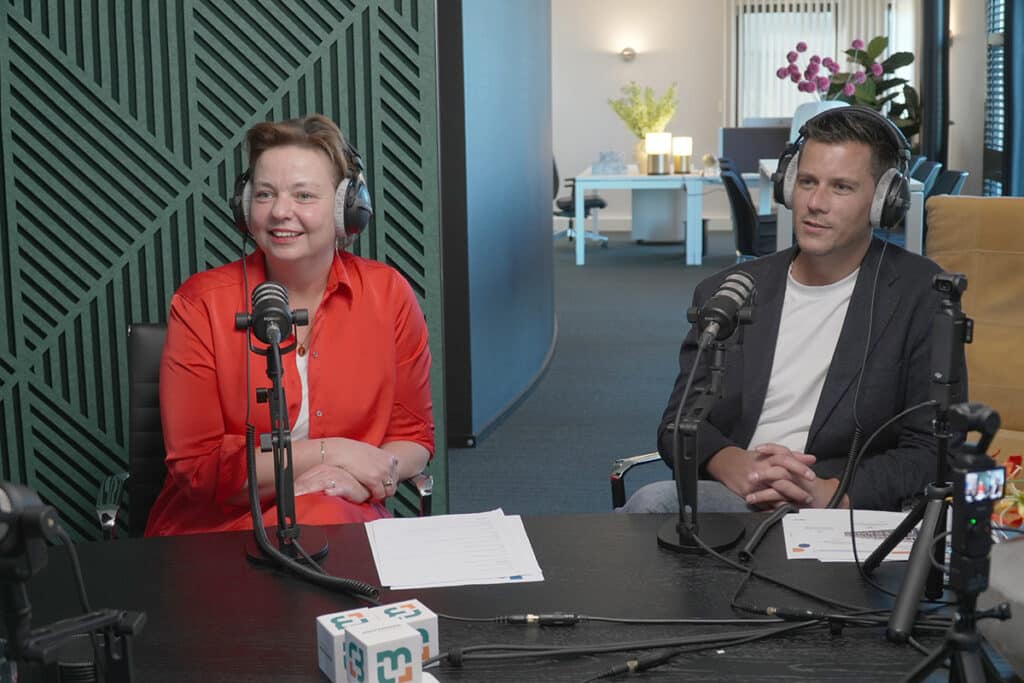
From the Louwers Mediagroep studio, it becomes clear that modular construction is no longer a niche or temporary stopgap solution. On the contrary: it is rapidly evolving into a fully-fledged and flexible alternative to traditional construction methods. In conversation with Annemiek Glorie and Joris Billen, both of whom work at Algeco, a clear picture emerges of the possibilities, misconceptions, and future of this innovative form of construction.
Modular construction is all about flexibility, says Annemiek Glorie, commercial director at Algeco Netherlands. “Modular solutions offer the flexibility to adapt to changing needs. It’s a temporary and flexible form of housing, ranging from a few weeks to as long as ten years or more.” Joris Billen, Project Office Manager at Algeco, brings this concept to life by comparing modular construction to Lego: “ready-made building blocks that you can combine as you wish to create complete buildings, from small office units to large-scale complexes.”
A common misconception is that modular construction is primarily cheap and of inferior quality. “That is absolutely not the case,” the experts say. “Because the units are manufactured in a controlled factory environment, the quality is consistently high and there is less construction waste. Moreover, projects can be completed much faster than with traditional construction, which is a decisive factor in many sectors.” The use of modular construction has expanded significantly in recent years. “Whereas it used to be seen primarily as a stopgap solution, in 2026 people are actually making a conscious choice to go modular,” says Glorie. “Organizations that need flexibility—such as growing companies or schools with fluctuating enrollment numbers—benefit particularly from this approach. They can easily scale up or down without long-term investments in permanent buildings.”
It is also striking that modular construction is increasingly being used for permanent structures. “The line between temporary and permanent is blurring, partly due to the high quality and level of comfort offered by modern units,” Billen suggests. Preconceptions about ‘containers’ are therefore outdated. “Algeco’s current generation of modular units offers a level of comfort that is equivalent to or even better than that of traditional buildings, including good insulation, ventilation, and acoustics.” There are, however, differences between the Netherlands and Belgium. “For example, regulations in Belgium are stricter when it comes to energy performance. Buildings there must meet requirements for insulation and sustainability more quickly,” Billen explains. “In the Netherlands, these rules often don’t take effect until after a longer period.” There are also differences in market applications: in Belgium, industry more often opts for more luxurious modular solutions, while in the Netherlands this is primarily the case for sectors such as education and healthcare.

Modular units have an average lifespan of thirty years and are then largely recycled. “That in itself is sustainable. In addition, we use sustainable technologies such as solar panels, heat pumps, and water harvesting systems. Standardization at the European level also allows units to be reused and exchanged between countries more efficiently,” says Glorie, who adds that Algeco offers both rental and purchase options. “The choice between renting and buying depends heavily on budget and duration of use. Renting offers flexibility and spreads out costs, while buying becomes more attractive for long-term use. Hybrid options, such as lease arrangements, are also gaining popularity.”
The future of modular construction looks promising. Regulations regarding sustainability and energy consumption are expected to become even stricter at the European level. Algeco is already responding to this trend with new generations of units that meet future requirements and preferences. The key message? “Modular construction is not a compromise, but a strategic choice. With endless possibilities, a high level of comfort, and a strong focus on sustainability, it represents a serious alternative to traditional construction. And in many cases, it’s even a better solution.”
Neem dan rechtstreeks contact op met Algeco B.V..
 Contact opnemen
A pioneer and still an international market leader, Algeco introduced the concept of modular container construction in 1955. Sixty years later, it is no longer the only player on the market. With a range of 330,000 modules and extensive international experience, more and more customers are putting their trust in Algeco. Today, [...]
Bekijk Bedrijfsprofiel