Platform on civil engineering, underground infrastructure, energy, construction equipment & construction machinery
From showstopper to design challenge
The infrastructure sector is increasingly running into the same limit. Not technically, but electrically. Grid congestion increasingly determines whether projects go ahead, delay, or start at all. Where previously the focus was on technology, budget and permits, energy capacity is moving to the forefront. Without power, no execution.
The extent of the problem is now known, but the impact is only now being felt. By 2025, more than 14,000 companies were on the waiting list for a new or upgraded connection, accounting for more than 9 GW of requested power. Temporary connections for construction and infrastructure projects are also increasingly subject to the same restrictions in congested areas. As a result, energy is no longer a facility, but a critical precondition.

The first change is visible in the start of projects. Whereas a project traditionally begins with a design and planning, the energy question is increasingly moving to the forefront. Is grid capacity available? If not, what alternatives are there?
This is particularly evident in infrastructure replacement and renovation projects. Bridges, tunnels and quay walls are not only being tackled structurally, but also prepared for electrification of management and maintenance. Think of shore power facilities at quays, energy supply for movable bridges and locks, and charging infrastructure for electric maintenance equipment. At the same time, implementation itself requires power: electric equipment, pumps, lighting and temporary installations.
The classic construction connection has long since ceased to suffice in this regard. In some cases, there is simply no connection available within the project schedule. This forces parties to think about alternatives even before tendering.
Grid reinforcement provides relief over time, but not within the life of most projects. This creates another approach: projects going forward without direct grid connection.
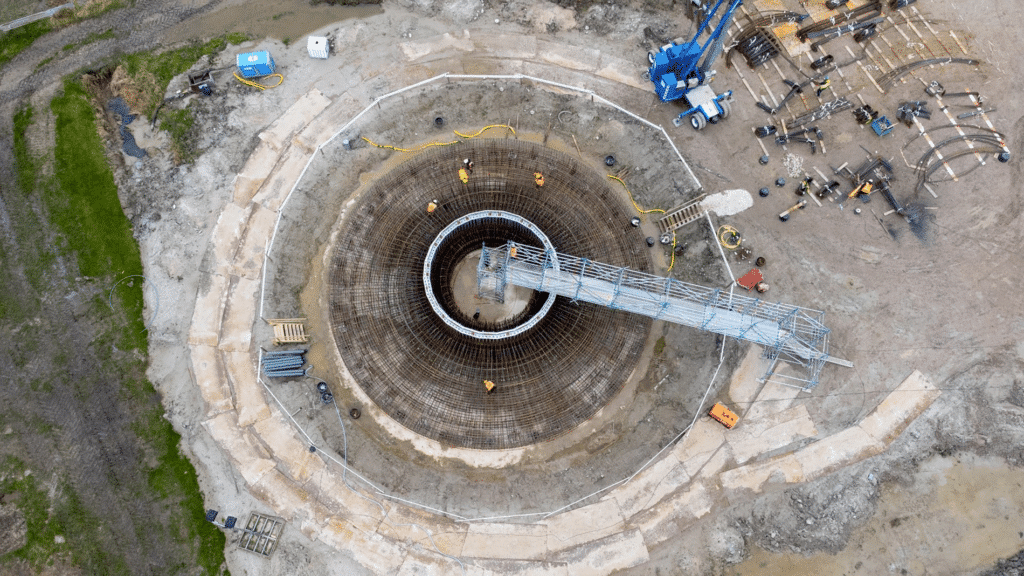
Practice shows that it can be done. In Arnhem, the trolleybus network is used as a temporary energy source for heavy equipment. In Tiel-Waardenburg, a dike reinforcement project with dozens of electric machines ran on a combination of local wind energy, storage and smart control.
New market players are also capitalizing on this. For example, Bryntell introduced a mobile energy solution that can operate completely off-grid. The installation runs on a specially developed biofuel and, according to independent measurements, produces net zero CO2 emissions, with no nitrogen deposition and greatly reduced particulate emissions. The civil contractor Mobilis meanwhile deployed the system on a project where traditional diesel solutions were no longer adequate. This shifts the discussion from ‘waiting for grid capacity’ to ‘how do we organize energy on site?’
Interestingly, these solutions are increasingly offered as a service, including installation, monitoring and maintenance. Energy is thus becoming an integral part of the project, rather than a separate supply. This also makes it easier to scale up and share knowledge between projects.
This shift can also be seen in recent tenders and consortium approaches. In proposals from contractors and engineering firms, energy is no longer treated as a closing item, but as a design task.
In doing so, a number of principles keep recurring:
Early coordination with grid operators as early as the VO phase to understand capacity, lead times and alternatives. Not connecting afterwards, but designing in advance for available energy. Combining energy sources. Temporary grid connections are supplemented with battery storage, mobile energy generation and - where possible - local generation. This smooths out peaks and keeps the project running, even with limited grid capacity. Smart control via energy management systems. Energy consumption is monitored and actively controlled so that charging and usage are matched to available power. Organizing energy hubs on or near the construction site. Not connecting each project individually, but working with shared facilities, charging plazas and buffers that can serve multiple projects or phases. In addition, tenders are increasingly asking for a concrete energy plan: a reasoned strategy detailing how power will be organized, how peaks will be accommodated and what fallback options are available if grid connection fails. This forces bidders to think beyond standard solutions. These approaches were developed in the context of emission-free construction sites, but prove directly applicable to infrastructure projects. It is precisely there, where projects are often larger and last longer, that energy logistics becomes a structural part of implementation.
A next step is now emerging: organizing energy not only at the project level, but at the area level. In urban areas, ports and infrastructure corridors, initiatives are emerging to address energy supply collectively.
That means, for example, multiple projects using a single temporary charging plaza, sharing energy storage, or linking local generation directly to infrastructure projects. Existing assets - such as rail infrastructure, port facilities or industrial connections - are also increasingly being used as temporary energy sources.
This approach requires cooperation across project boundaries. Clients, grid operators and contractors must make joint choices about prioritization and use of scarce capacity. This shifts energy from a technical issue to a managerial and organizational task.
The impact of grid congestion does not stop at the construction site. The subsurface - already a scarce domain - is becoming increasingly crowded. Cables, pipes and heat networks demand space in an environment where water, foundations and existing infra also have their place.
This makes energy infrastructure an integral part of the GWW task. Network operators are getting involved in projects earlier and earlier because their assets have a direct influence on feasibility. In urban areas, this means that design choices are increasingly determined by what still fits - both physically and energetically.
What all these examples have in common is that technology is not the limiting factor. Electric equipment is available. Energy generation and storage are technically possible. The challenge is in organization, coordination and timing.
Grid congestion is forcing the industry to take energy as seriously as construction and logistics. Power requirements, loading schedules and energy profiles are becoming part of the design. Energy logistics is developing into a discipline in its own right, with designers, implementers and energy suppliers working together.
This also requires something of principals. Ambitions for emission-free work have now been widely embraced, but without certainty about energy supply, they lead to risks and delays. Practice shows that consistent requirements, combined with room for smart solutions, work better than rigid regulations. Increasingly, therefore, functional requirements are being used instead of means regulations, allowing market parties to organize their own energy solutions.
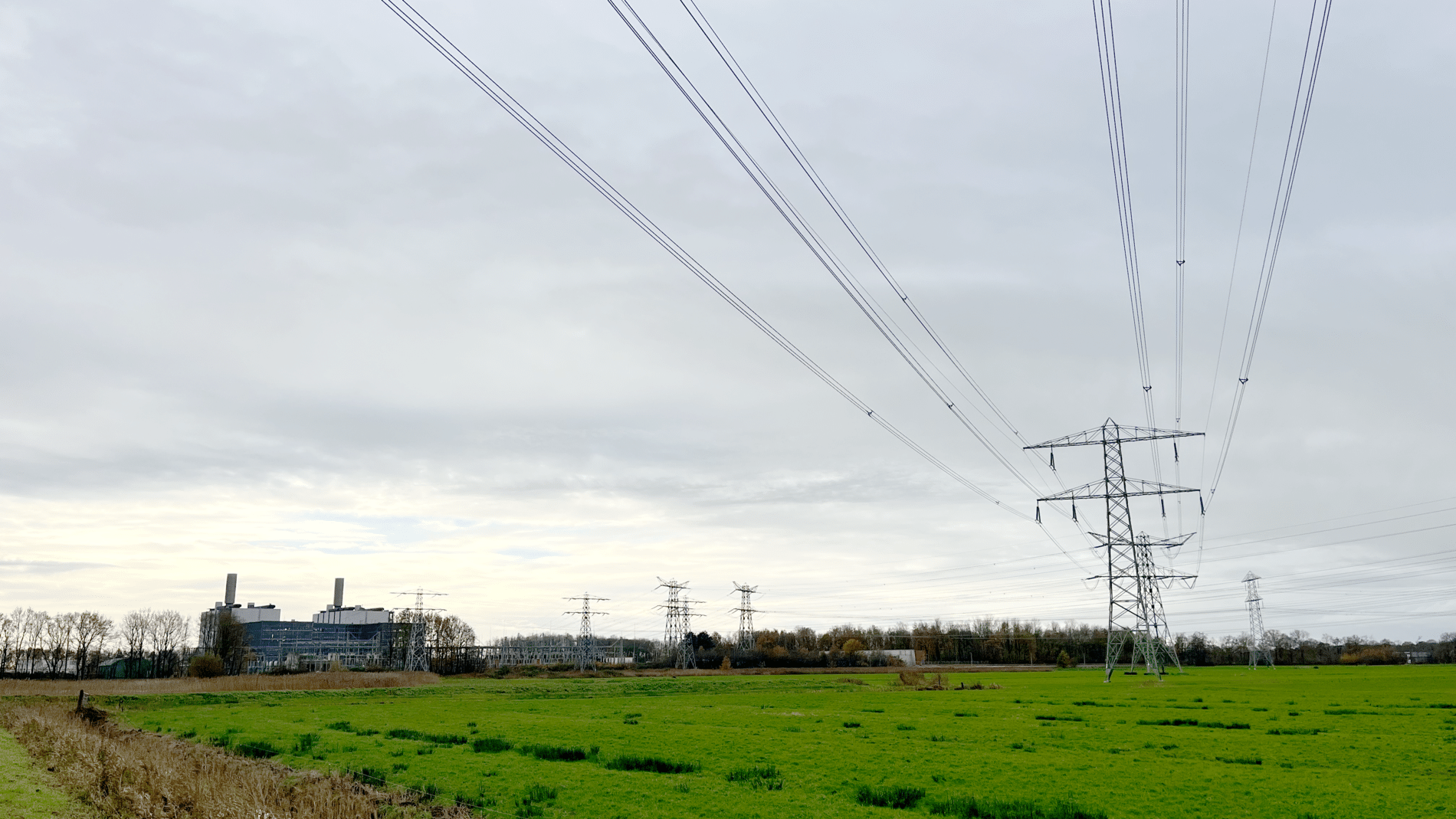
Grid congestion is not a temporary bump, but is increasingly proving to be a structural factor. Projects that do not respond to it get bogged down. Projects that incorporate energy from the beginning remain viable.
The industry is thus facing a turnaround. No longer waiting for capacity, but designing within the limits of the system. Temporary energy hubs, off-grid solutions and smart steering show that there is room - provided it is used properly.
The question is no longer whether it can be done, but how it is organized. Those who include energy integrally keep a grip on planning and execution. Those who do not, find that the biggest limitation is not in the ground, but in the grid.