[00:01] Introduction – The World Behind Construction Fences
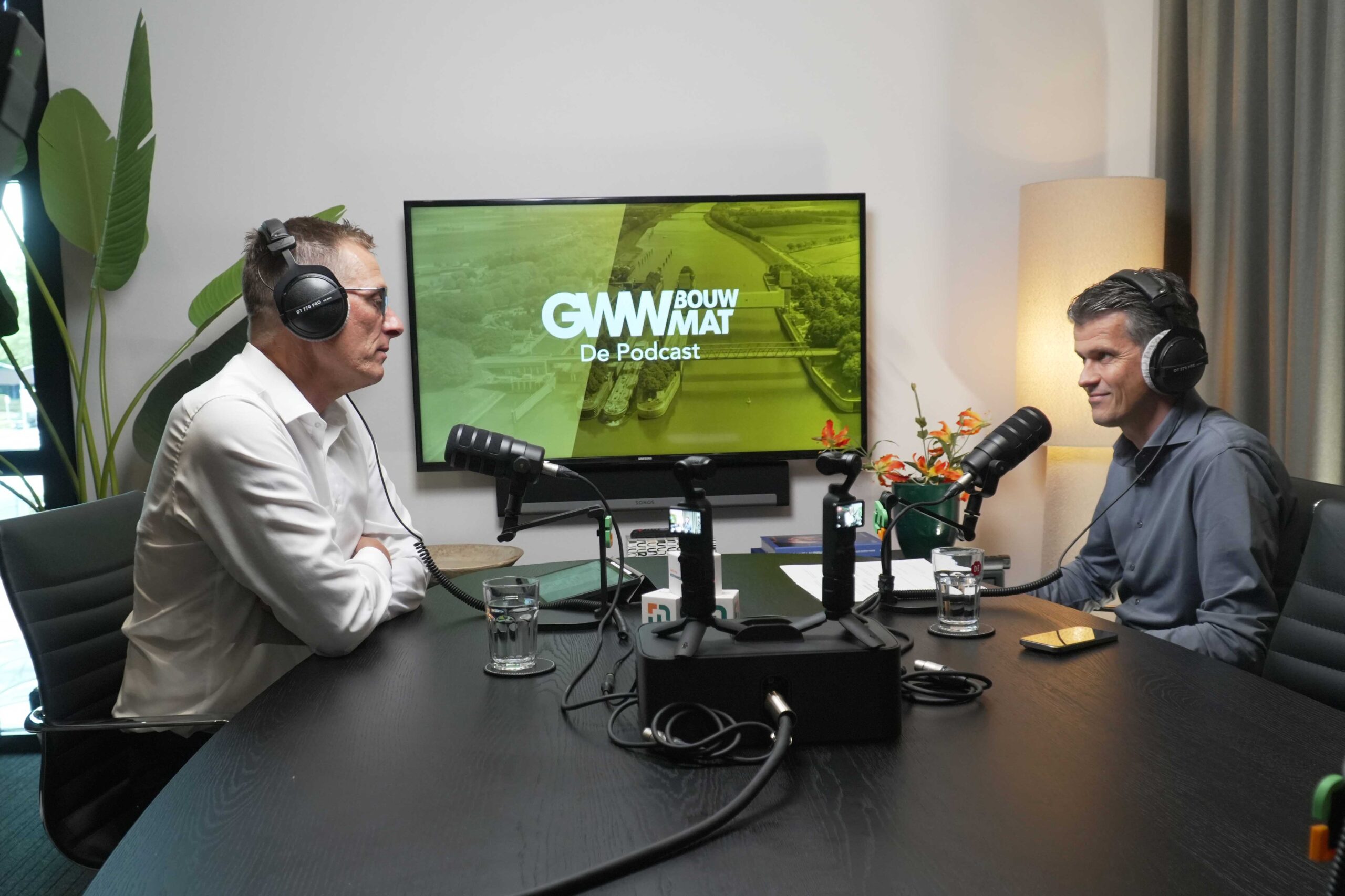
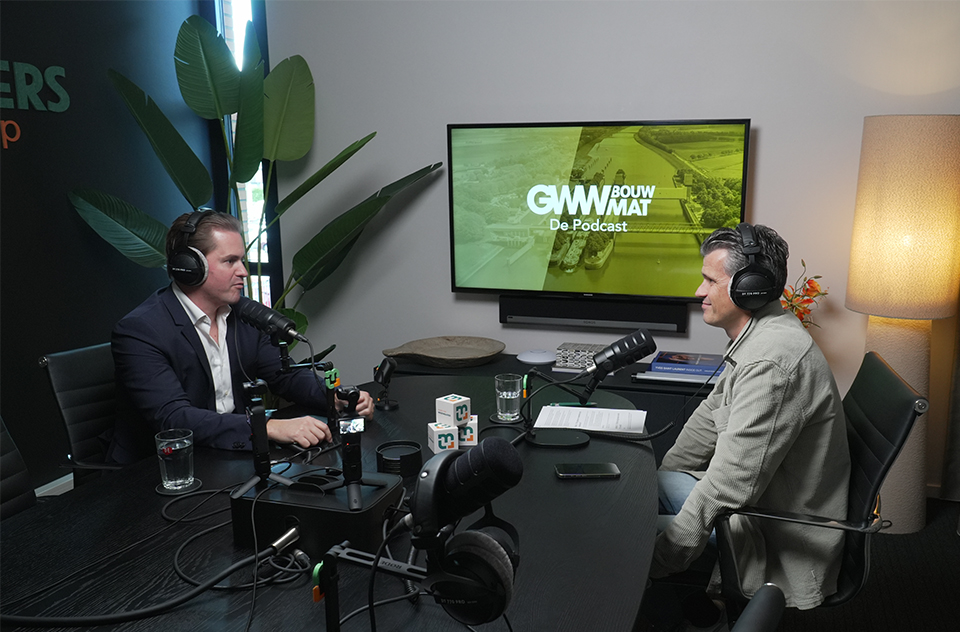
Roel van Gils: Welcome to another new episode of GWW Bouwmat, the podcast. Today we’re going to talk about construction fences. At first glance, a construction fence seems like a fairly straightforward product. You just put it up somewhere and you’re done, but behind that product lies a whole world of raw materials, energy prices, geopolitical tensions, perhaps regulations, working conditions, and, above all, sustainability. Joining me at the table is Marco de Tombe from Q-Fence. Marco, welcome.
Marco de Tombe: Absolutely.
Roel van Gils: Please introduce yourself, if you'd like.
[00:29] The founding of Q-Fence and its initial challenges
Marco de Tombe: Yes, I’m Marco de Tombe. I started Q-Fence in 2019. Before that, I worked for a manufacturer for 15 years. And I actually saw some trends emerging where most of my colleagues were starting to scale back on specifications. I also noticed that the quality of the fencing was steadily declining.
Roel van Gils: Standard fencing.
Marco de Tombe: Well, at some point I did see opportunities there. And I thought: yeah, I can just do that better. I couldn’t start right away, of course, obviously. But I left that company in 2017, and in 2019 I was able to get started. And it was actually well-received almost immediately. Unfortunately, I did run into some issues right from the start. When you become an entrepreneur, of course, you realize there are things you can’t control right away. We had to deal with a nitrogen scandal back then, which is still ongoing. Well, just a few months later, of course, the COVID-19 pandemic hit, which basically brought the entire country to a standstill. So those were definitely challenges.
Roel van Gils: So those were some bumps in the road at the start.
Marco de Tombe: Absolutely, absolutely. That was really nerve-wracking. While it was all happening, I thought: Is this the end of my business? But it was over pretty quickly.
Roel van Gils: Yes.
Marco de Tombe: But then again, opportunities were already presenting themselves at that time. For example, we noticed a trend where a lot of rental companies were actually selling their fencing to generate cash. And I jumped on that right away.
Roel van Gils: So did you guys buy that?
Marco de Tombe: We bought that back then. And we were able to sell it very well at that time, because we realized pretty quickly: people were stuck at home. Of course, people couldn’t go out to eat, and going out wasn’t an option at all. So people actually had quite a bit of extra cash at one point. So what did people do? They renovated and bought houses. And so construction picked up tremendously. And yes, we really did…
Roel van Gils: You jumped on that right away.
Marco de Tombe: We jumped at that opportunity back then. And I think that really helped Q-Fence get through that period.
Roel van Gils: Yeah, okay. Yeah, great.
Marco de Tombe: Yes, definitely.
[02:42] Thinner construction fences and the choice for quality
Roel van Gils: But I think you brought up an important point right at the start. The fences are getting thinner and thinner. How can you address that?
Marco de Tombe: Yes, it mainly comes down to weld quality and the pipe material, which was getting thinner and thinner. I do remember, back when I was still at [unclear], that the standard wall thickness for, say, a pre-galvanized construction fence at the time was one and a half millimeters. If you bought 4 by 3 wire, it was actually 4 by 3. You started seeing more and more on the market that people were welding with a wall thickness of 1.25 millimeters.
Roel van Gils: Really?
Marco de Tombe: Thinner wires, so instead of 4, it became 3.8 or 3.5.
Roel van Gils: It's all about cutting costs.
Marco de Tombe: To save money, of course.
Roel van Gils: So, basically, pushing the limits.
Marco de Tombe: Yes, actually, but the prices weren’t adjusted accordingly, of course. And in a way, that’s understandable, because as a company, the costs might be on that side. So it’s understandable to a certain extent. However, it’s obviously not entirely fair to the customer. And that’s exactly where I saw another opportunity: let’s just guarantee that quality. And make sure you’re putting a fair product on the market. And that even if you supply 6-millimeter wire, or 4-millimeter, or 3-millimeter, you actually use that size.
[03:51] The steel market and geopolitical tensions
Roel van Gils: Yeah, okay. Anyway, maybe we’ll come back to that in a moment. Looking at the bigger picture, how is the steel market performing right now, and what impact is that having on your market?
Marco de Tombe: Well, it’s obviously very turbulent right now. I don’t need to explain everything that’s going on in the world at the moment—especially with Iran, the Middle East, and so on. Of course, a lot of the raw materials we use—or the feedstock for them, like the hot-rolled coils used to make the pipes we use—all come from Asia. And those shipments normally go through the Suez Canal, but now, of course, they all have to take a detour. So that naturally causes a lot of…
Roel van Gils: Yes, and there are additional costs as well.
Marco de Tombe: Of course, that entails not only additional costs but also delays.
Roel van Gils: Yes.
Marco de Tombe: And then there’s the availability of materials. So that market is very volatile right now. And we’re also seeing that this is putting pressure on prices. On the other hand, demand isn’t constant either. We’re dealing with all sorts of factors here as well. Like what I just mentioned about nitrogen. If construction projects aren’t approved and permits aren’t issued, then construction can’t take place. Even though, of course, there’s a lot of demand. So that’s also causing a lot of uncertainty. And you actually see—back when I was still in [unclear]—that you could pretty much predict the whole year. So you knew right away: in January and February it was quiet, then the events would come, then construction would pick up. Then the summer vacation would hit, and you’d fall into a bit of a lull. And then after the summer vacation, it would peak again, right through October. And then in November and December, things quiet down again. But you’re actually seeing now, since I started Q-Fence, that you can’t really predict that at all anymore. Because last year, December was a fantastic month for us—which normally would have been a really bad month.
Roel van Gils: And was that because that was in…
Marco de Tombe: Yes, that might have something to do with events, but it’s also partly related to construction. Which is actually a bit unusual for this time of year. You can’t really anticipate it, so to speak, the way you used to.
[05:48] Changing demands from customers and contractors
Roel van Gils: Yeah, okay. And to what extent are those global developments, so to speak, reflected in the fencing being installed in the Netherlands?
Marco de Tombe: What exactly do you mean by that?
Roel van Gils: Well, if you look at it, for example, have customers also started to view price and delivery reliability differently?
Marco de Tombe: Yes, definitely. That’s part of it, but you do see that the major contractors in the Netherlands, in particular, are starting to focus a bit more on sustainability right now. So there’s a focus on continuity, but also on sustainability. We at Q-Fence have really capitalized on that trend over the past few years. And that’s actually becoming an increasingly important aspect—as a manufacturer or supplier…
Roel van Gils: So price isn't really the most important factor anymore?
Marco de Tombe: It's becoming less important.
Roel van Gils: Yes, the origin of steel is really…
Marco de Tombe: That's becoming more and more important, yes.
[06:34] CBAM and Its Impact on Importers
Roel van Gils: And of course, that’s also related to the next point we’re moving on to, I think. The Carbon Border Adjustment Mechanism, or CBAM. What impact will it have, and how are you planning to respond to it?
Marco de Tombe: Well, that’s still a bit of an uncertain and unclear situation for us as an importer. So we also buy our accessories directly from Asia. We have to—the CBAM is actually the Carbon Border Adjustment Mechanism—so we’ll have to pay carbon duties there on goods we purchase outside of Europe. That includes our construction fence accessories, just to focus on that for a moment.
Roel van Gils: Yes.
Marco de Tombe: Well, the way it worked was that your supplier would provide certain data, which you could then include in your CBAM declarations. We’ve also been filing CBAM declarations for the past two years. But now, the European Union has determined that certain countries have a specific indicator. And some countries are treated more favorably than others.
Roel van Gils: So where exactly does that come from?
Marco de Tombe: Yes, those are set by the European Union. So we have no further influence over them. But of course, that does have a huge impact on the…
Roel van Gils: Things that are outside…
Marco de Tombe: Well, the price the product will eventually have. Specifically, imagine you’re sourcing a product from China or India, for example, and that indicator isn’t quite as favorable. And that, of course, has a huge impact on your selling price.
Roel van Gils: But that's in hindsight, isn't it?
Marco de Tombe: That’s in hindsight, yes. So everything we import this year, we’ll have to account for in 2027. But we don’t know exactly how it will work yet. And our supplier… Because right now they’re in the process of accrediting companies. So there will soon be agencies that will accredit our manufacturers in China or India, so that they’re allowed to use the data they report.
Roel van Gils: It doesn't make things any easier, does it?
Marco de Tombe: It certainly doesn't make it any easier. No, definitely not.
Roel van Gils: But if we take a closer look, what exactly will change? Prices will probably go up.
Marco de Tombe: That will drive up the price. We just don’t know exactly by how much yet. But of course, you have to plan for that. So we’re now seeing that competing companies—including those we do business with—are already freeing up and setting aside budgets to cover the CBAM next year.
[08:54] Production Closer to Home and Opportunities for Europe
Roel van Gils: But does that also make it more interesting to produce goods closer to home?
Marco de Tombe: Definitely, absolutely. We’re also looking at products that aren’t as interesting to import in terms of volume. Take a construction fence clamp, for example—it’s a very small item, but it’s really a high-volume product. Yeah, you’re not going to make that here anymore, because I don’t think there’s anyone who wants to assemble and produce a construction fence clamp like that. Ultimately, I think that, for example, crowd control barriers—which are currently imported in large quantities—will stop being imported at some point.
Roel van Gils: Yes, it actually becomes too expensive to import.
Marco de Tombe: Because you’re transporting a lot of air. So I think that in the future, that will change with certain fences being used in Belgium and France. Right now, they all still come from countries like Turkey or Saudi Arabia, as I’ve heard mentioned before.
Roel van Gils: They're manufactured there.
Marco de Tombe: Those will then be transported here. But I do think that will eventually disappear. That production will shift back to Europe to some extent. So that’s obviously a positive development. And I think—and we’re already working on this—if you jump on that opportunity in time, it’s definitely a chance.
[10:06] More Sustainable Steel and Q-Fence's Carbon Footprint
Roel van Gils: But is it also an incentive to use cleaner steel? Or cleaner in that sense?
Marco de Tombe: Yes, definitely. Well, here at Q-Fence, I had a CO2 dashboard created last year. Because sustainability is, of course, an issue that’s becoming increasingly important. I don’t think sustainability is just about putting a few solar panels on your roof, driving HVO trucks, and then claiming we’re all being very sustainable. No, I think you have to make it much more concrete. Our Scope 1 and 2 emissions are practically negligible [unclear]. So we can make the most progress on our Scope 3 emissions, which are our products. The thing is, our steel supplier is offering us the opportunity to start using green steel—certified, too. And we’re really looking into that right now. See, then you can actually demonstrate that you…
Roel van Gils: You're committed to sustainability.
Marco de Tombe: That you’re committed to sustainability. And that applies to the raw materials we use.
[11:01] Sustainable construction fences and replaceable parts
Marco de Tombe: But take, for example, the sustainability aspect of the fencing itself. In recent years, we’ve seen a significant increase in the use of semi-wooden fences. These are called Combiwood construction fences. And we’ve developed it to be sustainable because it has a hot-dip galvanized frame. Normally, our competitors all use Sendzimir-galvanized frames. That means they use pre-galvanized steel… which is then welded together more cheaply. Which, by the way, isn’t very healthy for you. Because when you weld Sendzimir-galvanized material, toxic substances are released. That’s not really good for your respiratory system, so to speak. We weld ours from bare steel and then hot-dip galvanize it. So that frame is protected against rust for the next 20 to 30 years. And the bottom rail can be detached. So if a rail breaks, you can replace it very easily. So that’s indeed something we’re working on—so that if a fence is damaged, you don’t have to throw the whole thing away right away, but can replace specific parts. And you can use that fence for years to come.
Roel van Gils: And those existing products aren't?
Marco de Tombe: No, because if you use the Sendzimir galvanizing process, it corrodes very quickly. Or it’ll start to rust, and then you’ll have to throw it away.
Roel van Gils: So at first glance, it seems sustainable, but is it actually not at all?
Marco de Tombe: No, far from it. And besides, it’s also not sustainable at all—or rather, the production process and the welding method aren’t exactly very healthy for you either.
Roel van Gils: No, no.
Marco de Tombe: But that's how it's sold on the market.
[12:44] Combiwood and Citywood construction fences
Roel van Gils: And what do you call that product, that line, at your company?
Marco de Tombe: Yes, those are our Combiwood fences and our Citywood construction fences. The Citywood fence is a completely solid wooden construction fence.
Roel van Gils: Then you can't see through it, so it's not transparent.
Marco de Tombe: No. And that’s actually assembled. So there’s really no welding involved anymore.
Roel van Gils: Okay.
Marco de Tombe: So we have all those parts hot-dip galvanized, and then they're assembled. So if something breaks in there, you can just…
Roel van Gils: Yes, but that's just one. And then there's also the half-wood. That's the Combiwood.
Marco de Tombe: Yes, that's the Combiwood. It has a mesh panel on top and a wooden panel on the bottom.
Roel van Gils: That's also interchangeable.
Marco de Tombe: Yes, definitely.
[13:27] Chromium-6 in construction fence accessories
Roel van Gils: But you’re also still pointing out that there are construction fences—or at least accessories—that are sold containing chromium-6. Is that correct?
Marco de Tombe: Yes, it’s true that construction fence clamps, in particular—there are also several other types of clamps used in construction for scaffolding, but I’m not very familiar with those. But what we definitely still come across to this day are construction fence clamps that contain chromium-6. Well, how can you tell? There’s actually a sort of pinkish sheen in that zinc coating. Construction fence clamps are generally hot-dip galvanized—that’s electrolytic galvanizing. And to passivate that coating, you actually need chromium-6. That’s prohibited.
Roel van Gils: That's not allowed.
Marco de Tombe: Because, as far as I know—and I won’t lie about this—the European Union will ban chromium-6, or its use, in 2022. And as it happens, one of my account managers came to me a few weeks ago with a clamp and asked: Can we replicate this type of clamp?
Roel van Gils: Yes.
Marco de Tombe: I looked at that clamp. I said, “Robin, this contains chromium-6.” So, yeah, we’re not going to copy that. But we can make a copy that meets our specifications. And our client—so we presented that to them—and, of course, our client was also very alarmed by that.
Roel van Gils: Yes, because he also believes he's doing a good job of being sustainable.
Marco de Tombe: Exactly. So he was shocked by that. So he immediately canceled his contract with his current supplier. And now we're going to be the ones supplying him.
[14:49] Responsible Sourcing and Working Conditions
Roel van Gils: Yes, so where did those products come from? From outside Europe, I assume.
Marco de Tombe: All of that takes place outside of Europe. And, of course, some countries don’t have any restrictions on the use of chromium-6 at all. But as a general rule, we only do business with companies that do not use chromium-6 in their production process. In addition, we also do not want to do business with manufacturers outside Europe that, for example, use child labor. Take, for example, a gate wheel for a construction fence—the kind used to make a construction fence gate. This is a plastic wheel. In India, for instance, it’s very common to make these from recycled plastic. However, in India, that recycled plastic is often collected from landfills by young children.
Roel van Gils: It's unbelievable.
Marco de Tombe: And that’s melted down to make a gate wheel. And I don’t want anything to do with that. So our gate wheels are simply made from new material. And I know that makes them a little more expensive to buy. But I don’t want anything to do with that kind of thing. I’d rather pay a few euros more than put a product on the market when I don’t know how it was manufactured or who worked on it.
Roel van Gils: But from a sustainability perspective, you might say: it could also be made from recycled materials—as long as it’s made by adults, in this case.
Marco de Tombe: Yes, but you can't guarantee that, can you?
Roel van Gils: No, exactly.
Marco de Tombe: No.
[4:15 p.m.] The motivation behind Q-Fence
Roel van Gils: Yes, that actually brings us to the origins of Q-Fence. Because you all saw this happening in the market, of course. You really wanted to do things differently out of intrinsic motivation. Where did that actually come from?
Marco de Tombe: Well, as I mentioned earlier, I’m seeing certain trends emerge in the market more and more. I also noticed that when I visited customers, they’d say, “Yeah, those fences used to be much better quality, but these days they break after just a couple of uses.”.
Roel van Gils: Yes.
Marco de Tombe: And I’ve also always learned a great deal from event rental companies in particular. Because they’re actually our customers who often own the fencing and use it extensively. So constantly, every three weeks, it gets picked up again, and we head off to another event. And I’ve always listened very carefully to what they have to say. And if you listen to those guys and take note of what you need to pay attention to, and you apply that knowledge, then that benefits the construction industry as well, of course, naturally. So with us, the fences are welded a bit further around. Not just two welds at the top. That applies especially to the hot-dip galvanized construction fences. But we weld the fences—or the tubular fence frame—three-quarters of the way around. With us, the wires fit inside the frame, so you don’t damage your [unclear]. These are all very small details, but they’re incredibly important. If the wires are sitting on top of the tubing, you’ll naturally catch your hands on them.
Roel van Gils: Yes, always.
Marco de Tombe: Yes, it does have a sharp edge, especially if you're going to sink it.
Roel van Gils: Yeah, okay.
[5:36 p.m.] Lifespan vs. Purchase Price
Roel van Gils: So, over the years, the market has become accustomed to asking: “How much cheaper—just how much cheaper—can the fencing actually be?” While the question that wasn’t asked was: “How long is it actually supposed to last?”
Marco de Tombe: Yes, and that’s something that’s actually never looked into. And I saw those questions start to arise. I know that a very large equipment department at a very large construction company in the Netherlands investigated this on its own at one point. And at the time, they bought some of those fences from a colleague. Then one of their buyers came along: another shipment of fences needed to be purchased. He said, “But we bought three or four shipments six months ago. How is that possible?”
Roel van Gils: And they're already worn out.
Marco de Tombe: Broken. And at some point, those fences started showing signs of wear. Like: “Hey, we’ve bought these fences now—let’s see how long they last.” And then we actually came to the alarming conclusion that, after just one year, 40 percent of those fences were already no longer fit for use.
[6:25 p.m.] Warranty and Lifespan of Construction Fences
Roel van Gils: So what kind of warranty period or warranty do you offer? But how long do your fences last?
Marco de Tombe: Well, a warranty is, of course, always a bit… You can offer a warranty on the zinc coating. Look, we can’t offer a warranty on how it’s used.
Roel van Gils: No, definitely.
Marco de Tombe: So that’s obviously very difficult. I think it has to do with the galvanizing. But I’ll have to check the documentation from the galvanizing plant. But I think it’s normal—if you were to put a hot-dip galvanized construction fence, which we make ourselves, out in a field, it would still be standing there after 30 years.
Roel van Gils: But then, of course, they won't be affected or touched, right?
Marco de Tombe: No, that’s exactly it. You often see this with contractors—especially if they don’t store the construction fences on trestles, of course—and then you run into them with a forklift. Yeah, obviously no fencing can withstand that. Even if you made them out of solid steel, they’d still break, of course. So that’s a bit of a problem, naturally.
Roel van Gils: Yes.
Marco de Tombe: Well, yes, in terms of the quality of the fence, I’d be willing to offer a ten- to fifteen-year warranty on our construction fences.
[7:16 p.m.] Quality Requirements and Wall Thicknesses
Roel van Gils: Because what quality standards do you set for a fence? Are there specific aspects you focus on?
Marco de Tombe: We always use 1.5-millimeter-wall-thickness tubing as standard for our hot-dip galvanized construction fences. So we say we do that because the sturdiness of a construction fence is actually determined by the frame of the fencing. Look, the mesh is really just for visual purposes—it’s there so people can see that you can’t get through it. Of course, with a hot-dip galvanized construction fence featuring 6- or 4-wire mesh, the mesh does contribute significantly to the fence’s sturdiness. But it’s obviously the tubular frame that really determines the sturdiness. And those welds and the wall thickness of the material are actually very important. That ensures that a fence is simply less likely to warp compared to a pre-galvanized construction fence.
Roel van Gils: And what's the minimum for you guys? Like, the absolute minimum in terms of pipe thickness?
Marco de Tombe: Well, of course, there are always certain standards. So there’s always a plus-minus tolerance. We have no control over that. So you have to stick to it. But generally speaking, when we receive the material, we measure it. And if it’s well below the standard—which actually never happens—but if it were to fall outside the tolerance range, then we reject the material and it simply goes back to the supplier.
[20:31] Quality Control for European and International Suppliers
Roel van Gils: Okay. And those suppliers—because you don’t just look at the product itself to see if it meets the specifications, but as you just mentioned, you also set requirements for the suppliers, right?
Marco de Tombe: Yes, and that applies in particular to suppliers we have outside of Europe.
Roel van Gils: Yes, because you also have suppliers within Europe for the fences, right? For production?
Marco de Tombe: Yes, certain crowd control barriers, at least. We do have those within Europe. But anyway, that’s a certain level of consistent quality. We’re generally aware of that. It’s also a bit easier to influence that. But for shipments outside Europe, it’s naturally a bit more difficult. Because if you have a container of clamps here and they’re not up to standard, you’ve got a problem, of course. You can’t just send them back. So it’s obviously very important that we continue to monitor this very closely. And that’s exactly what we do with every shipment we receive. I also have some chromium-6 tests here in Eindhoven.
Roel van Gils: Oh, really?
Marco de Tombe: We take one sample—a random sample—from each pallet. Then we test it for the presence of chromium-6.
Roel van Gils: Yes.
Marco de Tombe: And it's actually never in there. But anyway, we'll test it.
Roel van Gils: Especially when things are uncertain.
Marco de Tombe: Especially when things are uncertain—yes, absolutely.
Roel van Gils: So how far do you go with those inspections? Because I think this already goes pretty far.
Marco de Tombe: Yeah, well, okay. I do think you should check that. So that includes the wall thickness of the clamp’s shell—you need to check that, too. To make sure you’re not secretly… These days, there’s also a trend where clamps are sold as 3 millimeters, but they’re actually only 2.5. We’re going [unclear] on that, too. We don’t do any of that.
Roel van Gils: No, you guys are all about quality.
Marco de Tombe: We do stand for quality.
[22:06] Accountability and Trust in Suppliers
Roel van Gils: The question, of course, is: To what extent can a Dutch supplier take responsibility for what happens thousands of kilometers away?
Marco de Tombe: Yes, that's right. That is a bit of a challenge. Well, our supplier does come to the Netherlands every year.
Roel van Gils: Oh, really?
Marco de Tombe: Yes, definitely. I haven't been to that factory myself yet. Yes, of course, you can't seal everything off.
Roel van Gils: No.
Marco de Tombe: Yes, sometimes you just have to have a little faith in what… And they really are a well-established manufacturer of these kinds of products.
Roel van Gils: Yes.
Marco de Tombe: So I don't think they're involved in that… No, that seems highly unlikely to me.
[22:46] CO2 reduction and certified green steel
Roel van Gils: Let’s go back to the topic of sustainability for a moment. So you’re really making a concerted effort to reduce your carbon footprint. Specifically, what has changed so far, and what’s still in the works?
Marco de Tombe: Well, as I said, we have indeed converted our vehicle fleet. But anyway, that falls under Scope 1 and 2. I don’t really think that’s… And I also think it’s a bit of a weak excuse. But we’re mainly looking at the raw materials we use. But we do put the question out to the customer. Look, I understand that our trading customers aren’t as concerned with that. But you do see that, for example, very large contractors in the Netherlands are increasingly prioritizing it. And we do want to offer them that option. So if they say, “We want you to use fully CO2-neutral steel for our construction fence storage racks,” then we’ll source that for them. And they’ll also receive those certificates.
Roel van Gils: Yes. So it's not greenwashing. It's actually backed up by numbers.
Marco de Tombe: Absolutely. It’s truly certified, that’s right. And we want to offer that option to our customers. You can achieve a great deal with it. And for us, the next step would be—if that’s so important to those customers—to start using electric trucks as well, so that those emissions are completely…
Roel van Gils: Toward zero.
Marco de Tombe: Yeah, well, down to zero. You can’t control everything… Sinking it—that will, of course, always involve some CO2 emissions. But for the aspects we can influence, we’ll leave that up to the customer. Is that what you want?
Roel van Gils: Yes. And you guys make sure it can happen.
[24:17] The additional cost of sustainable steel
Roel van Gils: So where do the biggest challenges lie in that regard?
Marco de Tombe: Well, if you want to start using carbon-neutral steel, of course, there’s a price tag attached to that. And that’s still a bit of a question: Is the market ready for that right now? Is the customer willing to pay for it?
Roel van Gils: Perhaps ultimately driven by regulations.
Marco de Tombe: Yes, I think so. I think that, especially in the major cities in the Netherlands—such as Amsterdam, Utrecht, and Eindhoven—you’re seeing more and more that it’s becoming important. When those big contractors have major projects there, it’s going to become increasingly important. But of course, there will be a price tag attached to it. And the question is—though that’s not something we can determine—is the client willing to pay for it?
Roel van Gils: Yes, that's the question.
Marco de Tombe: Yes, definitely.
[25:06] Expansion plans into Belgium and France
Roel van Gils: And looking ahead a bit: I think you're mainly active in the Netherlands. Do you have any plans?
Marco de Tombe: We are currently looking into expanding our operations in Belgium. We do have some Belgian clients—we already have them—but they’re mainly focused on events. However, there are still plenty of opportunities in Belgium, and perhaps in France as well. We’re really still in the research phase there, though. We’re a bit further along with Belgium.
Roel van Gils: But is that market at the same level as here?
Marco de Tombe: No, absolutely not. You can’t compare the two at all. We may seem like a united Europe from time to time, but if you look at the fencing used in France, it’s appalling.
Roel van Gils: So it's not high-quality.
Marco de Tombe: All disposable.
Roel van Gils: Really?
Marco de Tombe: Yeah, unbelievable.
Roel van Gils: Even on large projects?
Marco de Tombe: That's crazy. That's all I hear over there. A construction fence there doesn't even weigh ten kilos.
Roel van Gils: It is good for ergonomics, though.
Marco de Tombe: Yes, exactly. And here we are dealing with construction fences that weigh thirty kilos. So there’s still a difference there.
Roel van Gils: They still have some work to do.
Marco de Tombe: Yes, absolutely. But then again, we don't know how they'll view things ten years from now. So for all we know, a whole new market could open up for us then.
[26:16] What will the construction fence of the future look like?
Roel van Gils: Well, that’s a good one. In ten years, what do you think a construction fence will look like? Here in the Netherlands, that is?
Marco de Tombe: Yes, that’s an interesting question. I still think it’ll be steel. Because steel, of course, remains a raw material that can be recycled, and in principle, its quality doesn’t deteriorate. So I don’t think it’s going to disappear. But there might be several variations of it coming onto the market.
Roel van Gils: Do you mean other types of materials as well?
Marco de Tombe: Yes, you can see that now, for example, with those Combiwood fences. That’s something that’s come about in recent years, and it’s obviously grown explosively for us.
Roel van Gils: Yes. But is that also to show that we’re sustainable?
Marco de Tombe: Yes, sustainable, but also very visually appealing. You can see that now, too—last summer we completed a very large project in Brussels. It’s called Lakeside. It’s located in the heart of Brussels. And for that project, they specifically wanted those Citywood construction fences to fit the surroundings.
Roel van Gils: And those are the wood panels, right?
Marco de Tombe: Yes, all wood. It looks beautiful.
Roel van Gils: And what kind of wood is in it?
Marco de Tombe: [Wood species unclear].
Roel van Gils: But steel, or not? As for other materials, like plastic—I don't know—but is that an option?
Marco de Tombe: That’s a thing of the past. I know that in Belgium—in what’s called the Brussels Region—they have those low construction fences. They have a mesh panel in them, and a sheet pile profile.
Roel van Gils: Made of plastic?
Marco de Tombe: No, it's made of steel now. It has a kind of sheet pile profile. I don't know exactly what the alloy is, but it's blue, yellow, and blue.
Roel van Gils: Is that the city's color or the municipality's?
Marco de Tombe: Yes, from the municipality, I think. And I believe the municipality of Mechelen and places like that are all included in that as well.
Roel van Gils: That's basically the Belgian version of the Combiwood. Except it has…
Marco de Tombe: Yeah, well, I know—I think you should install those fences in downtown Brussels.
Roel van Gils: Yes.
Marco de Tombe: And I know there was some smart aleck who tried to do that with plastic panels, but apparently the City of Brussels rejected that idea. So that’s no longer allowed. But then again, maybe that will change in the future—from sheet pile to wood. That wouldn’t surprise me at all. After all, we’re kind of pioneers in this area here in the Netherlands. And you’re already seeing in Belgium that there’s more demand for wood there, too. So it wouldn’t surprise me if that…
Roel van Gils: That we're really heading in that direction.
Marco de Tombe: And maybe if Belgium starts, France might follow suit. Yeah, who knows.
Roel van Gils: Okay, that's great. I think these are some exciting developments for you guys.
Marco de Tombe: Yes, absolutely.
[28:36] Quality as the Most Important Consideration When Choosing Construction Fences
Roel van Gils: Well, if you could change just one thing about the current construction fence market, so to speak, what would it be?
Marco de Tombe: What would that be? Well, if I were a construction company and needed to buy fencing, I’d always buy hot-dip galvanized construction fencing. But do they actually have that knowledge? Or do they just say, “Yeah, we need some construction fencing”? That’s often how the request is phrased, from what we’ve seen. So we often get an email saying, “Yeah, we need two hundred construction fences.” “Yes, but do you specify which type? Or, ‘It doesn’t matter, as long as it’s cheap.’ Oh, right—the price. The price always comes up eventually.” If you show the customer the options and say, “Well, do you have time to come by sometime and see what we have to offer?” You’ll often hear: “Yeah, no, but we don’t want that flimsy fencing. We need something high-quality…” And then, in the end, they go for the more expensive option anyway.
Roel van Gils: But then you have to be given the time to explain it, of course.
Marco de Tombe: Absolutely. So what we often do—especially with new customers—is simply send them a demo unit, free of charge. Then they can try it out for themselves. And we can also back that up in a face-to-face conversation by explaining, “These are the differences.” And this also results in much less downtime, especially after a few years. And then you see that those clients often come around.
Roel van Gils: Yes, they've changed their minds. They're actually the ones reaping the cost savings.
Marco de Tombe: Yes, the upfront investment may be higher, but in the long run, you'll see that it saves you a lot of money.
[29:59] Closing Remarks
Roel van Gils: Yeah, well, that's great. I do think we've gotten a good sense of who you are and what you do.
Marco de Tombe: Yes, I hope so too.
Roel van Gils: Thank you for this conversation, Marco.
Marco de Tombe: You're welcome.
Roel van Gils: And listeners, thank you for listening.
Marco de Tombe: Yes, definitely. Thank you.