Platform on civil engineering, underground infrastructure, energy, construction equipment & construction machinery
Protects both the construction site and the surrounding area
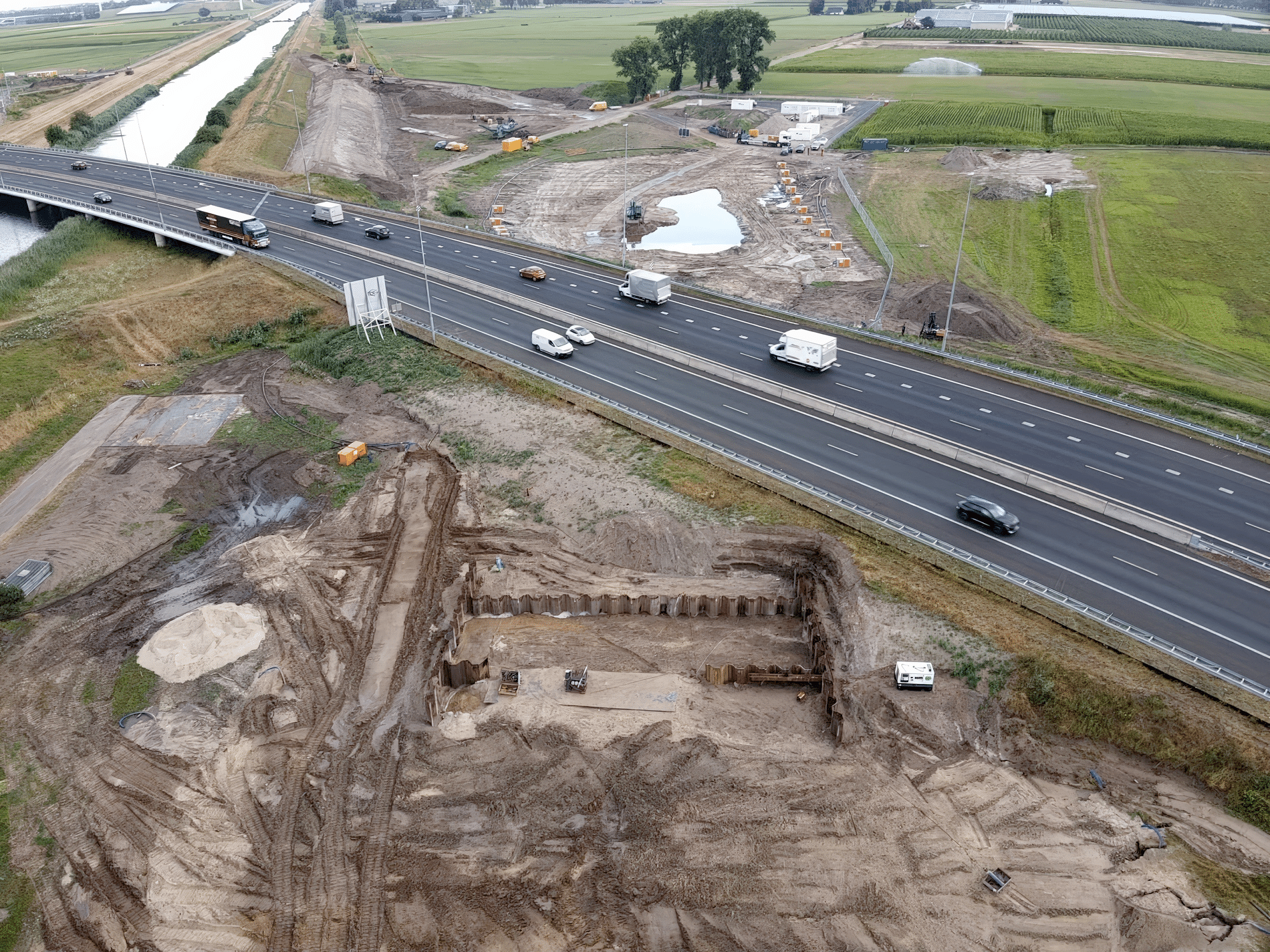
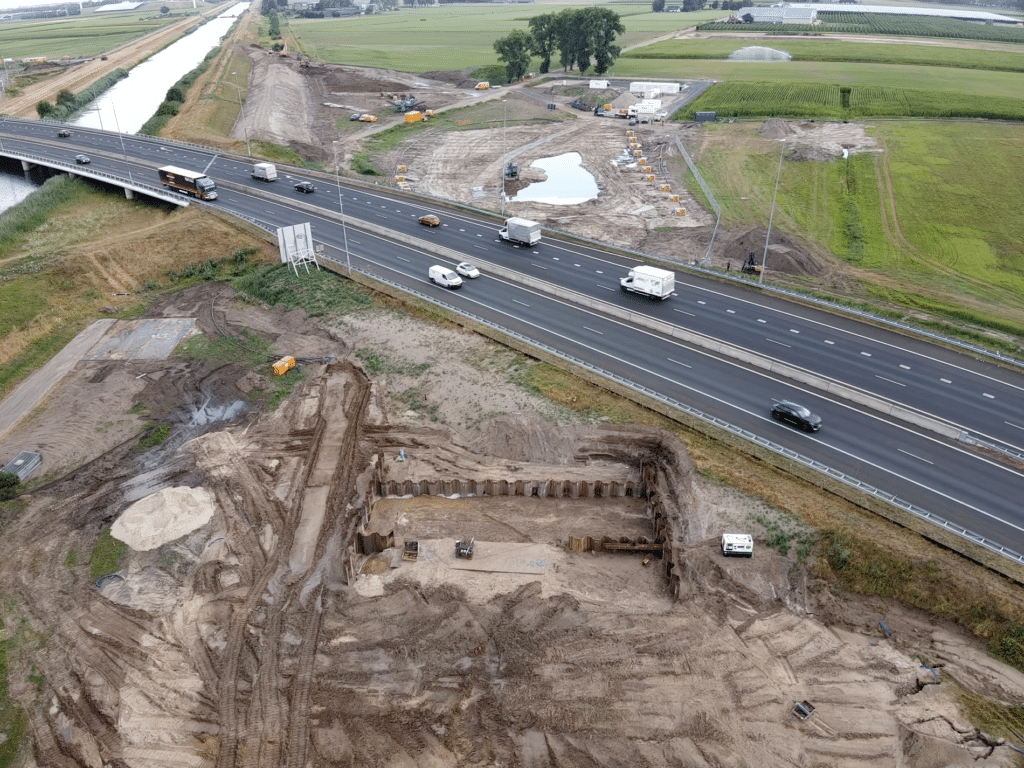
The Oostelijke Langstraat Area Development project strengthens flood protection for ’s-Hertogenbosch and the surrounding area and improves traffic safety along and around the A59. Part of the project involves the construction of an underpass beneath the highway. The structure will be built on the north side at a prefabrication site and then slid into place during a nine-day road closure. To make this possible, Bronbemaling.com—commissioned by the Mourik-BESIX construction consortium—is providing a comprehensive dewatering solution that keeps the construction site dry while also protecting the surrounding area.
”We have installed drainage systems on both the north and south sides of the future underpass,” says Nick Hermans of Bronbemaling.com. On the north side, drains were mechanically milled to a depth of approximately four meters, while on the south side—where the underpass is deeper due to the sloping embankment of the A59—drains were installed to a depth of six meters. “Twenty-five drain lines were installed on each side, with the depth precisely calibrated to the required dewatering depth.”
Bronbemaling.com has also drilled four deep wells into the embankment of the A59. “These will ensure that the tunnel segment can be slid into place under dry conditions,” says Nick. “To avoid any surprises during the nine-day road closure, an extensive pumping test will be conducted one week prior to the sliding operation. Using a test dewatering operation, monitoring wells, and data loggers, we’ll verify that the calculated reduction in the groundwater level is actually achieved before the highway closes.”
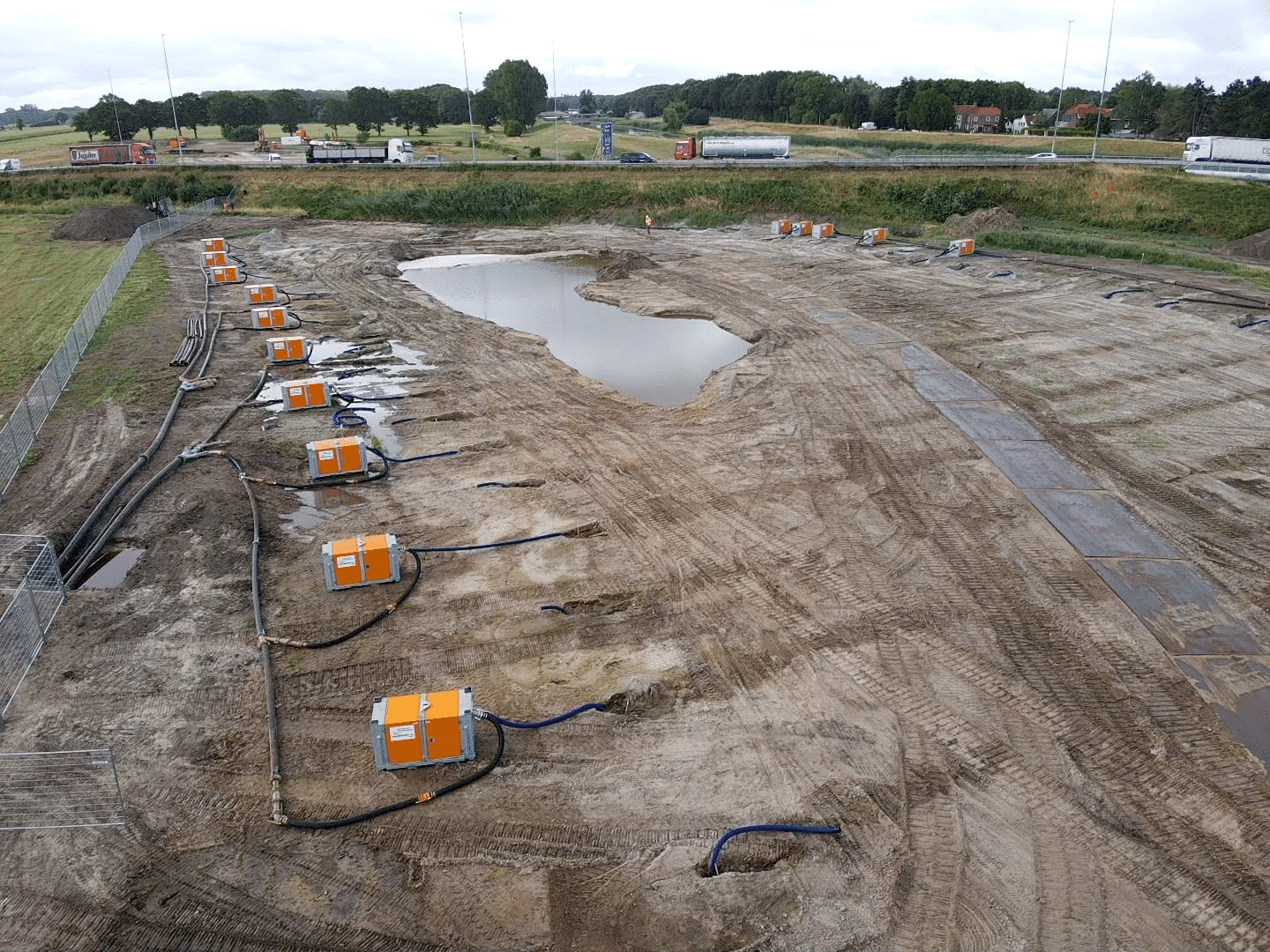
The dewatering operation runs for a total of about forty weeks and handles significant volumes of water. “On the north side, the flow rate is approximately 250 m³ per hour; on the south side, it’s 450 m³ per hour. During the sliding operation, an additional 400 m³ per hour of deep-well dewatering is added to that. In total, a permit has been granted for up to 1,050 m³ per hour,” explains Nick, adding that a large portion of the pumped water is returned to the ground. ”To this end, a return field with approximately forty return wells has been constructed on the south side, divided into three separate sections.”
Bronbemaling.com continuously monitors groundwater levels in the construction pit, the infiltration field, and the surrounding area using fourteen monitoring wells. “The groundwater level must not fall below 30 centimeters below ground level and is currently at 50 centimeters. We’re only allowed to let it rise another 20 centimeters. Early warnings and alarm thresholds enable immediate action,” according to Nick. “In addition, overflow facilities have been installed to discharge water into nearby waterways in case of emergencies, and if absolutely necessary, we can discharge water into the Drongelens Canal.”
Thanks to a carefully designed dewatering plan, extensive test measurements, and continuous monitoring, the construction site is fully prepared for the nine-day operation, ensuring that the underpass can be slid into place beneath the A59 as scheduled and the highway can reopen on time.
Neem dan rechtstreeks contact op met Bronbemaling.com.
 Contact opnemen
Safe and Dry Construction Starts with Bronbemaling.com. When water threatens to bring construction to a standstill, Bronbemaling.com springs into action. We are the leading specialist in groundwater control and the largest groundwater dewatering contractor in the Netherlands. Every day, we ensure that our clients can work safely, dryly, and sustainably. We operate nationwide, with 9 locations throughout the Netherlands. As a result, […]
Bekijk Bedrijfsprofiel