Platform on civil engineering, underground infrastructure, energy, construction equipment & construction machinery

Over the next few years, a number of tunnels in the Netherlands and Belgium will undergo extensive renovations. A complex operation because many of these tunnels will only be partially closed to minimize the amount of traffic disruption. The renovation must therefore run like a well-oiled machine. Infranea helps contractors with a risk-driven BIM approach, aimed at the 'first time right' renovation of a tunnel. This results in time savings, better decisions and significantly reduced personnel and failure costs.
Many of the existing tunnels in the Dutch and Belgian road networks no longer comply with current legislation on tunnel safety. This is usually the reason to replace the outdated installations and, in many cases, to raise the fire safety measures to a higher level. Infranea combines Systems Engineering and BIM for a digital preparation and realization of a tunnel renovation. "Not infrequently, significant savings are realized through our far-reaching digital approach," knows Johan Kuppens, founder of Infranea. "We have a pioneering role in the Benelux in this respect."
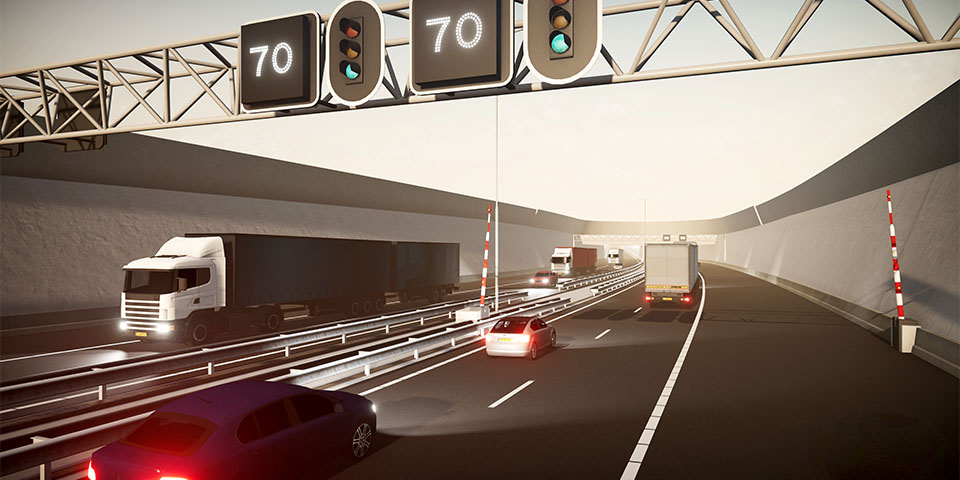
Digital twin of A16 (TWIN 16) In the driving simulator, visitors can virtually experience the environment before construction.
This pioneering role, according to Maarten van den Berg, BIM & SE Program Manager at Infranea, is the result of an integral approach and a strong focus on parametric modeling. "In 2019, for example, we meticulously prepared the Koningstunnel in The Hague on behalf of Heijmans and Siemens, particularly in order to maximally manage possible risks during execution. In addition to the technical installations in the tunnel, the installations in the service building were also modernized and expanded for the purpose of operating, monitoring and controlling the tunnel. A 3D laser scan of the tunnel and the 'as built' data formed the starting point for a representative digital model of the existing situation. This data combined with the environmental data formed the basis for the digital tunnel twinning. The new tunnel-technical installations were hung in this model. We were also able to take stock of how we could install new systems while the existing systems were still in operation. After all, that saves time." When renovating the Velser Tunnel, Infranea also used a similar approach in which the tunnel profile also had to be widened by 12 cm.
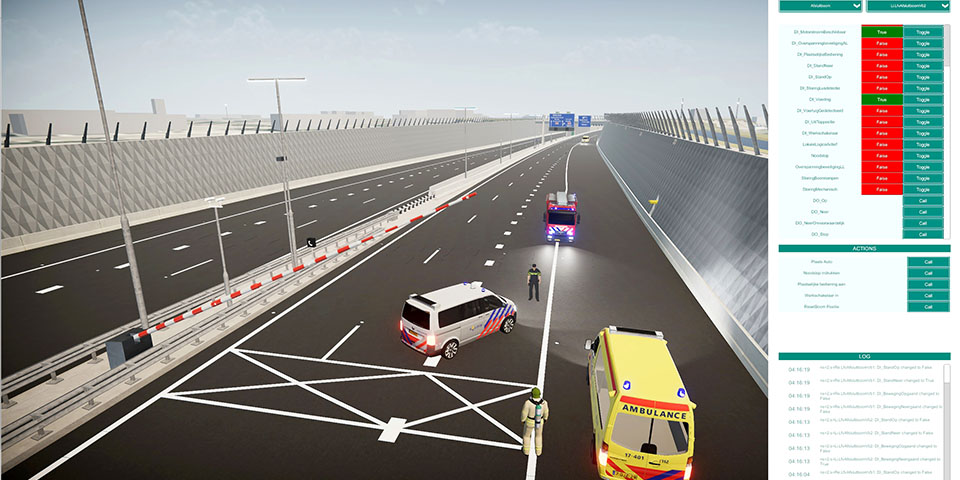
Digital twin of A16 (TWIN 16) Calamity scenarios can be tested virtually.
By relying heavily on computational design, BIM and a digital twin, Infranea, together with specialists from Heijmans and Siemens, managed to deliver the Koningstunnel some five weeks earlier. "That's a huge bonus, right in the middle of The Hague's city center," states
Kuppens rightly said. "The ambition was therefore to use all technological means to renovate the tunnel properly in one go. And that succeeded. There were no failure costs in terms of technology and only two residual points, which moreover could not be attributed to the BIM model. Also, the team was still deliberately kept as small as possible with the least chance of miscommunication." Van den Berg adds: "Compared to previous projects, parametric modeling and computational design saved about three FTEs of engineering time on this project. There was no second or third layer to think about anything. Lean design management, we call it. The less-is-more principle, with
as few people as possible doing as much work as possible. Furthermore, the engineers could now spend their time coming up with better solutions, instead of repetitively and manually processing the frequent changes."
"Even before a grain of sand has been stirred, we can use the BIM model and the digital tunnel twinning to simulate dynamic traffic behavior, optimize the CCTV cameras, and test whether the software initiates the right processes in case of calamities or train tunnel managers and emergency services in advance," Van den Berg continues. "All that technology is aimed at 'buying time' and reducing failure costs with the goal of making the renovation or new construction of a tunnel faster and more efficient."