Platform on civil engineering, underground infrastructure, energy, construction equipment & construction machinery

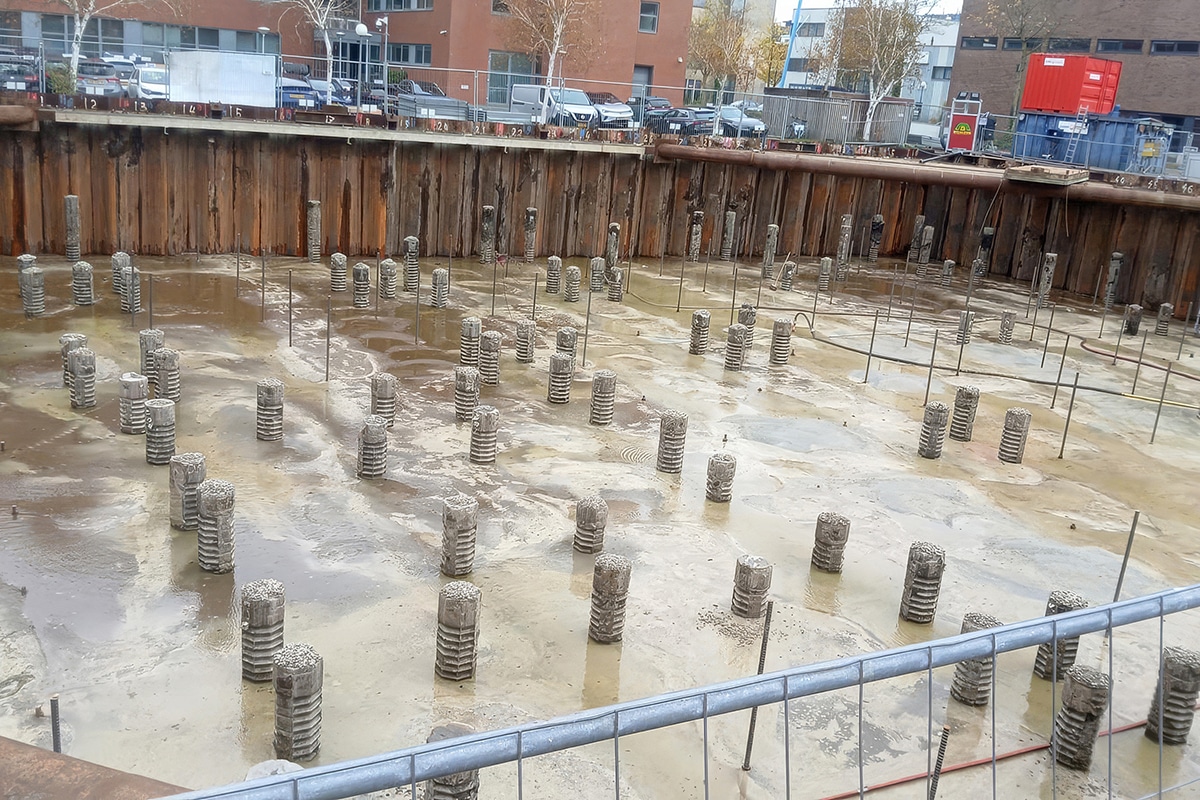
In order to realize underground projects, a construction pit is required and this can be realized in various ways. But what is the best, cheapest, fastest and safest way to realize a workable cofferdam?
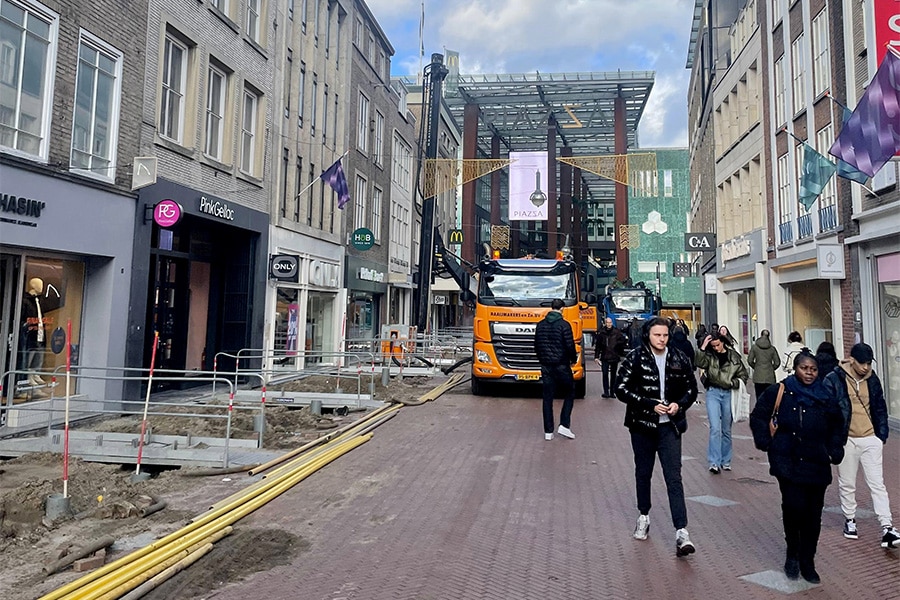
The realization of a good building pit depends on several factors. If one builds an inner-city cofferdam, different conditions apply than if one does this in the open landscape. Soil structure, groundwater level and the practical situation are always different and determine the choice of a type of cofferdam. Planning and permits also play a role: if there is enough time to complete the permit procedure for pumping out an excavation pit and the time required for completion is not an issue, an open cofferdam without a bottom seal is more likely.
Enough space, no inner-city environment then an open construction pit quickly seems the best choice. Until the problem of pumping groundwater literally surfaces. A cofferdam with a high water flow rate gives a lot of execution risk because a lot of groundwater extraction affects the environment. To reduce the impact, the water can be returned to the subsurface with a return pumping system. But even if the groundwater could be discharged normally, at high quantities this is always a concern due to, for example, light pollution in the groundwater. This requires intensive measures that give a high risk profile, after all, extra weeks/months creates more pumping and that is going to hit hard financially right away. But the most uncertain thing is that the building pit will not be workable at the slightest, for example due to pump failure, hard rainfall, or a rise in groundwater, and an unworkable building pit adds additional failure costs.
It is customary that in a cofferdam consultancy and when contracting out the cofferdam, the first thing to consider is the cost of the various cofferdam components (earth retaining wall, drainage, earthwork, foundations, under-sealing, etc.). But the most economical method of building excavation can only be calculated when counting down to the bottom line.
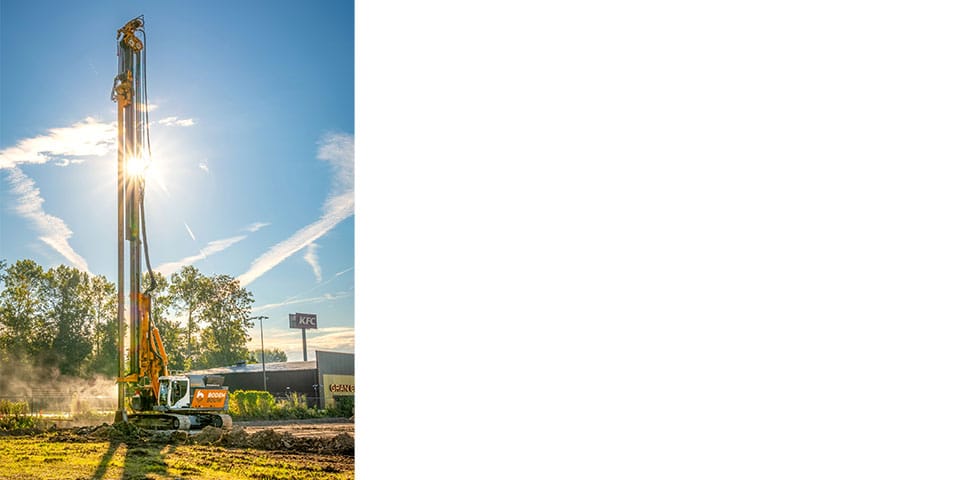
Often a deeper natural waterproofing layer is not considered interesting, because if the walls with the point level have to be continued into this layer, it will involve a lot of costs and risks. But this is not the case when using the CSM system. This system does not encounter any significant execution risk when extended to great depths. Moreover, a CSM wall can be designed in such a way that only the upper part of the wall is reinforced with reinforcement beams, so that this part of the wall can have a constructive function as a soil barrier. The lower part of the CSM wall consists only of grout mixed with the existing soil, which acts only as a retaining wall. Thus, the required wall is optimized as much as possible in strength and material and therefore cost.
If the walls are continued into a deeper clay or loam layer, a so-called "polder construction pit" is created with a low water flow, perfectly workable and controllable and thus a low risk profile. If there is enough space, then it can even be chosen to leave a natural slope against the CSM walls as a support berm. In that case, there is no need to reinforce the CSM walls with steel reinforcement beams and a seepage barrier is actually realized that only has a water retaining function.
In many cases, the most economical cofferdam is the one that is practically the most workable, the easiest to manage and therefore has the lowest risk profile. In order to get a picture of this cofferdam in advance, we need to keep counting down to the bottom line and include risk and failure costs. That is exactly the approach of BodemBouw!