Platform on civil engineering, underground infrastructure, energy, construction equipment & construction machinery
Heating Buildings with Wastewater
What if the water that flows through our sewer system every day not only carries away wastewater but also heats our homes, offices, and other living spaces? This is an interesting field that GW Leidingtechniek has successfully tackled in recent years. With the development of the ERT (Energy Recovery Tube), the company is taking an important step toward a more sustainable and decentralized heat supply. Rob Hoogervorst of GW Leidingtechniek gives us a lesson on sewer heat recovery: extracting heat from wastewater.
As a specialist in underground pipeline infrastructure, GW Leidingtechniek works daily for water authorities, drinking water companies, and municipalities. It was from this practical experience that the idea for sewer heat recovery emerged. “Years ago, we received a request from Switzerland asking if we could supply a special pipe for a heating solution. That project ultimately didn’t get off the ground, but it did get us thinking. Why couldn’t we extract energy from water ourselves?”
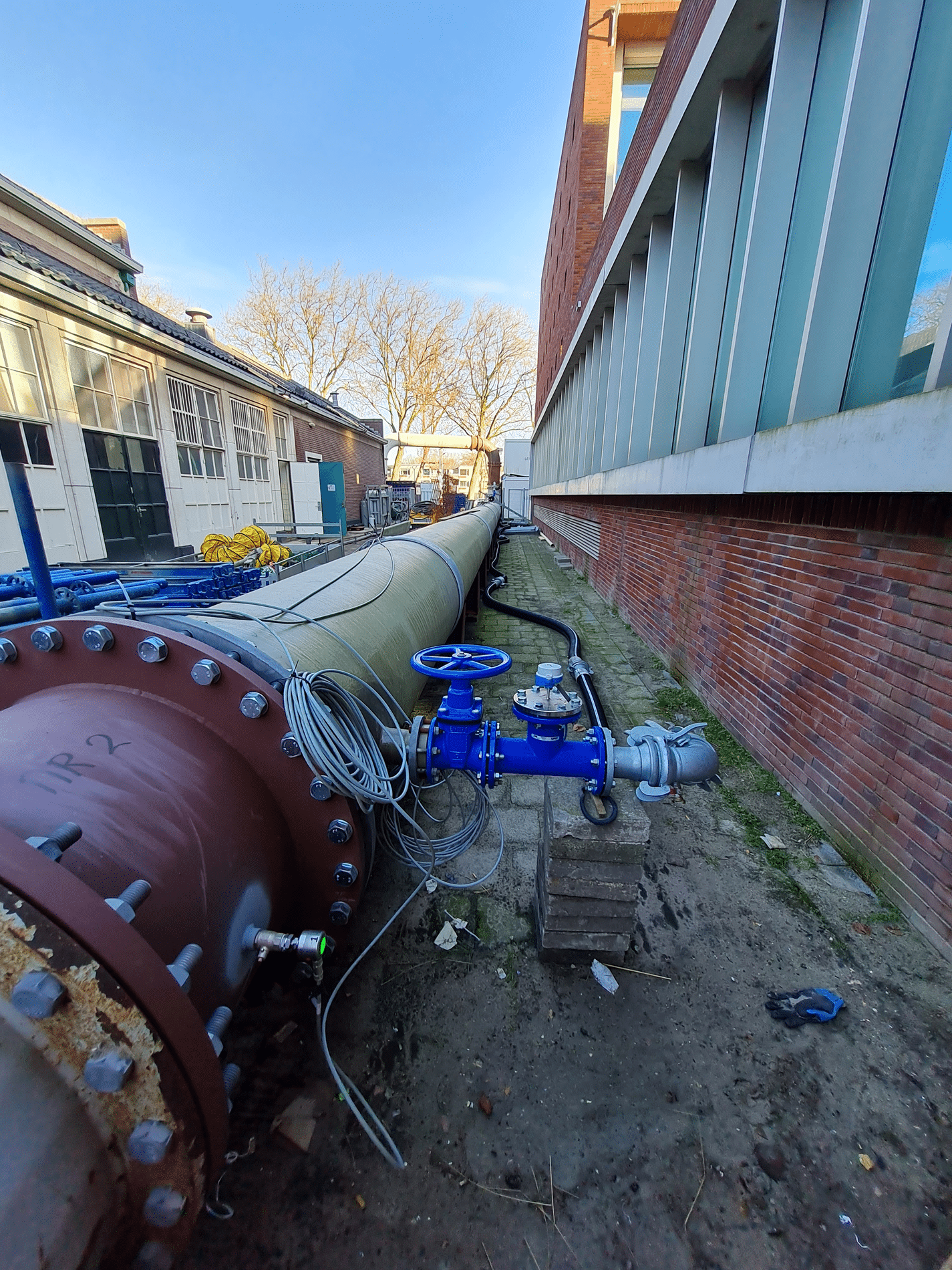
The principle of sewage heat recovery sounds surprisingly simple. “Wastewater maintains a temperature between 13 and 22 degrees Celsius virtually all year round. Using a heat exchanger, that energy can be transferred to a secondary system connected to a heat pump. This creates a sustainable heat source for buildings and district heating networks,” Rob explains.
The real breakthrough came in 2022. Three interns from Eindhoven University of Applied Sciences joined GW Leidingtechniek. “One of them, physics student Victor, immediately saw the potential of the concept,” according to Rob. “At the same time, municipalities—including Rotterdam—were paying increasing attention to aquathermal energy: harnessing energy from wastewater, surface water, and drinking water. Together with the City of Rotterdam, Victor, and myself, we spent a year and a half further developing the concept to extract energy from wastewater.”
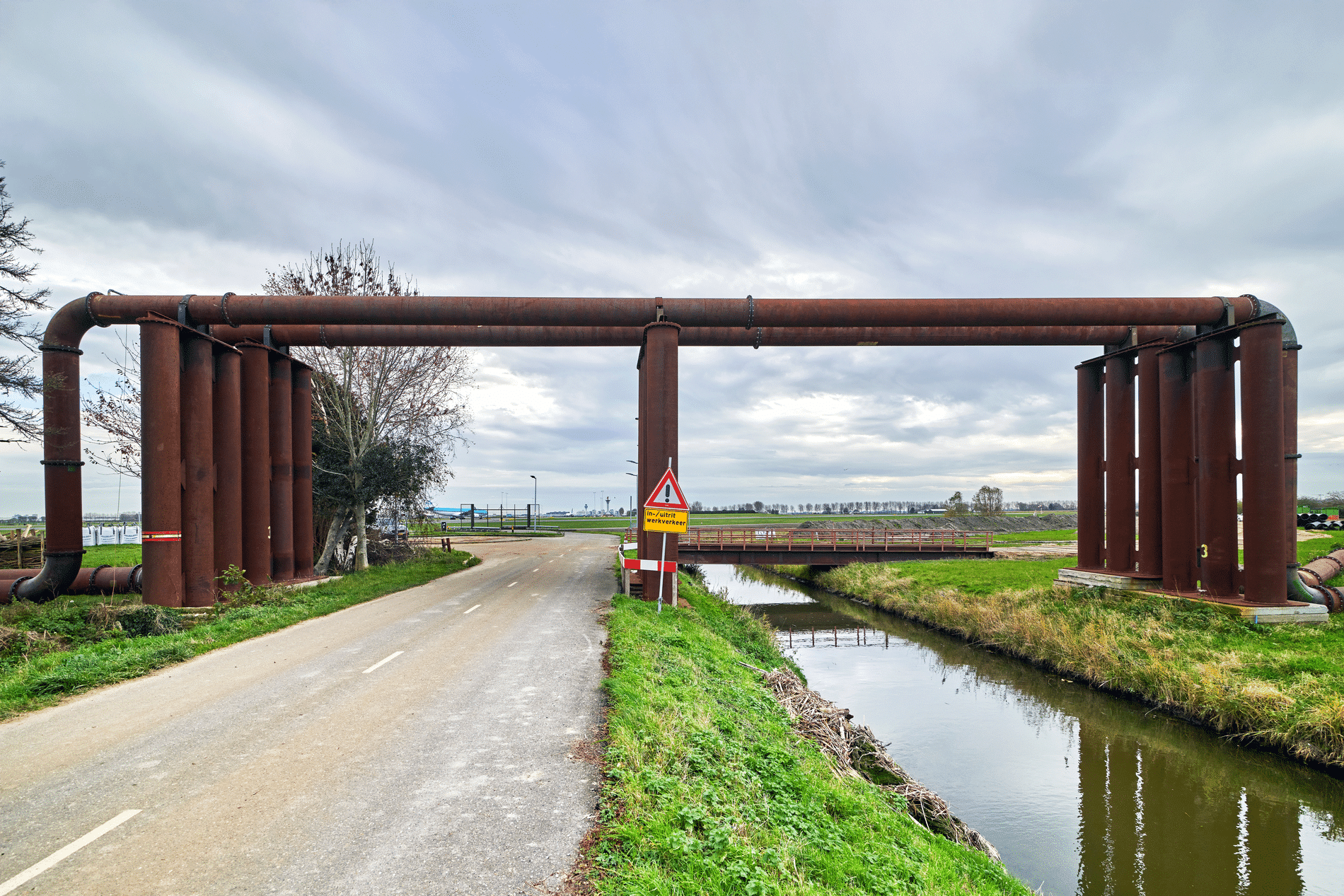
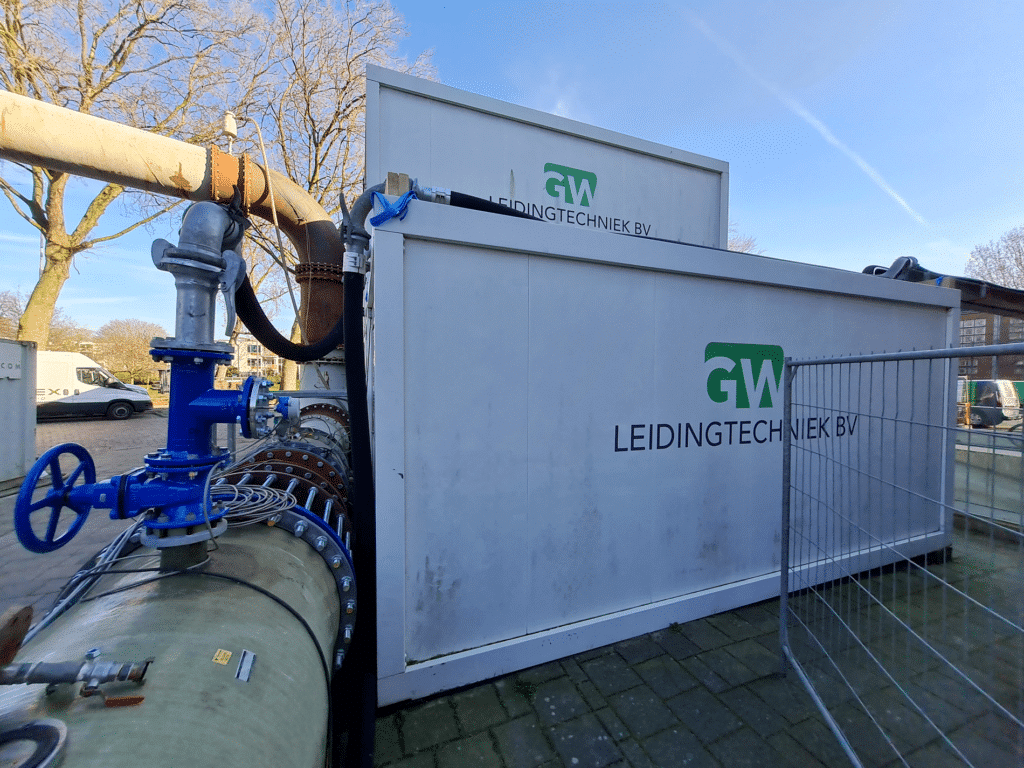
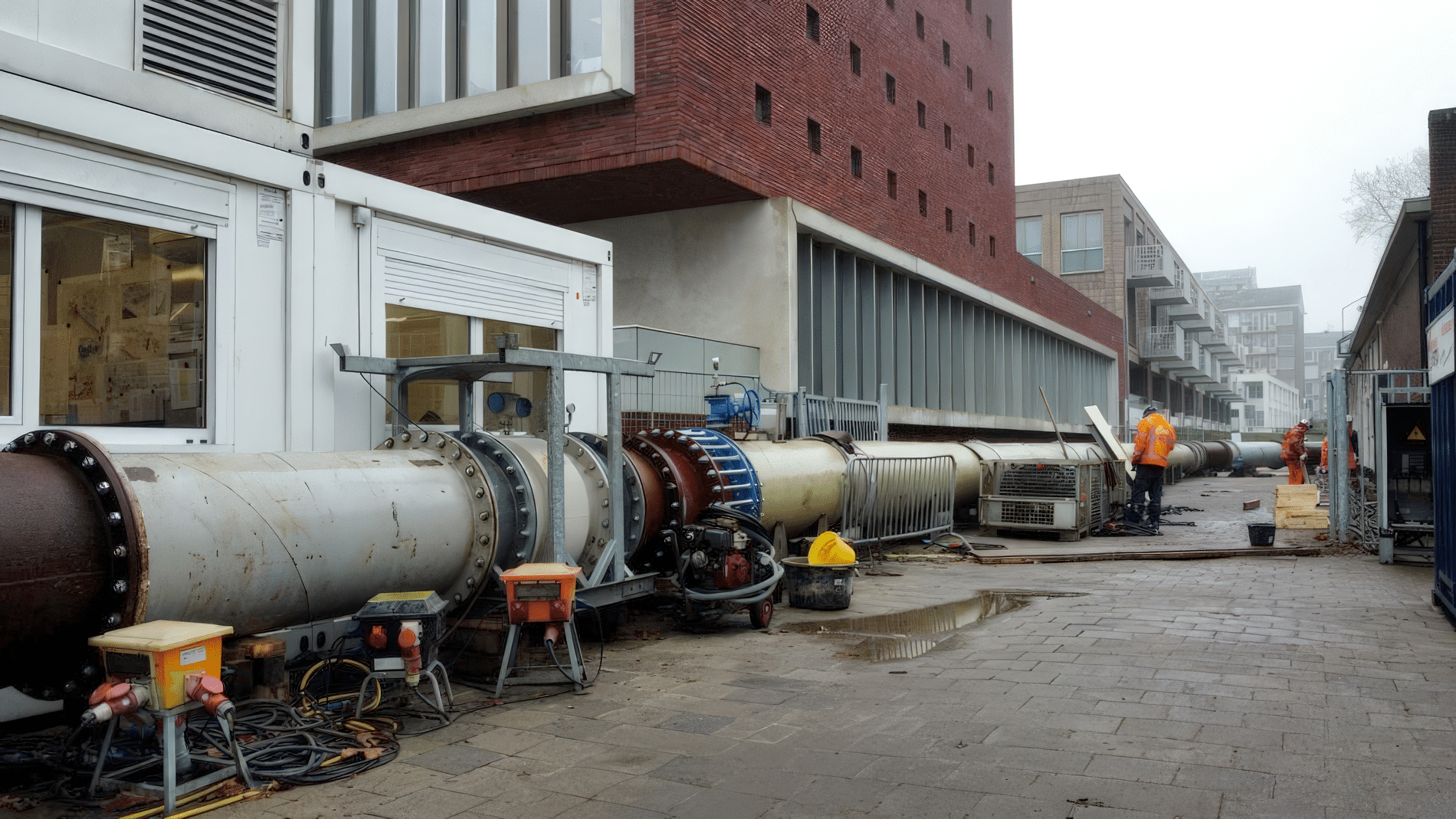
In 2023, the concept was tested during a major renovation project at the pumping station on Willem Schürmannstraat in Rotterdam, for which GW Leidingtechniek ‘coincidentally’ supplied the temporary bypass pipe with a diameter of 800 millimeters. “In this bypass, GW had the opportunity to install the ERT over a length of 36 meters. This length, combined with a flow rate of approximately 3,000 m³/hour of medium-temperature water, resulted in an enormous amount of potential energy generated through the ERT system.”
When the first measurement results came in, it felt almost like a moon landing to Rob. “After seven days of testing, it turned out that the system did exactly what we had hoped. The results were impressive. The pilot showed that approximately 200 kW of heat could be recovered from the bypass. This is a wonderful way to help heat public buildings, such as swimming pools or gyms, as well as offices and homes.”
Based on the data collected during the pilot, GW Leidingtechniek has developed a computational model that can determine within minutes how much energy can be extracted from a specific pipeline. “There’s a lot of interest,” Rob notes. “Water authorities, municipalities, consulting firms, and policymakers see sewer heat recovery as a promising solution for the energy transition—especially because it’s a decentralized solution for generating heat.”
In addition, the technology offers another benefit. “In urban areas, drinking water pipes are increasingly overheating due to the presence of cables and other infrastructure,” says Rob. “By extracting heat from the water using aquathermal technology, we not only generate sustainable energy but also cool the water at the same time.”
The first commercial application is now a reality. At the wastewater treatment plant in Oijen, GW Leidingtechniek will use the ERT to heat the sludge treatment building on the site. And according to Rob, that’s just the beginning. “The system is patented, a European patent application is pending, and discussions about new projects are coming in rapid succession.”
Neem dan rechtstreeks contact op met GW Leidingtechniek BV.
 Contact opnemen
GW Leidingtechniek BV aims to be a main contractor for both above-ground and underground infrastructure, with healthy and transparent operations and positive operating results. The organization is decisive, reliable, flexible and commercially strong. When it comes to innovation, GW Leidingtechniek BV is proactive and shares knowledge with its clients. GW Leidingtechniek BV's strength lies in [...]
Bekijk Bedrijfsprofiel