Platform on civil engineering, underground infrastructure, energy, construction equipment & construction machinery
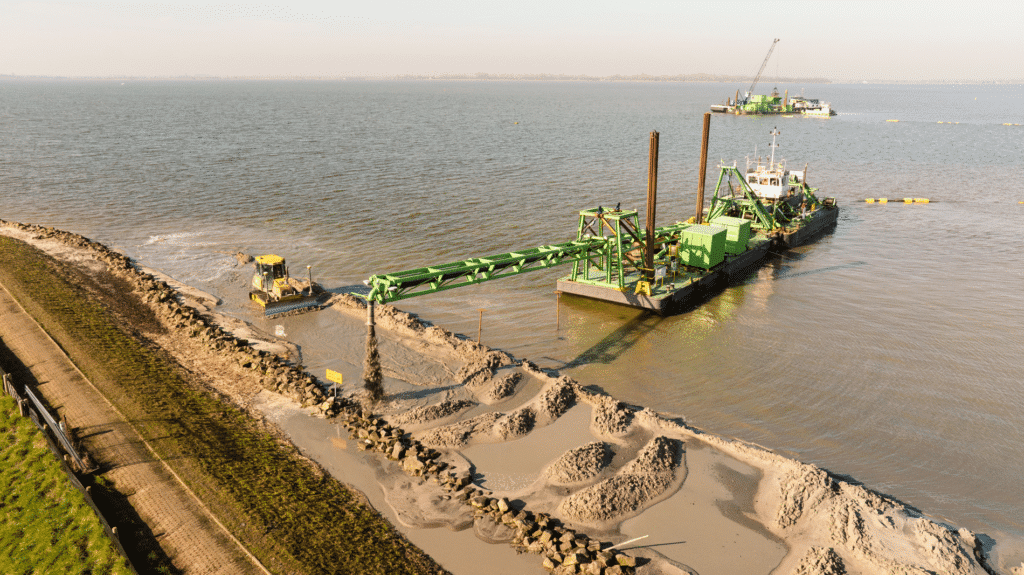
Anyone walking around Marken today will see plenty of activity on the dike. Parts of the dike are still open, as the Hof op Marken consortium is hard at work on the finishing touches. While that is certainly a true work of art, perhaps the greatest achievement of this project lies beneath the surface: an ingenious approach that makes the dike on peat soil future-proof.
The dike reinforcement project on Marken is part of the High Water Protection Program (HWBP) and is being carried out under the supervision of Rijkswaterstaat. “The dike no longer met the standards in several areas: the revetment, stability, and height were all inadequate,” explains Roger Boogert, project director on behalf of the Hof op Marken consortium, a partnership between DEME Environmental NL and JLD Contracting. “That is why we opted for a comprehensive approach that prioritizes a flood-safe and robust design, sustainability, and consideration for the surrounding environment.”
The biggest challenge of the project? “Building on peat soil,” emphasizes Fred Hemstra, technical manager at the Hof op Marken consortium. “The subsoil is like a kind of pudding—a soil that lacks any firmness. The entire design of the dike reinforcement was therefore geotechnically driven, and each layer of fill was laid with the utmost care. The new dike was deliberately constructed as close as possible to the existing dike. As a result, a large part of the settlement process had already taken place, leading to reduced material usage and a more compact design.”
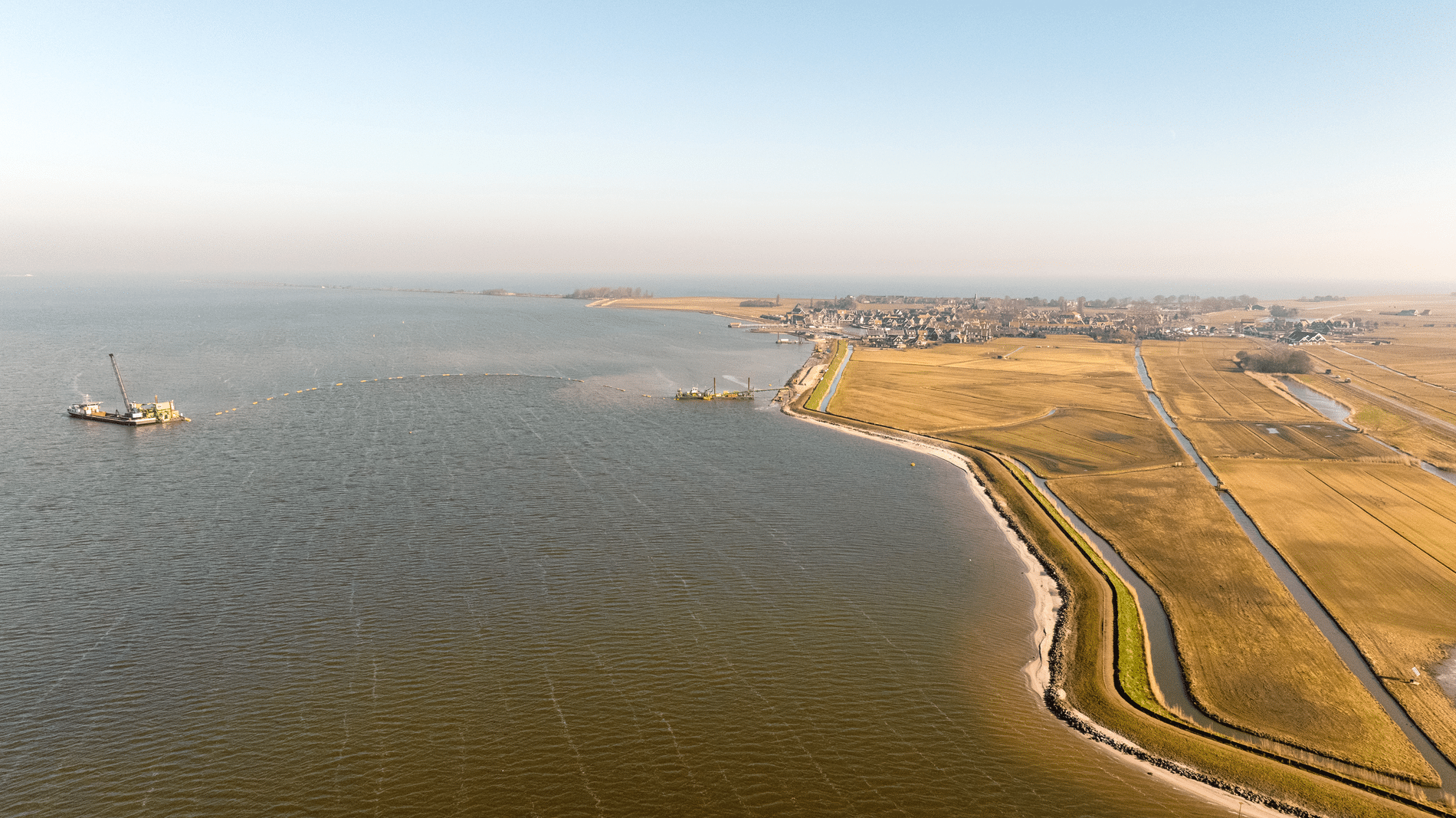
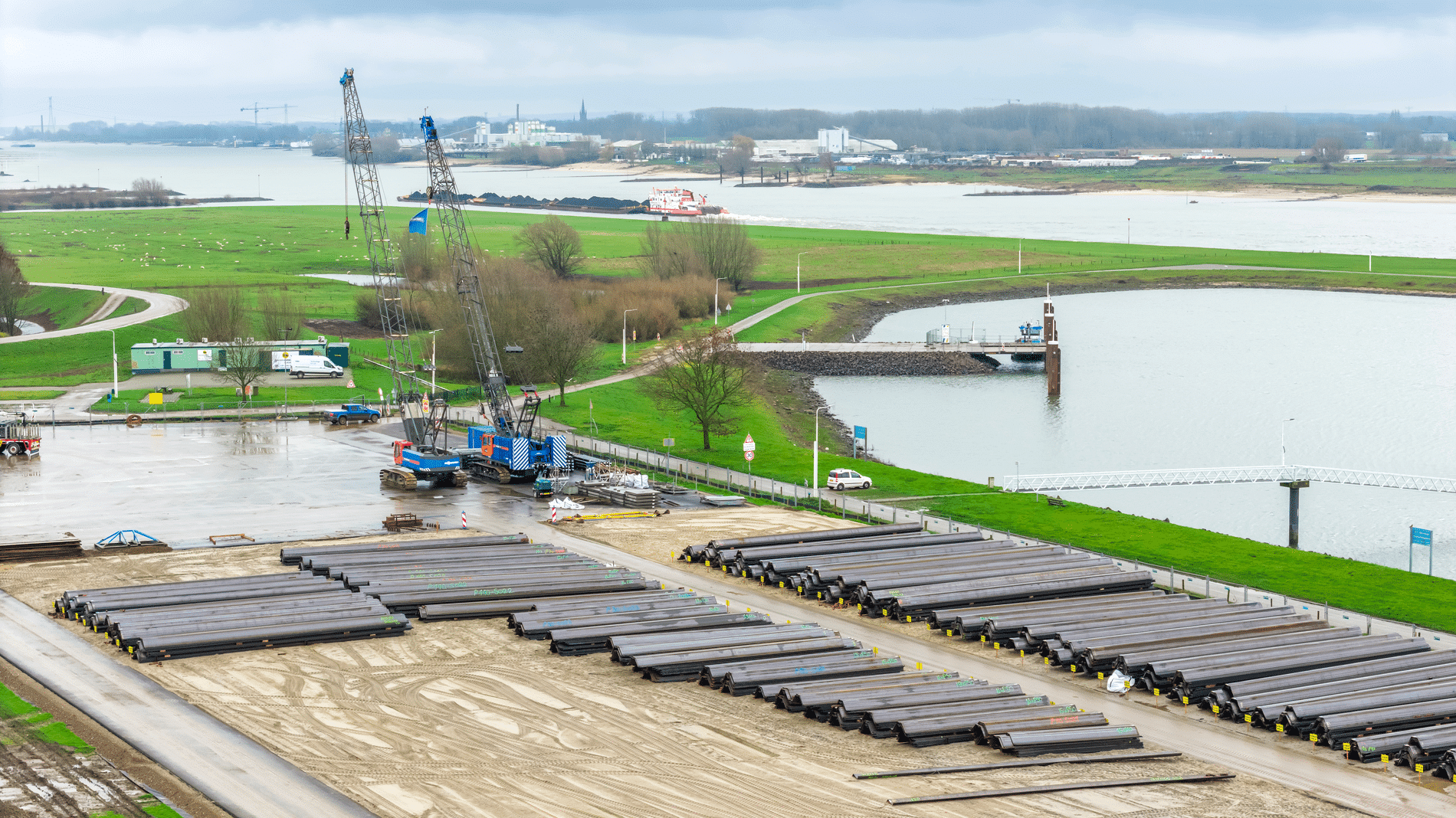
The dike was raised in nine stages, each about 50 centimeters high, Hemstra explains. “The sand was brought in from the water and transferred to a unloading barge. From there, a pipeline ran to a spray barge, which used it to spray the sand.” A crucial step in this process was therefore the degree of preloading and phasing, so that the subgrade could settle and stabilize. “By using vertical drainage, the consolidation process was accelerated and excess water pressure was relieved. This approach, which has remained largely invisible, is one of the project’s most significant successes.”
Boogert knows that the request for proposals had a fairly significant MKI (Environmental Cost Indicator) component. “For example, existing materials, such as concrete blocks and the basalt revetment, are reused in the new dike revetment. This not only results in a lower MKI but also a more efficient design that uses fewer new raw materials. The core of our proposal is therefore to build a dike that meets current standards while using as little material as possible. Part of our proposal also included the construction of two test sections, each 100 meters long. The test sections serve not only for technical validation but also to give residents a concrete idea of the final result.”
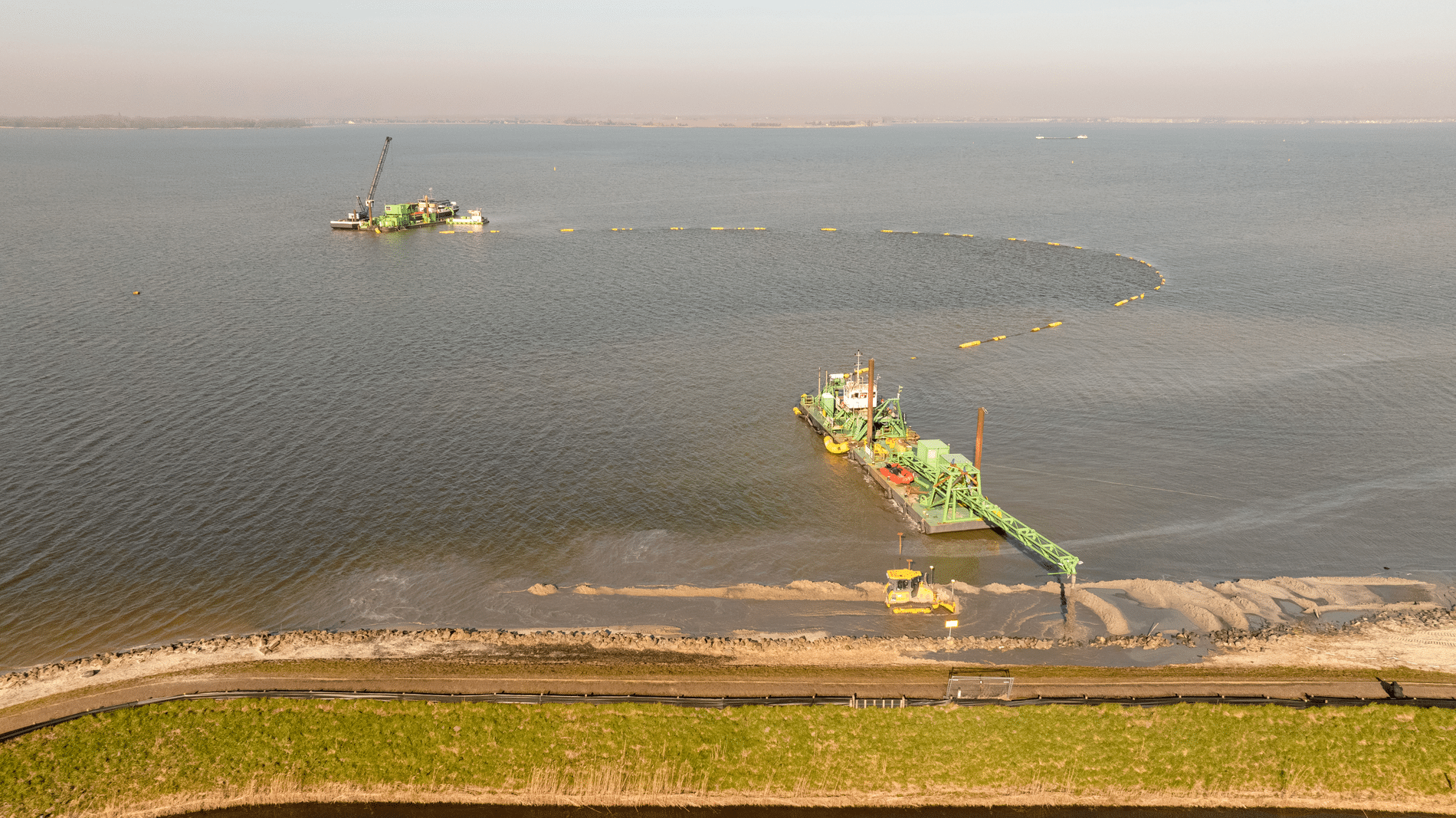
Incidentally, the contractor consortium is already reaping the benefits of the reinforced dike. “The maximum load on the dike in the existing situation was only 1 metric ton, due to its declining stability. Now that we’re working on the finishing touches, we have 20-metric-ton machines on the dike.” At the same time, the Hof op Marken consortium is also taking advantage of opportunities for synergy. For example, recreational facilities are being added, including beaches, walking trails, and renovated piers in the harbor. Attention is also being paid to ecology: the design incorporates 21 habitats for grass snakes into the dike revetment, a unique example of nature-inclusive construction.
With over 5 kilometers of dike reinforcement spread across the west and south dikes, this project is relatively small but exceptionally intensive, says environmental manager Roy de Haan. “Limited accessibility, a complex environment, and a large influx of tourists make the work quite challenging.” Nevertheless, the project is well on track: completion of the dike is scheduled for 2027, with handover in 2028.