Platform on civil engineering, underground infrastructure, energy, construction equipment & construction machinery
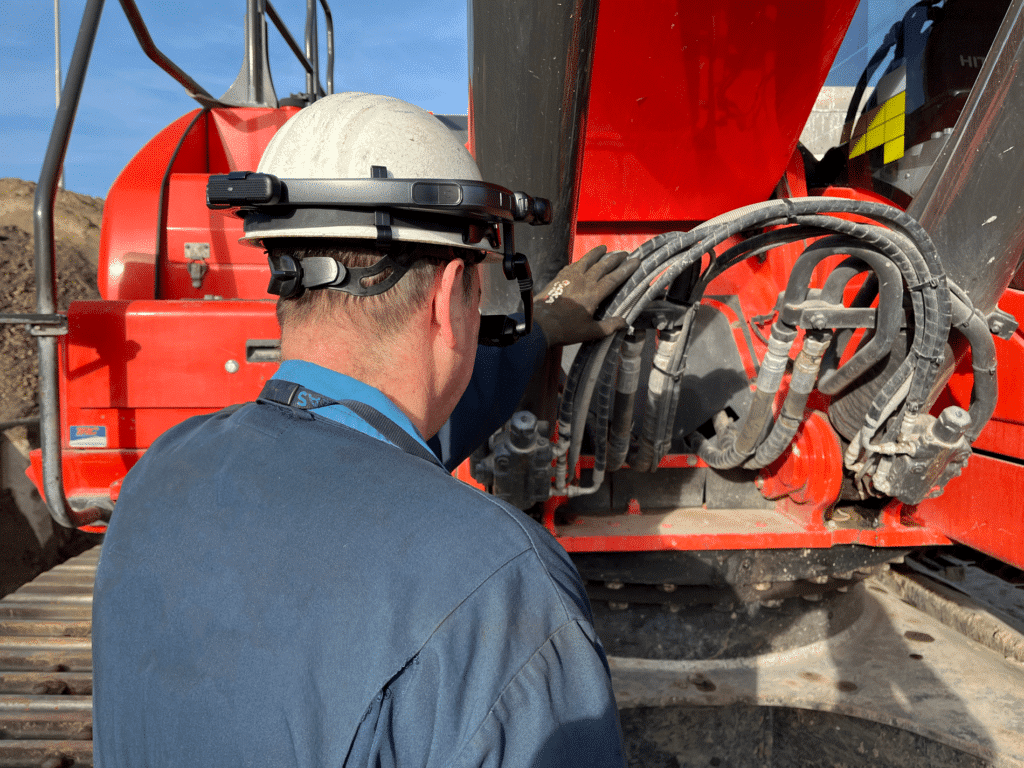
Many companies make good use of Aboma’s AMTeK system, which allows them to inspect their equipment and interchangeable attachments themselves at their convenience. AMTeK inspectors receive annual training from Aboma inspectors. Previously, this always took place in person on-site, but with the use of smart glasses, it can now also be done remotely, while the quality of the training remains just as high as before. Naturally, we’d like to learn more about this.
Using the smart glasses is simple and effective. “The on-site inspector puts on the smart glasses, connects, and gets to work,” says Mario Rovers, AMTeK manager at Aboma. “Through the camera, our inspector literally looks ‘through the eyes’ of the on-site inspector. Everything the inspector sees is immediately visible to the remote inspector.” At the same time, communication remains fully intact: both parties can talk to each other, see each other, and even pick up on nonverbal cues such as gestures. “This ensures that the personal aspect of the inspection supervision is preserved,” says Gerben van der Weide, AMTeK coordinator.
According to Rovers, the technology offers additional capabilities that are less practical in a physical setting. “For example, the inspector can display live instructions or standards on screen, take photos, and annotate them immediately. Whereas a laptop used to be needed to explain something afterward, this is now done directly in the work situation. This not only makes the guidance more efficient, but also even clearer and more practical.” Van der Weide adds: “A major advantage of this approach is its flexibility. The smart glasses are simply mailed to the company. At an agreed-upon time, the AMTeK inspector logs in, and the Aboma inspector can immediately view the screen. This makes scheduling inspection guidance much simpler and less time-consuming. Moreover, the inspector no longer has to travel, which helps reduce the environmental impact.”
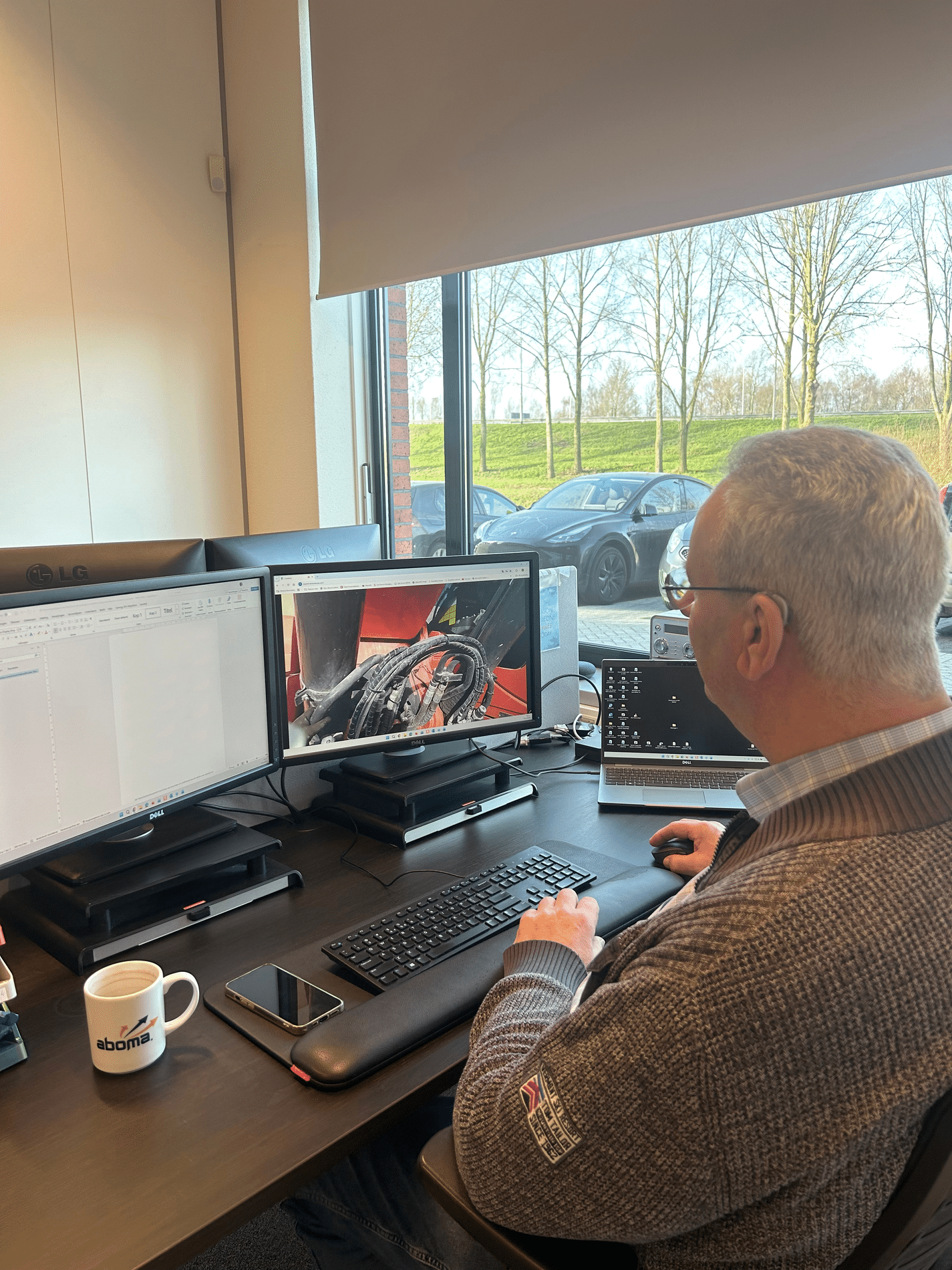
The duration of a session remains comparable to traditional on-site inspections, says Rovers. “For example, an inspection of ladders and stairs takes about an hour, while an earth-moving machine takes one and a half to two hours. The difference is that the inspector can simply continue working while the Aboma inspector watches live and provides guidance where necessary.” Several test sessions have now been conducted, both internally and with AMTeK inspectors in the field. “The feedback has been unanimously positive so far. Users find the system reliable and surprisingly personal.”
Although the technology is still relatively new at Aboma, the company has big ambitions. “For complex machines with extensive safety features, physical presence remains desirable for the time being,” Rovers notes. “But for many other inspections, this approach already offers a fully-fledged and efficient alternative, without losing sight of personal contact.”