Platform on civil engineering, underground infrastructure, energy, construction equipment & construction machinery
Crucial craftsmanship on two highly complex construction sites
Franki Grondtechnieken delivers crucial professional work on two of the most complex construction sites in the Netherlands: the new nuclear reactor in Petten and the widening of the A10 motorway near the Zuidas. Director of Execution Jan Leen van der Vlies looks back and ahead.
“These are projects you don't often get to work on as a ground engineering specialist,” says Van der Vlies. “You don't build a nuclear reactor (in this case for the production of medical isotopes) every day, and the same goes for increasing the capacity of the Netherlands” busiest highway. Both require customization and innovative solutions."
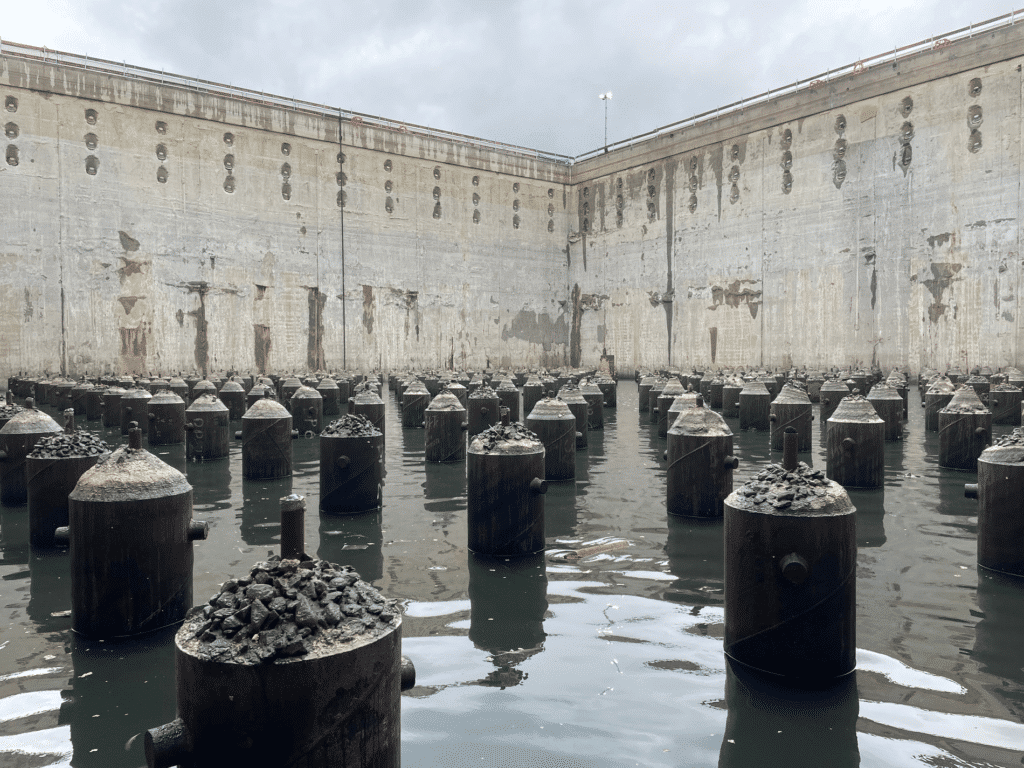
In Petten, Franki has been working on the foundation of the PALLAS reactor for the past several years. “We made the first building pit from 2022 to April 2025,” says Van der Vlies. “That pit consisted of diaphragm walls 1.5 meters thick that were installed up to 35 meters below ground level. This whole structure was excavated to a depth of 20 meters and provided with 380 foundation piles over 30 meters and a concrete floor with a total thickness of 3 meters. In this solid structure, the nuclear reactor will be built in the coming years.”
Currently, Franki is working on a second construction pit, for the cooling water building. That building is to feed cooling water from the North Holland Canal and discharge it into the North Sea after use. “This building pit is about half the size of the reactor pit: 10 meters deep and smaller in area. The walls here are constructed using the Cement Soil Mixing technique (CSM). This involves milling the soil loose, mixing it with cement and pressing heavy steel beams into it. This provides both waterproofing and structural strength.”
The big advantage of CSM is that less soil has to be removed. “With a diaphragm wall, you excavate everything and replace it with concrete,” Van der Vlies explains. “Here you use the existing raw materials. As a result, you have much less waste.”
A total of 327 micro piles (Gewi anchors Ø250) will be installed, both anchoring the underwater concrete floor and later forming the pressure piles for the building. Completion of this tub is scheduled for the second quarter of 2026.
The work at Petten provides Franki with more than just a successful project. “In the first 2.5 years, we have shown that we can do excellent work on a nuclear installation. That confidence now makes us preferred supplier for follow-up assignments. And it gives us a valuable reference for future nuclear plants in the Netherlands.”
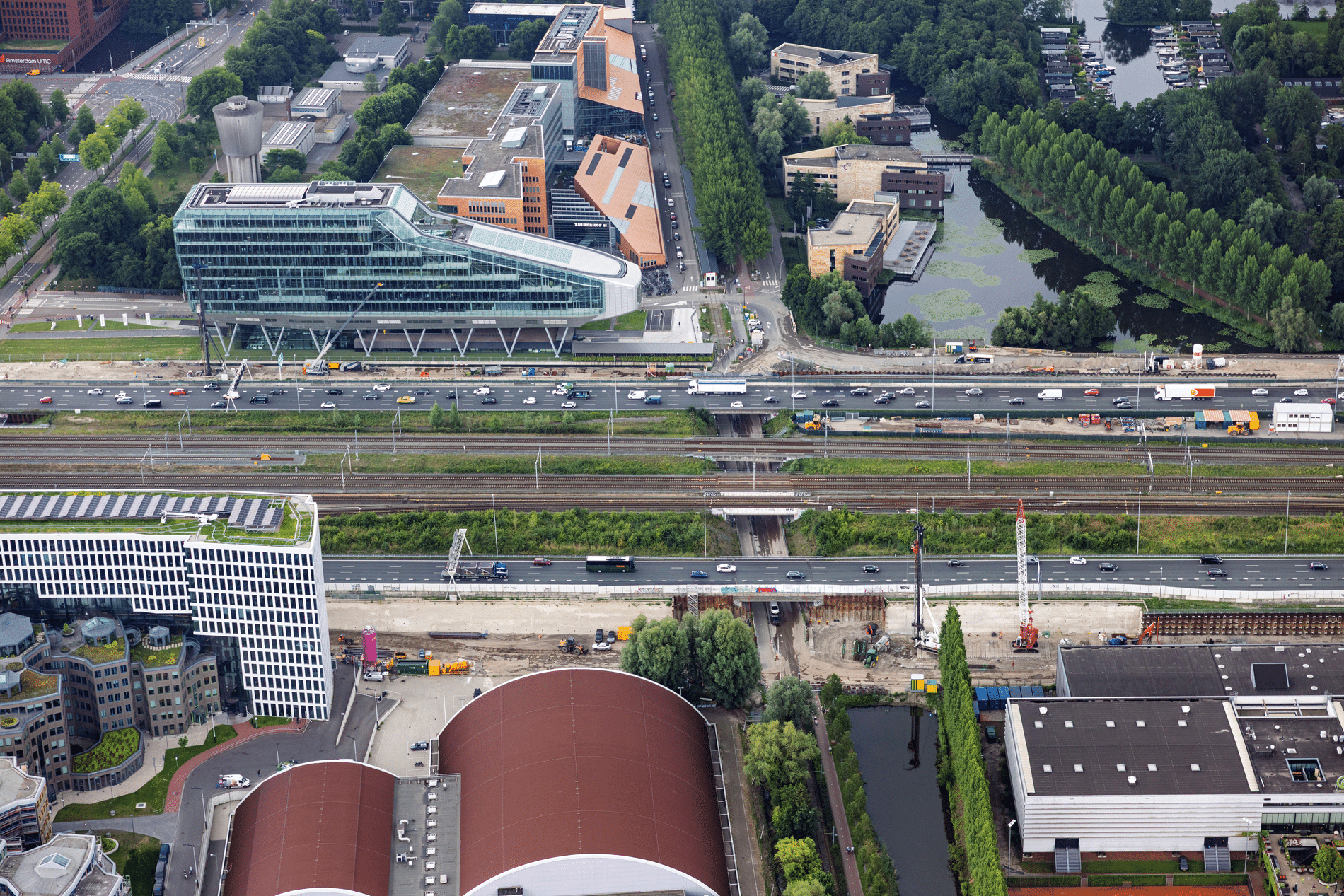
A second major project is the widening of the A10 Zuid near the Zuidas, which is being carried out by the Triax combination (BESIX, Dura Vermeer and Heijmans). Here through traffic must be separated from local traffic. “That means extra lanes and exits in an area that is already built up,” Van der Vlies said.
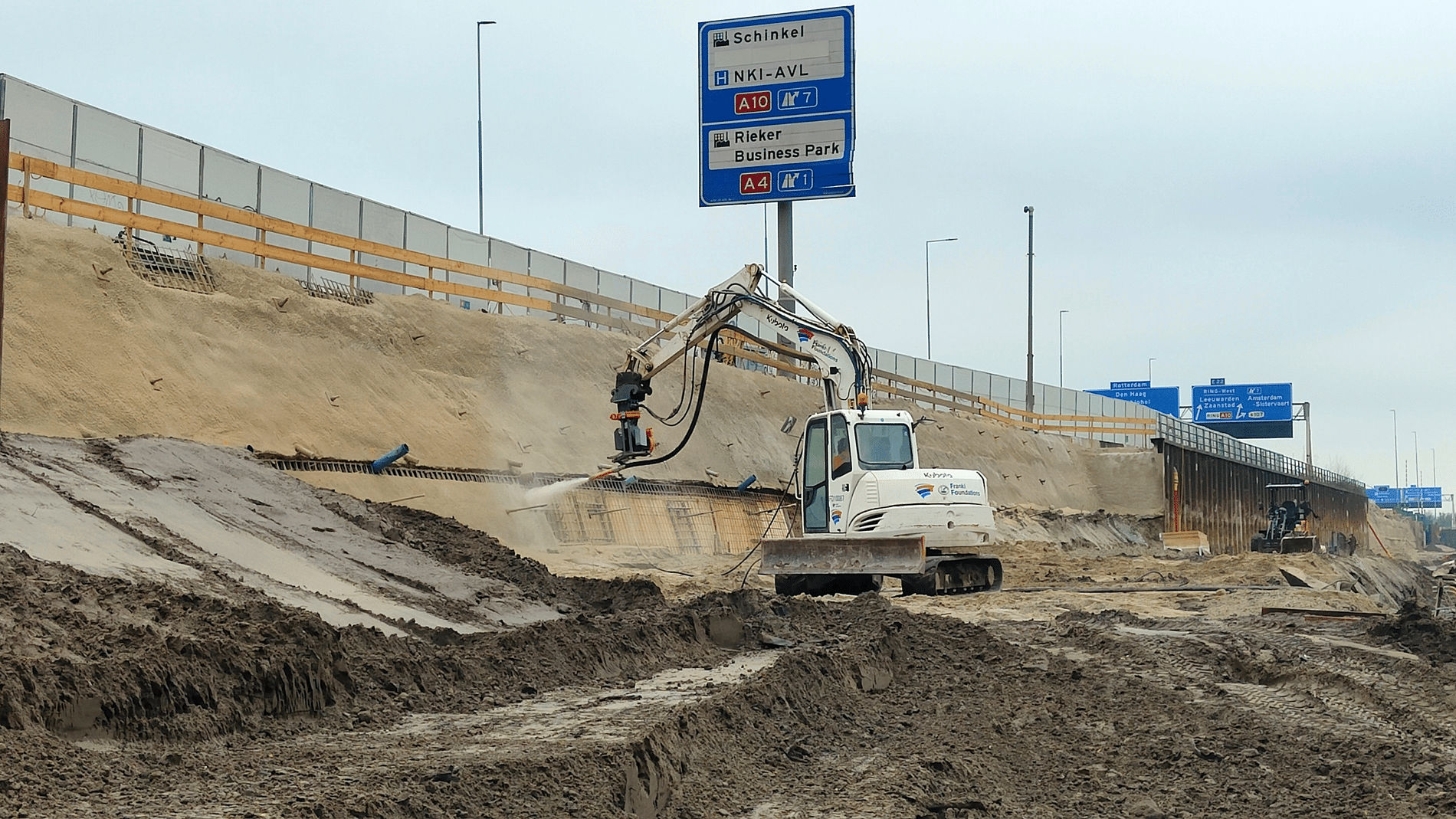
The solution was found in a technique rarely used in the Netherlands: ground nails with sprayed concrete. “The slope was at a 45-degree angle. By excavating one meter at a time, placing reinforcement nets and applying spray concrete, we were able to create a 5-meter high wall that is almost perpendicular. This created space to build new lanes next to the existing road.”
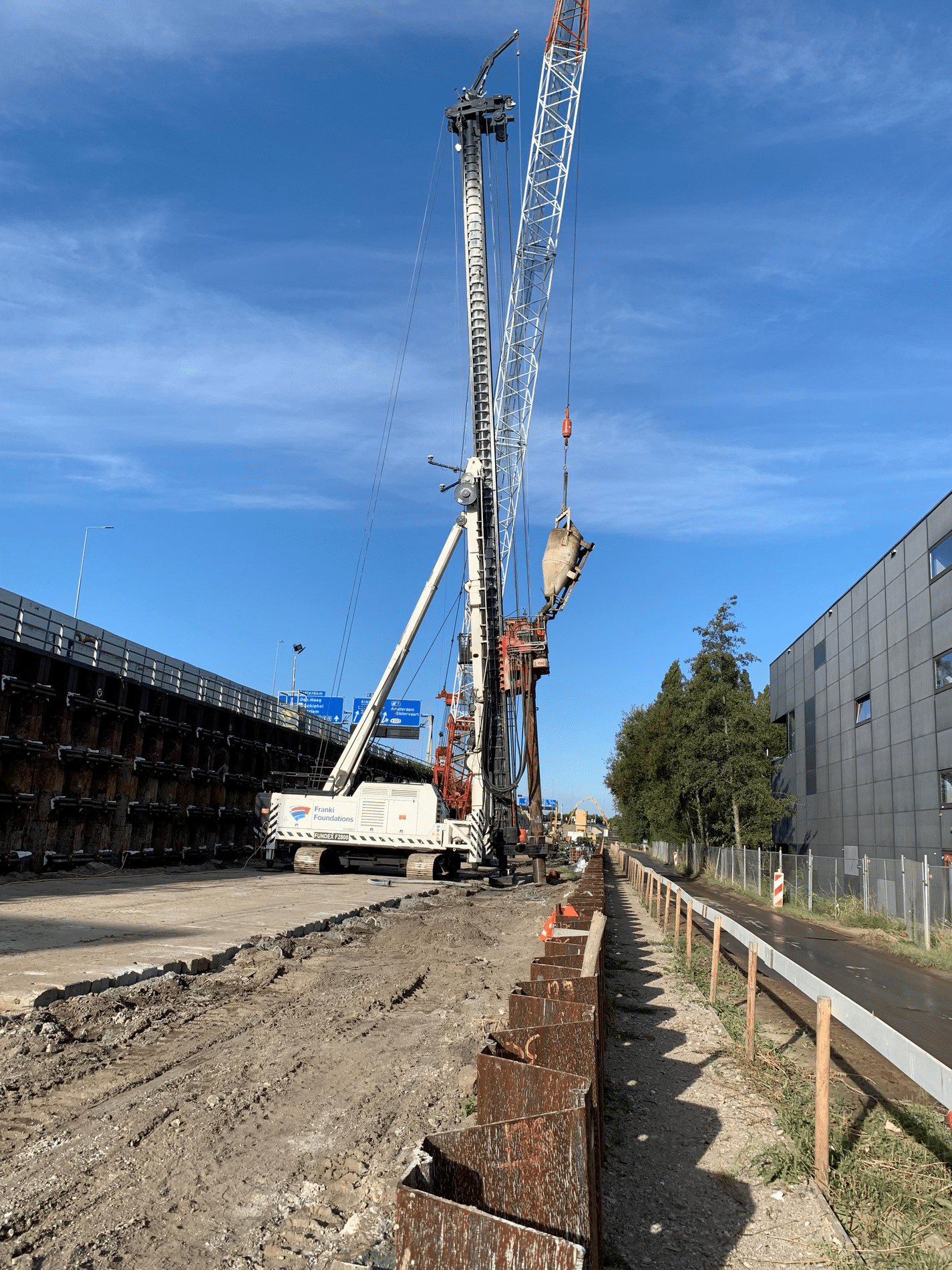
The foundations of the new road sections consist of pile mattresses: rows of piles capped with concrete heads on top of which a reinforced soil structure with geogrid and granules is built. “It almost looks like a huge bed of nails,” says Van der Vlies.
Franki works here together with Heijmans in the foundation combination FCFH. “Franki Grondtechnieken supplies the spray concrete and anchoring technology, Heijmans does the sheet pile walls and together we make the piles. Because of this cooperation, each can use his specialism and the strength of the combination becomes visible.”
Remarkably, most of the traffic was able to pass through during the work. “We worked mainly on weekends, with limited closures. For the road user the impact was minimal, while behind the scenes huge interventions took place.”
With both projects, Franki Grondtechnieken demonstrates the company's ability to successfully apply complex foundation techniques in a variety of circumstances. “Whether it's the sandy dunes near Petten or a dike body in Amsterdam, every situation requires a different solution,” Van der Vlies concludes. “It is precisely this variation and the technical challenge that make our work so special.”