Platform on civil engineering, underground infrastructure, energy, construction equipment & construction machinery
The effects of climate change are visible everywhere. Extreme rain showers and large periods of drought cause inconvenience and damage. Therefore, many municipalities are already informing their residents about options for climate-proofing gardens, and climate subsidies are even being provided for infiltration solutions in gardens. But is that enough? Can municipalities do it on a larger scale? In this article, we take you through our search for the solution.
It is well known that rainwater in inner-city areas cannot always be drained to wadis or surface water due to all the construction and paving. This will only become more problematic because it is expected that in 5 years 70% of the world's population will live in cities. As a result, there will be more construction and fewer opportunities for stormwater runoff. With dire consequences. Because with climate change, rain showers will become more intense, the sewer system becomes more stressed and the risk of flooding increases. How do we ensure optimal urban livability?
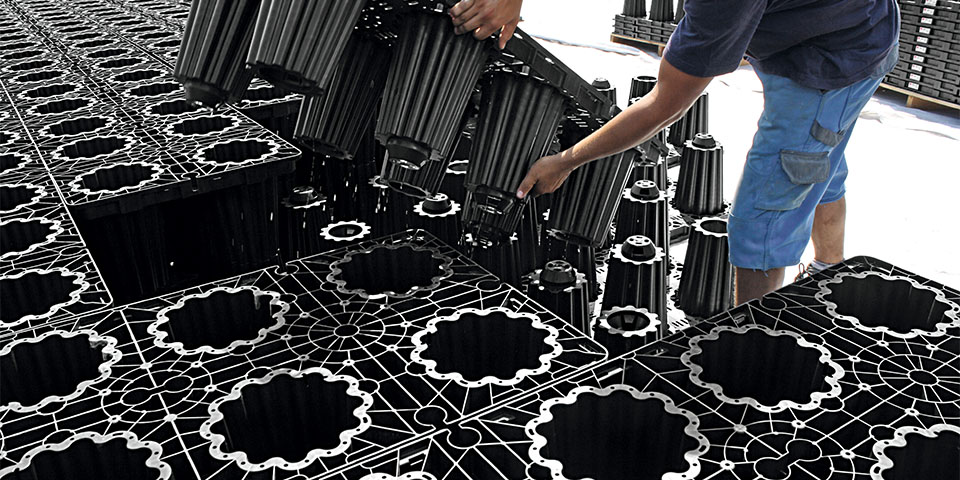
ACO Stormbrixx a CO2 friendly infiltration and storage system.
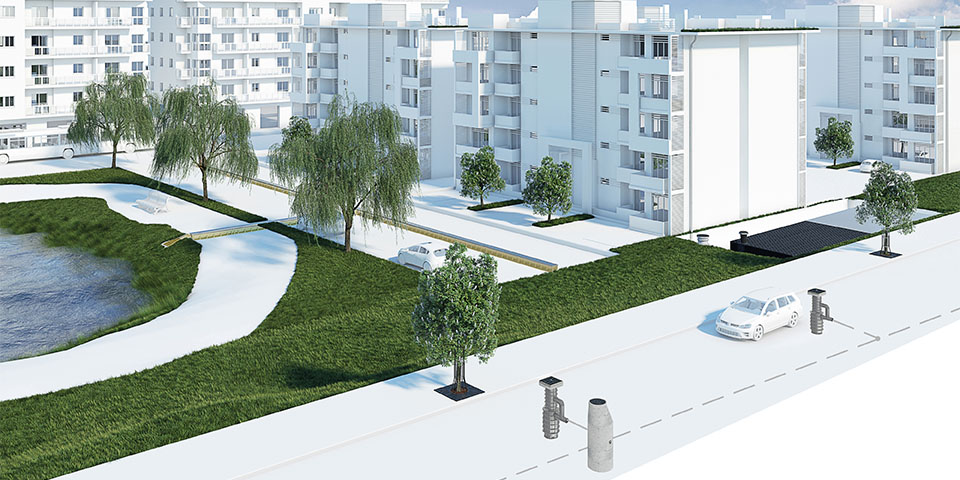
A conversation with Rieks Hulst of ACO, a company that provides innovative and high-quality drainage products and systems, provides the answer. "Everything ACO does is centered on getting people and nature to take full advantage of water. Because desiccation of green space in urban areas is as big an issue as water storage, ACO has developed the Sustainable Urban Drainage System (D-SAS) concept. This system combines drainage, storage and the return of rainwater to nearby green spaces. To make D-SAS possible, we have several solutions that keep trees and shrubs green and relieve the sewer system during heavy precipitation events. We often sit down with clients at an early stage to develop an integral vision together on how to 'manage' rainwater. Especially in the field of infiltration, the vision has changed in recent years. Today, people prefer to infiltrate rainwater on site. In the city, however, space is limited and, because of all the cables and pipes in the ground, people want shallow infiltration solutions. This is why we recently developed the infiltration gutter, which is even drivable by trucks."
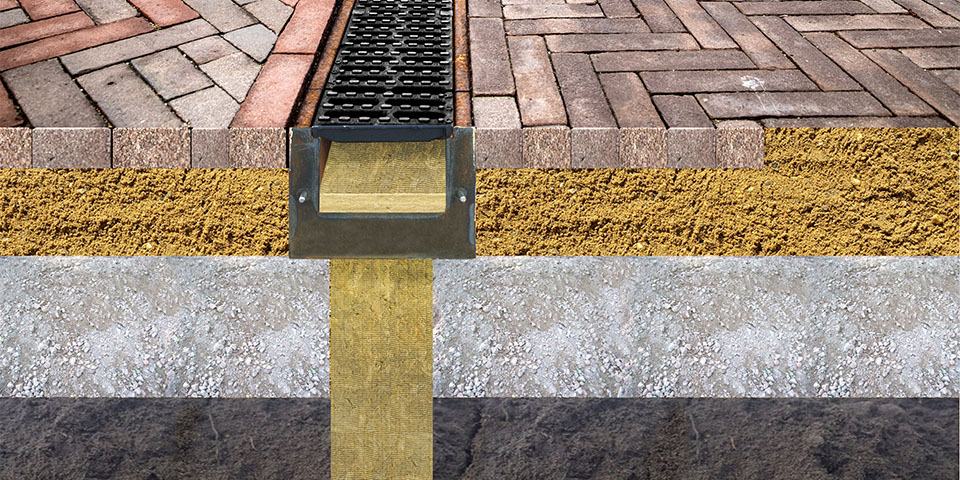
The ACO infiltration gutter in cross section.
During rainstorms, the infiltration channel collects rainwater and infiltrates it locally, high on the surface, into the soil. This relieves the sewerage system. The infiltration gutter is equipped with bottom outlets with vertical infiltration wicks made of environmentally friendly sustainable rock wool. These wicks ensure that rainwater infiltrates into the soil and is then released to the subsoil, preventing the soil from drying out. The infiltration gutter can be equipped with various grating covers, even custom-made grids are possible.
For collecting large volumes of water, ACO has the Stormbrixx, a CO2 friendly infiltration and storage system for inner-city and heavy traffic areas. The proven system of stackable plastic elements can buffer and infiltrate large volumes of water. Advantages of the lightweight and stackable Stormbrixx are minimal transport costs and significantly less handling at the construction site.
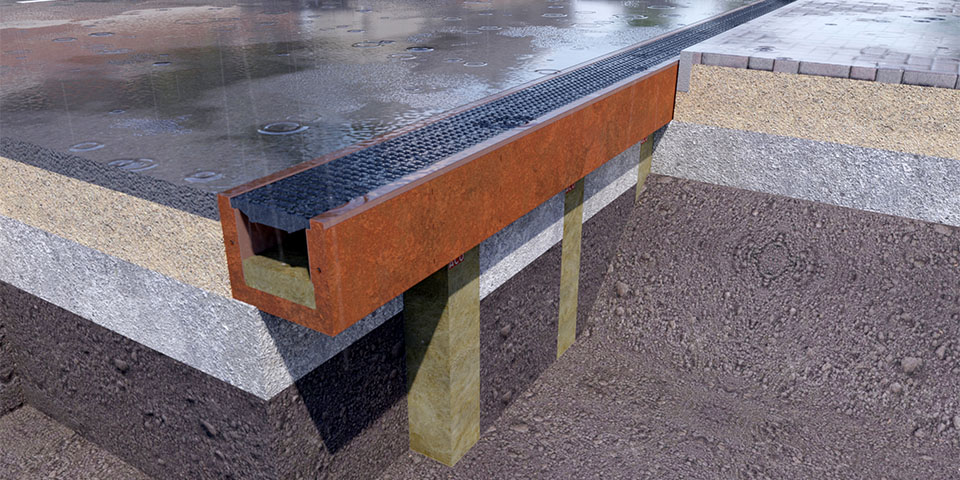
This system combines drainage, storage and the return of stormwater to the nearby green environment.
Thanks to the ACO D-SAS concept, municipalities can now also take measures to improve street or neighborhood to make it climate-proof. As a result, they are no longer dependent on infiltration solutions in gardens, which ACO also has great solutions for with its EasyGarden program, by the way. I wonder which municipality will be the first to apply the infiltration gutter. But no doubt we will hear more about that in the future.