Platform on civil engineering, underground infrastructure, energy, construction equipment & construction machinery

The RijnlandRoute is getting a world first with direct sunlight at tunnel entrances using fiber optics. A system with lenses on the tunnel roof and fiber optics for transport brings sunlight up to a hundred meters into the tunnel without loss of quality. A sustainable solution, since tunnel lighting is a real energy consumer. The innovation can lead to a 10-20% reduction in the total energy consumption of the tunnel in the RijnlandRoute.
Transport of sunlight via fiber optics (Solar Optic Fiber) is not new, but is now being used in a tunnel for the first time by contractor Comol5. The technique is already being used abroad in schools and offices. "This energy-saving innovation fits into the province's sustainability ambition, and we are proud to have the global first with this.", says Helmut Berkhout, contract manager for the province of South Holland. The permit for the application at the tunnel entrance to the A4 side has since been granted.
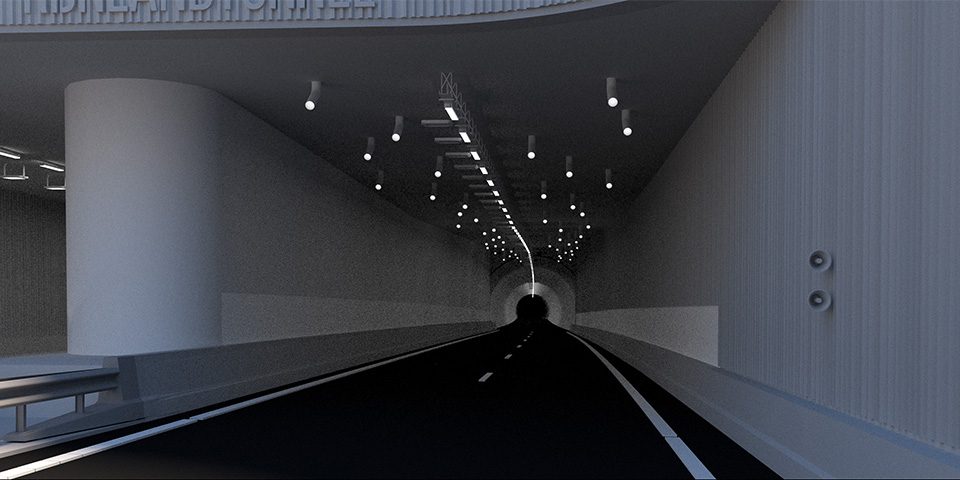
The application of Solar Optic Fiber creates a win-win situation. Comol5, which also takes care of maintenance for the first 15 years, benefits from lower energy costs. "In our quest for energy neutrality, we are always looking for ways to reduce energy consumption in tunnels and thus also reduce CO2 emissions. Since tunnel lighting accounts for about 50% of energy consumption, it made sense for us to look at that first.", says Onno Sminia, innovation manager at Comol5 and Croonwolter&dros. Berkhout: "It was agreed with Comol5 early on in the project that we, as the client, are open to innovations in the field of sustainability. We are, as it were, 'launching customer' for this new technology, which yields substantial energy reductions year after year in the management phase of the tunnel. The fact that we get 'free' sunlight without energy consumption in a place where this was impossible until recently is of course great."
To allow road users' eyes to get used to the transition from light to dark, additional light is needed at the tunnel entrance: the entrance lighting. Above ground, lenses are installed that catch the light and rotate with the sun. Through bundles of fiber optics, the sunlight is fed into the tunnel. The fixtures are installed in an aesthetic pattern (inspired by a starry sky) across the ceiling in the tunnel. The more light there is outside, the more light is needed in the tunnel mouth to accommodate road users' eyes. The beauty of using sunlight is that more sunlight then automatically enters the tunnel as well.
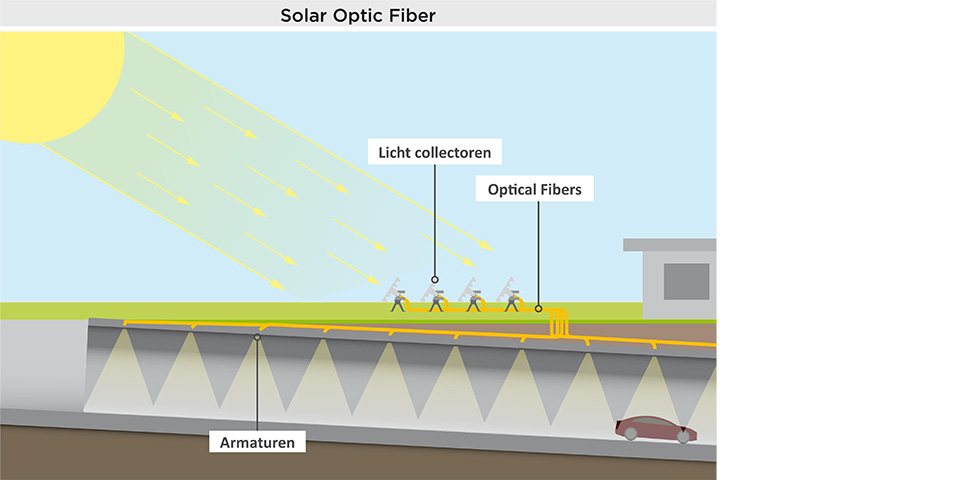
"It is high-tech and low-tech all in one", says Sminia. "Light is transported from one place to another without loss along the way and without requiring additional energy. That sounds simple. On the other hand, there are complicated calculations underneath to ensure that the light level in the tunnel mouths can be controlled based on the light level outside, so that we can meet the requirements of the national tunnel standard."