Platform on civil engineering, underground infrastructure, energy, construction equipment & construction machinery

The geo-information sector is in the midst of a transition phase. While industry organizations have traditionally focused on representing their members, Jacqueline Meerkerk, director of GeoBusiness Nederland, believes that the current climate calls for a broader perspective: collaborating in ecosystems, focusing on social challenges, and stimulating innovation. “That is exactly what we stand for as a trade association.” She wants to guide GeoBusiness Nederland to the next phase: from a more traditional interest group to a (network) association 3.0.
GeoBusiness Nederland is the trade association for companies that work with geo-information and technology. “In an association 3.0, the focus is no longer solely on the internal organization, but rather on the outside world,” says Meerkerk. “How can we as a sector contribute to a sustainable future? How can geo-information help with major social challenges such as housing construction, climate adaptation, and infrastructure renovation? This is changing our role: we are increasingly becoming a driver of innovation and collaboration. Of course, we will continue to support our members by providing information, organizing networking events, offering knowledge platforms, and advocating for a level playing field, but we are also increasingly focusing on strategically connecting knowledge, policy, and practice. Our members are asking this of us; they want a future-proof association with impact.”
GeoBusiness Netherlands has around eighty members: a mix of companies from a variety of backgrounds. “Through special interest groups, such as Data Acquisition and AI, and knowledge platforms focused on themes such as energy and climate and BIM/digital twin, we encourage knowledge sharing and innovation,” Meerkerk explains enthusiastically. “These networks are the driving force behind our association and strengthen our connection with the outside world. Many members are active in this.” But according to Meerkerk, more is needed to take the next step: the association as a facilitator and driver of the innovation ecosystem.
According to Meerkerk, a good example of collaboration on innovation is the GeoSamen initiative, a public-private partnership between government, industry, knowledge institutions, and professionals, similar to the top sectors. “The current vision for 2021-2025 expires this year and will be renewed with a view to 2030. As a trade association and secretary of GeoSamen, we are playing an active role in this on behalf of the Ministry of Infrastructure and Water Management. During the recent kick-off on October 3, the ambition was set: in the coming years, we will work together to create a visible and self-aware sector that contributes to themes such as housing and infrastructure based on high-quality expertise. According to Rijkswaterstaat, the renovation task must be made 25 percent more efficient. This can only be achieved by making optimal use of geo-information and technology. Innovations within our field are extremely relevant in this regard. The goal? Not separate solutions everywhere, but connection and upscaling. In this way, we strengthen both our innovative power and our competitive position in Europe.”
Another major challenge lies in attracting young professionals. “Geodesy programs are disappearing, even though the field is essential to our data-driven society,” says Meerkerk. “That's why we're teaming up with colleges such as Saxion, which recently launched a new Associate Degree program in geodesy. Our ultimate goal is to develop a full-time bachelor's program and put the field back on the map. Our sector needs to raise its profile much more. Its role is really underestimated. We mainly work behind the scenes. As long as everything is going well, people take it for granted. Maybe a major measurement error needs to be made so that everyone understands how relevant we are,” says Meerkerk jokingly.
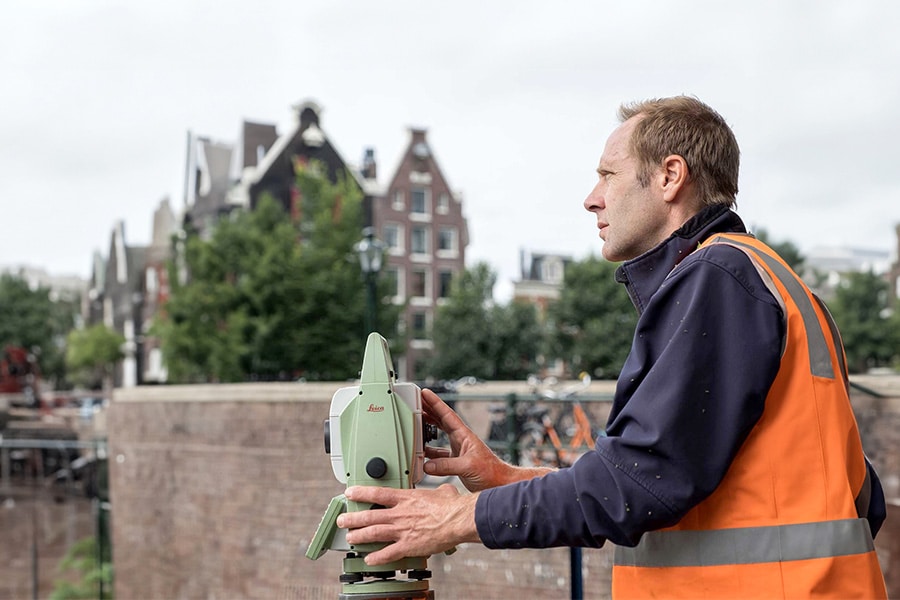
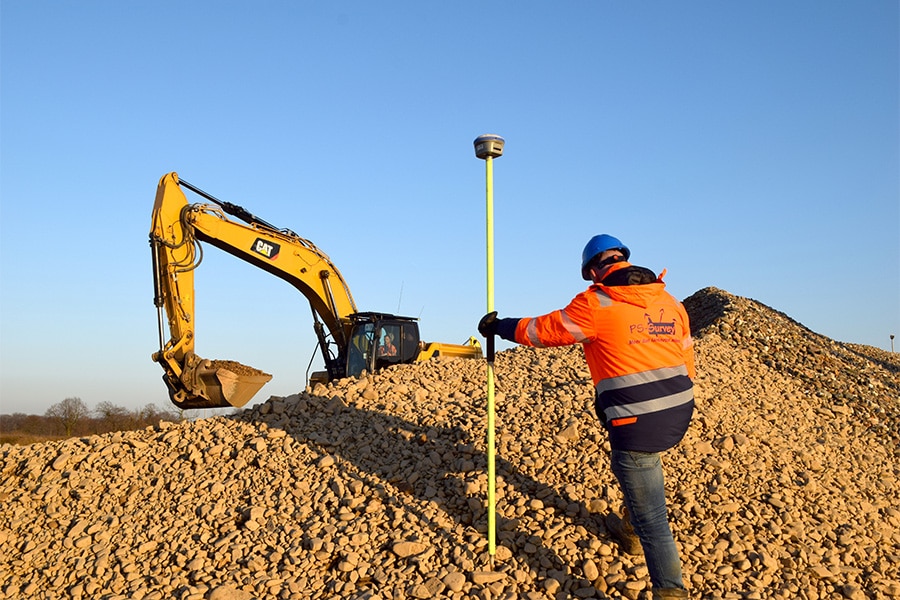
The geo-sector is technologically very advanced and works with high-tech systems and equipment on a daily basis, such as drones, laser scanning, and AI. “It is a fascinating and dynamic field that is extremely relevant to society in terms of utilizing our scarce space. As a trade association, that is precisely what we want to promote even more. We want to grow into a connecting network association 3.0. We are committed to making geo-information more visible in decision-making and implementation by governments and companies, thereby increasing the value of our field. This not only offers social added value, but also enormous opportunities for our Dutch companies at home and abroad. There is still plenty of potential, even beyond our borders, and there are also many European subsidies that we can make use of. We are among the top five in the world as a sector with our high-quality knowledge position, so let's make the most of it and strengthen it!”