Platform on civil engineering, underground infrastructure, energy, construction equipment & construction machinery
Asian knotweed feels at home along the A2
Invasive exotic species are a growing problem in the Netherlands. They displace native species, cause damage to infrastructure and nature, and involve high social costs. Asian knotweed also feels at home along the A2 motorway, but not for long. Commissioned by Boskalis, Weed Free Service is providing control of this invasive species here, integrated within the broader implementation process of the widening of the freeway between the Het Vonderen and Kerensheide interchanges.
A pioneer in the fight against invasive exotic species, Weed Free Service understands the art of understanding and effectively controlling them. The company's foundations were laid in 2013. Founder Harry Kloosterman, who until then ran his own landscaping company, always nurtured a penchant for keeping invasive plant species manageable. “In view of the upcoming ban on chemical control in 2016, I started pioneering the use of sustainable and innovative control techniques,” he says. In doing so, he focused early on the development and application of sustainable, non-chemical alternatives. Since last August, some exotics have been on the Union List, which means a strict ban on trade, possession and spread, and a duty to manage these proliferators.
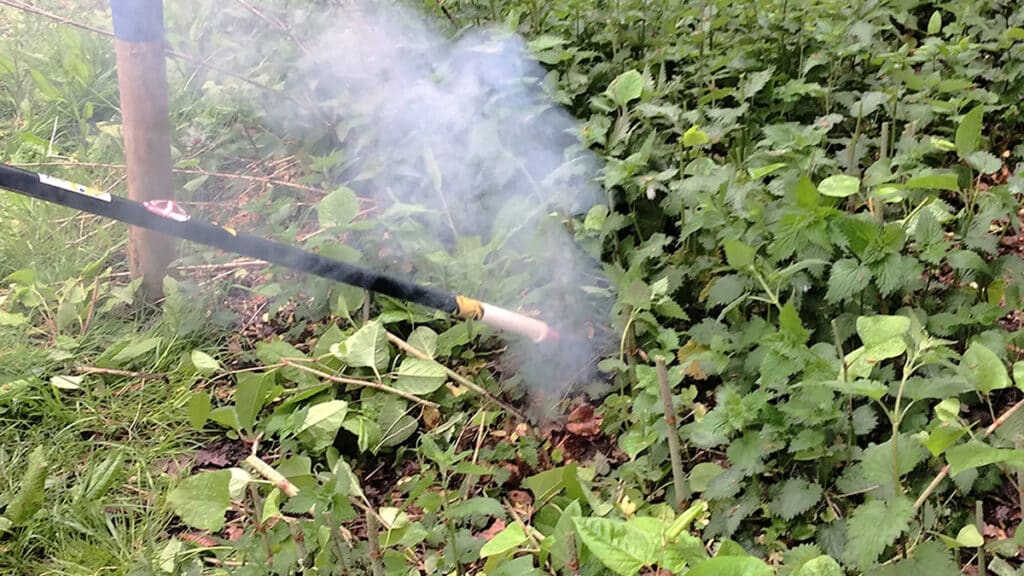
Weed Free Service targets giant hogweed, Asian knotweed, water pennywort and St. James's wort, among others. “The core of our method consists of combining different techniques, tailored to location, soil structure and risk profile,” Kloosterman explains. “And then also in the right order, intensity and combination.” This includes the use of:
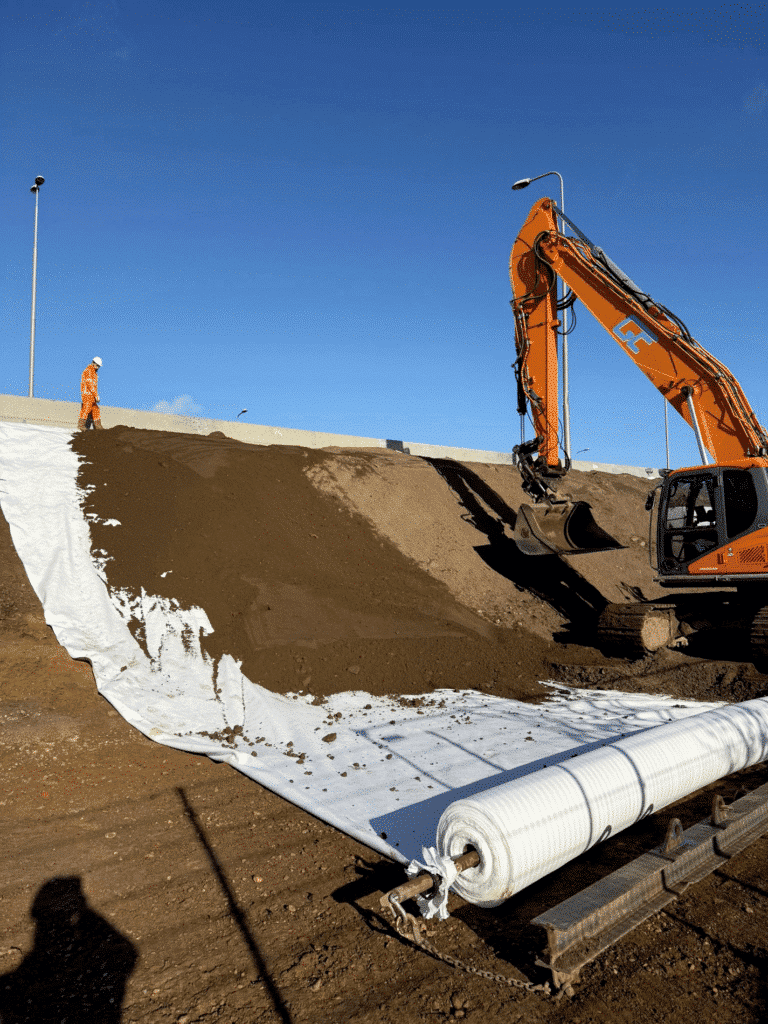
For Boskalis, Weed Free Service is treating several ‘spots’ along the 18-kilometer stretch of the A2 motorway where Asian knotweed has established itself. All in all, this involves an area of about 12,000 m2. The work has been phased. First, the above-ground vegetation is cut and removed in closed containers to prevent spreading. Next, the contaminated soil is excavated to a depth of approximately 1 meter and stored in an underground depot. The underlying soil is thermally treated and locally cryogenically charged. The area is then covered with a non-woven cloth and backfilled.
Within this controlled setting, Weed Free Service applies the Weed-Rhizom Destroy technique: a form of physical isolation in which rhizomes no longer have an opportunity for horizontal expansion. “Through space limitation and energy depletion, regrowth is structurally excluded,” assures Kloosterman. The depot is raised after treatment and used as a noise barrier.
By 2025, Weed Free Service will have successfully treated an area of more than 8,000 m2 along the A2, and the next phase will start later this year. “We will remain involved at least until the end of the project, but also after that. Aftercare remains crucial and is an essential part of responsible exotic species management. Only long-term monitoring keeps the risk manageable.”