Platform on civil engineering, underground infrastructure, energy, construction equipment & construction machinery
Temporary bridge solutions
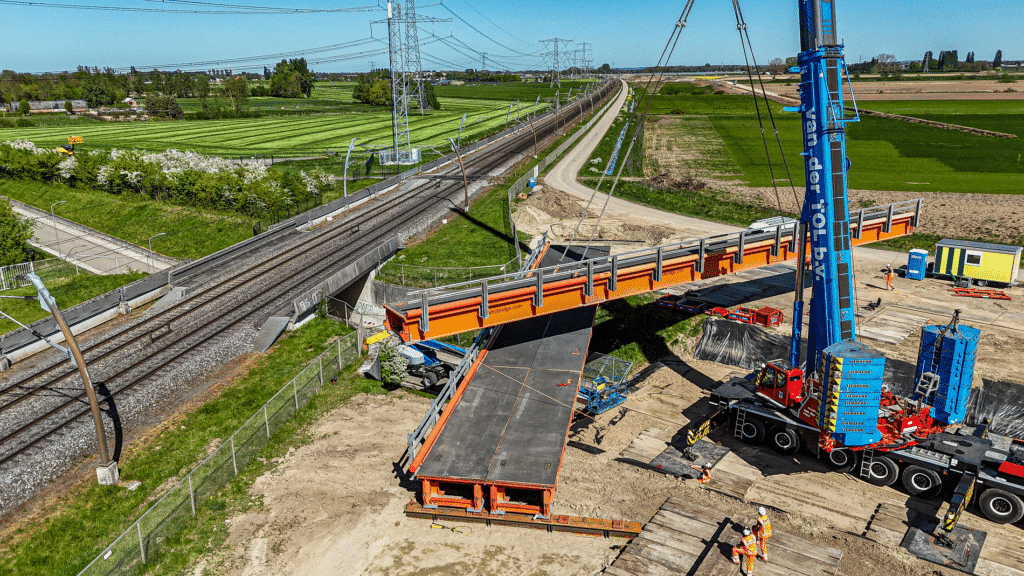
ViA15 is no ordinary infrastructure project. It involves extending the A15, connecting it to the A12, and widening existing sections. At the same time, it is important that local traffic can continue to flow safely and that the surrounding area experiences as little disruption as possible. In situations like this, temporary construction roads and modular bridges play a key role. Retro Bridge has already installed five bridges for this project. “We will hoist the remaining three bridges into place late this year and early next year,” says work planner Thomas Kastermans.
GelreGroen, a consortium comprising BESIX, Dura Vermeer, Hochtief, and Van Oord, is carrying out the project on behalf of Rijkswaterstaat. For Retro Bridge, previous project experience also comes together at ViA15. “We’re running into a lot of people we also saw at De Groene Boog, the project involving the new A16 in Rotterdam. They’re practically the same parties. From our end, we’re really enjoying the collaboration, and fortunately, I’m hearing nothing but positive feedback from the other side as well,” says Thomas with a smile.
For ViA15, Retro Bridge is supplying a total of eight bridges: six construction bridges and two public bridges. “The strength of our modular bridges lies in the combination of standardization and flexibility. Clients come to us with specific dimensions, traffic conditions, and construction requirements, and we translate those needs into a suitable configuration using existing modules. With our standard modules, we’re almost always able to find a solution.”
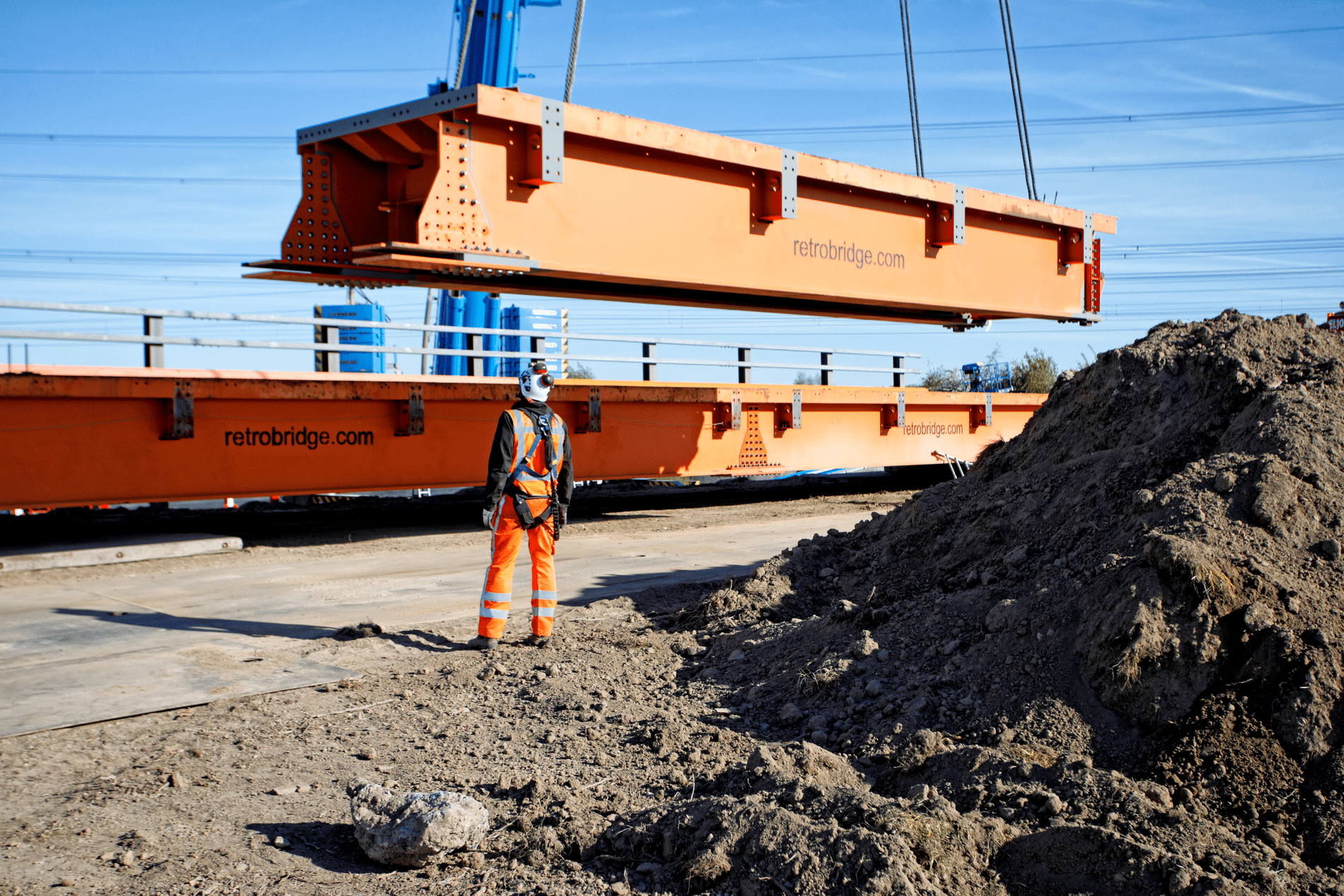
Retro Bridge offers three different types of public bridges and six types of contractor bridges. This allows engineers to determine, on a project-by-project basis, which system best suits the load, span, available space, subgrade, and temporary construction logistics.
For public roads, the company offers three types: the Heavy Bridge for heavy loads and longer spans, the Light Bridge as a sturdy and quick-to-install solution using standard components, and the Beam Bridge for shorter spans.
For construction bridges, the selection is even broader. In addition to the types mentioned above, Retro Bridge also offers the Over Bridge in this segment, which can be used to temporarily bridge existing obstacles, roads, or work zones. The Panel Bridge is a modular system that is particularly well-suited when speed, adaptability, and reusability are important. The Longspan Bridge is designed for situations requiring a larger clear span, such as when support points are limited.
According to Thomas, the added value lies not only in delivering the right bridge, but also in identifying practical needs on the construction site. That is why Retro Bridge actively contributes to the planning process. “For the ViA15 project, we took the initiative to install an offset walkway on the back of the bridge’s guardrail posts, so that project personnel could safely reach the other side. This eliminated the need for a separate pedestrian bridge. By actively contributing ideas, we tailor every bridge solution as closely as possible to the day-to-day realities of the project,” Thomas concludes.