Platform on civil engineering, underground infrastructure, energy, construction equipment & construction machinery
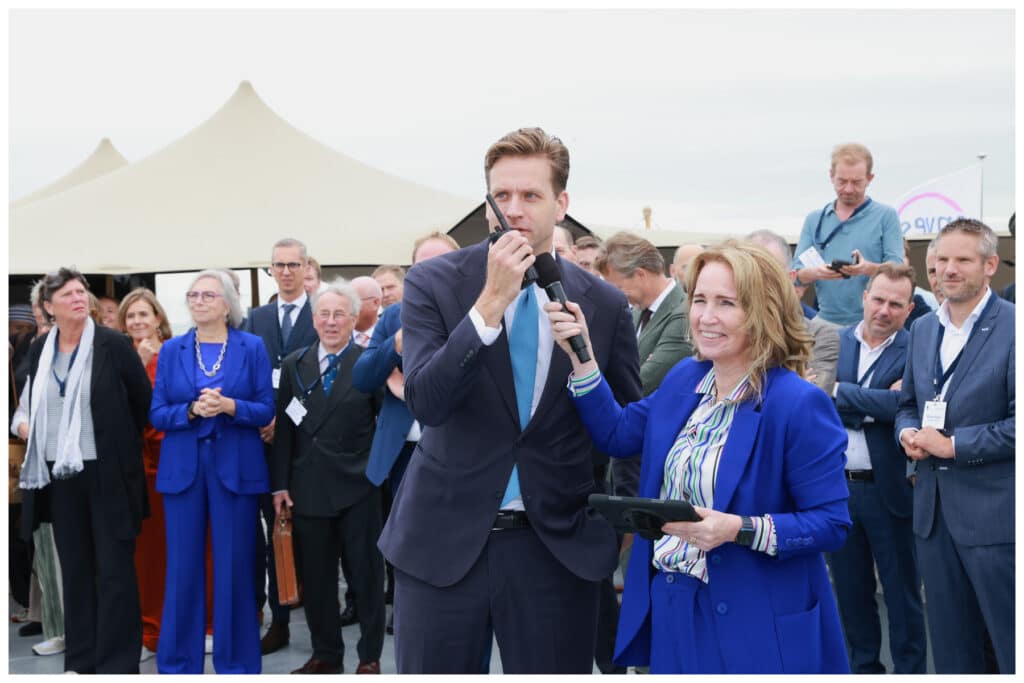
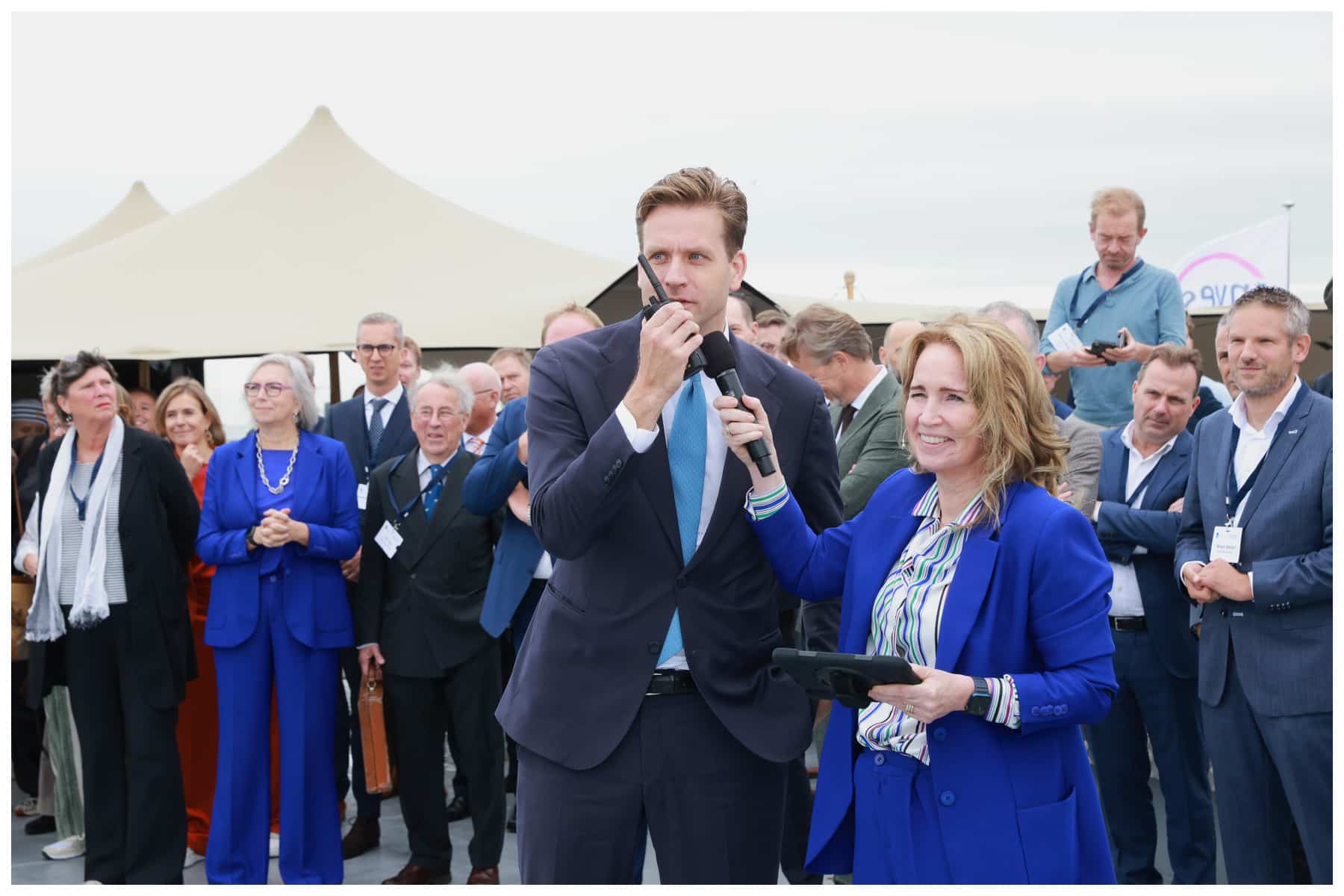
Minister Vincent Karremans of Infrastructure and Water Management officially commissioned the new pumping station and the new outflow locks today in Den Oever. This marks the completion of the large-scale reinforcement and renovation of the Afsluitdijk. As a result, the Netherlands is now better protected against high tides from the sea, and the capacity to discharge water from the IJsselmeer to the Wadden Sea has been increased.
The commissioning of the pumping station and the outfall gates marks the culmination of one of the largest hydraulic engineering projects in the Netherlands in recent years. Commissioned by Rijkswaterstaat, the Levvel Construction Consortium—comprising Van Oord, BAM, Rebel, Invesis, and Aberdeen—reinforced the Afsluitdijk along its entire 32-kilometer length. In addition to constructing the pumping station and new outflow gates, the flood barrier was raised and reinforced to keep the Netherlands safe even in a changing climate. Furthermore, new floodgates were built at Den Oever and Kornwerderzand to close off the openings in the dike during extreme high water. Finally, a cut (opening) was also constructed in the dike at Kornwerderzand to facilitate fish migration.
The major work is complete. At the same time, Rijkswaterstaat and its partners continue to work on other projects on and around the dike, including the renovation of the Vlieter Monument, the replacement of the bridges at Den Oever and Kornwerderzand, and maintenance to extend the service life of the historic sluices dating from 1932.
The new pumping station is equipped with six powerful pumps with a combined capacity of 275 cubic meters of water per second. Together with the new outfall gates, the Afsluitdijk now has 45 percent more capacity to discharge water from the IJsselmeer into the Wadden Sea.
Water is preferably discharged through outflow. By natural flow, water flows from the IJsselmeer to the Wadden Sea when the water level on the sea side is lower. Due to rising sea levels, the period during which outflow is possible is becoming shorter and shorter, and less water can be discharged.
When discharge is not possible, the pumps ensure that excess water can still be removed. This keeps the water level in the IJsselmeer manageable and prevents flooding in large parts of the Netherlands. Therefore: discharge when possible, pump when necessary. The commissioning of the pumping station coincides with the start of the storm season, the period during which Rijkswaterstaat traditionally has to handle large volumes of water.
Vincent Karremans, Minister of Infrastructure and Water Management: “We are living in a new reality: rising sea levels and more intense downpours—this is changing the battle the Netherlands has been waging against water for centuries. Ninety-four years after the completion of the Afsluitdijk, we are making history once again. Our guiding principle now is: stay one step ahead of disaster. In every respect, the Afsluitdijk is an icon of high-tech water management. I would therefore like to extend my heartfelt congratulations to Rijkswaterstaat, to the partners of the Levvel construction consortium, and to all suppliers. Together, we are ensuring that the Netherlands remains safe, now and in the future.”
In recent years, hundreds of engineers, technicians, hydraulic engineers, and construction supervisors have worked on the renovation of the Afsluitdijk. They collaborated on strengthening and renovating the Afsluitdijk, and their expertise in the fields of water safety and water infrastructure was of great importance.
Due to rising sea levels, even more capacity will be needed starting in 2045 to drain water from the IJsselmeer to the Wadden Sea. In addition, the outfall locks at Kornwerderzand and Den Oever, which date back to 1932, have now reached the end of their technical service life. Research shows that expanding the discharge capacity is the most optimal first step. In the long term, water discharge will increasingly have to be handled using additional pumps. This approach offers flexibility and takes future developments into account, such as climate change and decisions made within the Delta Program.
With the start of the storm and high-water season on October 1, we are once again on high alert for high water levels and storms. Thanks to the new spillways and pumps at the Afsluitdijk, we have more options for draining water from the IJsselmeer and thus better controlling water levels. From the Netherlands Water Management Center (WMCN) and the National Coordination Committee on Flood Risk (LCO), we monitor water level developments 24/7. We ensure that water managers have timely access to current water level forecasts and can anticipate them by taking appropriate measures.