Platform on civil engineering, underground infrastructure, energy, construction equipment & construction machinery
Lightweight, strong, and quick to install
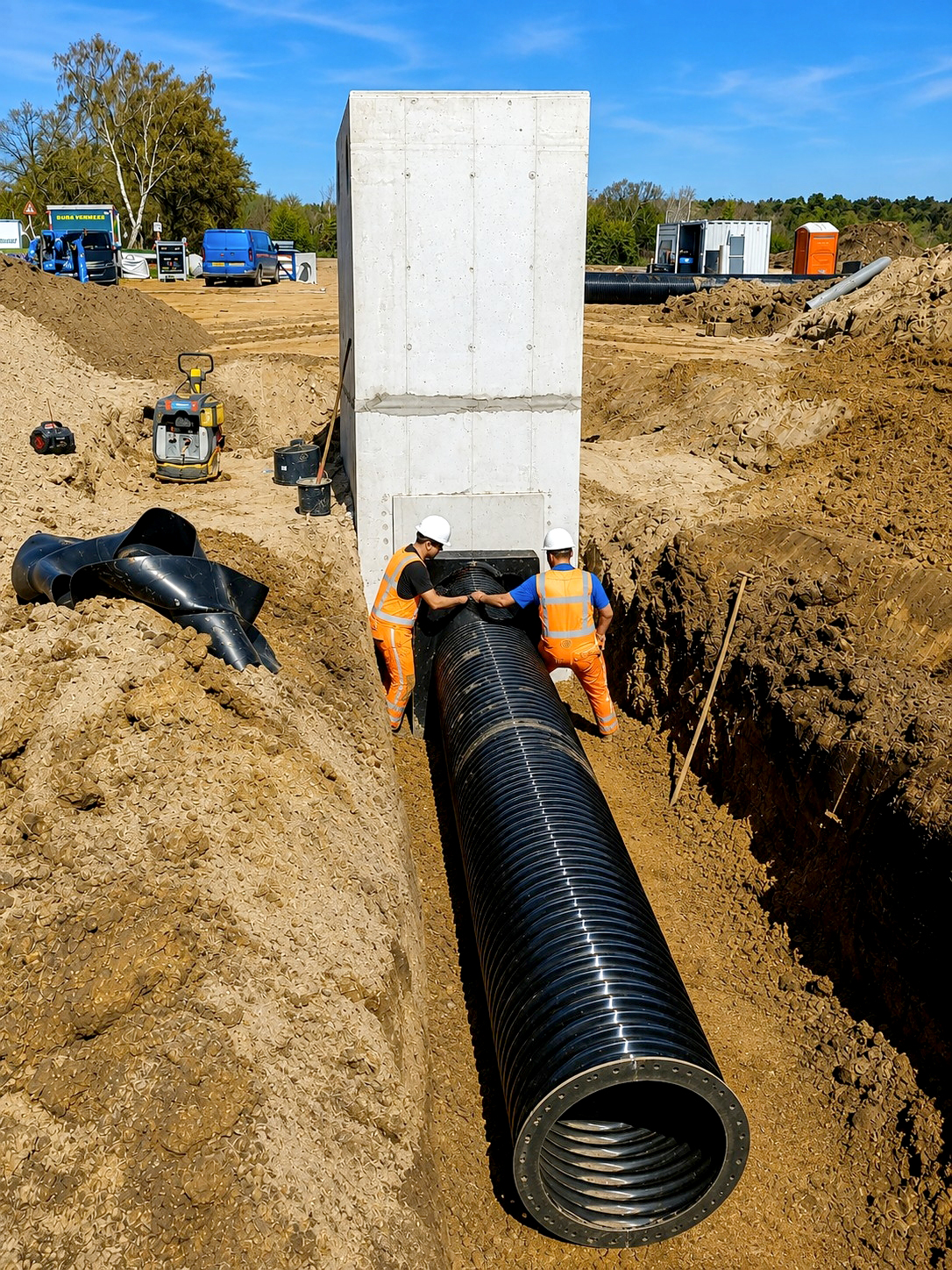
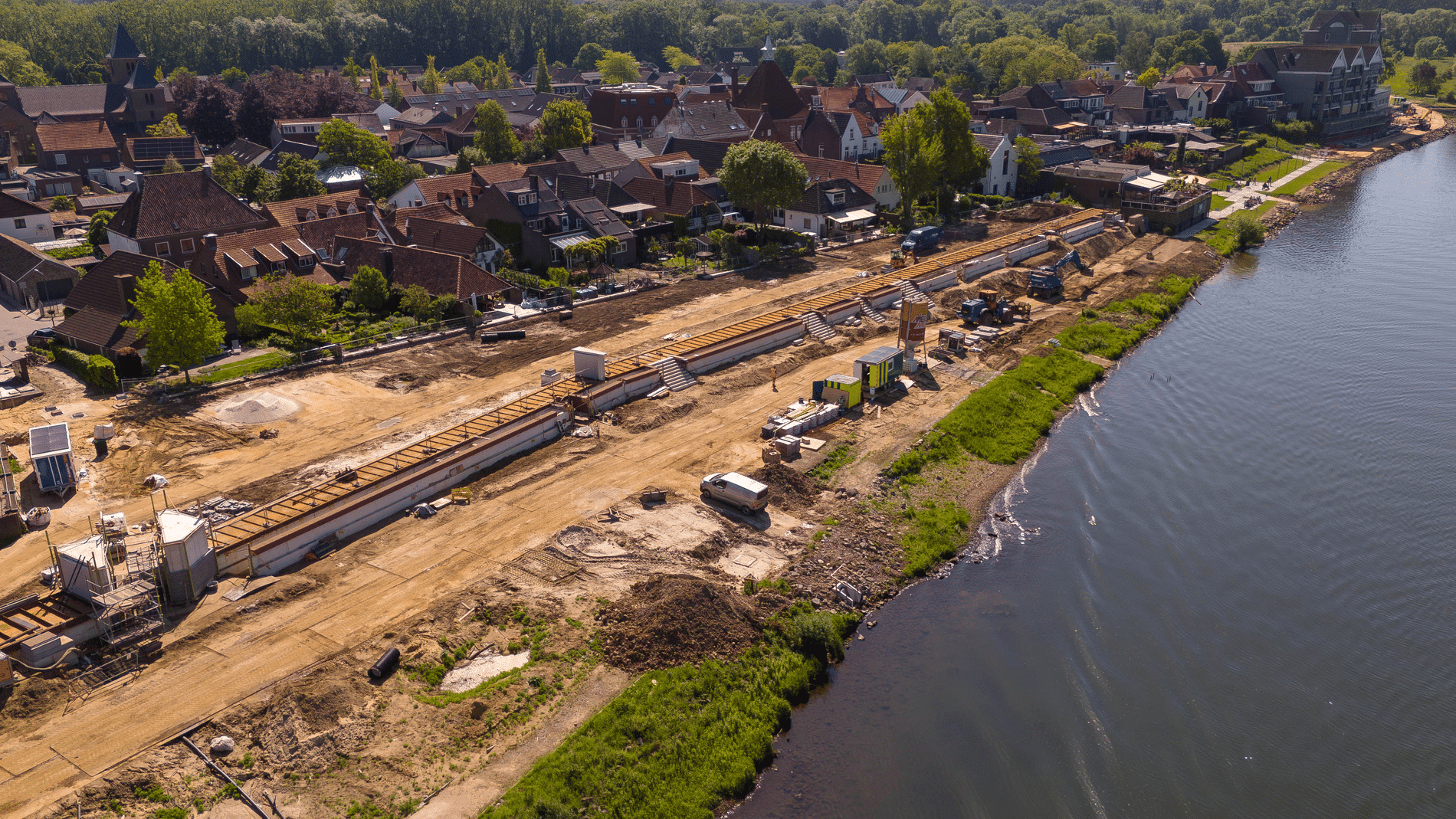
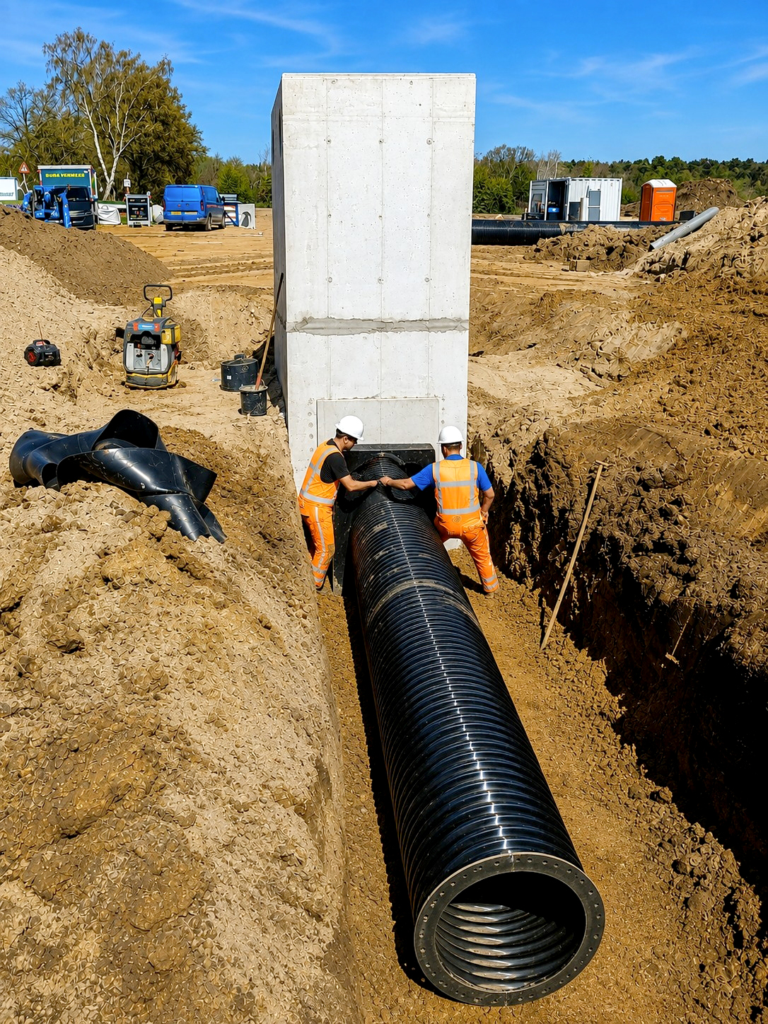
Dike reinforcement isn’t just about the flood barrier itself. Day-to-day water management must also continue to function. In Arcen, this is achieved through various lockable culverts. ViaCon BCT supplied corrugated steel SPIROsol culverts in diameters of DN800, DN1000, and DN1250 mm for this project. The challenge lay not so much in supplying the pipes, but primarily in the sizing and detailing of the design.
The culverts are part of the new flood defense system and, under normal conditions, facilitate water drainage. During high water, they can be closed off and contribute to flood protection. This places specific demands on the construction and connections. According to Dick van der Linde, managing director of ViaCon BCT, this was precisely one of the most significant challenges of the project. “The culverts had to be connected to manhole structures supplied by another contractor. That required precise coordination of dimensions and detailing. In addition, the Statement of Requirements stipulated that the culverts had to have a tensile-resistant connection. That is why the pipes were fitted with flanges and gaskets.”
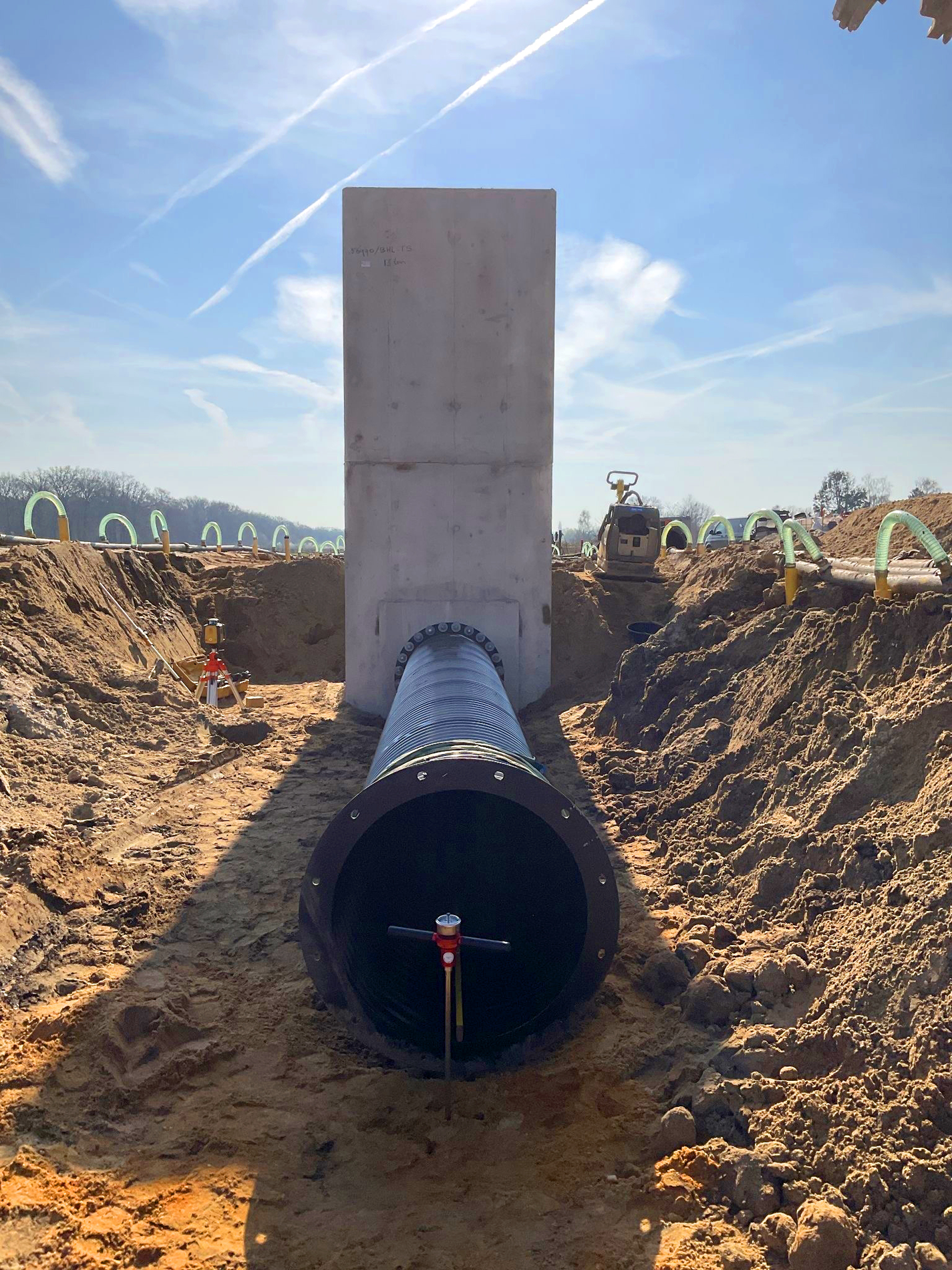
A major advantage of corrugated steel over concrete is its low weight. The steel’s corrugated profile provides high structural strength while requiring relatively little material. As a result, the elements are considerably lighter than concrete pipes, and heavy lifting equipment is generally not required for installation. This also contributes to quick and easy installation. The combination of long components, simple connections, and the absence of a heavy foundation allows for a relatively short installation time.
The length of the sections offers another advantage: fewer joints are needed. The round SPIROsol pipes can be supplied in lengths of up to approximately twelve meters per section. By tailoring the dimensions accordingly, the number of couplings in Arcen could be minimized. According to Dick, this optimization is a key feature of the design. “Technically speaking, it must, of course, meet the required strength and dimensional specifications. You can deliver what’s requested, but if we see opportunities to optimize the design, we do so—even if it’s just a matter of reducing the number of couplings or determining the length more efficiently.”
The use of steel culverts also offers advantages from a sustainability perspective. Because they are lighter, less energy is required during production, transportation, and installation. This also helps reduce CO2 emissions.