Platform on civil engineering, underground infrastructure, energy, construction equipment & construction machinery
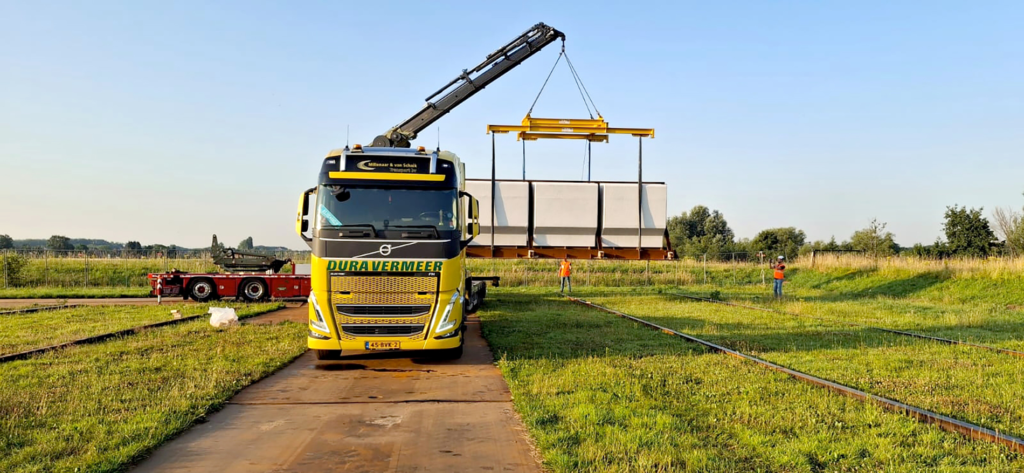
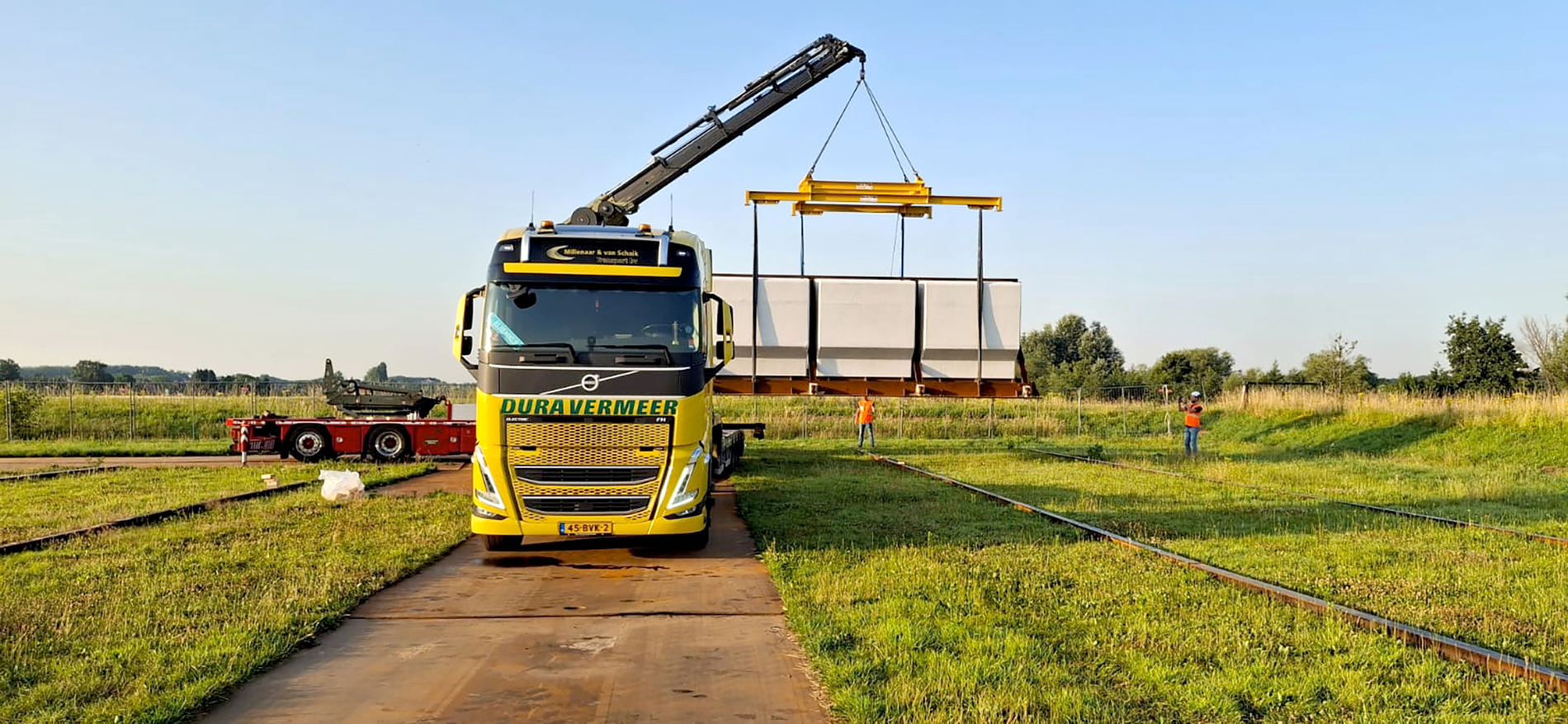
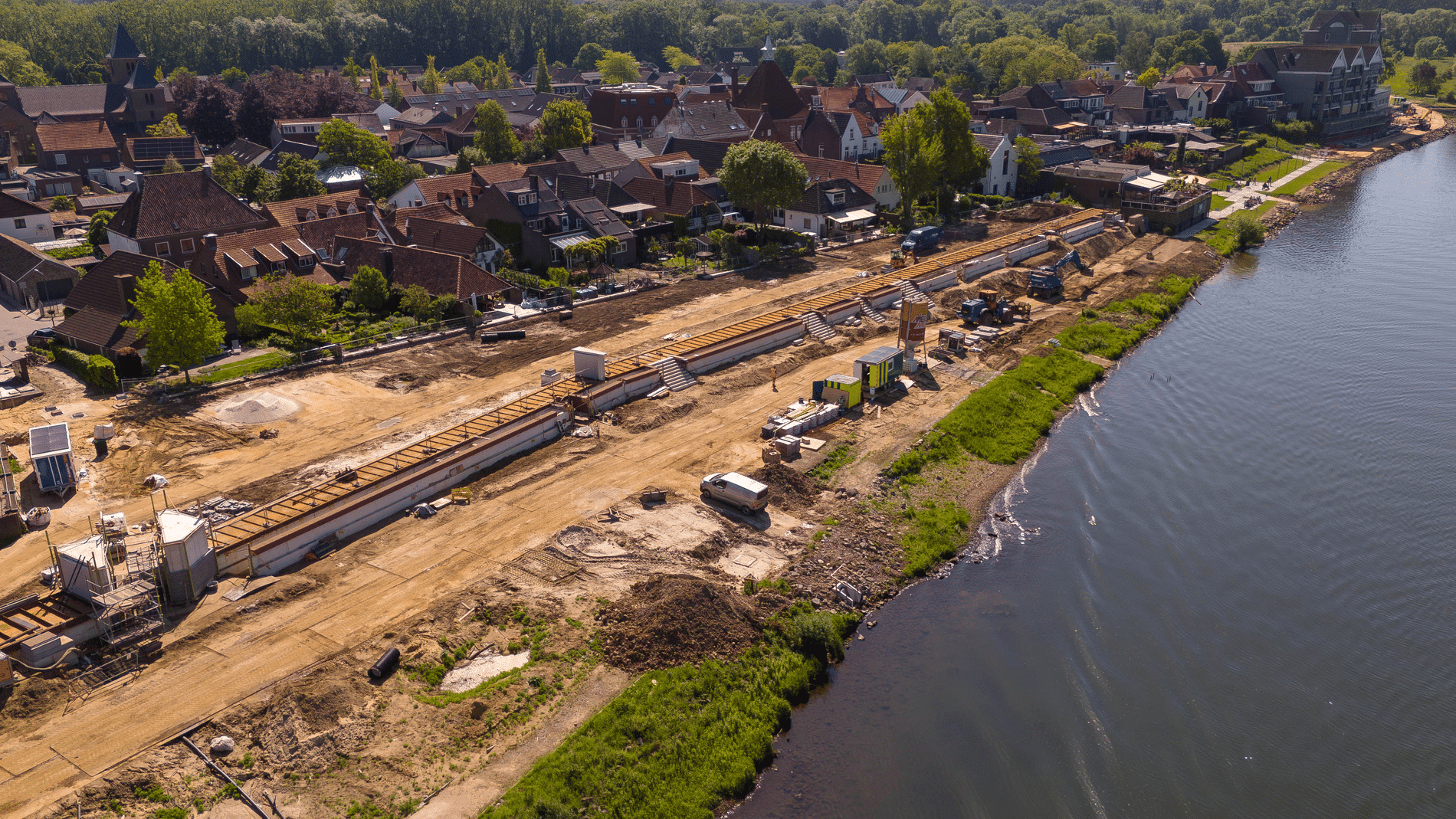
For the first virtually emission-free dike reinforcement project in the Netherlands, the transport of the seventy valves for the self-closing floodgate in Arcen also had to take place within the project boundaries without any emissions. The Dijkzone Alliantie Arcen entrusted this task to Millenaar & Van Schaik Transport. For the transportation company, it became much more than just a logistical job. It turned into a test case: Can exceptional transport also be emission-free? After a year of preparation and nine days of transport, the answer turned out to be a resounding ‘yes.’.
When the question came up, Marcel Vermeulen, Chief Operating Officer at Millenaar & Van Schaik, didn’t immediately think of trucks or routes. The first question was much more fundamental. “Can we do this, and do we want to? And could this become a showcase project for us to demonstrate that even exceptional transport can be zero-emission?” That question wasn’t just a random one. After all, this wasn’t a standard trip, but an exceptionally wide transport of seventy wide steel valves.
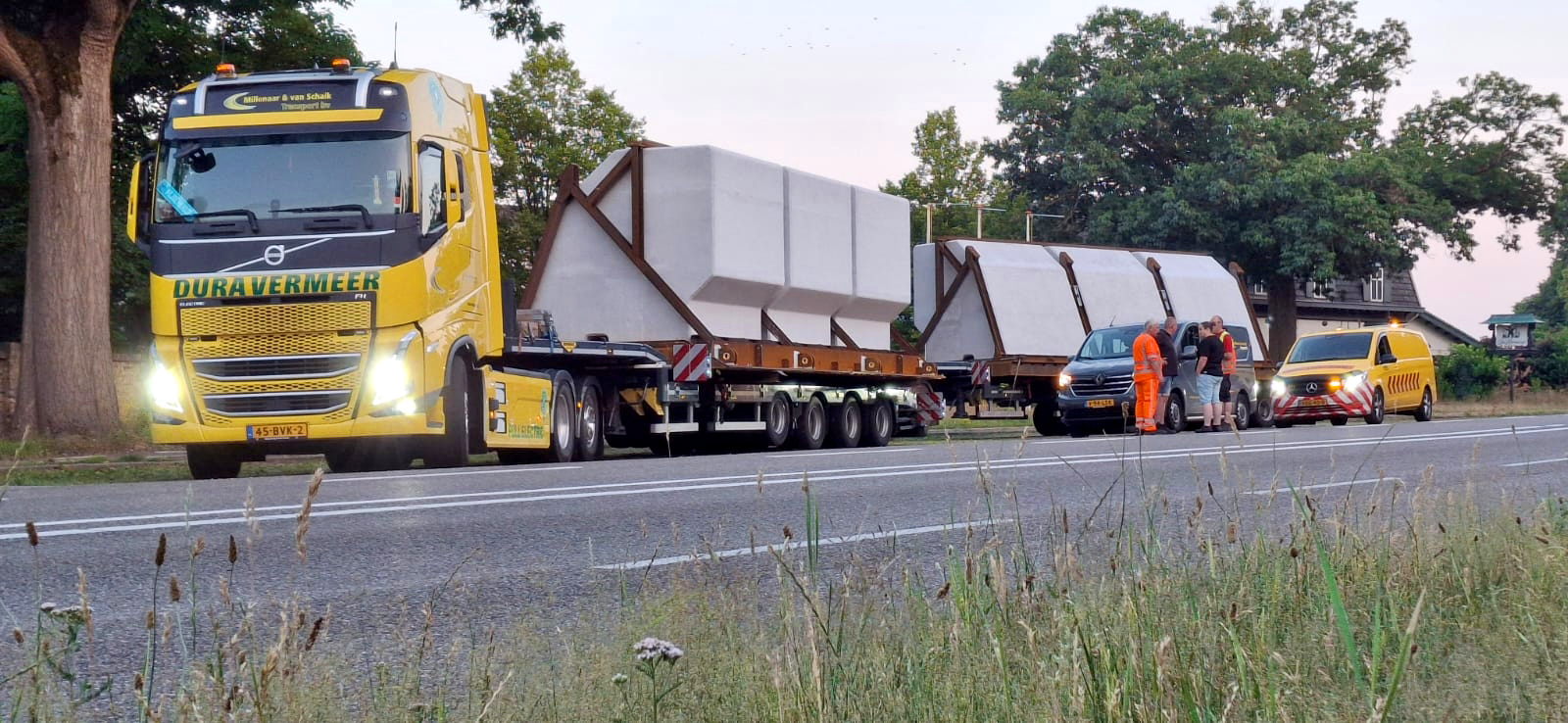
Millenaar & Van Schaik has been investing in electric transportation for several years now. Currently, about a quarter of its fleet is zero-emission, and the company has its own charging station in Oude Meer with a capacity of 1.7 megawatts.” ”Potentially, we can charge forty trucks there. You need facilities like that if you want to get serious about zero-emission transportation.“ However, it soon became clear that electric special-purpose transportation requires a great deal of preparation. ”You don’t just draw up a transport plan, but also a charging plan. You calculate driving times and charging intervals, find suitable charging locations, and estimate how much time you’ll spend on the road. Not every charging location is suitable for an electric truck carrying exceptional cargo. Moreover, all that information must be included in the exemption applications.“ According to Marcel, there’s another factor to consider: the people behind the wheel. ”Our drivers have the right certifications, such as ADR and TCVT, but above all, their experience is of immense value. This type of transport requires constant forward thinking.”
The Algerabrug near Capelle aan den IJssel presented the first challenge right away. The wide loads had to pass through there under escort before 5:00 a.m. Around 7:00 a.m., the trucks then arrived in the Venlo region. Temporary roadwork on the N210 near IJsselstein required adjustments to the schedule. Spending the night en route seemed like a logical solution, but proved unfeasible due to the dimensions of the load. Thanks to the planners’ experience and the drivers’ expertise, these obstacles were also overcome without any problems.
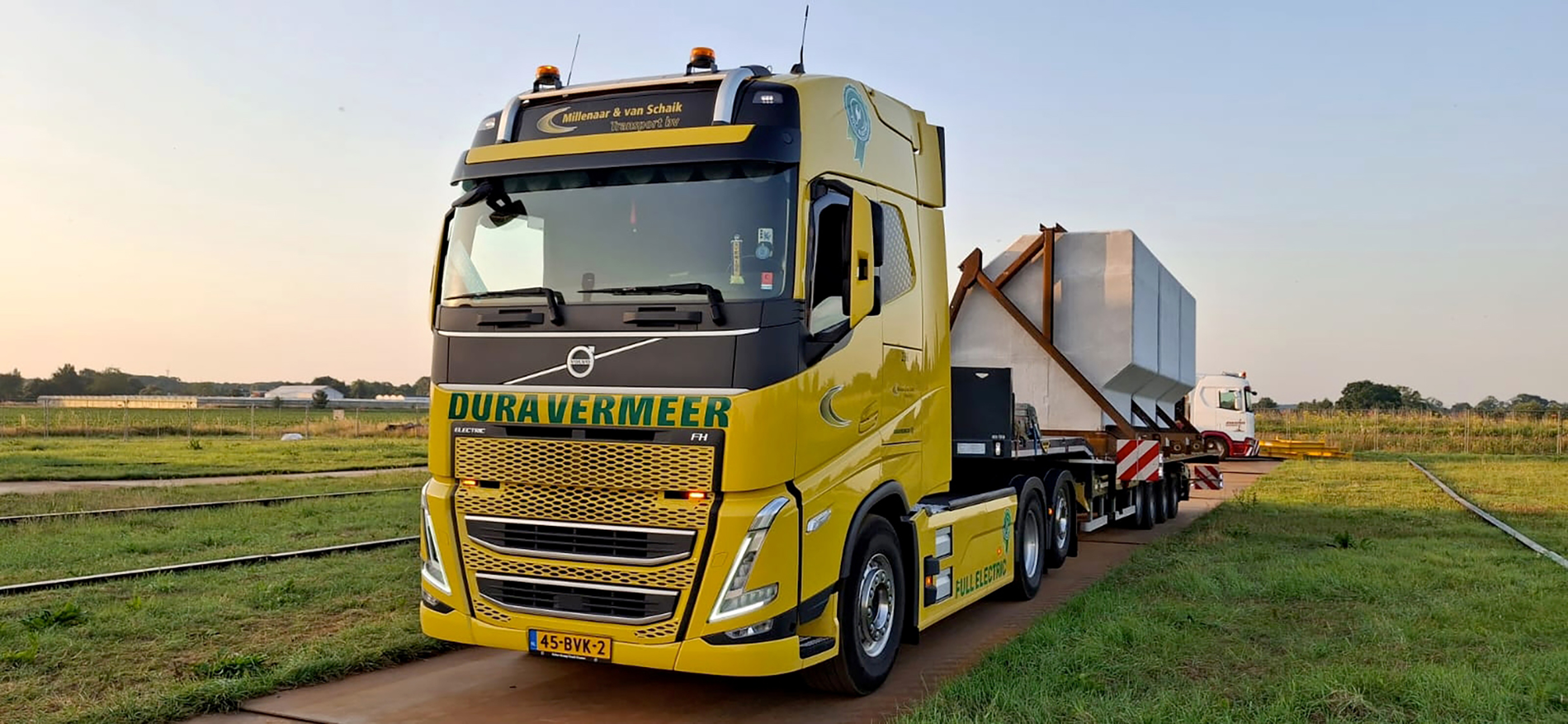
Ultimately, all seventy valves were transported emission-free within the Arcen project boundaries. Some were also delivered emission-free from Hollandia Infra in Capelle aan den IJssel. These electric vehicles were then used for internal transport within the project boundaries. For Millenaar & Van Schaik, this meant more than just a successfully completed assignment. “This was truly a challenge for our entire team. Everyone contributed ideas to make it happen: from the planners and work schedulers to the drivers and, of course, the client. That collaboration is what made it possible.”
Equally important is what the project has achieved for the future. “We now know that exceptional transport can also be carried out largely emission-free. Of course, that requires thorough preparation and the right people, but this project has given us the confidence that we can do this more often.”