Platform on civil engineering, underground infrastructure, energy, construction equipment & construction machinery
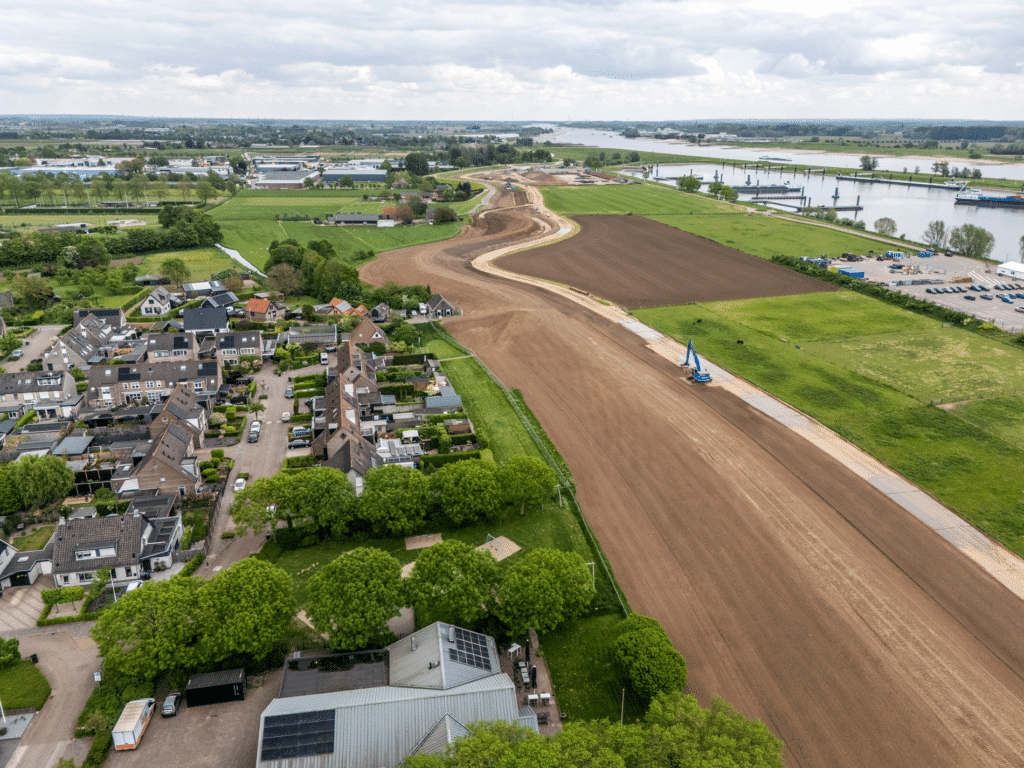
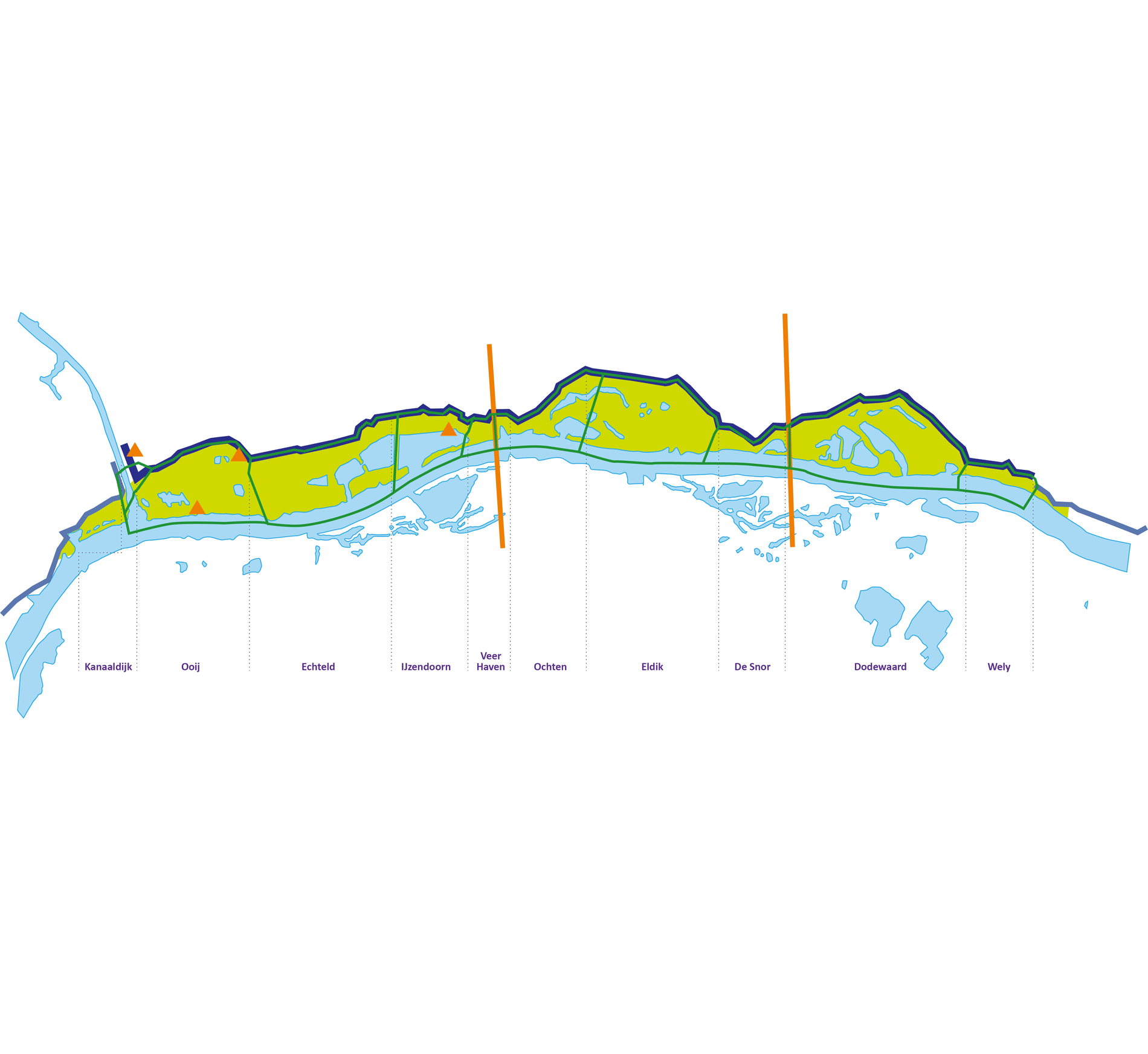
As part of the Neder-Betuwe dike reinforcement project, the Rivierenland Water Board is collaborating with the Neder-Betuwe Dike Alliance (a partnership between Dura Vermeer, GMB, and Ploegam) on one of the region’s largest water safety projects. Over a length of 20.2 kilometers, the Waal dike between Tiel and Wely is being reinforced to ensure continued protection against high water in the future. The project combines innovative dike reinforcement with zero-emission construction, smart logistics, and area development around Veerhaven Ochten, and forms the second-to-last link in a safe northern Waaldijk.
The impetus for the project stems from various failure mechanisms that threaten the safety of the dike according to the standards of the Water Act, as revealed by previous inspections and assessments. “The dike needs to be raised at various locations to meet current safety standards,” says David van Hasselt, project manager at the Rivierenland Water Board. “In addition, piping plays an important role: the phenomenon in which water flows under the dike and carries away sand, which can weaken the structure from the inside.”
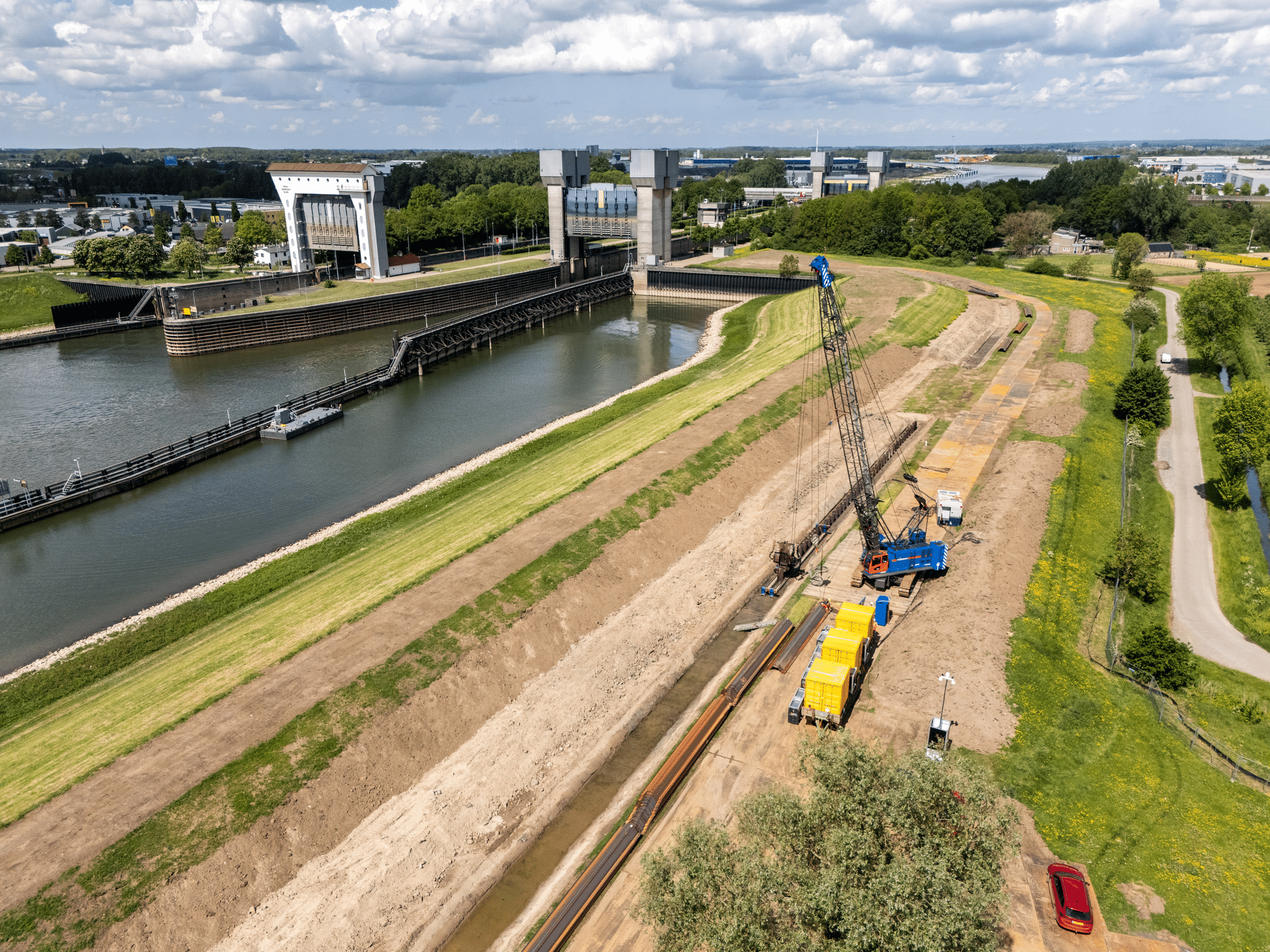
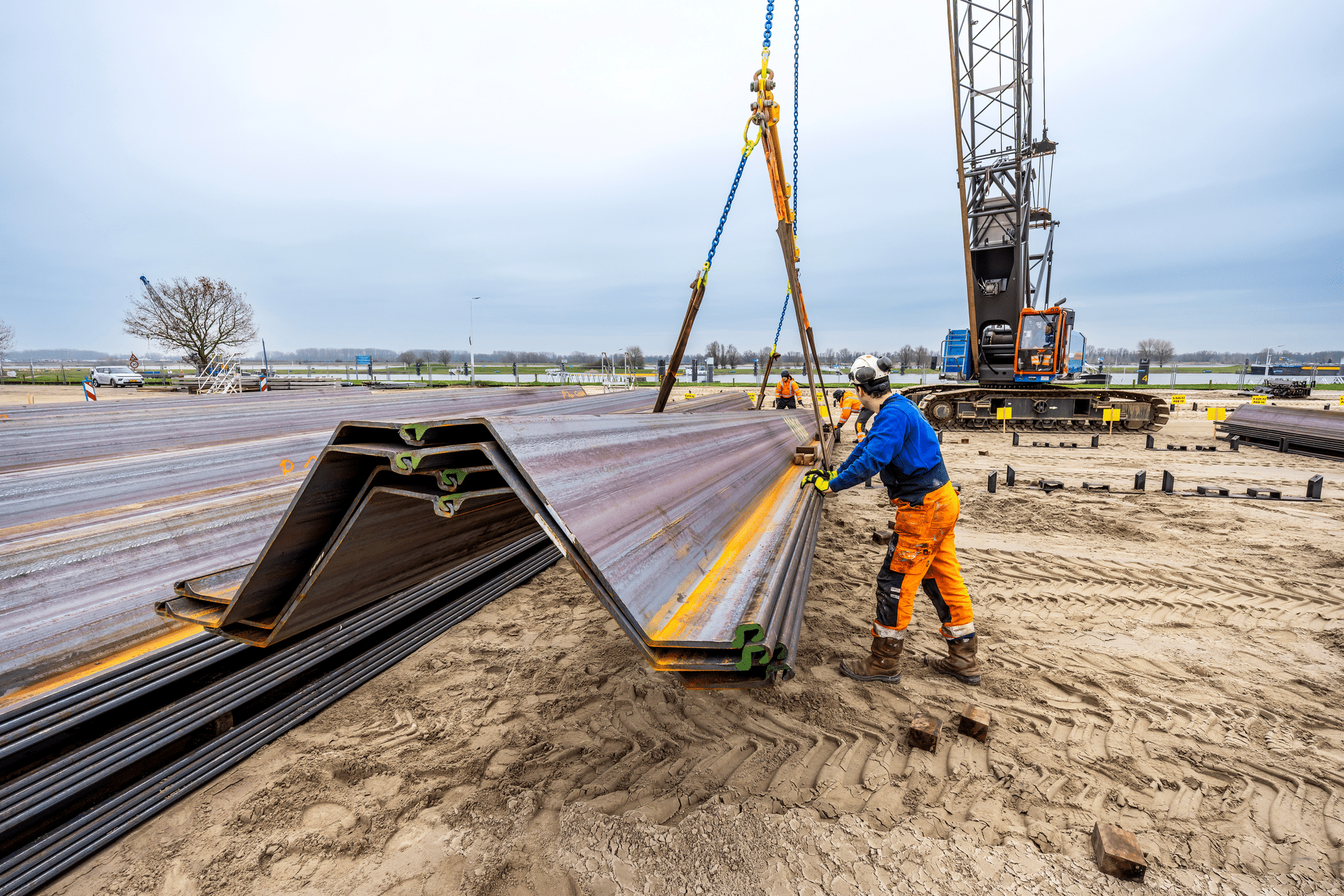
The stability of the dike also requires attention. During prolonged periods of high water, the river exerts great forces on the dike body. The reinforcement is intended to prevent the dike from collapsing under this load. In some places, sheet pile walls are therefore necessary as a structural measure.
Nowhere is the need for this dike reinforcement more widely felt than around Ochten. “Here, memories of the 1995 flood are still fresh in the collective memory,” David notes. “At the time, around 250,000 people were evacuated, and nearly a million animals had to be relocated due to cracks forming in the dikes. The events of that time still serve as a tangible reminder of the importance of strong flood defenses. Whereas many projects require time to build public support, the debate over the utility and necessity of this project is hardly an issue here.”
The guiding principle for the dike reinforcement remains to use green dikes as much as possible. This is sustainable and makes future adjustments easier. However, the situation in Neder-Betuwe calls for a customized approach. “Of the 20.2 kilometers of dike, approximately 11 kilometers will be constructed using structural solutions such as sheet piles and screens,” says Bart van Lieshout, project manager at Dijkalliantie Neder-Betuwe. “The reason for this lies in the existing buildings, limited space, and specific technical challenges. On other sections, traditional soil reinforcement is being used, whereby the dike is modified in multiple layers of fill to ensure stability.”
The combination of techniques is what makes this project unique. Various measures are being implemented along the entire length to eliminate the various failure mechanisms. This creates a robust flood defense that is prepared for future river discharges and climate change. “One of the distinctive features of Neder-Betuwe is its integration with area development,” David adds. “Around Veerhaven Ochten, the dike reinforcement is combined with the construction of a channel in accordance with the Water Framework Directive and the development of a new area for recreation and residential use. As a result, the project not only provides greater safety but also boosts the quality of the area.”
The chosen contract structure is also unique. As early as March 2023, the client and the contractor consortium began working together using a two-phase approach. Instead of first developing a complete design and only then selecting a contractor, the contractor was involved in the design process at an early stage.
“That gave us the flexibility to comprehensively weigh feasibility, planning, logistics, ecology, and costs from the very beginning,” Bart explains. “In October 2025, this resulted in a final agreement for the construction phase. The long preparation period made it possible to eliminate risks early on. Cables and pipes were rerouted, studies were conducted, and at some locations, preparatory sheet pile structures have even already been installed. This allows for more efficient execution and helps prevent surprises during construction as much as possible.”
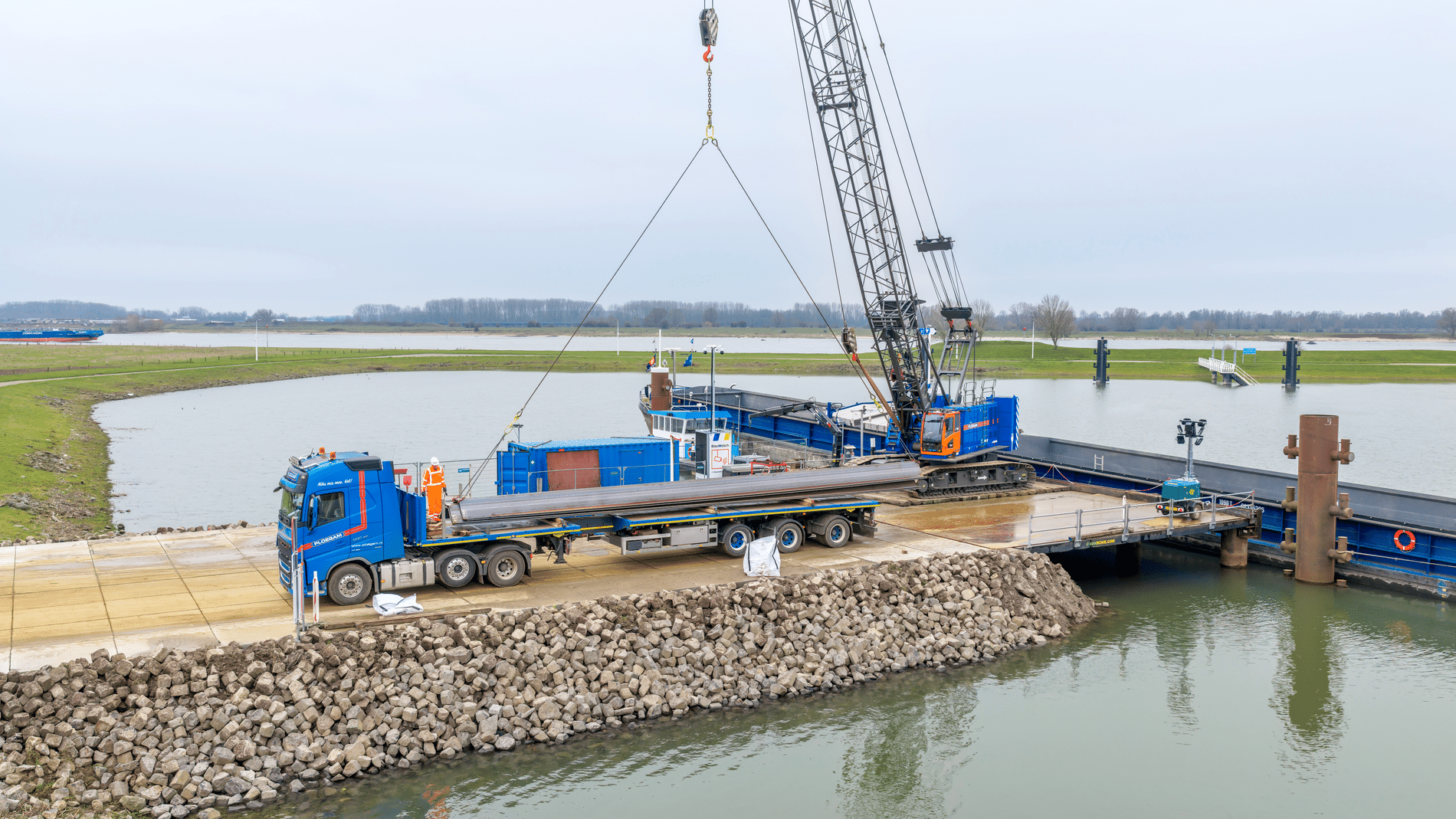
The scale of the project is impressive. “For construction logistics alone, we’re using about 30 kilometers of temporary construction roads,” says Bart, adding that the project has been divided into three phases. “By carrying out the work in phases, we can gain experience and immediately apply what we’ve learned to the next parts of the project. At the same time, the phases deliberately overlap to limit the total project duration. Without this approach, the project would take many years longer. The first section, on which we began work this year, runs from Tiel to the center of Ochten. Large quantities of clay and sheet piling are being delivered by ship via specially constructed unloading sites.”
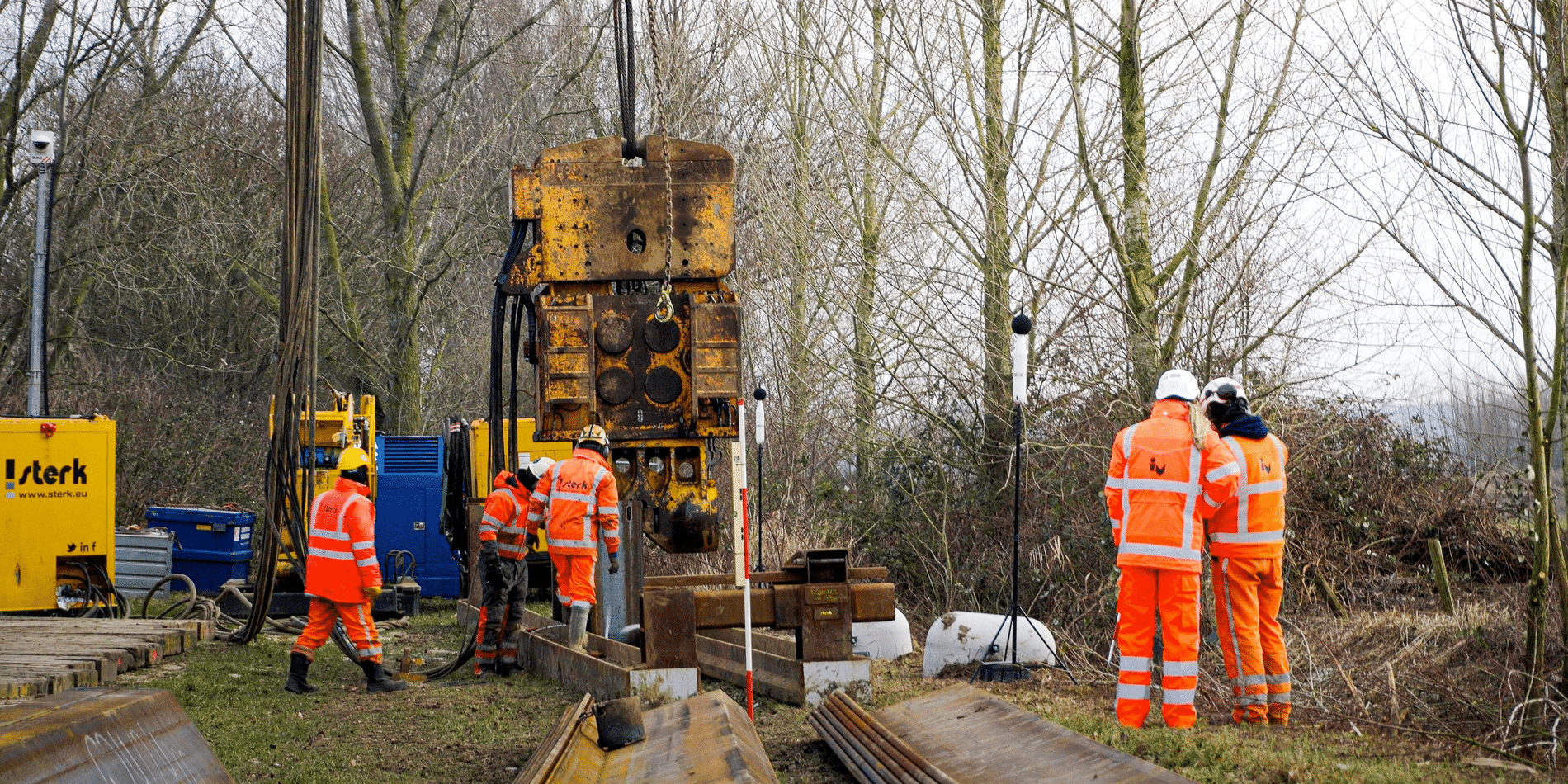
Equally impressive are the sustainability goals. The Dike Alliance aims for a 72 percent reduction in CO2 emissions, largely through the use of zero-emission equipment. “Electric crawler cranes, mobile cranes, wheel loaders, trucks, and tractors are now a common sight on the job site,” says Bart. “Even the vibratory installation of sheet piles is done entirely electrically, without generators.” The charging plaza at Lingemeer serves as the hub for this operation. “Here, large battery packs are charged with electricity sourced from, among other places, a nearby solar farm. Electric trucks continuously transport the battery boxes between the charging station and the construction sites. With this innovative energy system, we’re demonstrating that even large-scale infrastructure projects can be carried out without fossil fuels.”
In addition to technical innovations, changes are also being made at the process level. “Within the partnership, agreements have been made to jointly develop optimizations across about ten areas and to share the benefits fairly,” David continues. “This ensures that all parties continue to seek better, smarter, and more efficient solutions. A good example of this is the research into bats in relation to the installation of sheet piles. Together with ecologists, conservation organizations, and the province, we are investigating the extent to which bats are actually disturbed by the vibrating installation of sheet piles. The results of this research could be valuable not only for Neder-Betuwe but also for future dike reinforcements throughout the Netherlands.”
For the Rivierenland Water Board, the Neder-Betuwe dike reinforcement project is one of the largest in the organization’s 750-year history. For the dike alliance, it is an opportunity to demonstrate how collaboration, innovation, and sustainability can go hand in hand with water safety. “As an alliance, we always work with a core group of partners. We’re perfectly attuned to one another, and that’s once again paying off in this project,” Bart concludes.