Platform on civil engineering, underground infrastructure, energy, construction equipment & construction machinery
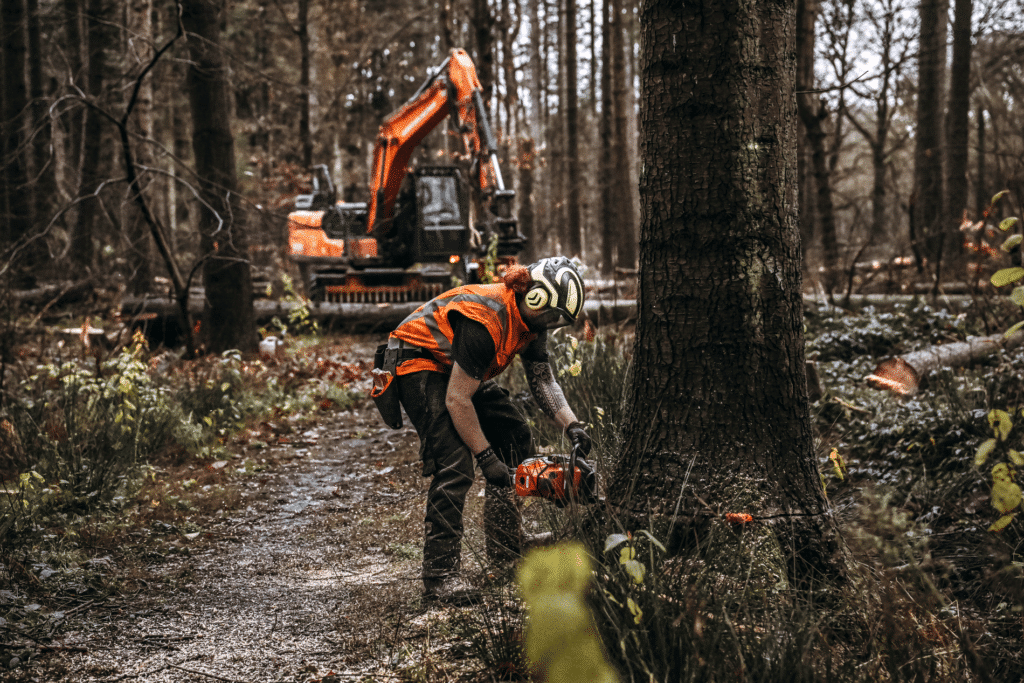
“We need to do this right for the future”
In recent years, Weijtmans Tree Removal has grown to become the leading national player in urban tree management, forest management, and sustainable wood supply chains. At the same time, the Udenhout-based company is investing heavily in zero-emission equipment and circular applications for wood. “We want to leave a positive legacy for future generations,” says Director Kees Weijtmans.
Although the name still refers to tree removal, the company’s scope of work today encompasses much more. “Weijtmans Tree Removal does more than just remove trees,” says Kees. “Our services range from small and large pruning jobs to the comprehensive management of forested areas, especially in urban settings. That has truly become our area of expertise.”
Six to seven years ago, Weijtmans Tree Removal took its first steps toward a ‘sustainable’ future. Today, the company performs much of its tree work using electric equipment, making it unique in the industry. “We can now carry out tree removal and pruning completely emission-free,” says Kees.
However, that journey was not without its obstacles. Both technology and regulations posed challenges. The development of battery technology, in particular, played a crucial role. “Five to six years ago, we hadn’t yet reached the tipping point where operating on electricity would be efficient enough to justify the investment required,” he explains.
According to Kees, there’s another problem on top of that: the overloaded power grid in the Netherlands. “If you’re working with electric equipment, you also need to be able to charge it. But simply requesting an extra connection these days is a lost cause.” That’s why, in recent years, the company has invested heavily in its own power supply and mobile battery containers that allow machines to be charged directly on-site or at a project location.
Still, the financial challenge remains significant. “You have to look at the big picture—not just the machine, but also everything needed to operate emission-free. That still requires substantial investments.”
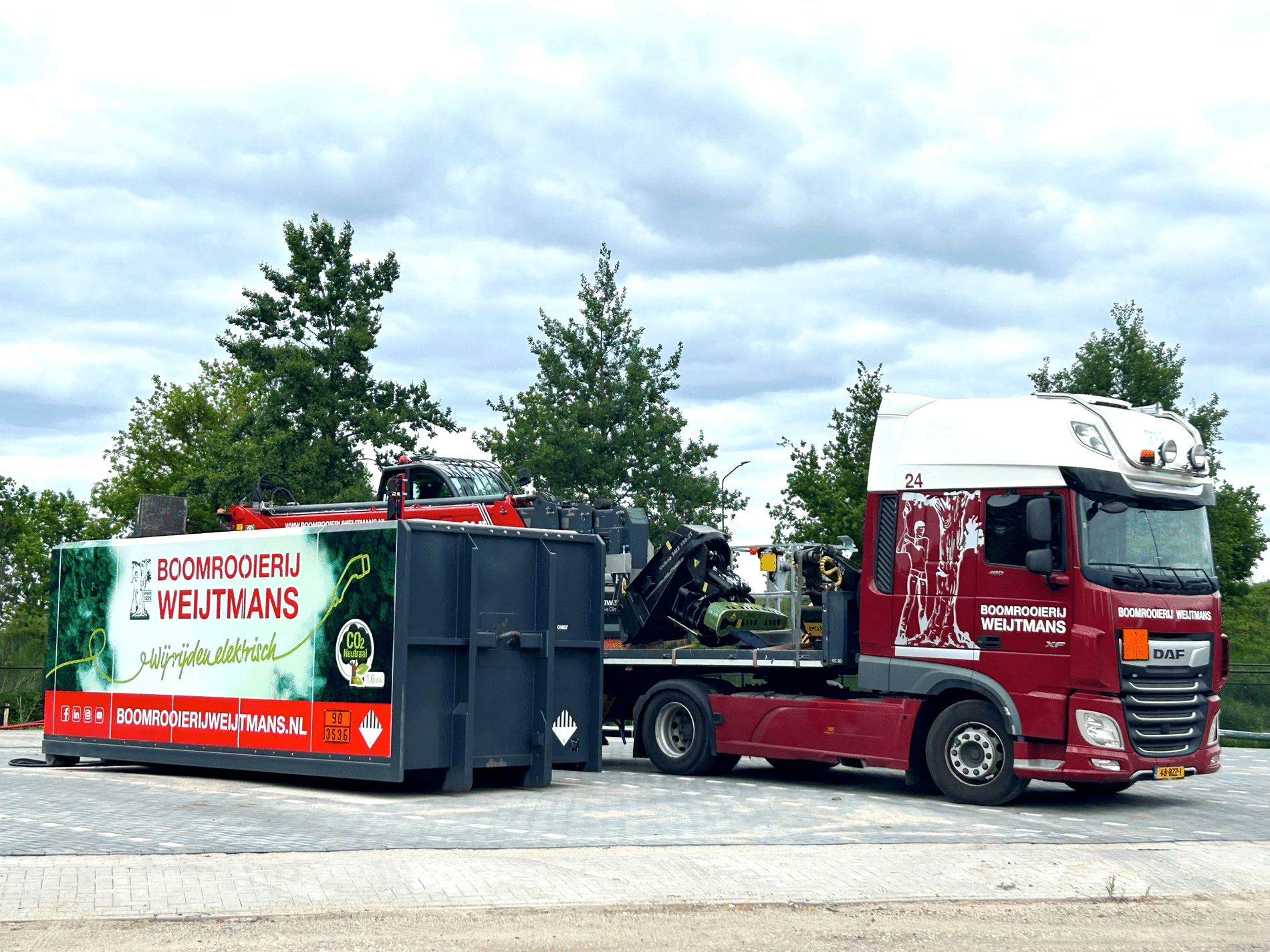
In addition to operating with zero emissions, Boomrooierij Weijtmans is strongly committed to circularity. The company processes tens of thousands of metric tons of wood annually from its own projects and strives to utilize these materials in the most high-value ways possible. A notable example is Peppelhout, an initiative in which poplar wood is processed into full-fledged structural lumber. “Poplar wood used to be considered a low-value material,” says Kees. “But thanks to a special treatment, it has now become an excellent building material.”
In addition, he sees a clear trend toward certified forest management. “We’re trying to convince various organizations that wood from urban areas can also be PEFC-certified, so that its origin and sustainability can be verified.” This adds value to those wood streams and ensures much greater transparency throughout the supply chain.
For Kees, the overarching theme remains clear: sustainable business practices with a long-term perspective. “A bright future means leaving a better world for our children.”
Like many technical companies across various sectors, Weijtmans is also facing challenges in the labor market. That is why the company is investing heavily in hands-on training through mentor-apprentice programs and BBL training programs. According to the entrepreneur, interest among young people in technical and hands-on professions is on the rise again. “I’m glad to see that more and more young people are once again choosing technical training and want to work outdoors and with their hands. And thank goodness for that…”