[00:03] Introduction and topic of the episode
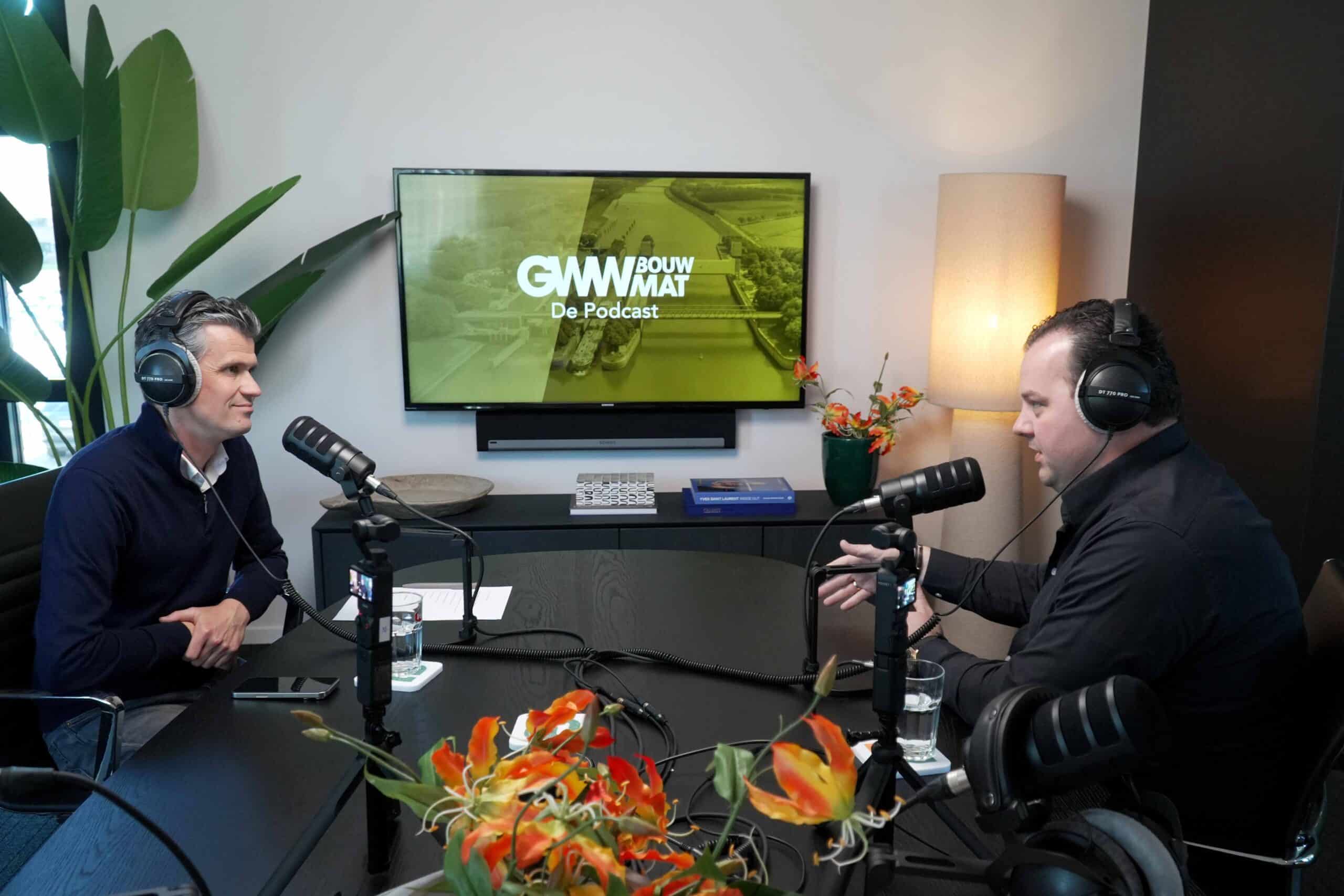
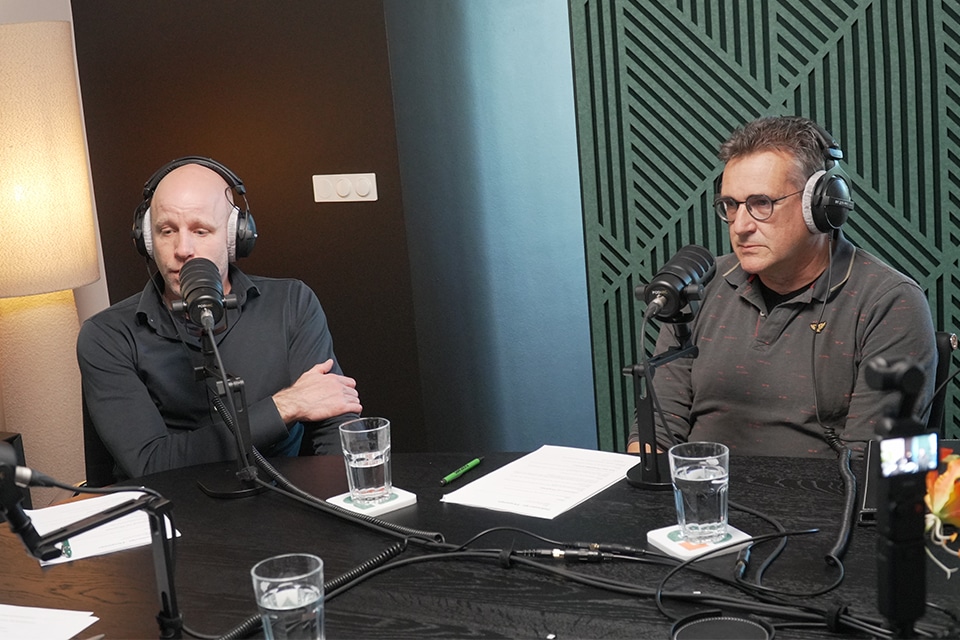
Roel van Gils: Welcome to yet another episode of GWW Bouwmat, the podcast. Today we take a look into the world of temporary pump installations, water management and smart solutions for an increasingly complex infrastructure. Because water, it should always keep flowing. But what if it doesn't flow naturally for a while? Yes, what then? That's what I'm going to talk about today with two experts from Flexpumps. A relatively young company that in a short time has built up a solid position in the Netherlands, Belgium and Germany. Gentlemen, welcome. Introduce yourselves.
[00:32] Introducing Marc Lautenbach
Marc Lautenbach: Thank you. I'm Marc Lautenbach, director of Flexpumps since 2021. I direct the day-to-day operations. We try to get the people to the right job, to bind the customers to us. That's working out better and better. We started with four people, now we have 11. And we are still looking for new employees.
[00:57] Introduction by Michiel de Vet
Roel van Gils: Look, we might come back to that later. And next to me Michiel.
Michiel de Vet: Yes, Michiel de Vet. One of the initiators of Flexpumps. As a drainage company, we noticed that we had too little knowledge. Well, materially, because as a drainage company you often get some overpumping work assigned to you. Enterprising as we are, we then set to work. And we are going to do it. And eventually you are left with equipment. Which we actually needed a new destination for. Together with a colleague crusher from the Netherlands we looked for a destination for the work and the equipment. And that's how we came back into contact with Marc and eventually founded Flexpumps.
[01:43] Origin of Flexpumps
Roel van Gils: Yes, because can you take us back to the beginning indeed, five years ago so actually, 2021 Marc already told us. How did it originate?
Michiel de Vet: Marc and I were in close contact because we were doing business with his former employer. Intensive contact, close contact, very pleasant contact. His former employer decided to put the store up for sale.
Marc Lautenbach: It was sold at one point to a party that I thought of yes, does that suit me? Well, I decided not to continue with a new owner. Then you get into a conversation with Michiel. Yes, what are you going to do then? Yes, I can't do much other than rent out pumps. That's going very well for me. Yes, put the heads together. Caught up with another party, Henk van Tongeren Water en Techniek. Put stuff together and we started running.
[02:43] Growth and first projects
Roel van Gils: Yes, and we're five years on now. Yes. Yes, and already experienced quite a bit of growth I understood.
Michiel de Vet: Yes, those five years that have flown by yes, that's how we should describe them. Yes, indeed. As I explained, especially with Henk van Tongeren Water en Techniek we were able to get a reasonable fleet and equipment together pretty quickly. Well, and that in combination with the knowledge and skills of Marc and other colleagues, we were able to turn that around very quickly by taking on some very nice projects in the market. And with that, we were able to take our first decisive blow.
[03:21] Ter Apel base of operations and working area
Roel van Gils: Well, look at that. And all that from Ter Apel, I understood?
Marc Lautenbach: From Ter Apel, the most talked about place in the news often enough. But for us an ideal base. We certainly grab all of the northern Netherlands with this. But we can also serve the entire Ruhr region with transport within 4.5 hours. That just means that our drive time compared to others is sometimes a bit more favorable.
Michiel de Vet: Yes, 4.5 hours may seem long, but where Flexpumps builds installations that stand for weeks, if not months, that require a certain amount of dedication also for a good, efficient, but certainly also a very reliable assembly, 4.5 hours is really negligible. In this way, we can easily serve a large part of our working area in order to provide our customers with our installations and craftsmanship.
[04:18] What Flexpumps does
Roel van Gils: Yes, because you already mentioned some examples, but if you can make it concrete, what should I think about? So you guys rent out temporary pumping equipment?
Marc Lautenbach: We rent out temporary pumping units used when pumping sewage or surface water. We have a number of industrial customers that we serve when they have cooling water problems or other issues that require pumping. Actually there is all types of water that we can pump, we are quite willing to provide a solution for that.
Roel van Gils: Yes, so from sewage water to industrial water and everything in between. But always water.
Marc Lautenbach: Always water.
[04:57] Work for power plants
Roel van Gils: And I understood that you even work for power plants?
Marc Lautenbach: Yes, we have a number of customers in Eemshaven where we are allowed to show up on a regular basis. Because they have another cooling water problem or they have temporary stops where the plant is partially shut down. Yes, we've been serving those for years. And actually from 2021 we had those directly in our portfolio.
[05:22] Type of projects and minimum duration
Roel van Gils: And you guys, the focus is on specific sectors then actually?
Marc Lautenbach: I actually always find the most beautiful work, which is what I call the rounds around the church. Those are the sewer pumps at sewer pumping stations that are being temporarily renovated. That's a short action. Often about three or four weeks and then you're done again.
Roel van Gils: Because is there a minimum?
Marc Lautenbach: Customers should not come to us saying, "Can I have a pumping system for two hours? I handle myself a bit like it is so complex. We have to have time to prepare it properly. At least a week is the minimum I would like.
Michiel de Vet: But that's also what customers want. Our kind of installations, apart from the separate rental of a dirty water pump or a surface water pump. These are often complex installations that can be remotely controlled, monitored and regulated. That just requires a certain commitment in installation and maintenance. So these are often not installations that are only used for a week or a day.
[06:32] Complete installation and telemetry
Roel van Gils: No, because you also clearly talk about installations, so it's not just the pumps.
Marc Lautenbach: It's the complete picture. We build the pumps, including the necessary piping needed to cover the distance. We control all that with a telemetry system, so we can monitor everything remotely, make adjustments. If a few more centimeters have to be removed, we control it remotely. Faults we can actually tackle remotely.
Michiel de Vet: That can be done in a wet setting, so dipping pumps. But we can also set up pumps dry, equipping them with a vacuum system. So yes, everything is possible. In the broadest sense, a lot is possible.
[07:14] Design and energy efficiency
Roel van Gils: But the design of that setting or that installation, that lies with the client then actually?
Michiel de Vet: Partly.
Marc Lautenbach: The customer has a question, yes, we translate that into an installation where we just think about what is exactly what you want and how can we best solve it technically. Yes, and then we are very focused on equipping the installation so that you use as little energy as possible. That's just especially now with these kinds of diesel prices and costs. So we try to arrange them in such a way that we can use an existing power connection, select the pumps in such a way that it can be done, piping accordingly.
[07:53] Technical considerations in installations
Michiel de Vet: Yes, ultimately the question is move a certain flow rate from A to B and then the game actually begins. What is available in terms of power supply? Can we get the volumes that need to be moved from the conventional power grid? Or do additional measures need to be taken there? Is it in a wet setup, is it in a dry setup? How much piping is behind that? Is the ductwork at elevation? There are a lot of factors that determine what is the smartest and most efficient way to wash this piggyback here.
[08:31] Acquisition of Flex tube and expansion of operations
Roel van Gils: Yes, and speaking of piping, you are already making that bridge indeed. You guys also incorporated Flex tube pretty quickly I understood.
Marc Lautenbach: Yes, it came our way. The former owner wanted to retire. The favor factor was with us. It was also a good fit in terms of the name.
Roel van Gils: Yes, it seems like it does indeed belong together. Match made in heaven.
Marc Lautenbach: Yes, Flexbuis really had been around for decades. He always had his own clientele, but it was a great fit for us. We also did business with him.
Roel van Gils: You also involved the piping systems for your plants there?
Michiel de Vet: Yes, we and with us I think half of the draining Netherlands. They had things you don't buy as a drainage company.
Roel van Gils: One-time or more.
Michiel de Vet: Indeed, because it is not necessarily current equipment. And as I said, the best man wanted to quit. We saw an opportunity there. Had a use for that, could immediately use the pipe work ourselves for our own projects. But still rent to many of his customers at the time.
Roel van Gils: Oh, you just took those too?
Michiel de Vet: Yes, because essentially little has changed. It's just still about the same materials. Only now we can offer the service of installing it as well, if necessary. Which didn't happen much before. We can also install the piping.
[09:54] Stock and special applications
Roel van Gils: That applies to all projects? That you guys provide that extra service?
Marc Lautenbach: Yes, there is always that possibility. And all of a sudden, of course, you get a very large inventory of pipes with that acquisition. Yes, absolutely. At least it ensures that we don't miss much ourselves. So we can make our own projects with our own equipment. You no longer have to hire externally and you still continue to serve Flexbuis's customers.
Roel van Gils: And you indicated, they also have some specials then. Do you have some examples of those?
Michiel de Vet: Yes, and there are some different names prevailing in the market in the Netherlands. Water barriers, crossing structures. What it's really about, we cross with pipelines, both pumping people but also the overpump people, we cross roads, bike paths and so on. It already goes to air, but it would be more efficient if we could keep it at ground level because of resistances and pressures. So an override structure has been devised for that, leading it through a sort of speed bump and then to the other side of the road.
Marc Lautenbach: Yes, these are so robustly constructed that I always say, you can run a Leopard over them, and nothing will happen. They are simply equipped for 50 tons of heavy traffic.
Roel van Gils: Okay, that's hefty.
Marc Lautenbach: Yes, and then with the relatively long curb ramps that it doesn't bother traffic that much.
[11:17] Personnel and growth
Roel van Gils: Okay, you started 2021, four people. By now there are 11 of you. Still looking for others?
Marc Lautenbach: Yes, still looking for hands.
Roel van Gils: So what should I think about?
Marc Lautenbach: Just people who know approach, who say with a clear mind of what does the customer want? I'm going to solve that for you. We install the pumps, the electricians will connect that, but then people who can lay the piping.
Roel van Gils: Especially the people in the field then are you actually looking for?
Marc Lautenbach: Yes, actually people in the field, but also good diesel mechanics that you don't actually find. We do try to run electric as much as possible, but we still have a number of diesel-driven pumps. Those also require maintenance. But you just don't find many technical people right now.
Roel van Gils: Yes, that's a recognizable problem I think in engineering.
Marc Lautenbach: Yes, we are not unique in that.
Roel van Gils: And what do you offer?
Marc Lautenbach: A very nice working atmosphere, I think. Dare I say. We have a nice, close-knit club. A lot for each other. Yes, salary is always... yes, that's negotiation, but I don't think we send the wrong signal with salary there.
Michiel de Vet: Just market-based, but above all a very flat organization. So short lines, a lot of mutual understanding. Understanding for long days when necessary, but also taking it easy when possible. Yes, and that way together you get a very pleasant atmosphere on the shop floor.
[12:54] Market and clients
Roel van Gils: Because your ambition is to grow even further, that space is there?
Marc Lautenbach: Yes, I think we are now limited in our growth by the number of people available.
Roel van Gils: Because if we zoom out for a moment, what exactly does your market look like?
Marc Lautenbach: What are our clients? Contractors who renovate sewer pumping stations or lay sewer pipes in the ground. Yes, is it us knows us too. Yes, it's just a small market. We have a number of water boards where we have an emergency contract. The moment there is an emergency we have to be able to act within 24 hours and have things fixed. So that's a big one. But also the big dredging companies, Boskalis is a big customer of ours. Industrial customers.
Roel van Gils: So there are few players who also have such a capacity or such a sortiment?
Marc Lautenbach: There are seven players in this market in the Netherlands that count.
[13:56] Distinctiveness
Roel van Gils: And where do you differentiate?
Marc Lautenbach: Because we are such nice people, we always say ourselves. We try to come up with a good solution that is affordable, that works. We monitor our installations ourselves, and we can also give customers access to our monitoring system so that they can watch themselves at home. This does distinguish us from the competition. In addition, short lines of communication; for a customer, this flat organization that can switch quickly and act immediately when necessary is of great value.
Michiel de Vet: Yes, ultimately everything with us is a total solution. We take care of everything. So the customer comes to us with a problem, which may or may not include a suggestion of how they would prefer it to be. But ultimately we can come up with a concept that takes care of the customer from A to Z. But especially in a very short period of time. Quick turnover, which is occasionally desirable in the case of calamities or climate issues. The fact that we just price out specifications for contractors or for governments or for water boards. It's a very broad customer base.
[15:19] Technology and innovation within Flexpumps
Roel van Gils: And then where is in your technical strength? If you look at technology, innovation, smart pumping, you just mentioned of course. Are there other things?
Marc Lautenbach: Our controls are fairly unique. We can reasonably customize our control very quickly. We program our own PLCs. We employ programmers who are simply very good at pump technology, but who can also translate customer requirements very quickly and adapt our software. So that we switch on those things that the customer wants, but also can connect signals to existing installations, so that they can watch what we are doing on their own platform.
Roel van Gils: So basically a smart, self-thinking system?
Michiel de Vet: Yes, but we also don't shy away from thinking out of the box. We always talk about pumps, and with pumps we immediately think of a water pump that moves water or volumes from A to B. We also think of a vacuum pump. A vacuum pump is also a pump. So a siphoning system where you use communicating vessels, just laws of physics, is a very energy-efficient system that can do incredibly large volumes at very low energy consumption if you make the piping big enough.
[16:30] Siphon systems explained
Roel van Gils: Yes, siphoning, explain, what does that mean?
Marc Lautenbach: The moment you have only a slight difference in height between the volume flow that you have to pump, or actually normally going to pump, you can siphon it with a very slight difference in height through the vacuum system. What we used to do with the little moped and the little hose to slurp the tank empty, we apply that wholesale.
Roel van Gils: Yes, that principle wholesale.
Marc Lautenbach: And you can just do that with so little energy, but move huge volumes. That's just really interesting right now.
Roel van Gils: So also more sustainable in that sense.
Michiel de Vet: Yes, absolutely. And certainly in the wastewater system, where more and more wet wipes and other contamination of the normal, already dirty sewage occurs these days. It's an open pipe system. There's no turning work in it. It's just an open pipe from A to B that is going to move water by means of a difference in elevation on the inlet and outlet side as long as that pipe is under vacuum.
Roel van Gils: So less chance of disruptions you want to say?
Marc Lautenbach: Yes, virtually no failures. Actually just not.
Roel van Gils: Is that used a lot or do people think about that?
Marc Lautenbach: The customer often doesn't think about it. Then we have to give them the idea. We always look at what the polls are, whether it's possible. And then we try to create that added value.
Michiel de Vet: There are some factors behind whether it's applicable. But if those signals are green, we feel it's always our job to consider that along with it. Could this be a solution for you guys?
[18:09] Boundary conditions for siphon systems
Roel van Gils: And what are those factors?
Michiel de Vet: What I'm saying, the inlet and outlet level, space. Because when you're talking about large volumes, when you're siphoning, you're also often talking about large piping, large diameters. So there has to be room for that. And that's basically it. If you're very honest, you need an inflow system. You need some space for that. So in the bed of a ditch or a river or a waterway, you need to build some. You need to do that on the outflow side as well. So a siphoning system with that data is often not for a short term either. It actually has to run a little bit longer. But if those factors are favorable, then it's certainly a system that should be considered.
Roel van Gils: And can you also monitor that system remotely? Or can you adjust less in that as well?
Marc Lautenbach: No, we can determine the inflow and outflow levels from that as well. We measure the flows what we siphon. We just put flow meters between everything. We can actually do everything we do with a pump, we can do with a siphoning system as well.
Michiel de Vet: You could even use a valve to regulate the volume flow. So determine how much water you let flow from A to B.
Roel van Gils: Okay, yes.
Michiel de Vet: Yes, nice system. Nice addition to the pumping thing as well.
[19:32] Practical examples of siphoning systems
Roel van Gils: And can you cite some concrete examples of that from a system that is somewhere in the country right now, for example?
Marc Lautenbach: We had a very large one a few years back in the Achterhoek. There we pumped 7200 cubic meters per hour. And in the past I had a very large installation with De Vet in Duren.
Michiel de Vet: But currently, and I think this is a good example, a dam complex in Duisburg is being renovated. There we have two siphons on both dams which ensure that in the event of a calamity, which would make the dams unstable, the construction pit is filled with 15,000 cubic meters per hour. So in 20 minutes, we can bring a water level equal to the water level of the Rhine, which will equalize the inner and outer pressure of the dam walls, compensate for it, so it would not become unstable. Totally equipped with an alarm system, so online we can monitor everything. We see all day long what all the levels are in the Rhine, in the Ruhr, in the construction pits. So yes, everything is monitored and everything is also signaled with alarm values. The moment the Rhine starts to rise during heavy snowfall or heavy melt water discharge, we have certain limit values. We see the Rhine is reaching its maximum in the coming hours. Then we will remotely open the locks. We verify that the construction pit is empty of equipment and people. And then we are going to fill the construction pit.
Roel van Gils: So it's not purely for calamity, it's also really as a precautionary measure?
Michiel de Vet: Yes, at a certain Rhine water level that is so high with an empty construction pit in the middle, the pit is no longer considered stable and we have to fill.
Roel van Gils: Has that occurred?
Michiel de Vet: Seven times. Seven times already. Filled seven times since 2023.
Unidentified speaker: Yes, and he's standing there for a while. We're only at weir field 1.
Roel van Gils: And how many more will follow?
Michiel de Vet: Three more, if all goes well. Those will now be done at once next year.
Roel van Gils: So, well beautiful.
Michiel de Vet: We hope to participate again.
[22:04] Water congestion and future challenges
Roel van Gils: Okay, let's bridge the gap. We were just talking about energy challenges. We hear a lot about grid congestion. But I also understood that you guys have coined the term water congestion. What do you mean by that?
Marc Lautenbach: There is new legislation coming in from this year. You mean the Water Framework Directive? Yes, and that's going to have quite a few consequences. It means that a number of drainage companies that are currently discharging into a waterway somewhere may soon no longer be allowed to do so and will have to return it to an aquifer. It will really have consequences. So I see the necessary challenges ahead.
Michiel de Vet: Yes, the market is going to notice a lot of this, but these are also opportunities for us to capitalize on that again. Especially with Flexbuis. Pumped water will probably be returned to the ground somewhere. That can be done over longer distances, which in turn gives us opportunities for renting out pipe work with the corresponding fittings and possibly specials. But the entire water system in the Netherlands is under pressure. Sewer systems have to be replaced. There is just a lot of attention for that. A lot of effort is being put into this. So there are great opportunities there for us.
[23:12] Drought, water management and additional uses
Roel van Gils: But also in dry conditions, of course.
Marc Lautenbach: Yes. We have that with a number of water boards as well. At the moment in extreme drought that we have to pump up. That means we bring in water from the IJsselmeer. That is pumped with large pumping stations towards the Groninger country and at a lot of dams where there is no capacity or insufficient capacity we place pumps. In any case, this is to ensure that the industry on the waterways has sufficient water.
Roel van Gils: Cooling water you mean?
Marc Lautenbach: Cooling water or process water, but also farmers who need to spray. That's also a fun business.
Michiel de Vet: Look, the water boards are of course fully committed to combating desiccation and humidification. So yes, there is indeed already ... there is a balance there as well.
[24:02] Energy consumption and grid congestion
Roel van Gils: Yes, absolutely. And if you look in terms of energy consumption, are there any developments in that or is that reasonable...
Marc Lautenbach: Yes, we try to use as little energy as possible by selecting the right pumps, piping and things like that. That makes it all kind of interesting. But we do notice more and more that problems pop up on the power grid, that there is insufficient power. Then fortunately we have a partner in Apeldoorn who makes generators available for a friendly fee. Then we try to do it that way. Then we do try to run it so that we do the low supply that there is always, we always talk about dry weather and rainwater runoff, that we do the dry weather runoff at least with the available power solution. And as more is demanded that we turn on a generator.
Roel van Gils: That you actually use the aggregate as little as possible.
Marc Lautenbach: Yes, that just saves a lot of emissions, diesel consumption. Just try to shift as smartly as possible with the available power we have.
Michiel de Vet: Then again, that's an intelligent system that determines when the water level starts to slowly rise. It calculates, okay, if this continues like this, in x period of time I will reach a level that I can no longer organize from my normal power grid. Those pre-signals go to the energy management system. It starts bringing the generators up to speed. The generators are up to speed the moment the pumps have to start running. And then it starts communicating with each other.
[25:48] Future vision and sustainability
Roel van Gils: And do you create that software yourselves or is that all in collaboration?
Marc Lautenbach: In collaboration.
Roel van Gils: Okay, well sounds good that development all. And looking to the future, where do you guys want to go? What are your ambitions?
Marc Lautenbach: I already think I'm the greenest landlord in the Netherlands. I think that has to do with something. Yes, we have chosen Kawasaki green as our corporate color. That's quite a bright color. It stands out in the landscape. But that's madness, of course. We just want to be a green rental company where we think along with our customers. As energy efficient as possible. Being able to offer the right installation.
Michiel de Vet: But you have to work sustainably. If you don't work sustainably, then you're not ready for the future. Then you won't be able to keep up in the near future. So there is definitely a focus there.
[26:27] Growth potential and cooperation
Roel van Gils: If we then look at the trends or developments that you see, or where are there still opportunities perhaps for companies?
Michiel de Vet: I think our growth potential is mainly in expanding the equipment. So making sure we are even more widely deployable. But well, that requires good hands. Yes, there are volumes that we just can't handle at the moment. Five years is a very nice milestone. And we are extremely proud of what we have achieved in those five years. But there is definitely more growth potential. And also in the volumes that should be able to be pumped. Where we could simply still develop.
Marc Lautenbach: That is true that we do have a partnership with a number of competitors.
Roel van Gils: Yes, that makes it special, too.
Marc Lautenbach: Yes, they are competitor colleagues. They occasionally have requests that they think are too small, they throw that over the fence with us. The moment we have the big things on our plate, we approach them again. We also had a calamity in the fall at a water board in the north of the country. There, all minute 15,000 cubic meters per hour had to be placed. Then I call in my friends, as I always do. They just acted very quickly. Within six hours the first trucks were loaded. The next morning we started building and it was running by the end of the day. But those were just volumes that we didn't have in place ourselves at that time.
Michiel de Vet: No, so indeed sometimes you just don't have all of your equipment in stock, where you can then respond directly to a demand from a potential customer. So better with each other than against each other. And in that sense we do have a number of colleague companies that we can work with, that also want to work with us. And also through the participating companies we have quite a nice network in the Netherlands. Also in the field of placing installations within a certain time frame. This enables us to switch very quickly.
[28:41] Closure and core values
Roel van Gils: Yes, because sometimes it has to be really fast indeed in case of emergencies. And where, if we were to conclude, do you really make a difference? Shall we summarize a few lines on that?
Marc Lautenbach: Thinking along, problem-solving. And putting the total picture down. Not just saying you have to have these pumps, come and get them. You have a problem, we can solve that problem for you and we do that from A to Z.
Michiel de Vet: I think also for our colleagues ownership. They are so involved, they want to solve that problem for that customer. No 9 to 5 mentality. Not dropping stuff at five past five and going home. No, we're going to get this problem ready now, we're going to solve that. And ultimately that results in a high level of commitment and quality. Going for the best result.
Roel van Gils: Okay, thank you very much. Thank you for your insights, for coming and good luck moving forward.
Michiel de Vet: Thank you very much.
Roel van Gils: Listeners, thanks for listening to GWW Bouwmat, the podcast.