Platform on civil engineering, underground infrastructure, energy, construction equipment & construction machinery
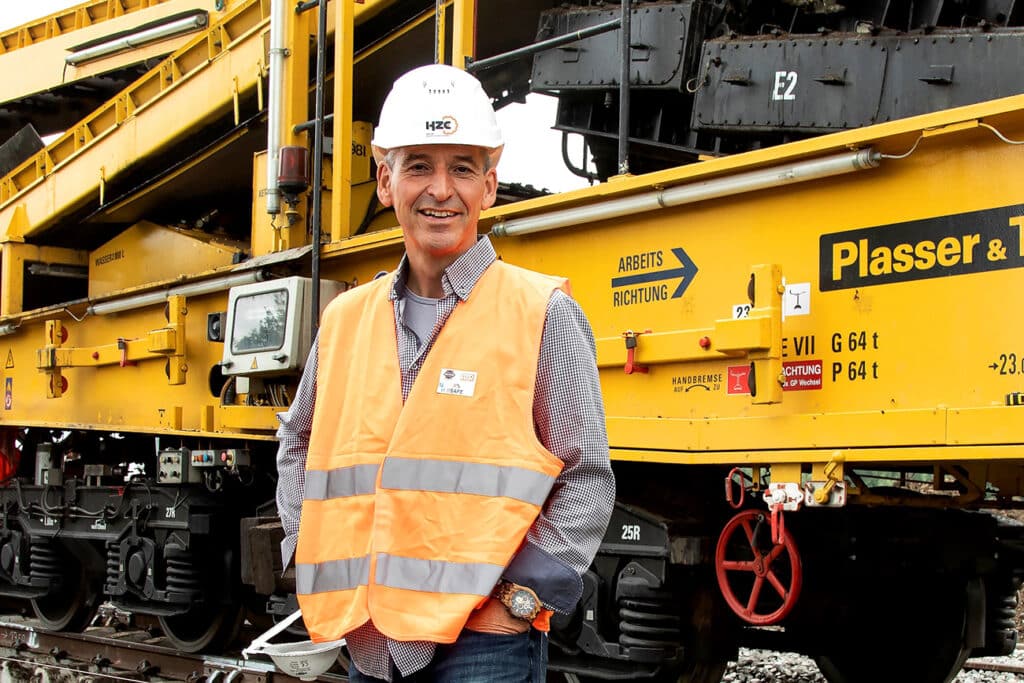
Chris van Veldhuizen – Director-director of trade union The Black Corps (HZC).
As a union for personnel in construction, infra, cultural engineering and transportation, among others, HZC follows the sector closely and finds more and more connection to developments that are going on to innovate it. That's great to experience up close. I have been in office for a year now and have been surprised by the beauty and versatility of our industry. It really is an exciting world, with a lot going on. It's a challenging time, unsettled too. Routine and stability usually lead to quality. The complexity that prevails now makes it difficult for everyone to do the job well. Our mission is to ensure quality and continuity of work and income for our constituents. This is not just about income and remuneration components, but also about things like work experience, safety and health. How are things organized on site? Is safety not an issue? Have things been optimized with regard to comfort and ergonomics?
By safety I also mean social safety; daring to call each other to account for unsafe behavior. That has to be widely accepted. Everyone thinks safety is important, but they do it in their own way. It is time to share the knowledge we have gained and to learn from each other. That way, bigger steps can be taken. This also fits well with our slogan: Together = better for you! Following the example of our Talking Cafés at companies, HZC wants to organize a large round table in the fall to achieve better mutual coordination. There is a certain distance between policy and rules on the one hand and implementation or follow-up on the other. This also has to do with a certain attitude and culture within the industry. Having been a manager of a training institute for thirteen years, I know that a different approach is needed to change attitudes and behavior than to teach knowledge and skills.
Another important issue is the environment. We are held in a grip by nitrogen rules, emission calculations and Natura 2000 areas. There is a huge pot of money available of 24 billion euros to accelerate the transition, but it is unclear how this amount will be spent effectively. Construction companies are worried whether the continuity of work is not at stake and with it the future of their workforce. This inhibits the investment climate, while digitalization is taking place at all levels in construction. Machines are becoming increasingly computerized. Working with screens requires different competencies from the operator. Digitalization definitely offers opportunities to increase the influx of young people, it makes the sector more fun and interesting. Dealing with new techniques often means working more with the head than with the hands. Of course, it is still dealing with equipment, so that always requires a certain amount of manual dexterity and especially skill.
On the other hand, it can also make entry more difficult. In addition to being able to work with computers, standard skills still apply and the operator must develop a certain practical sense. Craftsmanship is key. A fundamental solution may be to automate and mechanize work. We used to be vehemently opposed to this as a union, but now it is the direction in which we must develop as an industry to reduce work pressure and workload. Think of the masonry robot or concrete printer. A lot is already possible and is mainly a matter for contractors to decide to invest. That threshold seems - partly motivated by uncertainty - still too high for many companies. In any case, we hope to make a constructive contribution to this discussion. HZC is increasingly demonstrating its ability to add value from knowledge and information to help the sector we all love move forward.