Platform on civil engineering, underground infrastructure, energy, construction equipment & construction machinery
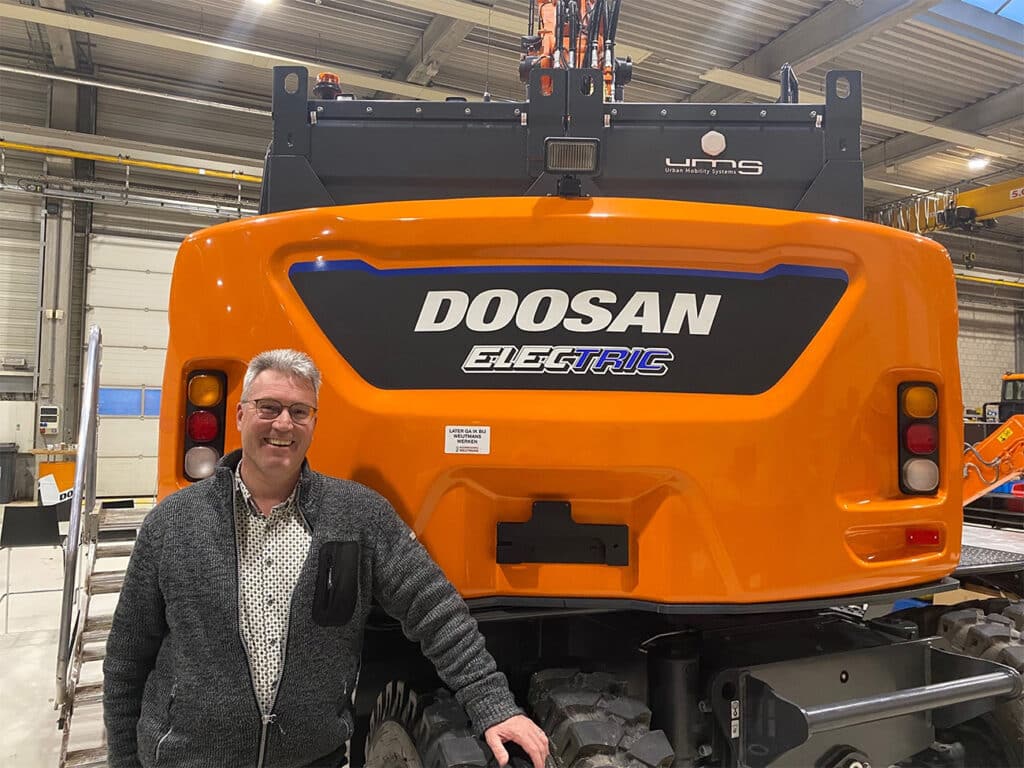
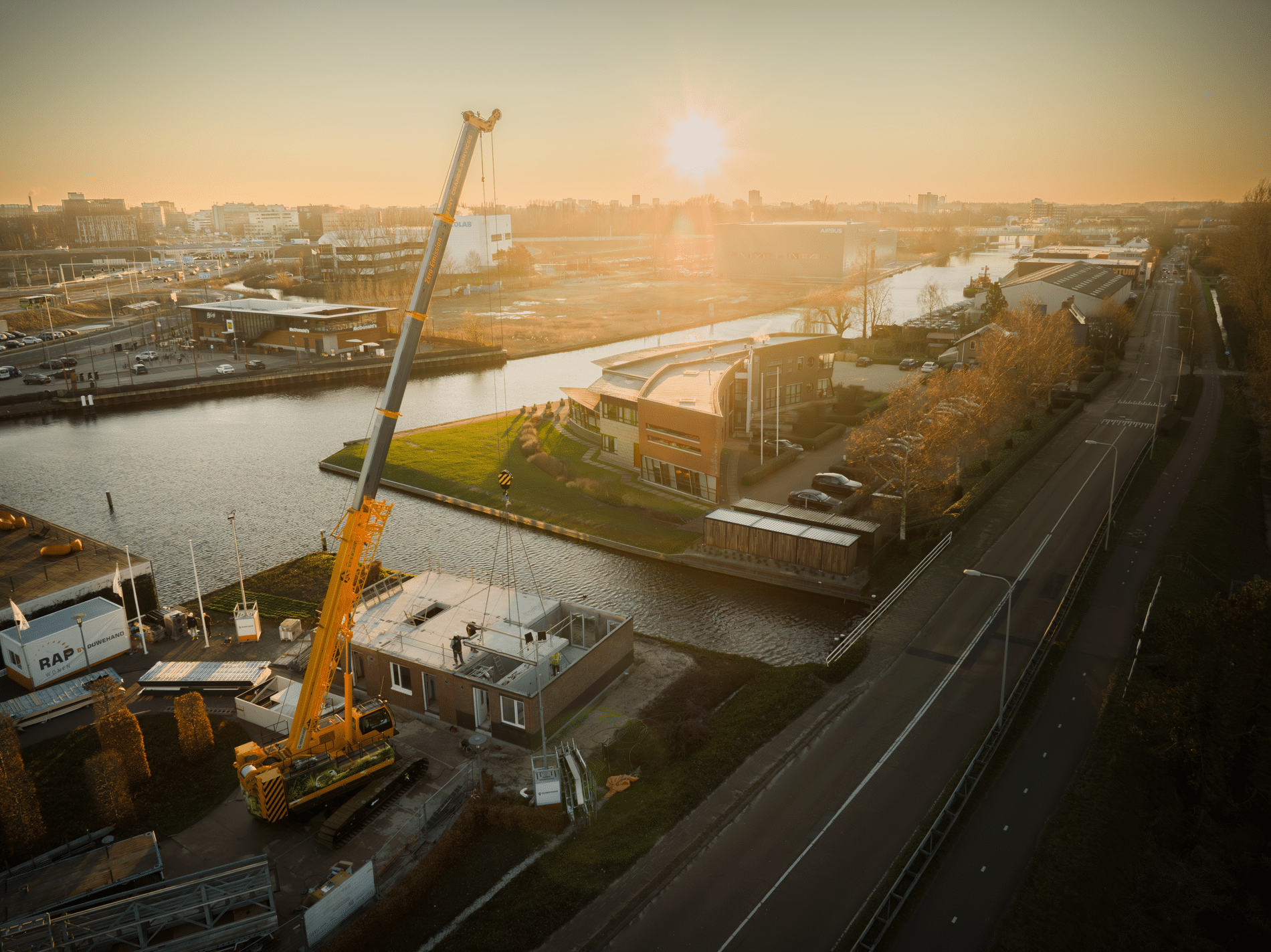
My forefathers started tree lifting Weijtmans over a hundred years ago with a horse and a so-called jig. Of course, these have long since been replaced by modern equipment. Indeed, we continue to invest in our machinery. Not least because we want to be as sustainable a company as possible. For that reason, our first fully electric mobile crane went into service this year. We will continue to invest in further electrification of our equipment in the near future. This will not happen without a struggle. I now know from experience that there are still far too few possibilities to recharge electric equipment. Moreover, our energy network is currently not at all ready for very many additional charging points. Despite these obstacles, we remain highly motivated to take the necessary steps towards emission-free work.
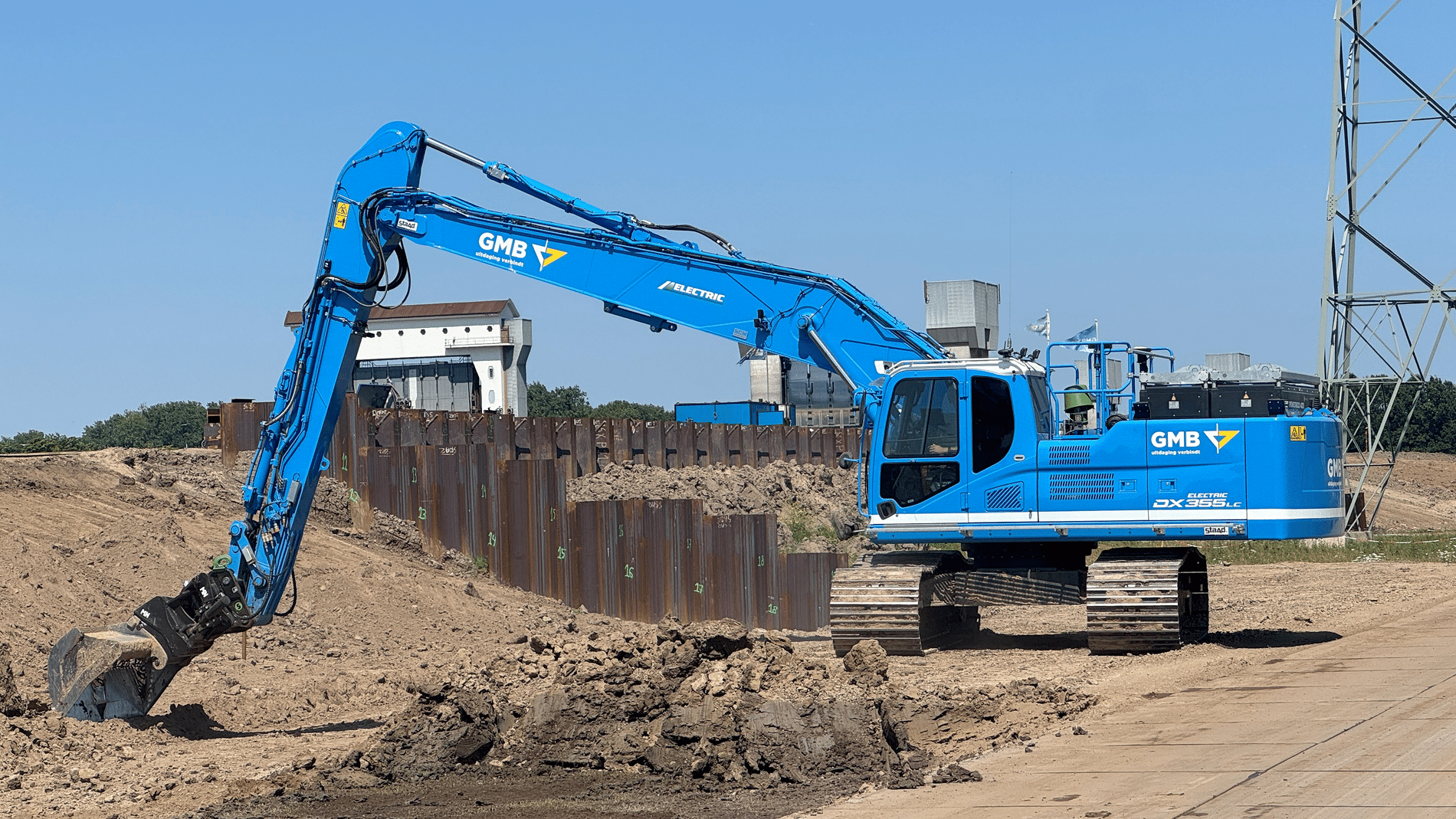
Following the commissioning of a sustainably built and climate-neutral business complex in 2019 - whose roofs were recently equipped with some 1,000 solar panels - Boomrooij Weijtmans is hereby committing yet another act to environmentally friendly and emission-free business. It is yet another action to emphatically proclaim that the time for talking about environmental care is over. Now is the time for action! Our Doosan DX165W Electric was delivered by Staad and is the first electric mobile excavator in our sector in the Netherlands. The investment was supported by a grant from the Demonstration of Climate Technology and Innovations in Transportation (DKTI) fund and stems from the national initiative The Construction Site of Tomorrow. Within this consortium, GWW contractors are working with suppliers and TNO to take structural steps to significantly reduce CO2 emissions from construction machinery.
We like to take the lead in this, even though I notice that the Netherlands is not quite ready for it yet. For example, the capacity of the electricity grid at our Udenhout location had to be expanded and the transformer house on the company premises upgraded to 3×250 amps. It has become clear to me that sustainable business goes hand in hand with a lot of patience and long-term thinking. Those who realize this also find the motivation to take these kinds of hurdles. By working emission-free, the environmental impact decreases immediately. In addition, an electric excavator causes considerably less noise pollution for local residents. This is a perfect match with the policies of municipalities, provinces, water boards and the Department of Public Works. When choosing suppliers, (semi-)government agencies are becoming increasingly critical with regard to the emission values of the work equipment.
Sustainability is deeply rooted in our company's DNA, which makes the purchase of an electric tire crane a logical step in the context of CO2 reduction and emission-free work. That investment provides immediate benefits. Let this be a piece of advice for business owners who are hesitant about electrifying their equipment. It is a question of decisiveness; we really have to take action now. To start with, by setting up adequate incentive schemes. The fact that the EUR 3.3 million SEB subsidy was oversubscribed on day one makes it clear that much more money is needed. If twenty to thirty emission-free machines can be purchased with this, it is a lot. This is no way to win the war and our government is leaving many well-intentioned entrepreneurs out in the cold. In my opinion, it costs even more to set up such a scheme than it actually costs in terms of subsidies. ■