Platform on civil engineering, underground infrastructure, energy, construction equipment & construction machinery

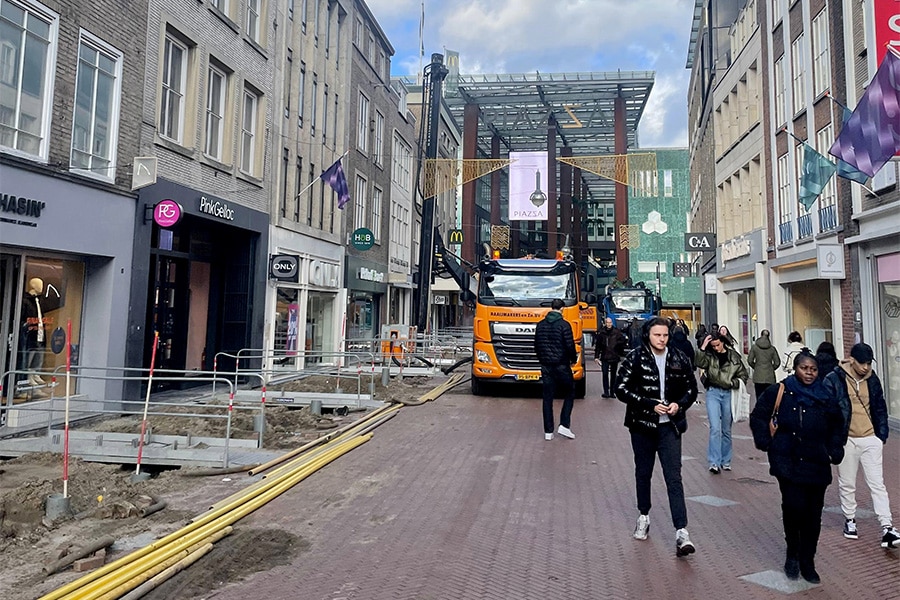
"We need more housing, we need more road infrastructure, our power grid needs to be adapted to today's energy demand and return, and we need drainage systems that are climate proof. In short: the Netherlands needs a makeover." Speaking is Harold Lever, Chairman of the Department of Underground Networks and Groundwater Management at Bouwend Nederland. "That has less to do in rural areas than in our big cities. Indoors, everything under the ground is full. That has a big impact on the way work has to be done. The corona period brought the sector a lull in which work could be done without causing too much disruption, however, now that everything is open again there will have to be a break from the 24/7 urban activity in crucial places.

With the huge task in underground work ahead and the related bottlenecks in inner-city areas, Lever believes there are two approaches to choose from. "That could be the 'big bang' tactic, where we work as quickly as possible, with inconvenience, but through tight planning with a clear end date in sight. With the right environmental management involved, less inconvenience can still be ensured within that framework, but that there will be pressure on the environment is a fact. An alternative is to make projects completely subservient to the environment and take a long time, but with a minimum of disruption every day. It will also depend on the environment and the nature of the work which method is preferable."

For Lever, it's clear that the latest trenchless techniques are already a huge win when it comes to preventing inconvenience. "Add to that the trend of making equipment smaller and smaller while maintaining performance and you have a win-win situation. Wherever possible, we can already work trenchless within a very limited space. That's ideal for inner cities, of course. The inner-city issue has been a catalyst for making infra more sustainable. Smaller equipment, vibration-free work, electrification, you name it. Incidentally, the province of Brabant is the absolute leader when it comes to sustainable procurement, in both urban and suburban areas," Lever said.

"In some places, the elasticity of the subsurface is nearing its end. Quite paradoxically, the work is becoming more expensive, more complex and slower, while the energy transition demands more and more speed. New construction of energy networks is now the biggest task. In addition, the work of replacement is increasing in the medium-voltage area. Higher capacity is needed namely in the connection network. Power return and an increasing energy demand are the cause of this, think of the charging of electric cars for example."
Network operators need to properly map where their cables are located and submit accurate data to the Land Registry, according to Lever. "Groundworkers must also become more accurate in their reports. The non-invasion techniques are getting better and better, but if the map is incorrect you are still digging test trenches. A shame! We have wonderful digital tools nowadays to retrieve data, report changes and keep everything up to date. More attention should be paid to the accuracy of registration. Meanwhile, great strides are being made by standardizing data; the Land Registry is actively working on this. Accuracy must be demanded in all layers of the project. From drawing office to subcontractor."
Lever hopes there will soon be more clarity on alternative sources of energy, such as hydrogen. "I hope there will be enough green gas and hydrogen and we can use the existing gas pipelines for that. Because nobody knows where it will go with hydrogen and green gas, investors stay away from it. A vicious circle, it seems. Someone has to be the first to confidently put money into these energy sources." There are also concerns regarding our groundwater. Lever: "The Netherlands needs drainage in many places. That affects groundwater levels. However, we can monitor these better and better. The heat/cold systems also call on the subsoil; the challenge for the next few years is to keep groundwater levels up and to ensure that our drinking water is not affected. In short: everything is connected
together and there is still a lot of work to do. By working together we need to form an overarching picture, that's the only way we'll get there."