Platform on civil engineering, underground infrastructure, energy, construction equipment & construction machinery
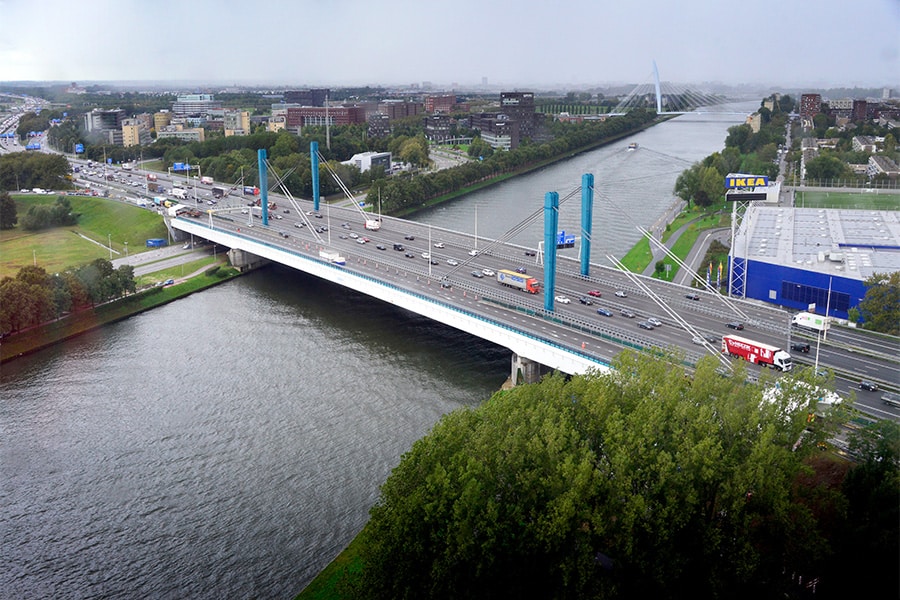
Many of our bridges, locks, tunnels, and roads date back to the period of reconstruction shortly after World War II. At that time, the Netherlands of the future was being built at a rapid pace, with canals being further expanded and adapted to the growing economy. For a long time, it was assumed that many engineering structures would last for generations with regular maintenance. That assumption has proven to be incorrect. The backbone of our economy and society is now showing some flaws. “Decades of intensive use now require large-scale maintenance: preserving what is good, replacing what is no longer adequate, and at the same time preparing for the future. I am hopeful, because repairs are underway,” says Martin Wijnen, Director-General of Rijkswaterstaat.
What once symbolized progress now calls for renewal. “The speed at which our infrastructure is aging is difficult to keep up with,” Wijnen notes. “At the same time, this presents enormous opportunities for the civil engineering sector. Climate change, digitization, and data-driven technologies are developing rapidly and offering new possibilities.”

The Netherlands is expected to grow by two million inhabitants by 2040, and mobility per inhabitant will also increase. “This puts extra pressure on networks that are already heavily burdened by traffic and transport,” Wijnen continues. “New infrastructure must be future-proof: resistant to climate change, circular in design, and energy-efficient in construction and use. But the biggest part of the challenge lies in what is already in place: maintaining and renewing existing networks while traffic and shipping continue. At the same time, working in existing environments is becoming more complex. When replacing a large network link, there is not always room to build something new next to it. Examples of this are the widening of the Juliana Canal and the upgrade of the Galecopper Bridge, where the cables and pylons were replaced and traffic on the A12 motorway was able to continue with minimal disruption. This requires planning, craftsmanship, and smarter collaboration. Maintenance is therefore no longer a ‘maintenance task’, but a complex system task at a high national level, in which the classic client/contractor relationship is giving way to partnership.”
When it comes to vital processes that are important for keeping our economy running, for Rijkswaterstaat this translates into effective traffic flow on the roads and waterways and ensuring water safety. “We live in a very vulnerable delta with two enormous rivers crossing our country, we are facing sea level rise, and our land is still sinking,” Wijnen summarizes the critical factors. “Our task is to keep the system robust. That means investing specifically in maintenance so that vital connections remain available under all circumstances. And there is an important element that precedes this: vulnerability.” Wijnen is referring to natural vulnerability such as storm surges, spring tides, cluster showers, or extreme heat and drought, but also to man-made vulnerability such as cybercrime and sabotage, and finally to vulnerability as a result of age. “All these factors determine how we design our maintenance program: adaptive, risk-driven, and above all, safe. In short, there is work—a lot of work—to be done.”
In the coming decades, the focus will shift definitively from construction to maintenance. “The task is clear: to keep the Netherlands safe, accessible, liveable and resilient by investing smarter, faster and together in renewing what we already have. The challenges are considerable: staff shortages, lack of nitrogen space, permits and raw materials. Nevertheless, there is also a huge opportunity to make a systemic leap forward together,” says Wijnen, who is committed to a resilient and sustainable infrastructure sector that serves as a global showcase for civil engineering innovation.