Platform on civil engineering, underground infrastructure, energy, construction equipment & construction machinery
On March 17, 18 and 19, GW Leidingtechniek will be present at Aqua Nederland in Evenementenhal Gorinchem. As a contractor in underground pipeline construction, we would like to meet existing relations there and make new contacts within the water sector.
The fair is a valuable time for us to present our expertise and innovations within piping technology. Equally important to us is the discussion with colleagues and partners. It is precisely in the exchange of knowledge and experience that new insights and better solutions for practice arise.
Will you be attending Aqua Netherlands? You are welcome to attend at booth C36.
During the exhibition we will present our latest innovation in the field of sewage heat. On our stand we will show a scale model and a video in which the operation and application possibilities are clearly explained. We will be happy to tell you more about it.
Want to learn about this development in advance? Below is the article that previously appeared in the section Construction Makes it Smart of the magazine of Bouwend Nederland.
Innovation is high on the agenda at GW Leidingtechniek. In cooperation with the municipality of Rotterdam, the Helmond-based company developed a new riothermal solution for pressure pipes. Their patented method utilizes heat from sewage water as a sustainable source of energy.
GW Leidingtechniek designs, constructs and renovates underground piping systems, contributing directly to clean drinking and wastewater in the Netherlands. They work sustainably and with modern techniques. According to director of business development Rob Hoogervorst, the market is changing: ‘Clients are increasingly looking for partners who can work in a construction team right from the design phase. That suits us well.’ Project leader Jaap Peters of Ingenieursbureau Rotterdam also sees this movement. The bureau has been designing and constructing public infrastructure for 170 years and therefore has a great deal of knowledge, including knowledge of sewage pumping stations, bridges and quay walls. That expertise is badly needed, because Rotterdam - like other municipalities - is facing major challenges such as energy transition, densification, housing construction and greening. Innovation while implementation continues is essential.
Sewage is pretty warm A confluence of circumstances brought the two parties together. ‘In 2021, we had a trainee with a physics background,’ Hoogervorst says. ‘Around that time, the City of Rotterdam called on companies to help think about sustainable applications. That's how the idea arose to invest in a heat exchanger that extracts heat from sewage water.’ About thirty percent of the energy entering a home disappears through the sink. As a result, sewage water is relatively warm. Sewer heat - part of aquathermy, heat extraction from waste, drinking and surface water - utilizes that residual heat as a gas-free, sustainable energy source. For Rotterdam, as owner of the urban wastewater system, that perspective is interesting. Peters: ‘We are already investigating in several places how to extract heat from water systems. That's why we were happy to partner with GW Leidingtechniek to take their idea further.’
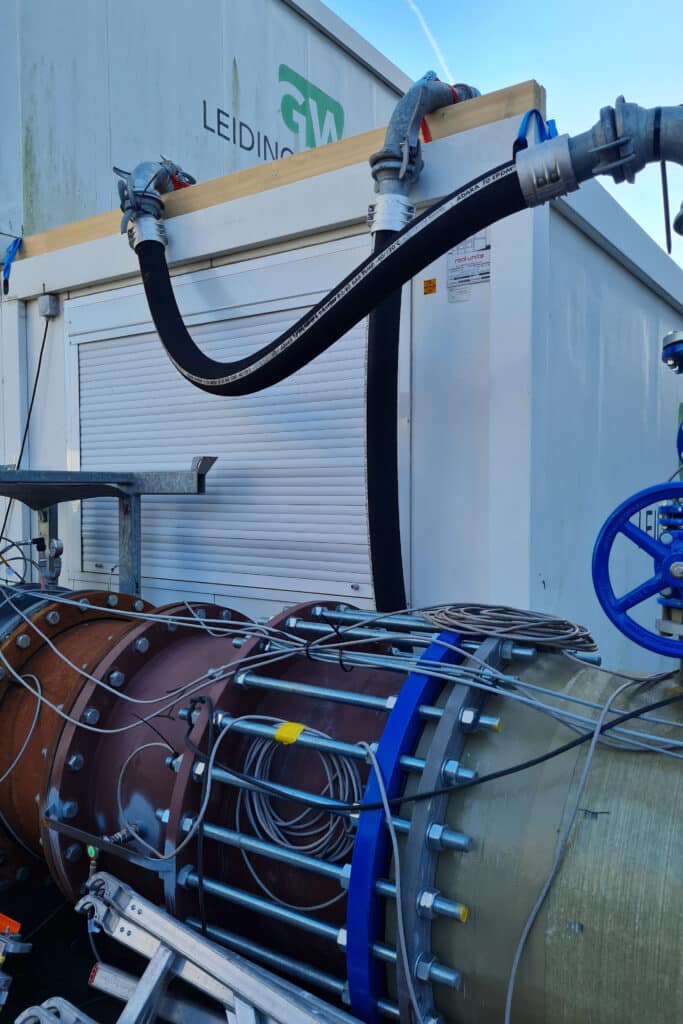
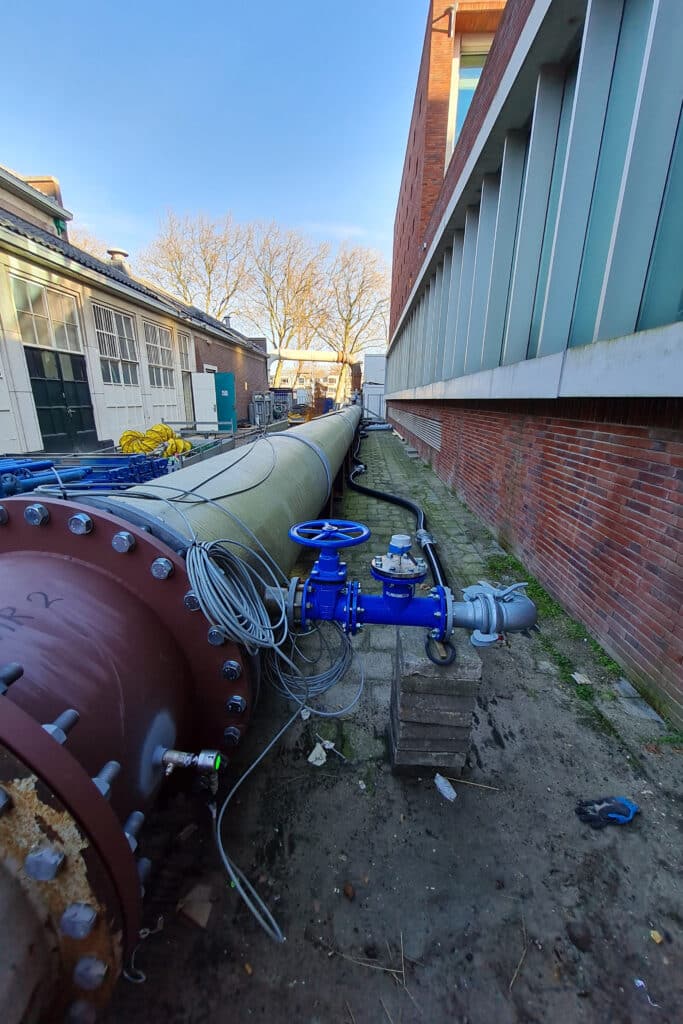
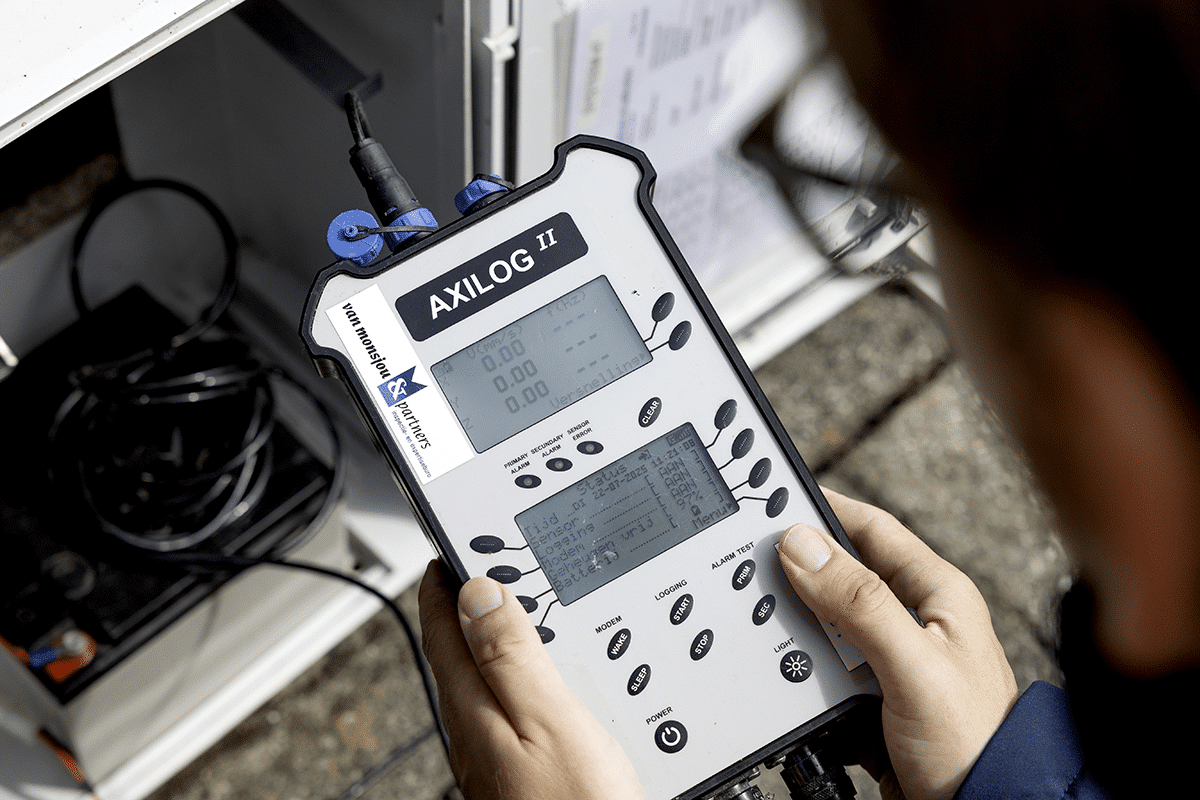
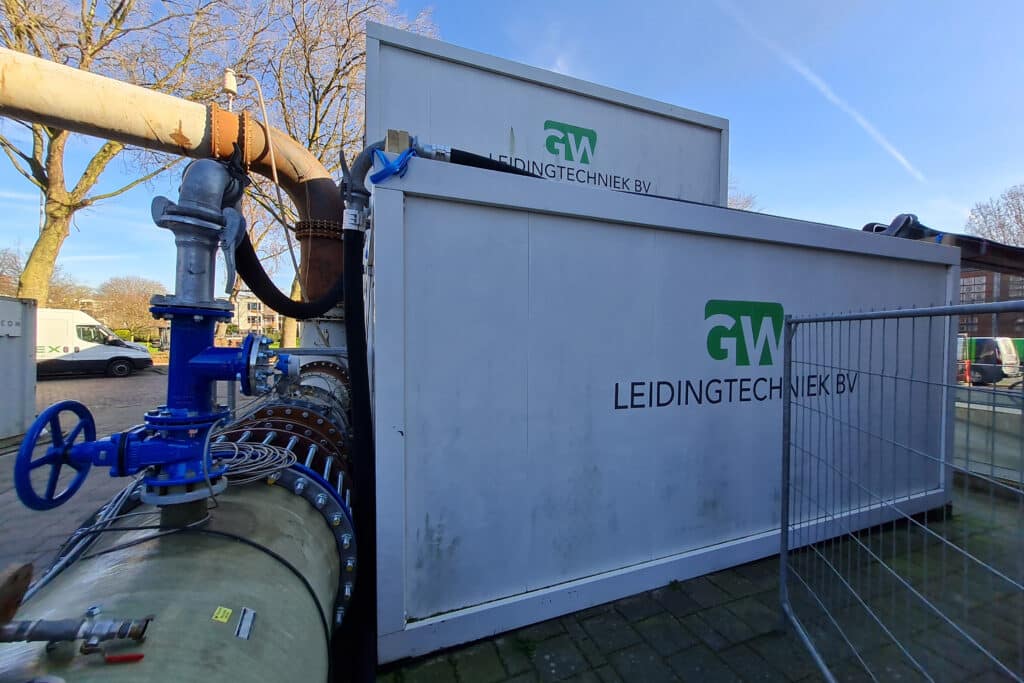
Together, they developed the Rotterdam Energy Recovery Tube (RERT), a new type of heat exchanger. The double-tube construction - with a coated steel inner tube and a GRP outer tube - is easier to install and cheaper than existing foreign solutions. Heat is transferred to a second tube containing liquid, after which a heat pump upgrades it to 45 to 55 degrees. In summer, the system can also cool. The renovation of one of the largest and oldest pumping stations in the heart of the city, on Willem Schürmann Street, provided an excellent opportunity to test the innovation. In fact, an above-ground temporary bypass was constructed for the work. The test ran for about a year in order to measure seasonal effects; an intensive measurement week took place in March at a sewage water temperature of about 15 degrees. For a length of 36 meters and a diameter of DN800, thermal power was delivered between 96 kW and 180 kW, which fits well within the expected power range of 160 kW to 250 kW.
The system is specially designed for pressure lines that are full of water. The thermal capacity transferred is therefore logically also greater than for gravity sewers. Rotterdam has some four hundred kilometers of pressure pipes, Peters explains. ‘These often run along facilities such as swimming pools, schools and hospitals - places that benefit greatly from this heat. The interest is there, but there are also questions: who owns the heat in the pipe network, what does a contract for decentralized heat supply look like, and do parties opt for this as long as gas remains relatively cheap? Still, I see great potential. In new neighborhoods, low-temperature networks are already being constructed that can use this technology. Hoogervorst adds: ’We also see opportunities with drinking water companies. The subsurface is busy and other pipes give off heat. Drinking water companies have trouble getting that heat out of their pipes. Our technology can help with that.‘
Now that the pilot is complete, GW Leidingtechniek has established a working group to further develop both the technology and governance. In addition to GW Leidingtechniek employees, the working group includes public clients and Rotterdam Engineering. Hoogervorst emphasizes that new partners are welcome: ‘The more insight into the issue as well as the technical possibilities, the better.’ The enthusiasm within the team is great. Peters: ‘For innovations like this you need people who are intrinsically motivated and willing to go the extra mile to advance their field. Fortunately, we have such a team together here.’ Hoogervorst: ‘It's great to see experienced professionals and young trainees working together, combining the best of two generations.’
Zo’n dertig procent van de energie die een woning binnen komt, verdwijnt via de gootsteen. Riothermie benut die restwarmte.
Neem dan rechtstreeks contact op met GW Leidingtechniek BV.
 Contact opnemen
GW Leidingtechniek BV aims to be a main contractor for both above-ground and underground infrastructure, with healthy and transparent operations and positive operating results. The organization is decisive, reliable, flexible and commercially strong. When it comes to innovation, GW Leidingtechniek BV is proactive and shares knowledge with its clients. GW Leidingtechniek BV's strength lies in [...]
Bekijk Bedrijfsprofiel