Platform on civil engineering, underground infrastructure, energy, construction equipment & construction machinery
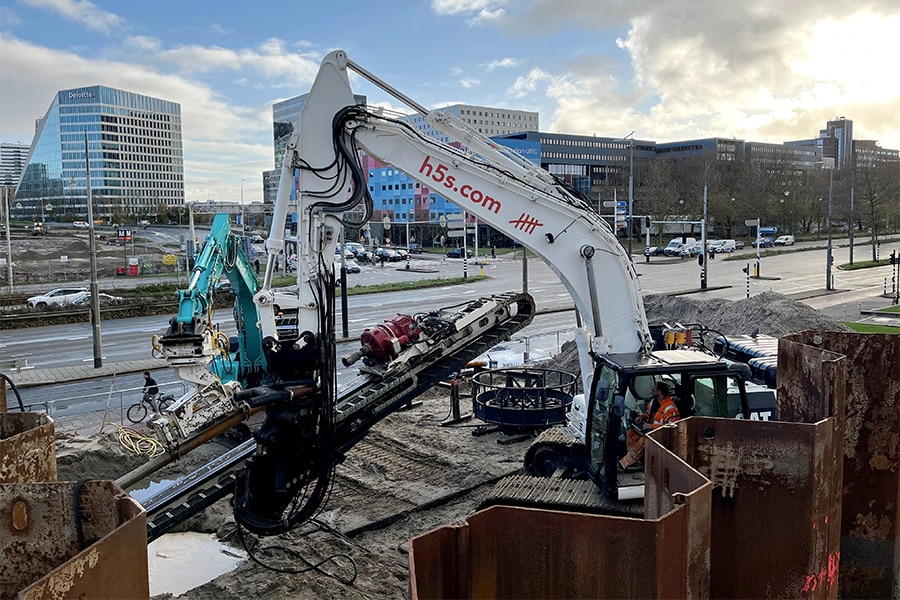
The reconstruction of the De Nieuwe Meer junction requires temporary or permanent earth retaining structures at many locations. These are often constructed using ground anchors of various types and sizes. The TriAX construction consortium outsourced the specialist anchoring work to High 5 Solutions from Vianen. Site manager Mark Huissoon talks about his experiences with this project.
The work consists of a combination of temporary strand anchors, temporary self-drilling anchors, and permanent self-drilling anchors. For example, the retaining walls next to the viaducts are mainly constructed using strand anchors, while other locations require self-drilling systems.
“There are many different locations where anchors need to be placed. That makes the work challenging,” says Huissoon. “The trick is to maintain an overview while responding effectively to the project planning. Where should which anchors be placed, and what does that mean for the preparations we are making?”
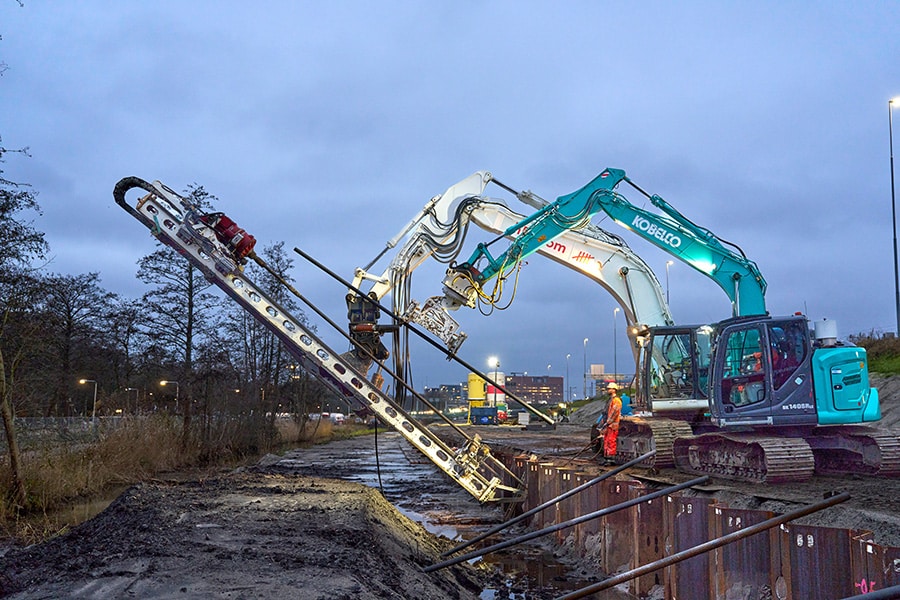
TriAX has set high sustainability targets for this project. “We are making the anchors here with GM.42 grout mortar from Weber.Beamix,” explains Huissoon. “Thanks to the favorable MKI value of this product, we are helping our client to achieve that ambition. This applies not only to the grout mortar, but also to the anchor rods used.”
“The great thing about this project is that we can use all our anchor machines,” says Huissoon. “From our 55-ton broker drilling rig to the compact, electrically powered 8.5-ton machine. Each machine has its own strengths and comes into its own depending on the conditions on site. We use the large drilling machine for heavier drilling work, overhead drilling, and locations where reach is required. We use the electric machine in places with limited space or where the overhead load must remain low. That variation makes the design and preparation complex and requires a well-thought-out approach.‘
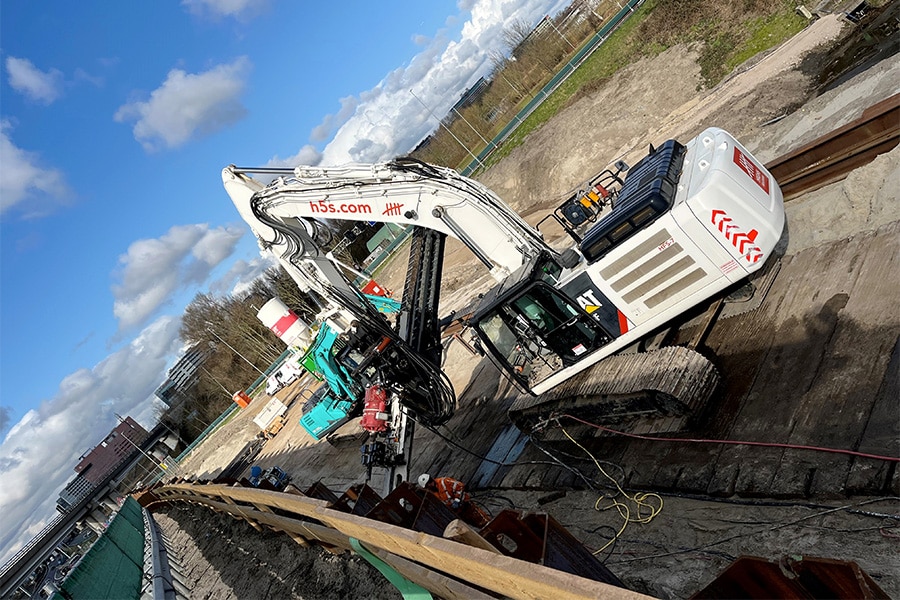
TriAX's schedule and the multitude of locations make it necessary to be flexible at all times. “With so many disciplines and different foundation techniques, the order of work changes regularly,” says Huissoon. “We always want to work according to the client's wishes, and that means we have to constantly adapt. Thanks to intensive contact with TriAX, we are able to keep pace with the progress of the project. This applies to both the implementation and the preparations.”
The combination of extensive logistics, complex working methods, and constantly changing locations entails risks. “Our employees are constantly entering new environments with associated hazards,” according to Huissoon. “That's why we conduct a tour of each location with the TriAX supervisor beforehand, so that we can properly instruct the teams. In addition, we hold a start-up meeting for each location and subject the drilling rig to an internal setup inspection. This allows us to maintain focus and ensure safe working practices.”