Platform on civil engineering, underground infrastructure, energy, construction equipment & construction machinery
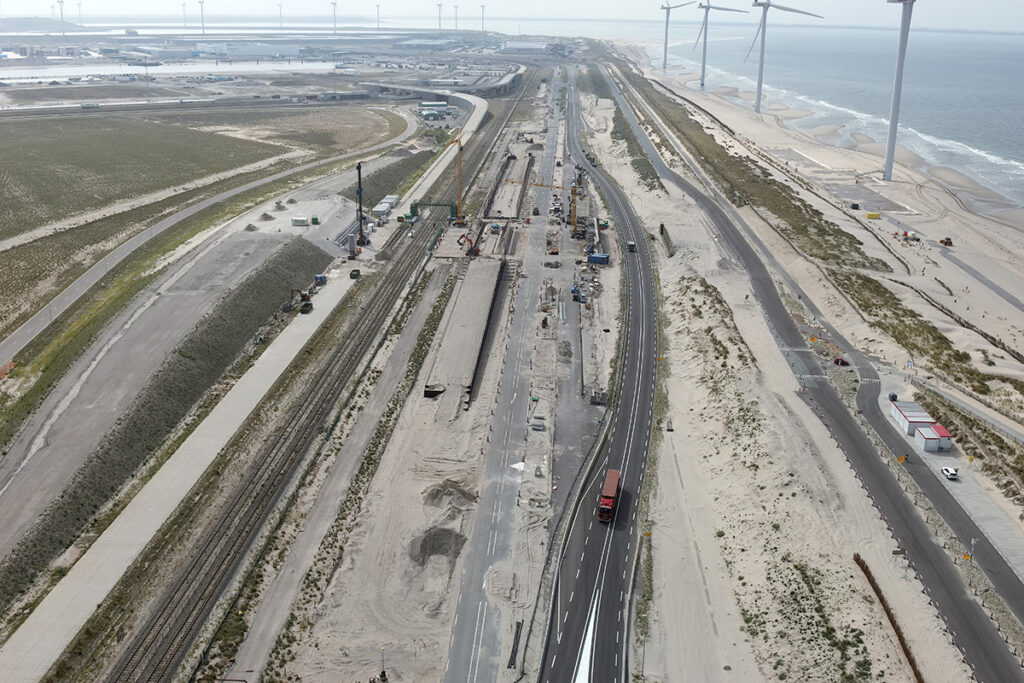
With the growth of Alexiahaven and the surrounding industrial area, traffic pressure and complexity are rapidly increasing. The current level crossing is a major safety risk and accessibility bottleneck. That is why BAM Infra Nederland is building a new flyover on behalf of the Port of Rotterdam Authority: an integrated project with three new viaducts, in the middle of a challenging environment of sea walls, rail and through road traffic. According to project manager Reinier Mieris, it requires smart phasing and careful coordination with parties such as Rijkswaterstaat, Port of Rotterdam Authority and ProRail. A combination that makes the project special both technically and organizationally.
Basically, the project involves the construction of three contiguous structures that will eventually merge to form the Princess Alexia Viaduct. “One structure we are building above a future strip for industrial pipelines,” says Mieris. “Although these pipes are not there now, the infrastructure is already prepared for them. One particular challenge is that this structure is being built in the Department of Public Works” soft seawall, so strict permits and seasonal construction restrictions apply. For example, we are not allowed to work on this during the storm season, which makes planning and phasing complex."
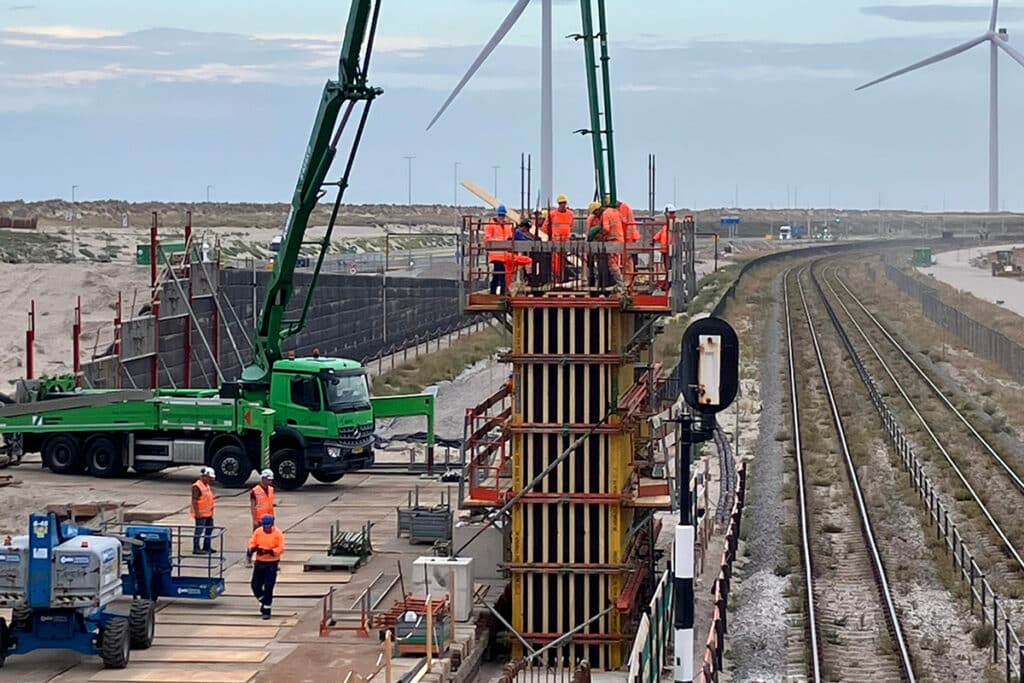
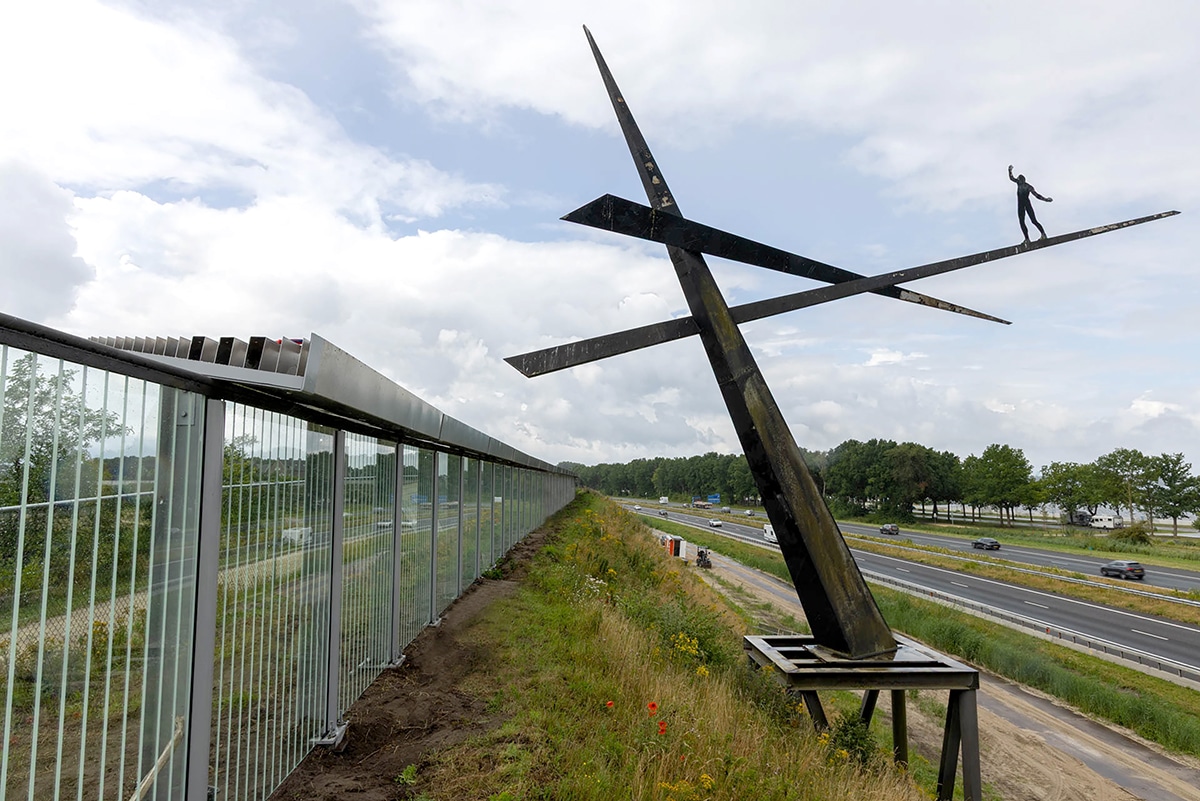
The second viaduct spans the Maasvlakteweg, an important through route towards the hinterland, and the third part of the Princess Alexia Viaduct crosses the railroad. “This requires close coordination with ProRail and obtaining the necessary rail permits,” Mieris knows. “Whereas the basic design still assumed an in-situ deck over the track, we opted for prefabricated girders. This choice significantly reduces the amount of work near the track, which is both safer and more efficient.” Finally, the long on- and off-ramps are constructed with reinforced soil, finished with precast architectural pre-walls. These walls have a characteristic curvature, inspired by wind-shaped dunes. This makes the artwork part of a series of so-called dune viaducts, designed by Zwarts and Jansma” After the Maxima and Amalia Viaduct, this is the third viaduct in the series.
There are numerous existing cables and pipes in the area, in addition to the future industrial pipeline strip. “To enable future work, the reinforced soil under the roads will be laid up to 3.5 meters deep, so that cables can later be buried next to the viaducts without major interventions,” explains Mieris, who adds that the use of integral viaducts has been prescribed by the Port of Rotterdam Authority. “The three viaducts will be built without joints and without overlays. That means less maintenance in the future, but additional requirements for the jointless crossings and asphalt construction. We deliberately took the knowledge and expertise from the market and surrounded ourselves with renowned partners to meet these high ambitions. Partners who were mostly also involved in the construction of the previous viaducts on the Maasvlakte.”
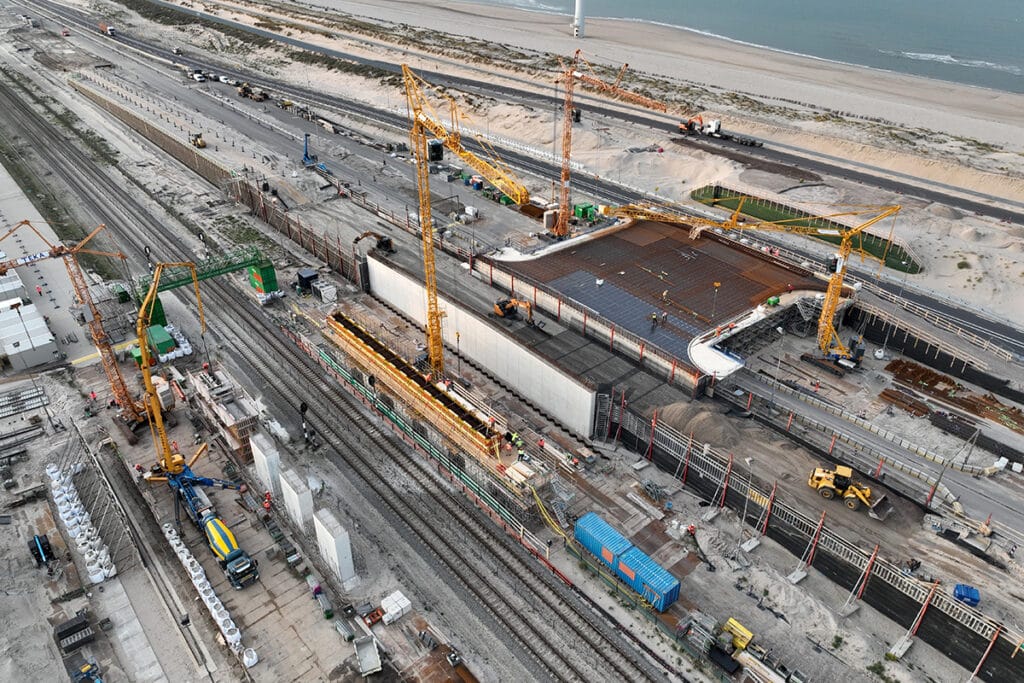
The project was awarded to BAM Infra Nederland on price and EMVI criteria, including nuisance reduction and three sustainability themes: low environmental impact (MKI), a low-emission construction site and sustainable concrete. “We are applying on a large scale our sustainable mixture GROENR-Beton, an innovative product with significantly less cement. This leads to a substantial CO2 reduction in both piers, walls, decks and precast elements,” says Mieris. “Besides a lot of concrete, there is also a lot of asphalt involved. For example, parking facilities, bike paths and parts of the Maxima Road will be relocated. Furthermore, the construction site is highly sustainable. With its own loading bay and a high proportion of electric equipment, including trucks, asphalt sets, tower cranes and telescopic handlers, emissions are drastically reduced. Thanks to the early application for a heavy electrical connection, made possible by a good cooperation with Stedin and the Port of Rotterdam Authority, we do not suffer from grid congestion issues.”
The work area is sandwiched between the sea and industry. “To create space, a bypass of the Maasvlakte road towards the sea was first constructed. This allows us to build without traffic disruption. In March 2026, the road will be put back under the new viaduct, after which we will build the last part of the structure, partly in the dunes. Thanks to a parallel design and permit process in the first phase, combined with timely procurement and work preparation, we were able to start the project quickly,” said Mieris, who is proud of the cooperation between all parties. “It is a brilliantly beautiful integral project with a sustainable challenge that will ultimately permanently improve both the accessibility and safety of the Alexiahaven.”