Platform on civil engineering, underground infrastructure, energy, construction equipment & construction machinery
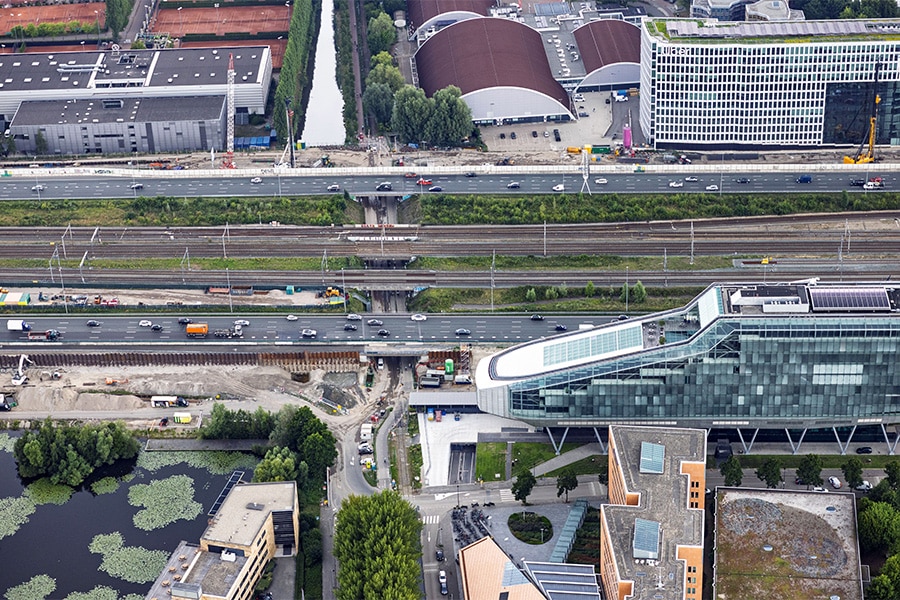
The reconstruction of the De Nieuwe Meer junction on the A10 South, part of Zuidasdok, is one of the most challenging infrastructure projects in the Netherlands. The TriAX construction consortium is working together on the construction of a parallel structure that separates through traffic from local traffic. Given the scale of this project, two foundation specialists have joined forces in Funderingscombinatie Franki – Heijmans (FCFH). Their combined expertise in sheet piling, drilling techniques, anchoring, and nailing makes it possible to efficiently gain space in the limited environment along the A10.
Inherent to the widening is that existing structures along the route must be widened (viaducts) and partially replaced (bridges). “Extra abutments and foundations are needed, particularly at the Schinkel river, with the work often taking place in confined spaces and during night-time closures to minimise disruption to traffic,” says Jan Leen van der Vlies, director of operations at Franki Grondtechnieken.
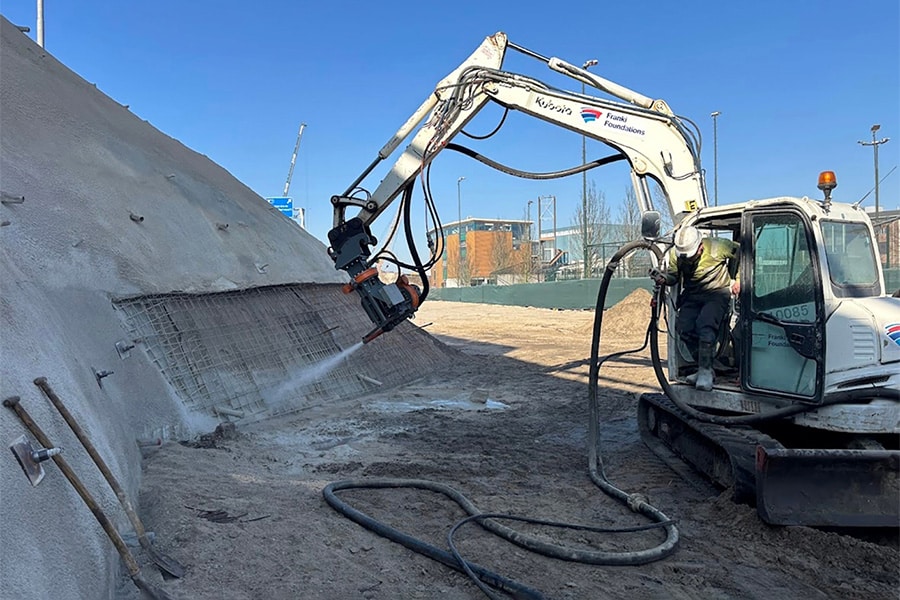
A special feature of this project is the use of nailed soil with shotcrete. “It's a method that is used more often internationally, but is virtually unique in the Netherlands,” says Van der Vlies, adding that it is one of Franki Grondtechnieken's areas of expertise. “The new parallel road must connect at the same height as the existing A10 South, which is at a reasonable height above ground level. Due to the adjacent buildings, there is insufficient space to create a traditional 45-degree slope. The solution: the existing embankment is excavated bit by bit, after which we apply anchors and shotcrete. We repeat this trick about six times, creating an almost vertical retaining wall of 80-85 degrees with a height of 6 meters. In this way, we efficiently create working space for the foundation machines without disrupting the existing highway.”
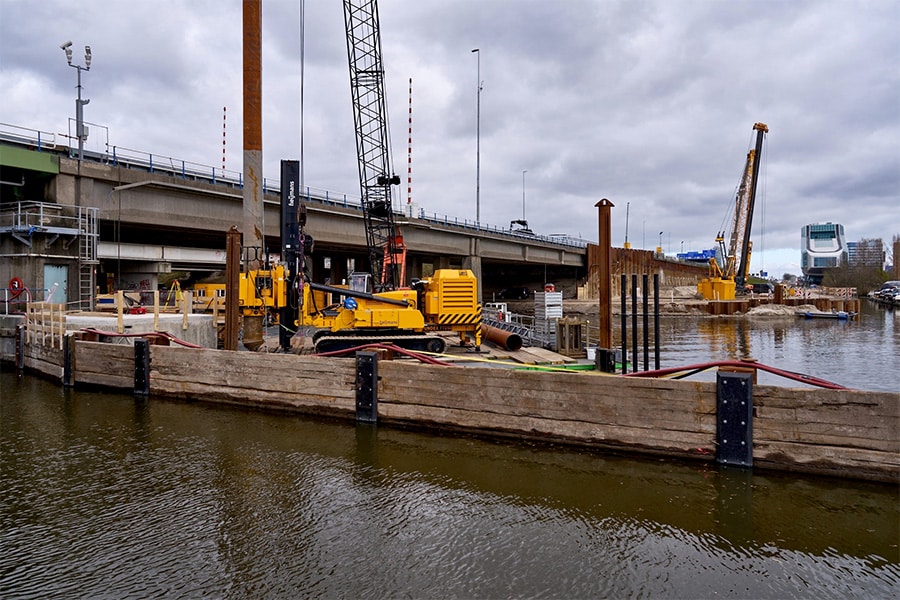
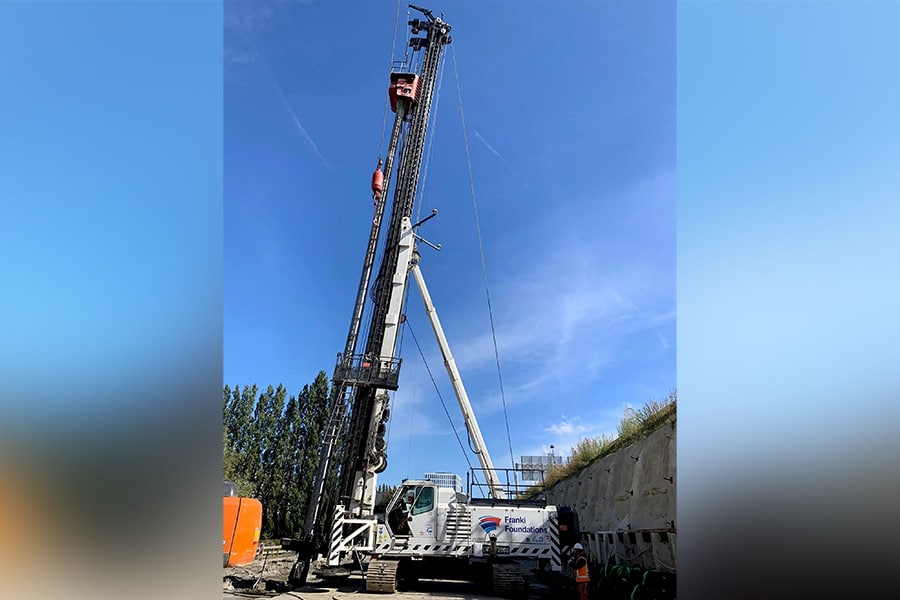
Funderingscombinatie FCFH began installing the phased sheet piling along the A10 South in the middle of last year and will start work on the nailed soil structures in October 2024. “Since March 2025, we have been installing seven rows of piles on both sides along the entire length of the route as a foundation for the pile mattress. In total, we are drilling around 4,500 foundation piles, completely vibration-free,” explains Van der Vlies. “Concrete caps will be placed on top of these, onto which the reinforced soil package will be applied. This will raise the new section of road to the correct height and ensure that it connects seamlessly with the existing road structure. This approach allows a lot of work to be carried out in a single construction phase and ensures that traffic flow is maintained.”
Much of the foundation work at the Schinkel is being carried out from pontoons in the water, as there is a lack of space on land. Van der Vlies: “Piles and sheet piling are largely transported by ship and installed on site. This logistical solution limits the disruption to the city and ensures a safe working environment.” And speaking of safety. “Working right next to a busy highway involves considerable risks, such as the danger of falling and the proximity of traffic. Safety is therefore paramount: both during execution and in the preparation phase, where 3D models and BIM are used to plan all construction steps, the deployment of machinery, and logistics with precision,” Van der Vlies assures us.
The collaboration between the two foundation specialists has proven to be a success. Heijmans brings experience in sheet piling and pile driving techniques, while Franki Grondtechnieken specializes in anchoring, nailing, and large-diameter bored piles. “We complement each other very well, which makes it possible to apply innovative methods and tackle complex challenges.”